
TL;DR: Prescription DHT blockers (finasteride, dutasteride) genuinely work. Finasteride reduces scalp DHT by roughly 70% and stops further loss in about 83% of men, with visible regrowth in around 65% after two years. Over-the-counter DHT blockers (shampoos, supplements) have far weaker or no clinical proof. Results require continuous use; stopping reverses gains within 6-12 months.
What is DHT and why does it cause hair loss?
DHT stands for dihydrotestosterone. It's a hormone made when an enzyme called 5-alpha reductase converts testosterone. That conversion happens all over the body, but in the scalp it causes a specific problem for people who are genetically susceptible to androgenetic alopecia (the clinical name for male and female pattern hair loss).
In those people, DHT binds to receptors in hair follicles and progressively shrinks them. The technical word is miniaturization. Each growth cycle, the follicle produces a thinner, shorter hair, until eventually it stops producing visible hair at all. The follicle doesn't die right away, which is exactly why early treatment matters and why some of those dormant follicles can recover if you remove the DHT signal.
The genetic sensitivity piece is key. Not everyone with high DHT loses hair. That's why a man with sky-high testosterone and DHT can have a full head of hair while his brother goes bald at 25. The follicles themselves have to be coded to respond badly to DHT, and that coding is inherited. [1]
If you want a fuller picture of the mechanisms behind hair loss beyond DHT, the what causes hair loss guide covers the other major contributors including stress, nutrition, and autoimmune conditions.
How do DHT blockers work?
DHT blockers work by interrupting the conversion of testosterone to DHT. The main mechanism is inhibiting 5-alpha reductase, the enzyme that drives that conversion.
There are two types of 5-alpha reductase: Type 1 and Type 2. Type 2 is the dominant one in scalp hair follicles. Finasteride blocks Type 2 almost exclusively. Dutasteride blocks both Type 1 and Type 2, which is why it reduces DHT more aggressively (by roughly 90% in serum, compared to finasteride's roughly 70%). [2]
Some ingredients marketed as "natural DHT blockers," things like saw palmetto, pumpkin seed oil, and certain green tea extracts, may also inhibit 5-alpha reductase to some degree. But the degree matters enormously, and that's where most supplements fall short.
The blocking doesn't eliminate DHT from the body entirely, nor would you want it to. DHT has real functions: prostate health, libido signaling, and other hormonal processes depend on it. The drugs reduce circulating and scalp DHT to a level low enough to slow or stop follicle miniaturization without crashing it to zero.
Does finasteride actually work, and what does the evidence show?
Finasteride is the best-studied DHT blocker for hair loss. The evidence is genuinely strong.
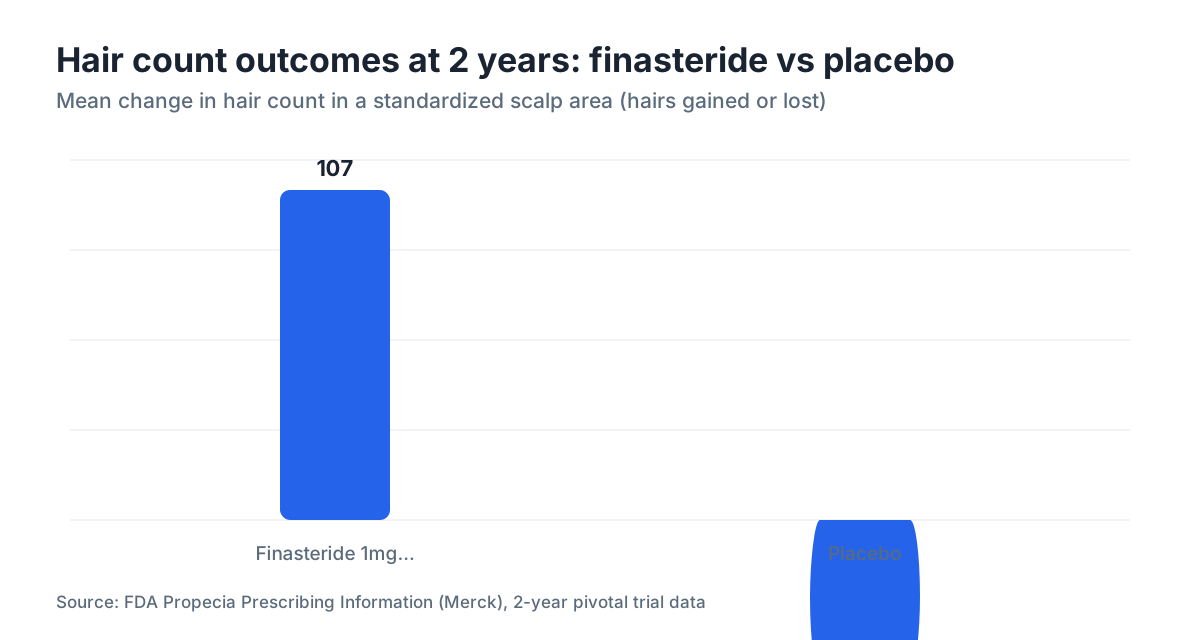
The registration trials submitted to the FDA for finasteride 1mg (brand name Propecia, now mostly available as generic) enrolled 1,553 men with mild to moderate androgenetic alopecia and followed them over two years. After two years, 83% of men on finasteride had no further hair loss, compared to 28% on placebo. Hair count in a standardized area of the scalp increased by a mean of 107 hairs in the finasteride group versus a loss of 50 hairs in the placebo group. [3]
At five years of follow-up, 90% of men on finasteride maintained or increased their hair count compared to baseline, while placebo-treated men lost an average of 26% of their original hair count. [3]
That's real, clinically meaningful improvement. It's also not a miracle. The regrowth typically shows up most on the crown. The frontal hairline responds more modestly. And not everyone responds; roughly 17% of men in those trials continued to lose hair despite treatment.
For a detailed breakdown of how finasteride works, dosing, and what to expect month by month, see the full finasteride guide. If you're considering combining it with minoxidil (many doctors recommend exactly that), the finasteride and minoxidil article covers the combined data.
How effective is dutasteride compared to finasteride?
Dutasteride (brand name Avodart) is approved in South Korea and Japan for hair loss, and is used off-label in the US and much of Europe. It's the stronger DHT blocker numerically, and several head-to-head trials confirm that.
A 24-week randomized controlled trial published in the Journal of the American Academy of Dermatology compared dutasteride 0.5mg daily to finasteride 1mg daily in men with androgenetic alopecia. Dutasteride produced significantly greater increases in hair count at both 12 and 24 weeks. [4]
A separate meta-analysis (Lee et al., 2018) covering six trials found dutasteride consistently outperformed finasteride on hair count and patient-reported outcomes. The tradeoff is that dutasteride's longer half-life means its hormonal effects persist longer after stopping, which matters if side effects emerge.
For most men starting out, finasteride 1mg is still the typical first choice because of the longer safety record and FDA approval status. Dutasteride is a reasonable step up if finasteride stops working or produces insufficient results, ideally with a dermatologist's guidance.
Do over-the-counter DHT blockers like shampoos and supplements work?
This is where the honest answer gets uncomfortable for a lot of marketing. Most over-the-counter "DHT blocker" products have weak or no clinical proof that they actually reduce scalp DHT enough to change hair loss outcomes.
Saw palmetto is the most studied natural 5-alpha reductase inhibitor. A randomized, double-blind trial published in the Journal of Alternative and Complementary Medicine (Prager et al., 2002) found that 60% of men taking saw palmetto extract rated themselves as improved versus 11% in the placebo group. But hair count wasn't objectively measured, and the sample size was small (26 men). [5] That's not nothing, but it's not anywhere close to the rigor of finasteride's trial data.
Ketoconazole shampoo (2% prescription strength) has some trial data suggesting it reduces DHT-related inflammation in the scalp and may complement finasteride, but using it alone as a DHT blocker is not supported by strong independent evidence. [6]
Pumpkin seed oil, biotin, zinc, rosemary oil, and similar ingredients are frequently labeled as DHT blockers. The data on most is either preliminary, conducted in animals, or confounded by small sample sizes and short durations. None should be expected to work the way finasteride does.
If you're thinking about supplements in a broader context, the hair loss supplements article has a rigorous breakdown of what the evidence actually supports.
One more honest note: DHT-blocking shampoos that you rinse off after a few minutes almost certainly don't have meaningful residence time on the scalp to inhibit 5-alpha reductase in living follicles. The concept is plausible in theory; the executed products aren't convincing in practice.
Do DHT blockers work for women?
This is more complicated. Finasteride is not FDA-approved for hair loss in women, and it's explicitly contraindicated in women who are pregnant or may become pregnant because of teratogenicity risk (DHT is required for normal male fetal development). [3]
That said, finasteride and dutasteride are prescribed off-label for postmenopausal women with androgenetic alopecia by dermatologists in many countries. Several small trials show some benefit. A 2020 systematic review in JAMA Dermatology found that 5-alpha reductase inhibitors showed efficacy for female pattern hair loss in postmenopausal women, though the evidence quality was rated as moderate. [7]
For premenopausal women, the safety picture is less settled, and the drug requires reliable contraception. The more commonly used first-line treatment in women remains minoxidil (topical or oral), with spironolactone as a hormonal alternative in the US.
Women also have a different hormonal context for hair loss. DHT is less often the dominant driver compared to men, and other androgens, thyroid issues, iron deficiency, and telogen effluvium are frequently involved. Assuming your hair loss is DHT-driven without investigation can lead to chasing the wrong treatment for a long time.
What are the side effects of DHT blockers?
The FDA label for finasteride lists sexual side effects: decreased libido, erectile dysfunction, and decreased ejaculate volume. In the original clinical trials, these occurred in roughly 3.8% of finasteride users versus 2.1% of placebo users. [3] For the majority of users, these are reversible on discontinuation.
Post-finasteride syndrome (PFS) is a more contested topic. Some men report persistent sexual, neurological, and psychological symptoms that continue after stopping finasteride. The FDA added a label update in 2012 acknowledging reports of libido decrease and orgasm disorders that continued after stopping. The Post-Finasteride Syndrome Foundation has documented cases, but formal epidemiological studies are limited and causation is debated. [8]
Dutasteride carries similar sexual side effect risks. Because it inhibits both Type 1 and Type 2 5-alpha reductase more completely, some researchers have suggested the risk profile may be slightly higher, though direct comparative data on side effect rates is limited.
For most men, finasteride is well-tolerated. But it's a real hormonal drug, not a vitamin, and it deserves a real conversation with a doctor before starting. Men with a history of depression or sexual dysfunction should be especially careful and candid with whoever prescribes it.
Topical finasteride (applied directly to the scalp) is a newer delivery method that has shown lower serum DHT reduction compared to oral finasteride, with some evidence of similar local efficacy for early androgenetic alopecia and potentially lower systemic side effect rates. The data is still emerging.
How long does it take for a DHT blocker to work?
Slower than most people expect, and that's the main reason people quit too early.
In the first three to six months on finasteride, many people experience a shedding phase. This happens because the drug shifts follicles from a prolonged telogen (resting) phase back toward an active growth phase, and old hairs fall out to make room. It looks like things are getting worse. They're usually not.
Visible improvement in hair density typically begins around months four to six. The meaningful results in the clinical trials were measured at twelve to twenty-four months. The standard dermatology guidance is to commit to at least twelve months before evaluating whether the drug is working for you. Quitting at month three because of the shed is one of the most common and most unfortunate mistakes.
After the initial regrowth window (roughly two years), finasteride primarily functions as a maintenance drug: it holds onto what you have rather than continuously growing more. This is still very valuable, because untreated androgenetic alopecia is progressive.
| Timeframe | Typical response |
|---|---|
| 0-3 months | Possible increased shedding (normal) |
| 3-6 months | Shed slows; some early density improvement |
| 6-12 months | Visible hair count improvement in most responders |
| 12-24 months | Peak regrowth, stabilization |
| 24+ months | Maintenance; continued slowing of loss |
What happens when you stop taking a DHT blocker?
Hair loss resumes. This is not a treatment with lasting effects once you stop; it's ongoing management.
When you stop finasteride, serum and scalp DHT levels return to baseline within about two weeks. The hair you preserved or regrew during treatment begins to miniaturize again under the renewed DHT signal. Most men who stop finasteride notice significant shedding within six to twelve months. Within two years of stopping, most of the benefit is gone, and in some cases men end up at a worse baseline than if they had never started (because they delayed other interventions while on the drug). [9]
This is the one part of the conversation that's routinely undersold when people start DHT blockers. Understand going in that you're signing up for a long-term or permanent medication if you want to keep the results. If that's not acceptable for you, hair transplant surgery may be a better primary strategy, because transplanted follicles from DHT-resistant donor areas are not affected by DHT. Learn more about that option in the hair transplant article.
Some people use finasteride for a defined period to regrow hair before a transplant, then assess whether to continue. That's a legitimate strategy if planned intentionally.
Can you use a DHT blocker with minoxidil?
Yes, and this combination is considered the most effective medical approach to androgenetic alopecia.
Minoxidil and finasteride work through entirely different mechanisms. Minoxidil increases blood flow to follicles and prolongs the growth phase. Finasteride removes the DHT signal that's shrinking those follicles. They're genuinely complementary.
A 2015 randomized controlled trial published in Dermatologic Therapy found that the combination of 5% topical minoxidil plus finasteride 1mg produced significantly greater hair count improvement than either drug alone. [10]
The American Academy of Dermatology (AAD) guidelines for androgenetic alopecia list both finasteride and minoxidil as first-line, evidence-based treatments, and note that combination therapy is reasonable for men who want to maximize results. [11]
If you're early in researching minoxidil, the minoxidil for men guide covers how it works, and minoxidil side effects covers the risk profile. For people considering the newer oral minoxidil option, the oral minoxidil article has the relevant clinical data.
At MyHairline, the free AI hair scan can help you understand your current Norwood stage and whether your pattern of loss looks more like a DHT-driven case or something else before you commit to a medication. It's not a substitute for a dermatologist, but it's a reasonable first step.
Are there any DHT blockers that work without a prescription?
Only in a much weaker sense than prescription options.
Saw palmetto has the most accessible clinical support among OTC options. In the small Prager trial, 320mg daily of saw palmetto extract showed subjective improvement in 60% of men versus 11% placebo. [5] A 2012 randomized trial published in the International Journal of Immunopathology and Pharmacology comparing saw palmetto to finasteride found finasteride significantly outperformed saw palmetto in objective hair count at 24 months (the finasteride group showed a 38% improvement vs 9% for saw palmetto). [12]
So saw palmetto does something, probably. But it does considerably less than finasteride, and the evidence base is thin enough that you'd be taking it on faith more than data.
Ketoconazole 1% shampoo is available without a prescription and has some supportive data as an adjunct. Pumpkin seed oil capsules (400mg daily) showed promise in a small RCT published in Evidence-Based Complementary and Alternative Medicine (2014), with a 40% increase in hair count in the treated group versus 10% in placebo. Again, small trial, unblinded method concerns, and not replicated at scale. [13]
If you don't want to use prescription drugs, these options are reasonable low-risk additions. Just don't expect them to replicate what finasteride does. And watch out for the receding hairline pattern specifically: that frontal recession is the hardest area to treat even with prescription DHT blockers, let alone supplements.
One genuine concern: some fitness communities connect DHT, creatine, and hair loss. The does creatine cause hair loss article covers what the actual study found and what it means.
Who is a good candidate for a DHT blocker?
The strongest candidates are men under 50 with mild to moderate androgenetic alopecia, particularly Norwood stages 2 through 4, who still have meaningful hair to preserve. Finasteride is better at preventing further loss than recovering lost ground, so starting earlier in the progression gives you more to work with.
Men with Norwood 6 or 7 who have already lost most of their hair get less benefit from DHT blockers in terms of regrowth (too many follicles have been lost), though the drugs can still slow progression in remaining areas.
Women in postmenopause with confirmed androgenetic alopecia pattern loss are potential candidates for off-label finasteride or dutasteride, best evaluated by a dermatologist who can rule out other causes and weigh the risk-benefit for that individual.
People whose hair loss is primarily from other causes (stress, nutritional deficiency, thyroid dysfunction, autoimmune conditions like alopecia areata) are unlikely to benefit from DHT blockers at all, and might actually delay finding the right treatment by focusing on the wrong mechanism. A scalp biopsy or bloodwork panel from a dermatologist can clarify the diagnosis.
Finally, men with a history of depression, sexual dysfunction, or who are considering fathering children in the near future should have a more careful conversation with a doctor about whether the timing and risk-benefit calculation is right.
Sources
- American Academy of Dermatology, Hair Loss Overview
- FDA, Avodart (dutasteride) Prescribing Information
- FDA, Propecia (finasteride 1mg) Prescribing Information
- Journal of the American Academy of Dermatology, Gubelin Harcha et al. 2014
- Journal of Alternative and Complementary Medicine, Prager et al. 2002
- International Journal of Dermatology, Piérard-Franchimont et al. 1998
- JAMA Dermatology, Vaño-Galván et al. 2020, systematic review of 5-alpha reductase inhibitors in women
- FDA, Drug Safety Communication on finasteride (Propecia, Proscar), 2012 label update
- Journal of the American Academy of Dermatology, Kaufman et al. 1998, 5-year finasteride follow-up
- Dermatologic Therapy, Khandpur et al. 2015
- American Academy of Dermatology, Clinical Guidelines for Androgenetic Alopecia
- International Journal of Immunopathology and Pharmacology, Rossi et al. 2012
- Evidence-Based Complementary and Alternative Medicine, Cho et al. 2014, pumpkin seed oil RCT