
TL;DR: Nizoral shampoo (ketoconazole 1 to 2%) is not a DHT blocker in the way finasteride is. It's an antifungal that also has weak anti-androgenic properties, meaning it can reduce DHT's effect at the scalp level without meaningfully lowering systemic DHT. Two small trials showed hair density improvements comparable to 2% minoxidil, but evidence is limited and it works best as a supporting treatment.
What is Nizoral and why do people think it blocks DHT?
Nizoral is a brand-name shampoo whose active ingredient is ketoconazole, an antifungal drug first approved by the FDA in 1981 [1]. Its original job is killing the Malassezia yeast that causes dandruff and seborrheic dermatitis. That's still what it does best.
The DHT connection came later, from lab research showing that ketoconazole has weak anti-androgenic activity. Androgens like dihydrotestosterone (DHT) bind to receptors in hair follicles and, in genetically susceptible people, miniaturize them over time. Researchers noticed that ketoconazole could interfere with that androgen receptor binding at the skin level, which raised the obvious question: could a ketoconazole shampoo slow androgenetic alopecia (male or female pattern hair loss)?
That's the origin of the claim. It's not invented, but it's also not the whole story. Understanding the difference between "reduces DHT's local effect" and "blocks DHT systemically" matters a lot before you spend money or make treatment decisions.
For background on how DHT drives hair loss in the first place, see our explainer on DHT blockers.
How does DHT cause hair loss?
DHT is converted from testosterone by the enzyme 5-alpha reductase, which is present in high concentrations in scalp skin and hair follicles. When DHT binds to androgen receptors in the dermal papilla cells at the base of the follicle, it shortens the anagen (growth) phase and causes the follicle to produce progressively thinner, shorter hairs. Over years this process, called miniaturization, results in visible thinning and eventually bald patches.
Genetic sensitivity to DHT varies enormously between people, which is why some men go bald in their twenties and others keep a full head of hair into their seventies despite similar testosterone levels. The follicle's androgen receptor density, not circulating DHT alone, is the key variable.
Drugs that genuinely block DHT do so by inhibiting 5-alpha reductase systemically. Finasteride (Propecia, 1 mg/day) inhibits type 2 5-alpha reductase and lowers serum DHT by roughly 65 to 70% [2]. Dutasteride inhibits both type 1 and type 2 and lowers serum DHT by over 90%. These are the only FDA-approved treatments for androgenetic alopecia that act via DHT suppression.
Ketoconazole is not in that category. It doesn't inhibit 5-alpha reductase. What it does is different, and worth understanding precisely.
More on how this all starts: what causes hair loss.
Does ketoconazole actually have anti-androgenic effects?
Yes, but the mechanism is indirect and mostly local. Ketoconazole belongs to the imidazole antifungal class and works by blocking ergosterol synthesis in fungal cells. A secondary effect is that it also inhibits certain cytochrome P450 enzymes involved in steroid hormone synthesis, including the production of androgens in the adrenal glands and testes.
At oral doses (200 to 400 mg/day), ketoconazole can meaningfully suppress androgen production and has been used off-label to manage conditions like prostate cancer and Cushing's syndrome. The FDA added a boxed warning to oral ketoconazole in 2013 for serious liver toxicity and drug interactions, and the agency recommends against using oral ketoconazole for skin conditions [1]. Nobody should take oral ketoconazole for hair loss.
The shampoo is a different story. Topical ketoconazole at 1 to 2% concentration has negligible systemic absorption. Serum ketoconazole levels after normal shampoo use are essentially undetectable [9]. So systemic androgen suppression from a shampoo is not happening.
What may happen is local interference with androgen receptor activity in the scalp. A 2007 in-vitro study published in Experimental Dermatology found that ketoconazole reduced DHT-driven proliferation in cultured prostate cells, suggesting genuine (if weak) anti-androgenic receptor-level activity [3]. Whether this translates to living scalp tissue during a two-minute shampoo rinse is the central unanswered question.
The honest answer: the anti-androgenic effect is real in lab conditions and at oral doses. At topical shampoo doses, it's plausible but not proven to matter for hair retention.
What do clinical trials actually say about ketoconazole and hair loss?
The most-cited trial is a 1998 Belgian study published in Dermatology by Van Cutsem et al. that compared 2% ketoconazole shampoo to 2% minoxidil solution in men with androgenetic alopecia over six months [4]. Both treatments produced similar increases in hair density and follicle size. That's a striking result, and it's why ketoconazole keeps showing up in hair loss discussions.
But the trial had serious limits. It was small (n = 39 total), the randomization method is unclear, and it was never replicated at scale with a placebo control. A second study by the same lead author found that alternating ketoconazole shampoo with a standard shampoo improved hair density versus the control shampoo alone. Again, small and not independently replicated.
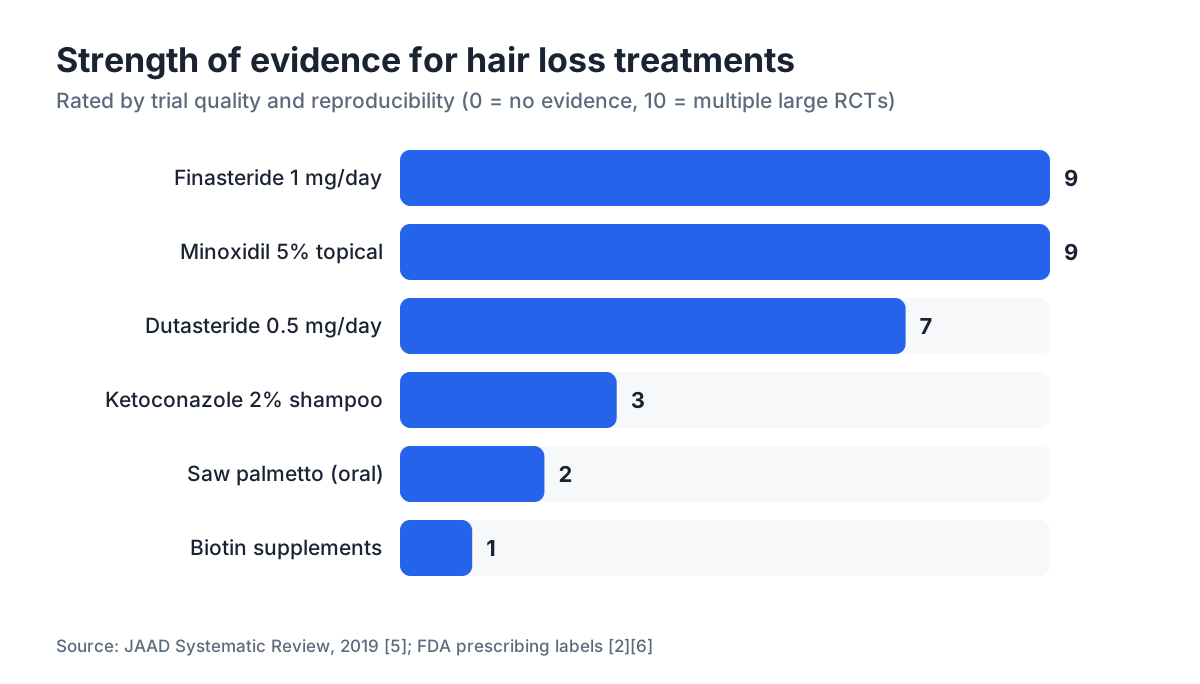
A 2019 systematic review in the Journal of the American Academy of Dermatology evaluated evidence for non-prescription hair loss treatments and rated ketoconazole as having "limited evidence" for androgenetic alopecia, noting that the existing trials are insufficient to draw confident conclusions [5]. The AAD does not currently include ketoconazole shampoo in its official treatment guidelines for androgenetic alopecia.
So here's the evidence base: two small positive trials from the same research group, a plausible biological mechanism, and no large randomized controlled trial confirming it works for hair loss specifically. That's not nothing. It's also a long way from the confidence you'd want before calling it a proven treatment.
How does nizoral compare to finasteride and minoxidil?
The table below uses efficacy data from FDA approval trials and the most rigorous published studies available.
| Treatment | Mechanism | DHT reduction | Evidence level | Regrowth shown in RCTs? |
|---|---|---|---|---|
| Finasteride 1 mg/day | 5-alpha reductase inhibitor (systemic) | ~65 to 70% serum DHT [2] | Strong (multiple large RCTs) | Yes |
| Minoxidil 5% topical | Vasodilator, prolongs anagen | None | Strong (multiple large RCTs) | Yes |
| Ketoconazole 2% shampoo | Antifungal + weak anti-androgen (local) | Negligible systemic | Weak (2 small trials) | Unclear |
| Dutasteride 0.5 mg/day | Dual 5-alpha reductase inhibitor | >90% serum DHT | Strong | Yes |
Finasteride at 1 mg/day was shown in a two-year Merck-sponsored trial (n = 1,553) to increase hair count by a mean of 107 hairs in a one-inch circle compared to baseline, versus a loss of 50 hairs in the placebo group [2]. That's a large, replicated signal.
Minoxidil 5% foam showed statistically significant hair regrowth versus placebo at 24 weeks in multiple trials across thousands of patients [6].
Ketoconazole shampoo has shown no such replicated large-scale signal. The 1998 trial's sample size (roughly 20 per arm) is simply too small to stake conclusions on.
The practical takeaway: ketoconazole shampoo is not a replacement for either finasteride or minoxidil. If you're managing androgenetic alopecia and mapping out your full treatment stack, look at finasteride and minoxidil for men as your primary options, with ketoconazole as a low-cost, low-risk addition.
For the combination approach, finasteride and minoxidil together is worth reading.
Does nizoral reduce scalp inflammation that contributes to hair loss?
This is probably where nizoral earns its keep most honestly.
Scalp inflammation is increasingly recognized as a contributing factor in androgenetic alopecia, more than a side effect of it. A chronically inflamed scalp environment, often worsened by Malassezia overgrowth, can speed up follicle miniaturization in susceptible people. Several pathology studies have found perifollicular lymphocytic inflammation in balding scalp biopsies.
Ketoconazole shampoo directly reduces Malassezia load on the scalp. Lower fungal burden means less inflammatory cytokine release. Less inflammation means a slightly less hostile environment for follicles that are already under androgenic stress. This is a real, if modest, benefit that has nothing to do with DHT.
A 2002 study in Skin Pharmacology and Physiology found that ketoconazole shampoo reduced scalp sebum and Malassezia colonization, which correlated with reduced scaling and erythema [7]. Sebum is also the primary vehicle that concentrates DHT at the follicle level, so cutting sebum production might have a secondary benefit on local DHT exposure, though this hasn't been directly measured.
If you have visible scalp flaking or redness alongside your hair loss, nizoral shampoo addresses a real contributing problem. That's a better reason to use it than the speculative DHT-blocking claim.
How should you use nizoral shampoo for hair loss?
The most common protocol in hair loss contexts is washing with a 1% or 2% ketoconazole shampoo two to three times per week, leaving it on the scalp for three to five minutes before rinsing. Daily use isn't necessary and can be drying.
In the US, 1% ketoconazole shampoo (sold as Nizoral Anti-Dandruff Shampoo) is available over the counter. The 2% concentration requires a prescription, though it's widely available from international online pharmacies and generic brands.
Ketoconazole shampoo is considered safe for most people at topical doses. The main side effects are scalp dryness and occasional contact irritation. There are no known systemic hormonal effects from topical use in adults at normal frequency [1][9]. Women can use it safely, including those who are pregnant, though as with any cosmetic product, checking with a doctor first is reasonable.
Cost is genuinely low. A 200 ml bottle of Nizoral 1% runs $12 to $20 at most US pharmacies and big-box stores. Generic ketoconazole shampoo can be under $10. Compared to finasteride ($30 to $80/month) or minoxidil ($20 to $50/month), this is negligible.
One thing to avoid: don't treat a scalp-level shampoo as a substitute for tracking your overall hair loss pattern over time. If you're seeing real progression at the temples or crown, that pattern deserves a broader evaluation. A tool like the free AI hair scan at MyHairline can give you a baseline Norwood-stage read so you know where you're starting from.
Does nizoral work for women's hair loss too?
The trial data for ketoconazole and hair loss is almost entirely in men with androgenetic alopecia. There are no published RCTs specifically in women with female pattern hair loss.
That said, the anti-inflammatory and anti-fungal mechanism is not sex-dependent. Women also get seborrheic dermatitis, also have Malassezia on their scalps, and also experience scalp inflammation that can worsen diffuse hair thinning. Using ketoconazole shampoo to address those issues is reasonable regardless of sex.
Women with hair loss related to hormonal shifts, including post-partum shedding or telogen effluvium, won't see specific benefits from ketoconazole beyond what any calming, anti-inflammatory shampoo might offer. The androgen-receptor angle is less relevant because female pattern hair loss has a different hormonal profile than male pattern baldness.
Bottom line for women: it's a reasonable shampoo choice if you have a flaky scalp, and the risk is essentially zero. Don't expect it to be a meaningful hair loss treatment on its own.
Should you use nizoral as part of a hair loss treatment stack?
The honest take: yes, but as a minor add-on, not a foundation.
If you're already using finasteride or minoxidil (or both), adding a ketoconazole shampoo two to three times a week costs almost nothing, takes no extra time, and addresses scalp health in a way the other treatments don't. The theoretical anti-androgenic benefit at the scalp level might be real. The anti-inflammatory benefit probably is real. The risk is essentially nothing.
If you're not ready or willing to use finasteride or minoxidil but you want to do something, nizoral is the most evidence-adjacent of the OTC options. It beats most hair loss supplements that make much bigger claims on much weaker evidence. It doesn't compare to finasteride or minoxidil for actual hair retention, but it's not in the same category as biotin pills or caffeine shampoos either.
For people with a receding hairline who want to act now while they weigh bigger decisions, ketoconazole shampoo is a sensible first step. Just don't let it stand in for a real conversation about finasteride if you're a man with androgenetic alopecia and you're still losing ground.
If you reach a point where medical treatments aren't giving you enough results, a hair transplant consultation might be the right next stage depending on your Norwood classification and donor area status.
What's the bottom line on nizoral and DHT?
Ketoconazole shampoo does not block DHT the way finasteride does. It has demonstrable anti-androgenic properties at high oral doses, but a two-minute shampoo rinse is not producing those effects.
What it may do, modestly, is calm the local inflammatory environment on the scalp and interfere slightly with androgen receptor activity in scalp tissue. Two small trials from the late 1990s showed positive results for hair density, but neither was large enough or rigorous enough to stake a clinical recommendation on.
The American Academy of Dermatology does not list ketoconazole shampoo in its evidence-based treatment guidelines for androgenetic alopecia [5][8]. That's a meaningful data point.
Use nizoral for dandruff and seborrheic dermatitis: it works well and the evidence is solid. Use it as an inexpensive, low-risk addition to a hair loss routine that already includes proven treatments. Don't use it instead of finasteride or minoxidil if those are appropriate for you.
If you want to understand your own hair loss pattern before deciding on treatments, the free AI hair analysis at MyHairline takes a photo and gives you a Norwood or Ludwig stage estimate in under a minute. Knowing what you're dealing with is the right starting point.
Sources
- FDA, Drug Safety Communication: FDA limits usage of Nizoral (ketoconazole) oral tablets due to potentially fatal liver injury and risk of drug interactions
- Merck & Co., Propecia (finasteride 1 mg) prescribing information via FDA label
- Experimental Dermatology (2007): Ketoconazole anti-androgenic activity in cultured cells
- Dermatology (1998): Van Cutsem et al., ketoconazole 2% shampoo vs. 2% minoxidil in androgenetic alopecia
- Journal of the American Academy of Dermatology (2019): Systematic review of non-prescription interventions for androgenetic alopecia
- FDA, Minoxidil topical solution/foam prescribing information
- Skin Pharmacology and Physiology (2002): Ketoconazole shampoo effect on scalp sebum and Malassezia
- American Academy of Dermatology, Hair Loss: Diagnosis and Treatment guidelines
- National Institutes of Health, MedlinePlus: Ketoconazole topical
- Journal of Dermatological Science (2004): Androgens and scalp follicle miniaturization review