
TL;DR: Nutrafol is not a DHT blocker in the clinical sense. It contains saw palmetto, which may weakly inhibit 5-alpha reductase, the enzyme that converts testosterone into DHT. But no peer-reviewed trial has shown Nutrafol reduces scalp DHT to a meaningful degree. Its published studies show improved hair growth scores, not DHT reduction. Finasteride and dutasteride are the only proven DHT blockers.
What is Nutrafol and what does it claim to do?
Nutrafol is a once-daily oral supplement marketed for hair thinning. It costs roughly $88 per month for the standard men's or women's formula, depending on the subscription tier. The company positions it as a "multi-targeted" approach, meaning it tries to address several hair-loss pathways at once: stress hormones, inflammation, nutrition, and what it calls "DHT sensitivity."
That last phrase does a lot of work. DHT sensitivity is real, and it does differ from person to person. But "addressing DHT sensitivity" is not the same as blocking DHT. One is a marketing claim about a mechanism the supplement might nudge. The other is a measurable, FDA-recognized pharmacological action.
Nutrafol's active ingredients include saw palmetto extract, ashwagandha (as Sensoril), marine collagen peptides, biotin, tocotrienol complex (a form of vitamin E), curcumin, and a mix of vitamins and minerals [1]. The saw palmetto is the only ingredient with any meaningful published evidence pointing toward DHT pathway activity. Everything else targets inflammation, cortisol, or general nutritional support.
The company holds two published clinical trials in dermatology journals, both sponsored by Nutrafol itself. The trials show statistically significant improvements in hair growth versus placebo, which is genuinely better than most supplements can say. But neither trial measured serum or scalp DHT levels as an outcome. So the claim that it "works through DHT" is an inference, not a proven conclusion from their own data.
How does DHT cause hair loss in the first place?
DHT stands for dihydrotestosterone. It's made when an enzyme called 5-alpha reductase (5-AR) converts testosterone, and it binds to androgen receptors in the hair follicle. In people who are genetically sensitive, that binding shrinks the follicle over time, shortens the growth phase, and eventually produces a thinner, weaker strand until nothing grows at all. This process is called androgenetic alopecia, and it's the most common cause of hair loss in both men and women [2].
The degree to which DHT damages your follicles depends heavily on how many androgen receptors your follicles have and how sensitive those receptors are. That's the genetic component. Two people with identical DHT levels can have wildly different hairlines. This matters because a supplement that lowers DHT only slightly might still help someone with low follicle sensitivity, while doing almost nothing for someone with high sensitivity.
To meaningfully block DHT, you need to either inhibit 5-AR (finasteride and dutasteride do this) or block the androgen receptor directly (spironolactone and bicalutamide work this way). True 5-AR inhibitors reduce serum DHT by 65-70% (finasteride) or up to 90-95% (dutasteride) in clinical measurements [3]. Saw palmetto, the closest thing in Nutrafol, has not replicated those numbers in any controlled human trial.
If you want to understand the full landscape of why hair falls out and what pathways are involved, the what causes hair loss overview covers the main categories well.
Does saw palmetto in Nutrafol actually block DHT?
Saw palmetto (Serenoa repens) is the ingredient in Nutrafol most associated with DHT activity. It inhibits both type 1 and type 2 isoforms of 5-alpha reductase in vitro, meaning in lab conditions it does interfere with the enzyme that makes DHT [4]. The question is whether the dose in a supplement produces that effect in a living scalp.
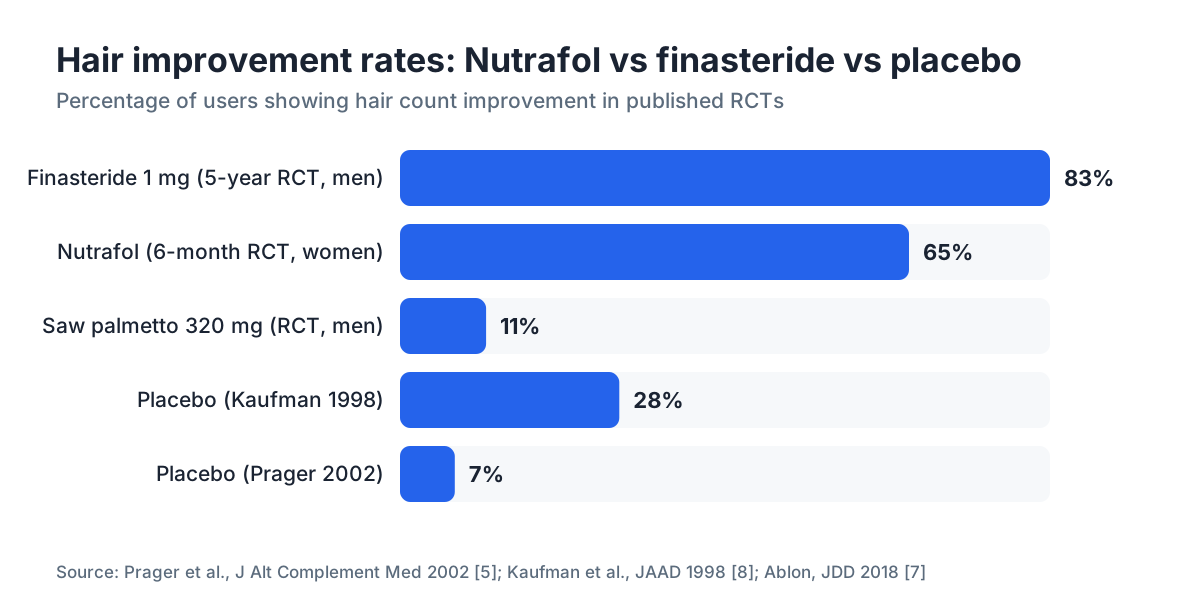
The published clinical evidence on saw palmetto for hair loss is thin. One randomized, double-blind trial published in the Journal of Alternative and Complementary Medicine in 2002 compared saw palmetto (320 mg/day) against finasteride (1 mg/day) in men with mild to moderate androgenetic alopecia. Sixty percent of finasteride users showed improvement versus 11% of saw palmetto users [5]. That's a real result, but it's from a small trial (n=38) that has not been replicated at scale.
A 2020 systematic review in Dermatology and Therapy found that saw palmetto produced "a statistically significant improvement in overall hair quality, total hair count, and hair density" in available studies, but noted the evidence base was weak and that none of the studies directly measured scalp DHT reduction [6].
Nutrafol uses a proprietary saw palmetto dose, so you can't directly compare it to the 320 mg used in most studies. The company has not published pharmacokinetic data showing what its formula does to serum DHT. Given those gaps, calling Nutrafol a DHT blocker is a stretch. Calling it "a supplement that contains an ingredient with mild 5-AR inhibiting properties in lab conditions" is accurate.
For a broader look at how the dht blocker category works and which options have real evidence, that comparison is useful reading before making any decision.
What do Nutrafol's own clinical trials actually show?
Nutrafol has two peer-reviewed trials worth knowing about. Both were funded by the company, which is common in supplement research and worth keeping in mind when reading the results.
The first, published in the Journal of Drugs in Dermatology in 2018, enrolled 40 women with self-perceived hair thinning [7]. After six months, women taking Nutrafol had statistically significant improvements in hair growth rate, terminal hair count, and thickness versus placebo. Clinician-assessed improvement was also significant.
The second, also in Journal of Drugs in Dermatology from 2021, enrolled 56 women with self-perceived thinning and found similar results at six months, with significant improvements in shedding and overall hair volume scores.
Neither trial included a DHT measurement. Neither trial compared Nutrafol against finasteride or minoxidil, which have decades of large-scale randomized trial data behind them. The sample sizes are small enough that replication in independent trials would meaningfully change confidence in the results.
What the trials do show: Nutrafol appears to do something real for hair growth, at least in women with non-androgenetic thinning (stress-related or nutritional). Whether it works through DHT inhibition, cortisol reduction, anti-inflammation, or simply better nutrition is unknown. The mechanism claim is not what the trial data proves.
How does Nutrafol compare to proven DHT blockers like finasteride?
Here's where the comparison gets uncomfortable for Nutrafol.
Finasteride at 1 mg/day has been studied in trials involving thousands of men over five years. The key 1998 trial published in the Journal of the American Academy of Dermatology showed 83% of men who took finasteride maintained or increased their hair count versus 28% of placebo users [8]. Finasteride reduces serum DHT by about 65-70%. It is FDA-approved for androgenetic alopecia in men.
Dutasteride inhibits both type 1 and type 2 5-AR (finasteride only inhibits type 2) and reduces DHT by up to 90-95%, though it's not FDA-approved specifically for hair loss in the U.S.
Nutrafol has no FDA approval for hair loss. Supplements are regulated under DSHEA (the Dietary Supplement Health and Education Act of 1994), which does not require the manufacturer to prove efficacy before selling the product [9]. Nutrafol cannot legally claim to treat, cure, or prevent hair loss. Its labeling language carefully stays in the territory of "supports hair growth" rather than "treats alopecia."
The honest comparison:
| Treatment | DHT Reduction | FDA Approval for Hair Loss | Evidence Level |
|---|---|---|---|
| Finasteride 1 mg | ~65-70% | Yes (men) | Large RCTs, 5-year data |
| Dutasteride 0.5 mg | ~90-95% | No (off-label) | Multiple RCTs |
| Saw palmetto 320 mg | Unclear, likely minimal | No | Small RCT, mixed evidence |
| Nutrafol | Not measured | No | 2 small company-funded RCTs |
| Minoxidil | None (different mechanism) | Yes (men and women) | Large RCTs |
If DHT is driving your hair loss (classic androgenetic alopecia), finasteride sits in a different evidence class than Nutrafol. Read the finasteride deep-dive to understand what you're actually considering before deciding.
Can Nutrafol work alongside finasteride or minoxidil?
There's no known dangerous interaction between Nutrafol and either finasteride or minoxidil, based on their known ingredient profiles. Nutrafol is food-derived supplements. Finasteride is a prescription drug that specifically inhibits one enzyme. Minoxidil is a vasodilator that extends the anagen (growth) phase of the hair cycle. They work through completely different pathways, so combining them doesn't create obvious redundancy or conflict.
Some dermatologists do have patients who use Nutrafol alongside minoxidil, particularly women who want to avoid prescription drugs or who are dealing with both androgenetic and stress-related shedding at the same time. The stress-cortisol pathway that ashwagandha targets is real and can contribute to hair loss independently of DHT. If your hair loss has multiple drivers, a multi-ingredient supplement might address one while a prescription drug addresses another.
That said, nobody has run a trial combining Nutrafol with finasteride or minoxidil to measure the additive effect. The combination is plausible in theory. It's not proven.
If you're considering finasteride and minoxidil together, that stack already has some published combination trial data. Adding Nutrafol on top would be spending an extra $88/month on an untested third layer.
For minoxidil specifics, the minoxidil for men article covers dosing, evidence, and realistic expectations in detail.
Is Nutrafol worth it if finasteride isn't an option for you?
Finasteride isn't right for everyone. Men who want children soon have legitimate concerns about its effect on sperm parameters. Women who are pregnant or may become pregnant cannot take it. Some men experience sexual side effects that are unacceptable to them, though the rate and severity of those effects is debated. Post-finasteride syndrome is a contested but real concern for some users.
In those situations, what do you do? The honest answer is that no supplement replaces finasteride's level of DHT suppression. But that doesn't mean nothing else works.
For stress-related or nutritional hair loss (telogen effluvium), Nutrafol may be genuinely useful. The ashwagandha in its formula has published data showing reductions in cortisol [11], and elevated cortisol is a real mechanism for hair shedding. If your loss tracks with a period of intense stress, poor diet, or illness, addressing that axis makes sense. Nutrafol is a reasonable choice for that specific situation, more so than for classic pattern baldness.
For androgenetic alopecia without finasteride, topical minoxidil remains the most evidence-backed non-prescription option. Low-level laser therapy (LLLT) has some trial support. Saw palmetto at therapeutic doses (320 mg/day of standardized extract) can be purchased separately for much less than $88/month if that ingredient is your focus.
If your shedding doesn't fit the typical pattern hair loss profile, telogen effluvium explains the stress-triggered shedding mechanism and what's actually shown to help.
Who is Nutrafol most likely to actually help?
Based on what the trials enrolled and what the ingredients plausibly do, Nutrafol is most likely to help:
Women with diffuse thinning that isn't purely androgenetic. Both published trials enrolled women. The combination of nutritional support, cortisol reduction, and mild anti-inflammatory effect from curcumin addresses the mixed etiology common in women's hair loss.
People with documented nutritional deficiencies. Biotin, zinc, selenium, and vitamin D are included. If your levels are low (which a simple blood panel will show), supplementing them will help your hair. You can get the same effect from cheaper single-ingredient supplements if you know which ones you're deficient in.
People under chronic stress with accompanying hair shedding. Ashwagandha's evidence on cortisol is reasonably solid. If stress is a primary driver, that ingredient does something.
Nutrafol is least likely to make a meaningful difference for men with advanced androgenetic alopecia (Norwood III and above) where DHT has already miniaturized follicles extensively. At that stage, a weak 5-AR effect won't reverse the structural damage. You need finasteride, minoxidil, or a hair transplant conversation.
Men worried about a receding hairline in early stages have the most to gain from acting quickly, and if that recession is DHT-driven, a prescription 5-AR inhibitor will outperform a supplement by a wide margin.
What does the FDA say about supplements like Nutrafol?
The FDA does not evaluate supplements for efficacy before they reach market. Under the Dietary Supplement Health and Education Act (DSHEA) of 1994, the burden of proof is on the FDA to show a product is unsafe, not on the manufacturer to prove it works [9]. This is fundamentally different from the drug approval pathway that finasteride went through.
Nutrafol's label includes a required disclaimer that reads, in substance: "This statement has not been evaluated by the Food and Drug Administration. This product is not intended to diagnose, treat, cure, or prevent any disease." That disclaimer is legally required for all dietary supplements that make structure/function claims.
The FDA's Office of Dietary Supplement Programs does monitor for adulterated supplements, particularly those found to contain undisclosed pharmaceutical ingredients. Nutrafol has not been subject to any FDA warning letter for adulteration as of this writing, which is worth noting positively. Its ingredient list is what it says it is.
For context on how the regulatory picture affects other hair loss options, the hair loss supplements overview covers the DSHEA framework and what it means when evaluating any supplement's claims.
Are there any real risks or side effects to know about?
Nutrafol is generally well-tolerated based on its published trials and its ingredient profile. Most side effects reported are mild GI upset, which is common with any multi-ingredient supplement taken on an empty stomach.
A few specific concerns are worth knowing:
Biotin at high doses can interfere with certain lab tests, including thyroid function tests and troponin assays used in cardiac workups. The FDA issued a safety communication on this in 2019 [10]. Nutrafol contains 3,000 mcg of biotin per serving, which is well above the adequate intake level of 30 mcg/day [12]. If you have thyroid labs or cardiac tests upcoming, stop biotin-containing supplements at least 48-72 hours before.
Ashwagandha has rare but documented associations with liver injury in case reports, though causality is difficult to establish from case reports alone. If you have liver concerns, mention it to your doctor.
Saw palmetto has antiplatelet activity in some studies. If you take blood thinners or are scheduled for surgery, that's worth flagging.
Pregnant women should not take Nutrafol's men's or standard women's formula. There is a pregnancy-safe formulation marketed separately.
None of these are dramatic risks for a healthy adult. But they're real, and most supplement marketing glosses over them.
What's the bottom line before you spend $88 a month?
Nutrafol is not a DHT blocker in any clinically meaningful sense. It contains saw palmetto, which has weak 5-AR inhibiting properties in lab conditions, but the company has never published data showing it actually reduces DHT in humans who take the supplement. That gap between the ingredient's mechanism and the product's effect on your DHT levels is the thing the marketing blurs.
What Nutrafol does have: two small, company-funded randomized trials showing real improvements in hair growth in women, a formulation that addresses multiple pathways beyond DHT, and no major safety red flags for healthy adults.
What it doesn't have: FDA approval, independent large-scale trials, any measurement of its effect on DHT, and evidence that it outperforms finasteride or minoxidil for androgenetic alopecia.
If you're a woman with diffuse thinning and a mixed etiology, or someone who can't take prescription drugs, Nutrafol is a reasonable experiment at six months. If you're a man with classic pattern baldness, you will almost certainly get more hair preservation per dollar from finasteride plus minoxidil than from Nutrafol alone.
Before spending anything, figure out what type of hair loss you actually have. A personalized picture of your hairline and pattern is the starting point for any real decision. MyHairline's free AI scan (/scan) can give you a baseline assessment of your hairline pattern in minutes, which helps you figure out whether DHT-driven loss is actually what you're dealing with.
For anyone wondering whether other lifestyle factors are feeding into their loss, the does creatine cause hair loss article addresses a common and underrated question about DHT and supplementation.
Sources
- Nutrafol (Synergen Health), Product label and ingredient disclosure
- American Academy of Dermatology, Androgenetic alopecia overview
- U.S. National Library of Medicine (MedlinePlus), Finasteride and dutasteride drug information
- Raynaud JP et al., Prostate Cancer and Prostatic Diseases, 2002: Saw palmetto extract inhibits 5-alpha reductase activity
- Prager N et al., Journal of Alternative and Complementary Medicine, 2002: Saw palmetto vs finasteride RCT
- Evron E et al., Dermatology and Therapy, 2020: Systematic review of saw palmetto for hair loss
- Ablon G, Journal of Drugs in Dermatology, 2018: Nutrafol RCT in women with hair thinning
- Kaufman KD et al., Journal of the American Academy of Dermatology, 1998: Finasteride 5-year trial
- U.S. Food and Drug Administration, Dietary Supplement Health and Education Act (DSHEA) overview
- Chandrasekhar K et al., Indian Journal of Psychological Medicine, 2012: Ashwagandha and cortisol RCT
- U.S. National Institutes of Health Office of Dietary Supplements, Biotin fact sheet