

TL;DR: Yes, zinc deficiency causes hair loss. It disrupts the hair growth cycle, pushes follicles into the resting phase, and can trigger widespread shedding (telogen effluvium). Studies find low serum zinc in alopecia areata, androgenetic alopecia, and telogen effluvium patients. Supplementation reverses loss only when deficiency is confirmed, taking zinc when you're not deficient does not regrow hair and can cause harm.
How does zinc deficiency cause hair loss?
Zinc is not optional for hair follicles. It is directly involved in protein synthesis, DNA replication, and the regulation of androgen receptors inside follicle cells [1]. Hair follicles are among the most metabolically active structures in the body, which makes them disproportionately sensitive to any nutritional shortfall.
Here is the specific mechanism. The hair growth cycle has three phases: anagen (active growth), catagen (transition), and telogen (resting and shedding). Zinc helps anchor follicles in anagen. When zinc drops, follicles slip prematurely into telogen. The result is diffuse shedding across the scalp, sometimes dramatic, usually starting six to twelve weeks after the deficiency takes hold [2].
Zinc also inhibits 5-alpha-reductase, the enzyme that converts testosterone to dihydrotestosterone (DHT). DHT is the hormone most directly responsible for androgenetic alopecia (pattern baldness). Low zinc means less natural inhibition of that enzyme. That's a secondary pathway, and it's not strong enough to be a primary treatment target, but it matters for understanding why zinc status shows up as a variable in pattern hair loss studies.
Finally, zinc supports the structural integrity of keratin, the protein hair is built from. A deficiency produces thinner, more brittle hair even before visible shedding begins.
What do studies actually show about zinc levels in people with hair loss?
The clearest signal comes from alopecia areata. A 2013 meta-analysis published in Annals of Dermatology pooled data from ten case-control studies and found that serum zinc levels were significantly lower in patients with alopecia areata compared with healthy controls (weighted mean difference of roughly 16 micrograms per deciliter) [3]. The authors concluded that zinc supplementation "may be beneficial" in patients with alopecia areata who are zinc-deficient, though they stopped short of calling it a treatment.
The telogen effluvium data is similar. A 2013 study in the Indian Journal of Dermatology, Venereology and Leprology measured serum zinc in patients with acute and chronic telogen effluvium and found low zinc in a meaningful percentage of cases, particularly in women with chronic telogen effluvium [4]. Chronic telogen effluvium is the frustrating pattern where hair sheds for months with no clear trigger; a missed nutritional deficiency is one of the few correctable causes. If you're dealing with that pattern, telogen effluvium is worth reading in full.
For androgenetic alopecia (male and female pattern baldness), the evidence is weaker. Some studies find modestly lower zinc in patients compared to controls; others find no significant difference [5]. The honest read is that zinc deficiency probably is not a primary driver of genetic pattern loss, but it can worsen the picture if it's present alongside the genetic predisposition.
One caveat applies to all of this: most studies in this area are small, case-control designs, or observational. There are very few large randomized controlled trials. Nobody has good data from a double-blinded zinc supplementation trial in a well-characterized deficient population. The closest data we have points toward benefit in deficiency, not benefit in adequacy.
What zinc levels count as deficient, and how do you test?
The standard test is a serum zinc level, ordered by a doctor and run from a routine blood draw. Normal serum zinc is generally cited as 70 to 120 micrograms per deciliter (mcg/dL) in adults, though reference ranges vary slightly by lab [6].
Deficiency thresholds matter:
| Category | Serum Zinc (mcg/dL) |
|---|---|
| Adequate | 70 to 120 |
| Marginal/borderline | 60 to 69 |
| Deficient | Below 60 |
| Severe deficiency | Below 40 |
The problem is that serum zinc is an imperfect marker. About 70% of the body's zinc is in red blood cells, not serum, so someone with marginal tissue deficiency can still show a technically normal serum level [6]. If your symptoms match (hair shedding, poor wound healing, taste or smell changes, frequent illness) but your serum zinc is borderline normal, a clinician might still treat empirically. Zinc inside red blood cells (erythrocyte zinc) is a more sensitive marker but is not routinely ordered.
Groups at high risk for zinc deficiency include vegetarians and vegans (plant-based zinc is less bioavailable), people who have had bariatric surgery, anyone with Crohn's disease or other malabsorption conditions, pregnant and lactating women, and heavy alcohol users [1].
Before you do anything else: get the blood test. Self-diagnosing and supplementing is a real gamble (more on that below).
Does taking zinc supplements actually regrow hair?
If you are genuinely deficient: yes, correcting the deficiency typically stops the shedding and allows regrowth over the following three to six months. The hair does not regrow overnight, follicles need time to cycle back into anagen, but the trajectory reverses.
If you are not deficient: the evidence says no. A 2019 review in Dermatology and Therapy examined nutritional supplements for hair loss and found no evidence that zinc supplementation in zinc-sufficient individuals promotes hair growth [7]. This is a common mistake people make with nutritional hair loss products. Fixing a deficiency restores normal function. Going above normal does nothing extra.
The one partial exception is alopecia areata. A small number of studies, including a 2012 randomized study comparing zinc sulfate to placebo in patients with alopecia areata, showed modest improvement in the zinc group, but the response was significantly better in patients who had low baseline zinc, which circles back to the same principle [3].
For the types of hair loss that are not nutritional in origin, androgenetic alopecia being the main one, zinc supplementation is not a meaningful treatment. The established options for genetic pattern loss are finasteride, minoxidil for men, and in more advanced cases, hair transplant. Zinc does not substitute for any of those. Understanding what causes hair loss in your specific case matters before you spend money on anything.
How much zinc should you take, and which form works best?
The Office of Dietary Supplements at the NIH sets the Recommended Dietary Allowance (RDA) for zinc at 11 mg/day for adult men and 8 mg/day for adult women [1]. The Tolerable Upper Intake Level (UL), the maximum daily amount considered safe for long-term use, is 40 mg/day for adults.
Most clinical studies that found hair-related benefit used zinc sulfate at doses between 220 mg and 440 mg of zinc sulfate per day. Here is the catch: zinc sulfate is roughly 23% elemental zinc. So 220 mg of zinc sulfate delivers about 50 mg of elemental zinc, already above the 40 mg upper intake level. Those study doses were therapeutic, supervised doses in confirmed deficiency, not maintenance supplementation [3].
For general supplementation, most practitioners use lower doses: 15 to 30 mg elemental zinc daily, taken with food to reduce nausea.
Form matters for absorption. Zinc picolinate and zinc bisglycinate tend to absorb better than zinc oxide, which is the cheapest and least bioavailable form [8]. Zinc sulfate is well-studied but more likely to cause GI upset. If you're supplementing, picolinate or bisglycinate is a reasonable choice.
One practical note: take zinc and iron supplements at separate times. They compete for the same absorption pathway and taken together, you absorb less of both [1].
Can you take too much zinc and make hair loss worse?
Yes. This is the part most supplement marketing skips.
Chronic zinc intake above 40 mg per day interferes with copper absorption. Copper is another mineral that hair follicles need, and copper deficiency has its own connection to hair loss and hypopigmentation [9]. So if you take a high-dose zinc supplement for months without medical supervision, you risk creating a copper deficiency that causes or worsens hair shedding. You'd be trading one problem for another.
Acute toxicity at very high single doses causes nausea, vomiting, and abdominal cramps. Long-term excess also suppresses immune function and reduces HDL cholesterol [1].
The NIH's Office of Dietary Supplements notes that "zinc supplements at doses exceeding the UL of 40 mg/day" can cause copper deficiency, immune dysfunction, and reduced iron function. This is a real risk with the high-dose zinc supplements sold in some hair supplement stacks.
Get tested, supplement at appropriate doses if deficient, and drop the idea that more zinc equals more hair. It doesn't.
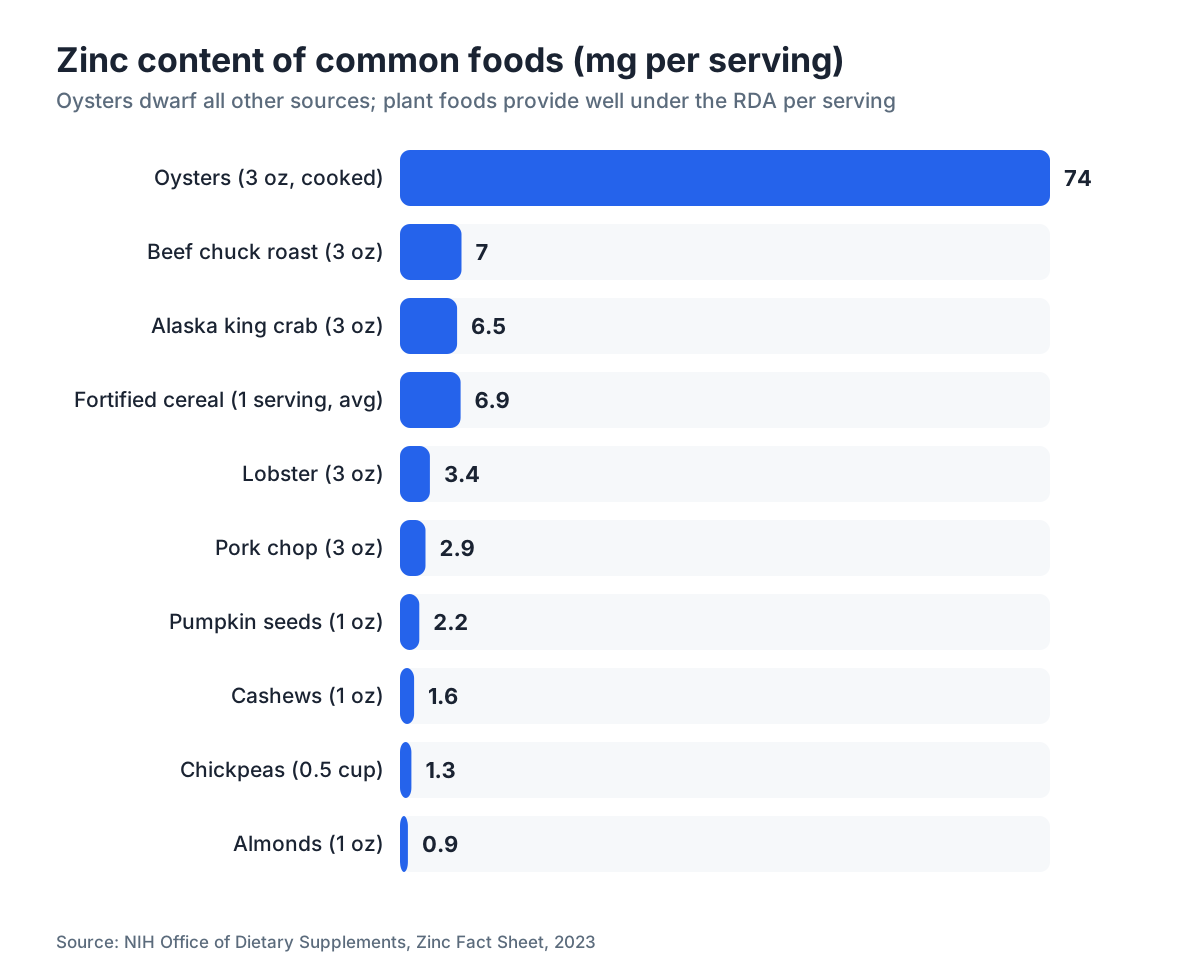
Which foods are high in zinc?
Food sources of zinc are the safest way to get adequate amounts without pushing into excess. The body regulates zinc absorption more tightly from food than from supplements.
The richest sources [1]:
| Food | Zinc per serving |
|---|---|
| Oysters (3 oz, cooked) | 74 mg |
| Beef chuck roast (3 oz) | 7 mg |
| Alaska king crab (3 oz) | 6.5 mg |
| Fortified breakfast cereal (1 serving) | 2.8 to 11 mg |
| Lobster (3 oz) | 3.4 mg |
| Pork chop (3 oz) | 2.9 mg |
| Pumpkin seeds (1 oz) | 2.2 mg |
| Chickpeas (0.5 cup) | 1.3 mg |
| Cashews (1 oz) | 1.6 mg |
| Almonds (1 oz) | 0.9 mg |
The vegetarian and vegan challenge is real. Plant-based zinc comes packaged with phytates, which bind zinc in the gut and reduce absorption by up to 45% compared to meat sources [1]. Soaking or sprouting legumes and seeds, and choosing leavened bread over unleavened, reduces phytate content and improves zinc uptake.
How does zinc deficiency relate to other hair loss causes?
Zinc deficiency rarely shows up alone. It often travels with other nutritional shortfalls, low iron (ferritin), low vitamin D, or low biotin, and those can all independently contribute to shedding. This is why a single-nutrient fix frequently disappoints people: they correct zinc but miss that their ferritin is also tanked.
The relationship between zinc and DHT is worth understanding clearly. Zinc has some in-vitro 5-alpha-reductase inhibitory activity, which is why you'll see it marketed as a DHT blocker. The human evidence for meaningful DHT reduction from zinc supplementation is thin. It is nowhere near the clinical effect of finasteride (a 60-70% reduction in scalp DHT) [10]. Treating pattern baldness with zinc as a DHT blocker is optimistic; treating a confirmed zinc deficiency that's worsening pattern loss is sensible.
Zinc deficiency can also intensify telogen effluvium, the type of diffuse shedding triggered by stress, illness, or dietary changes. Telogen effluvium caused purely by zinc deficiency should resolve with repletion. Telogen effluvium with multiple triggers, crash diet, surgery, high stress, and low zinc at the same time, is harder to untangle and usually requires addressing all factors.
If you want a broader map of what might be driving your hair loss before spending money on supplements, the free AI scan at MyHairline (/scan) can analyze your hairline pattern and help you figure out whether what you're seeing looks nutritional or structural, a useful first filter before a dermatology appointment.
What does zinc deficiency look like beyond hair loss?
Hair loss is rarely the first symptom of zinc deficiency; it's usually part of a cluster. Knowing the full picture helps you decide whether getting tested makes sense.
Common signs of zinc deficiency include: poor wound healing, white spots on fingernails, reduced sense of taste or smell, frequent colds or infections, dry or rough skin, and in more severe cases, diarrhea and loss of appetite [1]. In adolescents, delayed growth or delayed puberty can occur.
If you have hair loss and two or three of those other symptoms, zinc deficiency moves from a long shot to a reasonable hypothesis. If you have hair loss and none of those other symptoms, and you eat meat regularly and have no malabsorption condition, zinc deficiency is unlikely to be the driver.
Hair loss alone is not enough to justify supplementing without testing. Get the serum zinc level. It costs less than a month's supply of most supplements and actually tells you something.
Should you take a hair supplement stack that includes zinc?
The hair loss supplements market is enormous and largely under-studied. Many popular hair supplement formulas combine zinc with biotin, collagen peptides, saw palmetto, B vitamins, and various plant extracts. The marketing is aggressive; the clinical evidence for most of these combinations is weak.
Zinc in a supplement stack is not harmful at reasonable doses (15-25 mg elemental zinc per day), provided the stack doesn't also push copper out of range and the total zinc across all supplements and fortified foods stays under 40 mg daily. The problem is that many people don't add up their total intake across a multivitamin, a hair supplement, and fortified foods, and end up chronically over-supplementing.
If your hair loss is nutritional in origin, fixing the specific deficiency is almost always more effective and cheaper than a broad-spectrum stack. If your hair loss is androgenetic (genetic pattern loss), no supplement stack has evidence approaching that of prescription treatments. A combination like finasteride and minoxidil has decades of randomized controlled trial data behind it; a zinc-biotin-saw palmetto stack does not.
Spend the money on a blood panel first. It's honest information. A supplement purchase without it is mostly a guess.
What should you actually do if you suspect zinc deficiency is causing your hair loss?
Here is a practical sequence that reflects what the evidence actually supports.
Step one: see a doctor or dermatologist and ask for a full nutritional panel. This should include serum zinc, serum ferritin (more than hemoglobin), vitamin D (25-OH), and a complete blood count. If you're a woman with significant shedding, add thyroid function and free testosterone. The cost of a panel through most primary care offices is modest and often covered by insurance when there's a clinical indication like active hair loss.
Step two: if you're deficient, supplement with elemental zinc at 15 to 30 mg per day and retest in three months. Do not go above 40 mg without medical supervision. Add a small amount of copper (1-2 mg/day) if you are supplementing zinc for more than a few weeks, since zinc depletes copper.
Step three: fix your diet in parallel. Supplementing around a chronically zinc-poor diet works, but addressing the diet is more sustainable.
Step four: expect a delay. Hair follicles take twelve to twenty-four weeks to cycle back into visible growth after the deficiency is corrected. You will not see results in two weeks. If you don't have significant regrowth by six months and serum zinc is now normal, the zinc was not the only or primary cause.
Step five: if the hair loss pattern looks like recession at the temples, a thinning crown, or a progressively wider part, you're probably looking at androgenetic alopecia layered on top of whatever nutritional issue existed. That genetic component needs its own treatment. Understanding your receding hairline pattern and whether it fits Norwood staging is a useful next step.
MyHairline's free AI scan (/scan) is a low-effort way to get an initial read on your hair loss pattern before you book a derm appointment.
Sources
- NIH Office of Dietary Supplements, Zinc Fact Sheet for Health Professionals
- Karashima T et al. Indian Journal of Dermatology, Venereology and Leprology, 2012, Zinc in telogen effluvium
- Rushton DH. Nutritional factors and hair loss. Clinical and Experimental Dermatology, 2002.
- WHO/IAEA/IZINCG, Assessment of the Risk of Zinc Deficiency in Populations (Food and Nutrition Bulletin)
- Almohanna HM et al. Dermatology and Therapy, 2019, The role of vitamins and minerals in hair loss: a review
- Barrie SA et al. Comparative absorption of zinc picolinate, zinc citrate and zinc gluconate in humans. Agents and Actions, 1987.
- NIH Office of Dietary Supplements, Copper Fact Sheet for Health Professionals
- FDA, Drug label for Propecia (finasteride 1 mg)
- American Academy of Dermatology, Hair Loss: Diagnosis and Treatment