

TL;DR: Acute telogen effluvium typically lasts 3 to 6 months from the point of peak shedding, with full regrowth taking up to 12 months after the trigger is resolved. Chronic telogen effluvium, defined as shedding lasting more than 6 months, can persist for years if the underlying cause is not found and corrected. Most people recover completely.
What is telogen effluvium and why does timing matter so much?
Telogen effluvium is diffuse hair shedding caused by a disruption to the normal hair growth cycle. Hair follicles are prematurely pushed out of their active growing phase (anagen) and into the resting phase (telogen). Two to four months later, those resting hairs fall out all at once, which is when most people first notice a problem.
The timing matters because the shed you are experiencing today almost always reflects something that happened to your body two to four months ago, not something happening now. That lag is why so many people panic at exactly the wrong moment: the trigger is often already gone, and recovery has already started, even as handfuls of hair keep falling in the shower. Understanding the timeline is the single most useful thing you can do to manage the anxiety that comes with this condition.
For a full overview of causes and mechanisms, see telogen effluvium.
Telogen effluvium is distinct from androgenetic alopecia (pattern hair loss). It does not follow a Norwood pattern, it does not permanently miniaturize follicles in most cases, and the prognosis is substantially better. But it can exist alongside androgenetic alopecia, which complicates both diagnosis and expectations.
How long does telogen effluvium shedding last on average?
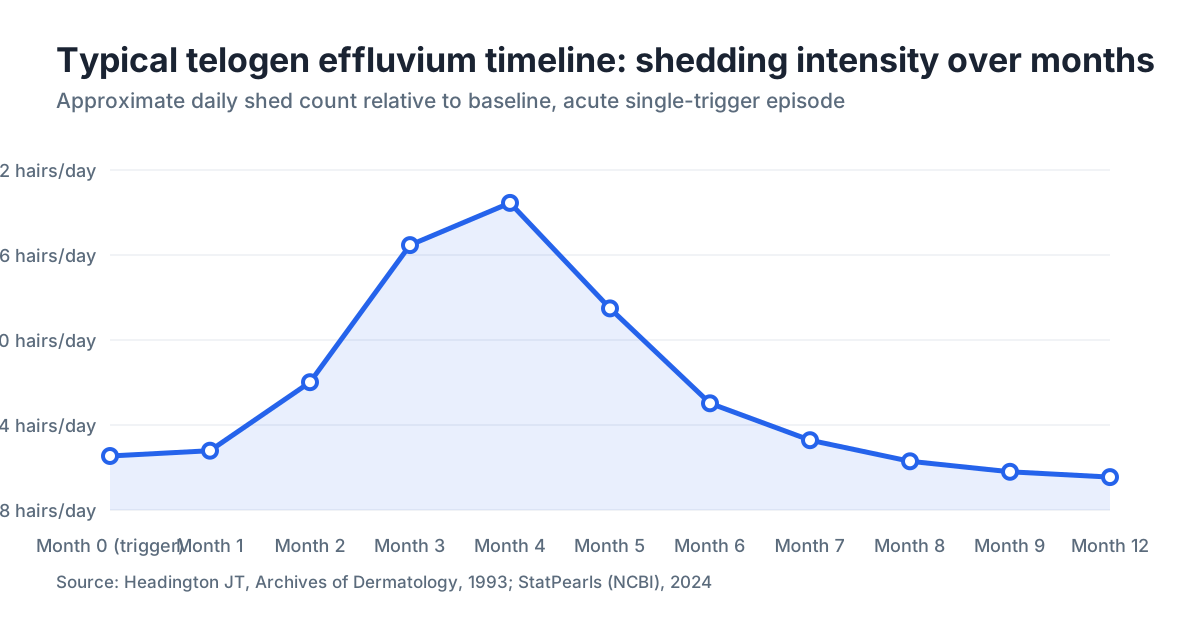
For acute telogen effluvium, active shedding typically runs 3 to 6 months [1]. Most dermatologists use 6 months as the dividing line: shedding that persists beyond that crosses into the chronic category.
Here is how the typical timeline unfolds.
| Phase | Timing from trigger | What you notice |
|---|---|---|
| Trigger event | Day 0 | Illness, surgery, crash diet, major stress, childbirth, etc. |
| Silent phase | Weeks 0 to 8 | Nothing visible yet; follicles shift into telogen |
| Peak shedding | Months 2 to 4 | 200+ hairs per day, alarming amounts in the shower |
| Shedding slows | Months 4 to 6 | Daily count drops toward baseline (roughly 50 to 100 hairs/day) |
| Early regrowth | Months 6 to 9 | Short new hairs visible at the hairline and part |
| Full density restored | Months 9 to 18 | Hair returns to pre-trigger thickness [2] |
Those numbers represent the average. The actual length depends heavily on what caused the episode and whether that cause has been fully corrected. A single acute stressor like a major surgery tends to produce a cleaner, shorter episode than an ongoing nutritional deficiency or a medication the person is still taking.
Can telogen effluvium last for years?
Yes. Chronic telogen effluvium, the less common form, can persist for years in some patients. A widely cited 1996 paper by Whiting described chronic telogen effluvium as a distinct condition predominantly affecting women aged 30 to 60, characterized by shedding that fluctuates but does not fully stop for six months to several years [3].
The key distinction is whether there is an ongoing trigger. If you never find and fix the root cause, your follicles have no reason to cycle back to normal. Common perpetuating factors include undiagnosed thyroid disease, ongoing iron deficiency (ferritin below roughly 30 to 70 ng/mL depending on the study), protein malnutrition, chronic psychological stress, and continued use of the causative medication.
Some cases of so-called chronic telogen effluvium appear to be a form of diffuse androgenetic alopecia that mimics TE, or a true overlap of both conditions. That is worth knowing because the treatment paths are completely different. A dermatologist who does a scalp biopsy and hormonal panel can usually tell the difference.
Even long-running cases of true telogen effluvium tend to resolve once the trigger is found and corrected. Permanent follicle destruction is not a feature of the condition.
If you are trying to figure out whether your own shedding is TE or something else, an AI-assisted first look can help you spot patterns worth discussing with a clinician. MyHairline's free AI scan can flag whether your shedding looks diffuse or patterned in under two minutes.
What triggers telogen effluvium and how does the trigger affect duration?
The type of trigger strongly predicts how long the episode lasts. One-time physiological shocks produce shorter, more predictable episodes. Ongoing or repeating triggers produce longer ones. See what causes hair loss for a broader breakdown.
Common single-event triggers (usually resolve within 6 months of the event ending):
- Childbirth (postpartum telogen effluvium is extremely common; most cases resolve by 6 to 12 months postpartum [4])
- Major surgery or hospitalization
- High fever or severe acute illness, including COVID-19
- Crash dieting or very low calorie intake, typically under 1,000 kcal/day
- Acute severe psychological trauma
Ongoing triggers (produce longer or indefinite shedding until corrected):
- Iron deficiency: low serum ferritin is one of the most consistently cited correctable causes. Most trichologists recommend a ferritin target above 40 to 70 ng/mL for hair health, though controlled trial data on specific thresholds is limited [5]
- Thyroid dysfunction: both hypothyroidism and hyperthyroidism can cause diffuse shedding
- Protein deficiency
- Chronic caloric restriction, including restrictive eating disorders
- Certain medications taken continuously (see next section)
- Chronic systemic illness
The reason the trigger type matters so much for duration: if the stressor resolves cleanly, so does the shedding, usually within 3 to 6 months. If the stressor is still present six months later, the shedding will still be present too. That is not a mystery. It is just biology.
Which medications cause telogen effluvium and how long does shedding last after stopping them?
Several drug classes are well-documented causes of telogen effluvium. The FDA label for many of these drugs lists hair loss as a known adverse effect.
Medications commonly associated with telogen effluvium include [6]:
- Anticoagulants (heparin, warfarin)
- Beta blockers (propranolol, metoprolol)
- Retinoids (isotretinoin, acitretin)
- Some antidepressants and mood stabilizers
- Hormonal contraceptives (onset or discontinuation can both trigger an episode)
- High-dose vitamin A supplementation
- Lithium
- Antithyroid drugs
If a medication is the cause, shedding typically begins within 2 to 4 months of starting the drug and tends to slow within 2 to 6 months of stopping it, following the same 2-to-4-month lag. The practical problem is that stopping a medication is often not an option or not the right medical decision. In those cases, the hair loss may persist, but it usually stabilizes rather than progressing to complete baldness.
Minoxidil is sometimes prescribed to help manage shedding while addressing the underlying cause. If you use topical minoxidil, be aware that it causes an initial shedding episode of its own in some users as follicles transition out of telogen. That particular side effect usually resolves within 4 to 8 weeks. More on that at minoxidil side effects.
How is chronic telogen effluvium different from regular hair loss?
Chronic telogen effluvium (CTE) is defined as diffuse hair shedding that continues for more than 6 months with no clear single trigger or with fluctuating intensity over months to years [3]. It is genuinely different from both acute TE and androgenetic alopecia, though it often gets confused with both.
Key features that distinguish CTE:
- Hair loss is diffuse across the entire scalp, not concentrated at the temples or crown
- Shedding fluctuates: some weeks are bad, some are almost normal
- The overall hair volume decreases noticeably over time but rarely to the point of visible bare patches
- Scalp biopsy shows an elevated telogen-to-anagen ratio (typically above 25 percent telogen hairs; normal is closer to 5 to 15 percent) [7]
- It predominantly affects women, usually between 30 and 60 years old
CTE is frustrating because the workup often comes back normal. Thyroid is fine, iron is fine, no obvious trigger. In those cases, dermatologists sometimes describe it as idiopathic CTE, which honestly just means "we cannot identify the cause." The prognosis is still generally good. Most patients with idiopathic CTE see gradual improvement over 2 to 7 years, even without a specific intervention, though the evidence here is mostly observational [3].
If your hair loss follows a pattern at the temples or crown rather than being diffuse, that points to androgenetic alopecia more than TE. See receding hairline for more on how pattern hair loss presents.
How long does postpartum telogen effluvium last?
Postpartum hair loss is among the most common forms of telogen effluvium, affecting an estimated 40 to 50 percent of women after delivery [4]. The mechanism is well understood: during pregnancy, elevated estrogen prolongs the anagen phase, keeping more hairs than usual in active growth. After delivery, estrogen drops sharply, and those extended-anagen hairs synchronously shift into telogen. Peak shedding usually hits between 2 and 4 months postpartum.
For most women, shedding slows significantly by 6 months postpartum and full regrowth is complete by 9 to 12 months postpartum. That is the typical trajectory. A smaller subset of women, particularly those who are breastfeeding and dealing with nutritional demands, sleep deprivation, and ongoing physical stress at the same time, may find the episode runs longer, closer to 12 to 18 months.
The intervention evidence for postpartum TE is modest. Correcting nutritional deficiencies, especially iron (which commonly drops after delivery and during lactation), is the most evidence-backed step. Some dermatologists discuss minoxidil for men data and note it is used off-label in women too, but most advise against topical minoxidil while breastfeeding given the lack of safety data. The honest answer is that most cases do not need treatment because they resolve on their own.
What actually speeds up recovery from telogen effluvium?
There is no intervention that directly shortcuts the hair cycle. Anagen takes months to restart regardless of what you do. What you can control is removing the stressor and correcting any nutritional deficiencies that are prolonging it.
Evidence-supported steps:
-
Find and fix the cause. This sounds obvious but it is where most people stall. A thorough lab panel, including TSH, free T4, CBC, serum ferritin, vitamin D 25-OH, zinc, and a metabolic panel, catches the most common correctable causes. Dermatologists who specialize in hair typically order this panel at the first visit.
-
Correct iron deficiency if present. Several observational studies link low ferritin to prolonged telogen effluvium, and correcting it is associated with improvement [5]. Oral iron supplementation takes 3 to 6 months to meaningfully raise ferritin levels, so do not expect instant results.
-
Eat adequate protein. Hair is almost entirely keratin. Protein intake consistently below roughly 0.8 grams per kilogram of body weight impairs hair cycling. This is a basic physiological floor, not a performance optimization.
-
Consider topical minoxidil. Minoxidil extends the anagen phase and can help push recovering follicles back into active growth. It does not fix the underlying cause, but it may reduce the appearance of thinning while recovery proceeds. See minoxidil side effects for the full picture, including the initial shedding that catches many new users off guard. Oral minoxidil is also used by some dermatologists for diffuse shedding; see oral minoxidil for that option.
-
Manage ongoing stress if that is the trigger. Easier said than done, but chronic HPA axis activation genuinely affects the hair cycle. The evidence for specific interventions (meditation, therapy, exercise) on hair regrowth is indirect, but the physiological link is real.
What does not meaningfully speed recovery: most hair loss supplements, scalp massagers, anti-shedding shampoos, and "hair growth serums" sold direct to consumer. None have randomized controlled trial evidence for telogen effluvium specifically. Some biotin supplements are sold aggressively for hair loss, but biotin deficiency is rare in people eating a normal diet, and supplementing in non-deficient people has not been shown to help in rigorous trials.
How do you tell when telogen effluvium is ending?
The clearest early sign is a noticeable reduction in daily shed count. If you have been losing 300 to 400 hairs a day at peak, dropping below 100 consistently is a real signal, even if it does not feel like one in the moment.
About 2 to 3 months after shedding starts to slow, you will typically see short new hairs, often 1 to 3 centimeters long, at the frontal hairline and along your part. These baby hairs are not an aesthetic win in the short term (they stick up, they are fragile, they resist styling) but they are the most concrete sign that recovery is underway.
Full density can take much longer to appear than these early regrowth signs suggest. Hair grows roughly 1 to 1.5 centimeters per month [2]. If you lost 6 centimeters of effective shaft length across the scalp, you are looking at 4 to 6 months of growth after the shedding stops before the overall density feels normal again. That math is why people still feel like they are losing ground at month 4 or 5 even when the worst is behind them.
A trichoscopy or densitometry scan done by a dermatologist can confirm recovery by measuring anagen-to-telogen ratios directly. That is more objective than counting hairs in a drain, though the drain count method, while crude, is actually not a bad tracking tool if you do it consistently.
When should you see a dermatologist about telogen effluvium?
See a dermatologist if:
- Shedding has continued for more than 6 months with no obvious trigger or no sign of slowing
- You are losing hair in a pattern (temples, crown, part widening on one side) rather than diffusely across the whole scalp
- A basic blood panel you had done through your GP came back normal but shedding continues
- You have other symptoms alongside hair loss: fatigue, weight changes, skin changes, nail changes
- The psychological impact is significant enough to affect your daily functioning
A board-certified dermatologist or a trichologist can do a pull test, trichoscopy, and targeted biopsy if needed. These tests are not typically available in a primary care office, and they meaningfully change the diagnosis in a substantial proportion of patients who get a second opinion with a specialist.
If you are trying to decide whether your hair loss pattern looks more like androgenetic alopecia or diffuse telogen effluvium before booking that appointment, MyHairline's free AI scan gives you a quick read on the pattern. It is not a diagnosis, but it can help you walk into a dermatologist's office with a more specific question.
For pattern hair loss that co-exists with TE, or develops after TE resolves, the evidence behind finasteride and finasteride and minoxidil in combination is worth understanding before that conversation.
Does telogen effluvium cause permanent hair loss?
In the vast majority of cases, no. Telogen effluvium is a disruption to the hair cycle, not a destruction of the follicle itself. The follicle stays intact below the scalp surface during the entire episode. Once the triggering insult resolves, the follicle restarts anagen and produces a new hair shaft.
Permanent loss from TE is possible in specific scenarios. Severely prolonged iron deficiency or extreme malnutrition over years can damage follicle integrity. Severe scalp inflammation from an untreated secondary condition can cause scarring. And in older patients whose androgenetic alopecia was subclinical, a TE episode sometimes unmasks miniaturization that would have progressed anyway, which can look like permanent loss but is really two conditions operating at once.
The American Academy of Dermatology notes that telogen effluvium typically resolves on its own once the cause is identified and corrected [1]. That is the general expectation you should go in with.
One honest caveat: even after full recovery, some people notice that their hair does not quite feel as thick as it was before the episode. There is limited formal research on this. It may reflect subclinical androgenetic alopecia that the TE episode made visible, or it may reflect incomplete density recovery in someone who had the episode during a period of aging-related follicle changes. Either way, it is worth monitoring rather than treating empirically with expensive interventions.
Sources
- American Academy of Dermatology, Hair loss types: Alopecia areata overview and related conditions
- StatPearls (NCBI/NIH), Hair Follicle Anatomy and Physiology
- Whiting DA, 'Chronic telogen effluvium: increased scalp hair shedding in middle-aged women', Journal of the American Academy of Dermatology, 1996
- Trost LB, Bergfeld WF, Calogeras E, 'The diagnosis and treatment of iron deficiency and its potential relationship to hair loss', Journal of the American Academy of Dermatology, 2006
- Harrison S, Bergfeld W, 'Diffuse hair loss: Its triggers and management', Cleveland Clinic Journal of Medicine, 2009
- Headington JT, 'Telogen effluvium: new concepts and review', Archives of Dermatology, 1993
- U.S. National Library of Medicine, MedlinePlus, Hair loss
- FDA, Drug label information database (DailyMed), warfarin sodium
- Shrivastava SB, 'Diffuse hair loss in an adult female: approach to diagnosis and management', Indian Journal of Dermatology, Venereology and Leprology, 2009