
TL;DR: No, wearing a hat does not cause hair loss. There is no peer-reviewed evidence linking hat use to androgenetic alopecia or any other common hair loss condition. Hair loss comes from genetics, hormones (mostly DHT), and medical factors. A hat can only cause temporary breakage or friction if it is extremely tight and worn for many hours daily, which is a different issue entirely.
Can hats cause hair loss? What the science actually says
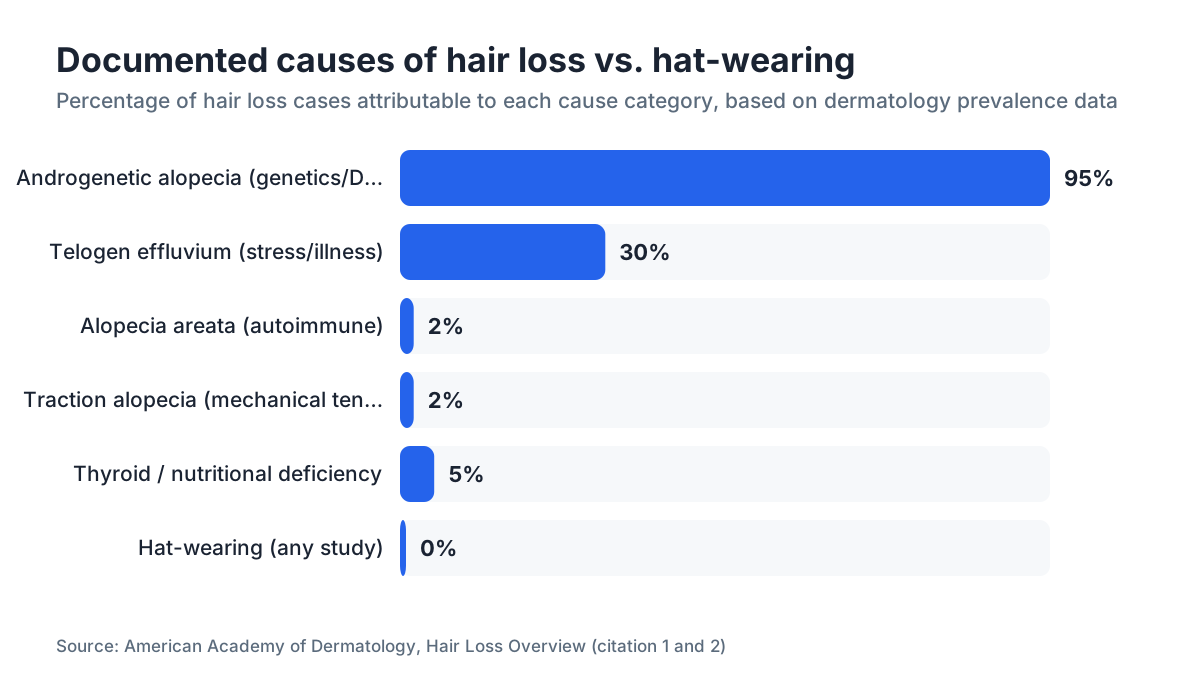
No. No published clinical study has found that regular hat-wearing causes or speeds up androgenetic alopecia, the most common form of hair loss in men and women. The American Academy of Dermatology explains that male-pattern hair loss comes from genetics and the hormone dihydrotestosterone (DHT), not from external compression by clothing or accessories [1].
The idea that hats smother follicles or cut off blood supply is a myth. Follicles get oxygen and nutrients through the bloodstream from below the scalp, not from the air above it. A hat sitting on your head does not meaningfully compress the dermal papilla or squeeze the tiny vessels that feed each follicle.
Here is why the myth sticks around. Men who are already losing hair tend to wear hats more often, to cover a receding hairline. The hat is a response to the loss, not the cause of it. Classic correlation-not-causation.
What actually causes hair loss if hats don't?
The main driver of hair loss in both sexes is androgenetic alopecia, a genetically programmed sensitivity of follicles to DHT. DHT binds to receptors in vulnerable follicles and shrinks them slowly over years. Roughly 50 percent of men show signs by age 50, and about 40 percent of women notice thinning by menopause [2].
Past genetics and hormones, the evidence-backed causes include:
- Telogen effluvium: a sudden shedding event set off by physical stress, illness, crash dieting, surgery, or childbirth. Hair usually regrows once the trigger clears. [See our full explainer on hair loss telogen.]
- Alopecia areata: an autoimmune condition where the immune system attacks follicles, causing patchy loss [9].
- Thyroid dysfunction, iron deficiency, and other nutritional or hormonal imbalances.
- Scalp infections such as tinea capitis (ringworm).
- Traction alopecia from prolonged mechanical tension on the hair shaft, the one category where physical pulling genuinely matters.
Hats appear on none of these lists. For a wider look at causes, see what causes hair loss. And if you have heard specific supplements blamed, the evidence on things like creatine is worth reading: does creatine cause hair loss.
Is there any scenario where wearing a hat could damage hair?
One narrow mechanism is real: traction. Traction alopecia is well documented in the dermatology literature. It comes from repeated, sustained mechanical tension on follicles, most often from tight braids, weaves, cornrows, or high ponytails worn daily over years. In severe, long-standing cases, follicles can scar permanently [3].
A hat could in theory push toward something traction-adjacent, but only if it were extremely tight, rubbed the same stretch of hairline every day for years, and stayed on for most of your waking hours. Picture a very tight helmet worn eight or more hours a day, not a baseball cap you pull on for the afternoon. Traction alopecia shows up most along the frontal hairline and temples because those areas take the most tension [3].
For almost everyone wearing normal-fitting hats for normal stretches, this does not apply. A standard baseball cap, beanie, or sun hat worn even daily does not produce the kind of steady follicular tension that causes traction alopecia.
Friction is a separate, smaller issue. A tight, rough hat worn every day can break the hair shaft near the scalp, which makes hair look thinner. Broken shafts are not lost follicles. The follicle stays intact and the hair regrows. Annoying, cosmetic, not a hair loss condition.
Do hats block sunlight and does that affect the scalp?
Sometimes people ask it from the other direction: could hats cut UV exposure to the scalp, and does UV play any part in hair loss? UV radiation does cause oxidative damage to the hair shaft and may age the scalp over time, but no established pathway runs from UV exposure to follicular miniaturization [4]. Hats protect against UV-induced scalp burns and long-term skin damage, including scalp skin cancers.
If anything, a hat is mildly good for your scalp, not bad for it. People with thinning hair or a shaved head are told to protect the scalp from direct sun.
Will wearing a hat cause hair loss if you already have a receding hairline?
No. If you already have a receding hairline, a hat will not speed it up. A receding hairline follows the pattern set by your androgen receptor genetics and your DHT levels. A cap on top of your head touches neither of those.
What can speed up an existing receding hairline: stopping a treatment like finasteride or minoxidil, real physical stress or illness, and ongoing hormonal shifts. Not hats.
One wrinkle. If you have active telogen effluvium layered on top of androgenetic alopecia (common after illness or intense stress), you may find more hairs in your hat when you take it off. It looks alarming, but that reflects the effluvium, not the hat. Hairs in the shed phase come out with any mild mechanical nudge, hat or no hat.
How is hair loss actually diagnosed?
A real diagnosis starts with a clinical history: when shedding began, family history, recent stressors, medications, and diet. Dermatologists often use dermoscopy to look at the scalp directly, checking follicle density, miniaturization patterns, and signs of scarring or inflammation [5].
Blood work rules out thyroid disease, iron deficiency anemia, and hormonal causes like polycystic ovarian syndrome in women. A scalp biopsy is saved for cases where the diagnosis stays unclear, especially when scarring alopecia is on the table.
Want a starting point before a dermatology appointment? MyHairline's free AI hair scan at /scan reads your hairline pattern and gives you a Norwood or Ludwig staging in minutes. It is a screening tool, not a medical diagnosis, but it hands you something concrete to bring to a doctor.
Mistaking normal shedding for pathological loss sends a lot of people down the wrong rabbit hole, hats included. The AAD puts normal daily shedding at 50 to 100 hairs [1].
What treatments actually work for hair loss?
If hats are not your problem, the real question is what does work. Two treatments carry solid FDA-approval backing.
Minoxidil is a topical (or oral) vasodilator that stretches out the anagen, or growth, phase of the hair cycle. The FDA approved 2% topical minoxidil for women and 5% for men. A 2022 systematic review in the Journal of the American Academy of Dermatology found that low-dose oral minoxidil (0.25 to 5 mg daily) raised hair density and was generally well tolerated, though side effects like hypertrichosis (unwanted facial hair growth) turned up in some patients [6]. The full breakdown of how it works is in minoxidil for men, with the side effect profile at minoxidil side effects. There is a separate explainer on oral minoxidil if the pill form interests you.
Finasteride is a 1 mg daily oral pill (FDA-approved for men) that blocks the type II 5-alpha reductase enzyme, cutting scalp DHT by roughly 60 to 70 percent [7]. It stops progression in most men and regrows hair in a meaningful subset. People often combine the two; finasteride and minoxidil covers how they pair up.
Hair transplant surgery is the only permanent fix for areas where follicles are already gone. Costs swing widely by graft count and method. The hair transplant overview and the hair transplant expenses page both walk through what to expect.
Curious about add-ons? See hair loss supplements for an honest read on what evidence exists. Does minoxidil work lays out the data in plain terms if you are still deciding.
How do you pick a hat that will not damage your hair at all?
Want to be practical about it? Here is what matters when you choose headwear.
Fit beats material. The hat to avoid is the one that leaves a pressure ridge or tugs your hairline when you put it on or pull it off, especially if you wear it all day. The band should sit comfortably with no steady pulling.
Seams and rough interior linings can break the shaft along the contact line. Satin-lined hats are genuinely gentler than cotton or polyester liners, and that matters more if your hair is already chemically processed or fragile.
Worn hair is not lost follicles. Breakage from a brim rubbing the same spot will look like thinning there, but the follicle is fine and the hair grows back once the friction stops.
Sweat and hygiene deserve a mention. A dirty hat sitting on a sweaty scalp for long stretches could in theory feed folliculitis (infected follicles) in people prone to it, which disrupts the growth cycle locally. Washing your hat regularly clears that up entirely.
The hat-hair-loss myth: where did it come from?
The myth has a few likely roots. Older medical texts carried vague notes about tight headgear reducing scalp circulation, a idea that predated any real understanding of follicular biology. Military members who wore tight helmets daily were sometimes seen with hairline recession, but those were mostly young men already inside the genetic window for androgenetic alopecia.
The fact that bald men wear hats more than men with full hair is obvious and true, but the causal arrow runs the opposite way. There is a cultural layer too. In some communities, warnings about hats get handed down as folk wisdom, and the lack of any correction lets them survive.
No randomized trial has ever shown that hat-wearing raises the rate of hair loss. No large epidemiological study has flagged hat use as a risk factor. The question comes up so often in dermatology offices that AAD patient resources address it directly [1].
Summary: what to do if you are worried about hair loss
Stop worrying about your hats. That is genuinely not the problem.
Real thinning, a widening part, temples pulling back, or more hair in the shower than you used to see: those are worth taking seriously. The earlier you start effective treatment (minoxidil, finasteride, or both), the more you keep. Both medications slow loss better than they recover lost ground, so timing matters.
Book a dermatology appointment if your shedding seems sudden, patchy, or comes with scalp symptoms like burning or itching. Those patterns point to something other than standard androgenetic alopecia and need a different workup.
For a free first look at your hairline pattern, MyHairline's AI scan at /scan gives you a staging in minutes. Use it as a starting point, then see a clinician if the picture is unclear or moving.
Keep wearing your hat.
Sources
- American Academy of Dermatology, Hair Loss Overview
- American Academy of Dermatology, Hair Loss Types
- National Library of Medicine, PubMed
- American Academy of Dermatology, Hair Loss Overview
- Journal of the American Academy of Dermatology, Low-Dose Oral Minoxidil Systematic Review 2022
- FDA, DailyMed Drug Label Database (Propecia / Finasteride 1 mg)
- FDA, Drugs@FDA Database (Rogaine / Minoxidil Topical Solution)
- National Institute of Arthritis and Musculoskeletal and Skin Diseases, Alopecia Areata
- MedlinePlus, National Library of Medicine: Telogen Effluvium
- PubMed, National Library of Medicine: Androgenetic Alopecia Review