

TL;DR: Yes, Wegovy (semaglutide) can cause hair loss, but the drug itself is probably not the main culprit. Clinical trials reported hair loss in about 3% of Wegovy users versus 1% on placebo. The leading explanation is telogen effluvium triggered by rapid caloric restriction and weight loss, not a direct toxic effect of semaglutide on hair follicles. Shedding typically starts 2-4 months after major weight loss begins and resolves on its own within 6-12 months.
What does the Wegovy label actually say about hair loss?
The FDA-approved prescribing information for Wegovy (semaglutide 2.4 mg) lists "alopecia" as an adverse reaction in 3.0% of patients in the STEP 1 trial versus 1.0% on placebo. [1] That three-to-one ratio looks scary on paper. Context changes the story.
STEP 1 enrolled 1,961 adults with obesity and ran 68 weeks. Participants lost an average of 14.9% of their body weight on Wegovy versus 2.4% on placebo. [2] That is a big physiological swing. When the body sheds roughly 15% of its mass in just over a year, it puts survival functions ahead of hair growth. Follicles read that metabolic stress as a signal to go dormant.
So the label confirms hair loss is real. It does not say semaglutide attacks follicles directly. The drug class carries this signal across the board: a pharmacovigilance analysis of the FDA Adverse Event Reporting System (FAERS) found alopecia reports linked to GLP-1 receptor agonists including semaglutide and liraglutide, with the association strongest in patients who lost the most weight. [3]
Is the hair loss from Wegovy itself or from losing weight so fast?
This is the real question, and the honest answer is: mostly the weight loss, not the molecule.
Telogen effluvium is a well-documented form of diffuse shedding triggered by physical or metabolic shock. When the body registers significant stress, a disproportionate number of actively growing hairs (anagen phase) shift abruptly into the resting phase (telogen). About 2-4 months later those hairs fall out together, sometimes in handfuls that scare people. You can read a full breakdown in our guide to telogen effluvium.
Rapid weight loss is one of the best-established triggers. Bariatric surgery research, which predates GLP-1 drugs by decades, consistently documents telogen effluvium in 30-50% of patients after gastric bypass or sleeve gastrectomy. [4] Wegovy patients usually do not lose weight quite that fast, but the mechanism is identical.
Nutritional gaps make it worse. Aggressive caloric restriction, especially when protein intake drops, leaves fewer amino acids for keratin synthesis. Iron, zinc, and biotin deficiencies each suppress hair growth on their own. Wegovy's appetite suppression can make it genuinely hard to eat enough protein, and hair is roughly 90% keratin by weight.
The drug probably adds a smaller, secondary push on top of the weight-loss effect. Animal studies on semaglutide have not shown direct follicle toxicity, but human mechanistic data is thin. Nobody has fully separated the drug's direct contribution from the metabolic disruption of fast weight loss. The closest evidence we have, the FAERS analysis and the STEP trial data, both point to weight-loss magnitude as the stronger predictor. [3]
How common is hair loss on Wegovy compared with other GLP-1 drugs?
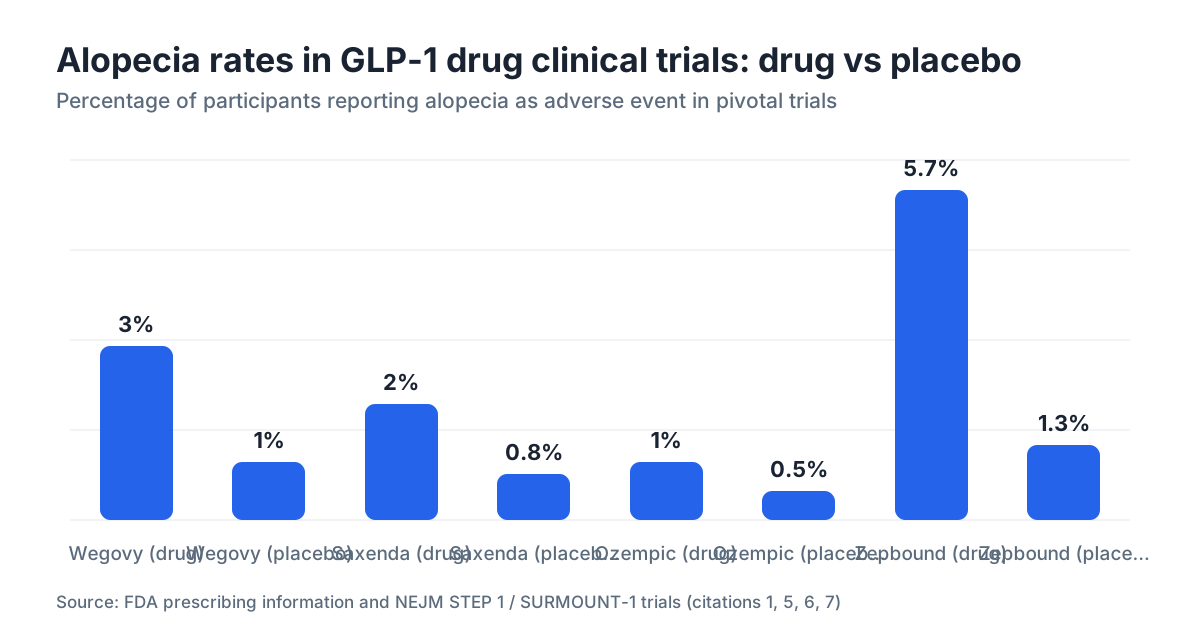
| Drug | Approved use | Alopecia rate (drug) | Alopecia rate (placebo) | Source |
|---|---|---|---|---|
| Wegovy (semaglutide 2.4 mg) | Obesity | 3.0% | 1.0% | FDA STEP 1 trial [1] |
| Ozempic (semaglutide 1.0 mg) | Type 2 diabetes | ~1% | <1% | FDA SUSTAIN trials [5] |
| Saxenda (liraglutide 3.0 mg) | Obesity | ~2% | <1% | FDA SCALE trials [6] |
| Zepbound (tirzepatide) | Obesity | 5.7% | 1.3% | FDA SURMOUNT-1 trial [7] |
Hair loss rates track weight lost more than the specific molecule. Zepbound (tirzepatide), which produced the largest weight losses in its main trial (about 20% of body weight in the high-dose arm), shows the highest reported alopecia rate. Ozempic, used at a lower dose for blood sugar control rather than aggressive weight loss, shows the weakest signal. [5][7]
That pattern supports the weight-loss-magnitude explanation over a drug-toxicity one. If semaglutide were poisoning follicles directly, you would expect similar rates across all doses regardless of how much weight patients dropped. That is not what the data show.
When does hair loss start after beginning Wegovy, and how long does it last?
Timing follows the classic telogen effluvium pattern. Follicles take about 2-4 months to cycle from the shock event (rapid weight loss) through the telogen phase into visible shedding. Most people notice more shedding around months 3-5 of treatment, which often lines up with the period of fastest weight loss on the dose-escalation schedule.
The shedding peaks and then tapers. For telogen effluvium driven by weight loss, published data from bariatric surgery cohorts suggests active shedding usually lasts 3-6 months before slowing. [4] Regrowth follows once the body stabilizes, generally within 6-12 months of the shedding onset, assuming the underlying metabolic stress resolves.
Wegovy is built for long-term use, which complicates the picture. If someone keeps losing weight for 18 months or more, the telogen effluvium signal can outlast that of a person whose weight settles at 6 months. Once weight plateaus, most people see shedding slow and new growth come in.
The hair that returns is usually the same texture and density as before. Telogen effluvium does not permanently shrink follicles the way androgenetic alopecia does. If a person also carries a genetic tendency toward pattern baldness, the shedding episode can make underlying miniaturization more visible, and that portion does not fully reverse on its own.
What can you actually do to protect your hair while on Wegovy?
You cannot fully prevent telogen effluvium if you are losing weight fast. You can reduce its severity and shorten the recovery window.
Protein is the biggest lever. Guidance from obesity medicine specialists generally recommends at least 1.2-1.5 grams of protein per kilogram of target body weight per day during significant caloric restriction. [8] Because Wegovy blunts appetite so hard, many users do not come close. Tracking protein on purpose, using high-protein foods or supplements, genuinely helps.
Iron levels deserve a blood test. Ferritin below roughly 30-40 ng/mL is linked to impaired hair cycling even without overt anemia. [9] If you are menstruating and dieting at the same time, iron depletion is a real risk. Supplementing to correct a documented deficiency is straightforward and well-supported.
Zinc and vitamin D are worth checking too, though the evidence is weaker than for iron. Many people starting Wegovy are already low on vitamin D, and deficiency tracks with telogen effluvium in observational data.
Topical minoxidil has reasonable evidence for shortening telogen effluvium episodes. It pushes more follicles back into the anagen (growth) phase. The American Academy of Dermatology recognizes topical minoxidil as an effective treatment for hair thinning, including diffuse shedding in women. [10] Our overview of minoxidil side effects covers what to expect if you add it to your routine.
Slowing the pace of weight loss is protective in theory but often impractical and possibly counterproductive from a metabolic standpoint. The more achievable goal is aggressive nutritional support at whatever rate of loss you hit.
If you are a man with a receding hairline or a family history of pattern loss, understand what is happening at the follicle level before you blame everything on Wegovy. Our what causes hair loss guide separates the mechanisms clearly. And if your temples are already receding, a DHT blocker or finasteride conversation with a dermatologist is worth having regardless of which GLP-1 drug you take.
Does Wegovy cause permanent hair loss?
For most people, no. Telogen effluvium, the mechanism behind Wegovy-associated shedding, is by definition a temporary disruption of the hair cycle. The follicles stay intact and keep the ability to produce new hair once the metabolic stressor clears.
Permanent hair loss from Wegovy would take one of two scenarios. Either the drug damages follicles directly (no credible evidence supports this), or the shedding episode exposes or speeds up an androgenetic alopecia (genetic pattern hair loss) that was already underway. The second scenario is real but not Wegovy's fault in any meaningful sense. The drug did not create the genetic predisposition. It just removed the buffer of dormant hairs that were hiding the miniaturization underneath.
If you are 6-12 months past peak shedding and still not seeing regrowth, that is the moment to see a dermatologist for a scalp exam and possibly a trichoscopy or biopsy. The difference between post-effluvium recovery and genuine androgenetic alopecia changes the treatment path a lot. minoxidil for men addresses androgenetic alopecia directly; telogen effluvium often resolves with less intervention.
Who is most at risk for hair loss on Wegovy?
A few traits raise the odds that hair loss will be significant.
Women, especially premenopausal women, appear more prone to telogen effluvium from weight loss. This may reflect greater baseline hair cycle sensitivity to hormonal and nutritional shifts. The STEP trials enrolled roughly 75% women, so most of the observed alopecia signal came from female participants.
People who lose weight the fastest face the strongest follicle stress. The dose-escalation schedule for Wegovy is standardized, but individual weight loss rates vary widely. Someone who drops 25% of body weight in a year takes a bigger hit than someone who loses 10%.
People with low baseline ferritin, particularly those with heavy periods or restricted diets going into treatment, are more vulnerable because the nutritional reserve is already thin.
Anyone with a first-degree relative who has significant pattern hair loss should know a telogen effluvium episode can unmask that genetic tendency. This is not a reason to avoid Wegovy, but it is worth a pre-treatment conversation with a dermatologist about baseline status.
People already taking medications linked to hair loss (certain blood pressure drugs, anticoagulants, retinoids) carry stacked risk that deserves attention before adding a GLP-1 drug.
Can masturbation cause hair loss?
No. There is no credible scientific evidence that masturbation causes hair loss in any meaningful way. It circulates widely enough that people genuinely worry, so it is worth addressing head-on.
The theory usually goes like this: ejaculation drains protein, zinc, or testosterone in amounts large enough to affect follicles. It does not hold up. A typical ejaculate is roughly 2-5 mL of fluid with very small amounts of protein and zinc, far too little to create a systemic nutritional deficit that reaches follicles. The body replaces these continuously.
The testosterone or DHT angle is slightly more plausible in structure but still wrong in practice. DHT (dihydrotestosterone) does shrink follicles in people genetically prone to androgenetic alopecia. But masturbation does not chronically raise DHT or testosterone to levels that differ meaningfully from normal daily swings. A 2001 study in Psychoneuroendocrinology measured testosterone changes around orgasm and found transient minor fluctuations that return to baseline within minutes. [11] That kind of blip has no established relationship to follicle miniaturization, which needs sustained DHT exposure over years.
The worry about does creatine cause hair loss is at least grounded in a study showing creatine raised DHT-to-testosterone ratios. Masturbation has no equivalent mechanistic study because the mechanism does not make biological sense.
If you are losing hair, masturbation is not the reason. The actual causes, genetics, hormones, nutritional deficits, medications, and physical stress, are covered in our what causes hair loss guide.
Should you stop Wegovy if you are losing a lot of hair?
Almost certainly not, at least not without talking to your prescriber first. For most people the answer after that conversation will still be to continue.
Hair loss from Wegovy is uncomfortable and upsetting, but it is rarely medically serious. The cardiovascular, metabolic, and longevity benefits of sustained weight loss for people with obesity are large and well-documented. Stopping Wegovy usually leads to weight regain, which carries its own consequences.
The more useful step is to see a dermatologist, confirm the diagnosis really is telogen effluvium and not something else, and fix any nutritional deficits that might be dragging it out. A hair loss analysis tool like the free AI scan at MyHairline can help you understand what pattern of thinning you are dealing with before your appointment, so you walk in with better questions.
If hair loss is severe enough to hit quality of life hard, the prescriber might consider temporarily slowing the dose-escalation schedule. That is a judgment call weighing the hair concern against the metabolic benefit, and it should be a shared decision with the prescribing physician, not a unilateral stop.
For people with androgenetic alopecia layered underneath the shedding, starting a treatment like finasteride and minoxidil at the same time as Wegovy is a legitimate option. The two are not contraindicated together.
What does recovery look like and how do you know hair is growing back?
The first sign is a slowdown in shedding. Most people with telogen effluvium notice the shower drain looks less alarming around month 3-4 after shedding begins. Then comes a phase where the hair feels thin but is not falling out in excess.
New growth shows up as short, fine hairs along the hairline and scalp. These get called "baby hairs," and they can take 6-12 months to grow to a length that meaningfully restores volume. Full cosmetic recovery often takes a year from when shedding stopped.
A scalp exam with a dermatoscope (trichoscopy) can confirm new growth even before it is visible to the naked eye. A dermatologist can measure hair density and shaft caliber to document recovery objectively.
If you added topical minoxidil during the shedding phase, stopping it abruptly can trigger a secondary shedding episode. This is well-documented and not dangerous, but it can rattle you if you are not expecting it. Our minoxidil for men article explains the shed-on-stop phenomenon in detail.
If a receding hairline was visible before Wegovy and has not improved after shedding resolved, that is almost certainly androgenetic alopecia needing its own targeted treatment. The receding hairline guide is a reasonable next read, as is the overview of hair loss supplements if you want non-prescription options while you decide on a treatment path.
What should you ask your doctor before starting Wegovy if hair loss is a concern?
A few concrete questions will do more for you than a general worry conversation.
First, ask for baseline labs: ferritin, iron saturation, zinc, vitamin D, and a complete metabolic panel. If these are low before you start, correct them before they turn into a bigger deficit during caloric restriction.
Second, ask for a specific protein target. Get a gram-per-kilogram number written into your plan, not a vague "eat enough protein" line.
Third, if you have a family history of hair loss or already have visible thinning, ask whether a dermatology referral before starting makes sense. Documenting your baseline with photos or a trichoscopy gives you a real comparison point 6-12 months later.
Fourth, ask your prescriber whether there is flexibility in the dose-escalation timeline if hair loss gets significant. The standard schedule is not always mandatory, and some clinicians are willing to hold at a lower dose longer.
None of these are reasons to avoid Wegovy. They are reasons to start it better prepared. The drug has real clinical benefits for people who qualify. Hair loss during treatment is manageable for most people, especially when nutritional support gets taken seriously from day one.
Sources
- FDA, Wegovy (semaglutide) prescribing information
- New England Journal of Medicine, Wilding et al., STEP 1 trial, 2021
- Journal of the American Academy of Dermatology, Patel et al., GLP-1 alopecia FAERS analysis, 2024
- Obesity Surgery journal, Goldfeder et al., hair loss after bariatric surgery review
- FDA, Ozempic (semaglutide 1.0 mg) prescribing information, SUSTAIN trials
- FDA, Saxenda (liraglutide 3.0 mg) prescribing information, SCALE trials
- New England Journal of Medicine, Jastreboff et al., SURMOUNT-1 tirzepatide trial, 2022
- Obesity Medicine Association, clinical practice guidelines on protein during weight loss
- Journal of the American Academy of Dermatology, Kantor et al., serum ferritin and hair loss, 2003
- American Academy of Dermatology, hair loss treatment guidelines
- Psychoneuroendocrinology, Exton et al., testosterone changes around orgasm, 2001