

TL;DR: Wellbutrin (bupropion) does list hair loss as a reported side effect. Clinical trial data puts the incidence somewhere between 1% and 4% of patients depending on the dose and formulation. The shedding is almost always a temporary telogen effluvium pattern, not permanent follicle damage. Most people who stop or adjust the drug see regrowth within a few months.
What does Wellbutrin's official label actually say about hair loss?
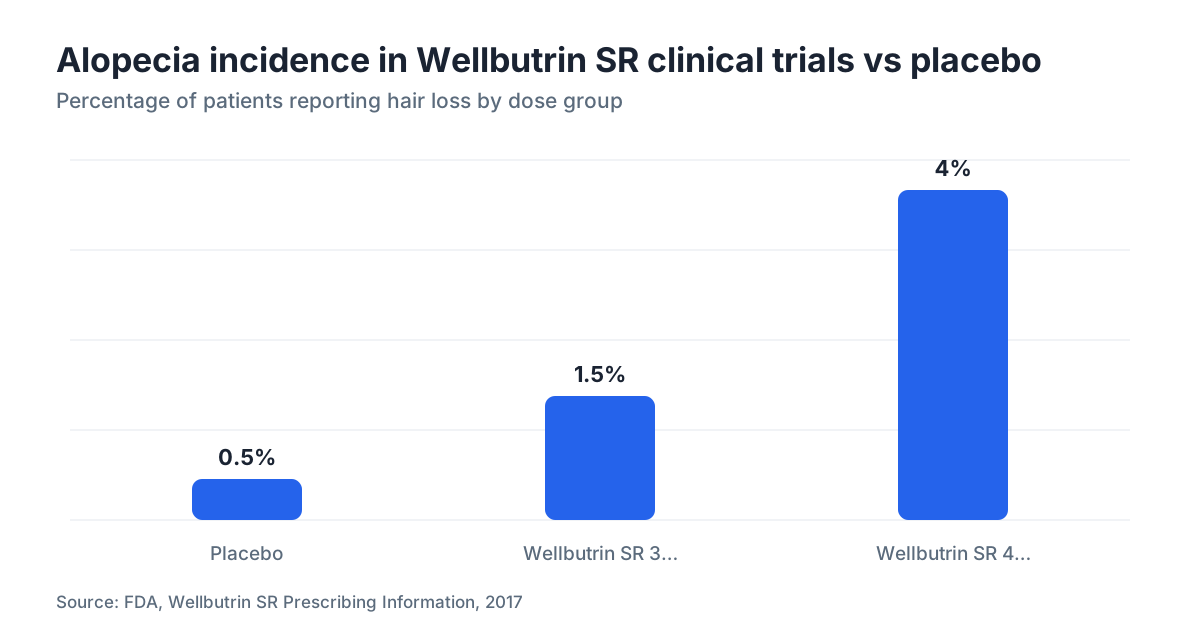
The FDA-approved prescribing information for bupropion lists alopecia as an adverse reaction seen both in post-marketing reports and in controlled clinical trials. The label files it under dermatological adverse events. In the original Wellbutrin SR trial data reviewed by the FDA, alopecia appeared in roughly 1.5% of patients on 300 mg/day and climbed to around 4% at 400 mg/day, against less than 1% on placebo [1].
That dose-response pattern matters. It tells you this is a real drug effect, not random noise. The higher the dose, the more people reported it.
The label does not call it serious or permanent. It sits in the same tier as dry mouth and nausea: unpleasant, worth knowing about, rarely dangerous. The DailyMed record maintained by the National Library of Medicine carries the same alopecia listing across all bupropion formulations, and the FDA's FAERS database holds post-marketing spontaneous reports of hair loss, though spontaneous reports cannot pin down true incidence [2][11].
How common is hair loss on Wellbutrin, really?
Uncommon, but real. Somewhere between 1 in 25 and 1 in 100 people on standard doses notice meaningful shedding.
Here is the trial breakdown. The main Wellbutrin SR trials submitted to the FDA showed alopecia in about 1.5% of the 300 mg/day group and roughly 4% at 400 mg/day [1]. Wellbutrin XL trials reported similar numbers. The placebo group in those same trials came in below 1%, so the excess you can attribute to the drug is genuine, even if modest.
A pharmacovigilance analysis published in the Journal of Clinical Psychiatry pulled adverse event reports across antidepressants in the FDA Adverse Event Reporting System (FAERS) and found bupropion carried a higher proportional reporting ratio for alopecia than SSRIs like sertraline or escitalopram, though every antidepressant shows some signal [3].
Nobody has clean population-level data on this. The closest we get is those controlled trial numbers and the FAERS signal, and both point the same way: bupropion carries a modest but genuine hair-loss risk that runs higher than most SSRIs.
| Dose / formulation | Alopecia rate (trial data) | Placebo rate |
|---|---|---|
| Wellbutrin SR 300 mg/day | ~1.5% | <1% |
| Wellbutrin SR 400 mg/day | ~4% | <1% |
| Wellbutrin XL 300 mg/day | ~1 to 2% | <1% |
| SSRIs (comparator antidepressants) | ~0.1 to 1% | <1% |
What type of hair loss does Wellbutrin cause?
Almost everyone describes the same thing: diffuse shedding across the whole scalp, not patchy bald spots or a receding hairline. That pattern has a name, telogen effluvium.
Telogen effluvium happens when a physiological or chemical stressor pushes a higher-than-normal share of follicles out of the active growth phase (anagen) and into the resting or shedding phase (telogen). Normally 5 to 15% of scalp hairs sit in telogen at any moment. A real stressor can shove that to 30% or more, and when those hairs let go two to four months later, you see visible thinning or a startling pile of hair on the pillow and in the shower drain [4].
The timing throws people off. Most Wellbutrin-related shedding shows up six to twelve weeks after starting the drug or bumping the dose, not on day one. So someone feels fine for three months, starts losing hair, and assumes it must be something else. It is probably the bupropion.
This is a different animal from androgenetic alopecia (the genetic kind driven by DHT), which miniaturizes follicles in a predictable temple-and-crown pattern. Bupropion does not appear to touch DHT metabolism. If you have a receding hairline that predates the medication, the drug is not driving it through hormones. What it can do is layer a telogen effluvium on top of existing genetic loss, which feels catastrophic but is still a separate process.
Why does bupropion trigger hair shedding at a biological level?
Honest answer: the exact mechanism is not settled. Researchers point to three plausible explanations, and they are not mutually exclusive.
First, bupropion blocks the reuptake of dopamine and norepinephrine. Dopamine receptors show up in hair follicle outer root sheath cells, and some evidence suggests dopaminergic signaling helps regulate the hair cycle. Disrupt it and you could, in theory, shorten anagen and push more follicles into telogen [5].
Second, bupropion and its active metabolites (hydroxybupropion, erythrohydrobupropion, threohydrobupropion) can nudge thyroid hormone metabolism in some people. Subclinical thyroid disruption is a known cause of diffuse hair loss. This pathway is speculative for bupropion specifically, but clinicians sometimes check TSH in patients shedding on the drug.
Third, and simplest, any systemic medication that shifts body chemistry enough to cause side effects can act as a nonspecific stressor on the hair cycle, the same way a high fever, a crash diet, or surgery does. The follicle is oddly sensitive to metabolic upset.
None of this points to permanent follicle destruction. Follicles in telogen effluvium are resting, not dead. That single distinction is why the outlook here beats what you see with scarring alopecias.
Does the hair grow back if you stop Wellbutrin?
Yes, in most cases. Not a guarantee, but clinical experience leans hard toward regrowth once the trigger is gone or dialed down.
The American Academy of Dermatology describes telogen effluvium as generally self-limiting and reversible once the underlying cause is handled [4]. With drug-induced telogen effluvium specifically, StatPearls notes regrowth usually begins two to three months after stopping the offending medication and is typically complete within six to twelve months [9].
The catch: you may not be able to stop Wellbutrin. If it is working for your depression, quitting it to save your hair is a serious trade-off that only you and your prescriber can weigh. Psychiatric medications should never be stopped abruptly without medical supervision.
What some doctors try first is a dose cut, stepping from 400 mg down to 300 mg, which in the trial data lines up with much lower alopecia rates. A formulation switch (from SR to XL, which releases more gradually) has helped some patients anecdotally, though no controlled trial confirms it.
If the shedding bothers you and you want to act while staying on the drug, topical minoxidil for men (or the equivalent for women) is the only FDA-approved topical shown to speed hair regrowth in telogen effluvium patterns. It does not treat the cause, but it can shorten the shedding phase and get you regrowing sooner [6].
Are some people more likely to lose hair on Wellbutrin?
Probably yes, though we have no clean genetic or biomarker test to predict it up front.
People who already carry androgenetic alopecia tend to notice drug-induced shedding more, because they have less density to spare. The number of follicles the drug affects may be the same, but on a thinner scalp it crosses the visible-thinning line faster.
Higher doses carry more risk. The trial data says so plainly. Starting at 150 mg and titrating slowly makes clinical sense, and many prescribers do exactly that.
Women report drug-induced hair loss more often than men across most medications, which likely reflects both sharper awareness and the fact that women's scalp hair tends toward smaller-diameter follicles that may be more prone to the telogen shift. Hormonal swings (perimenopause, postpartum) landing at the same time as a new medication can amplify the signal.
Nutrition matters too. Low ferritin (iron stores) makes telogen effluvium from any cause worse. A ferritin level below 30 ng/mL is tied to impaired hair regrowth, according to research published in the Journal of the American Academy of Dermatology [7]. Start Wellbutrin with low ferritin and you start in a weaker position.
Knowing where your hair stands before anything changes is genuinely useful. A free AI hair analysis at MyHairline gives you a baseline of your current hairline and density, which makes it far easier to tell whether a change you notice is real or anxiety talking.
How do you tell if Wellbutrin is causing your hair loss or if something else is?
Timing is clue one. If diffuse shedding kicked off two to four months after starting bupropion or raising the dose, drug-induced telogen effluvium is the lead suspect. If the shedding predates the medication or hit on day one, look elsewhere.
Clue two is pattern. Wellbutrin loss is diffuse. If you are thinning mainly at the temples and crown in a predictable shape, that is androgenetic alopecia, driven by genetics and DHT, not bupropion. Reading up on what causes hair loss helps you split these apart.
A dermatologist can run a pull test, gently tugging about 60 hairs and counting how many come free. More than six is a positive result. Trichoscopy shows the telogen-to-anagen ratio directly.
Blood work worth getting if the cause is murky: TSH (thyroid), ferritin, CBC (to rule out anemia), and androgen panels if hormonal patterns suggest it. None of these cost much, and they clear the most common mimics.
Do not assume it is the Wellbutrin without checking. Depression itself can cause hair loss through stress-related cortisol. Starting an antidepressant often overlaps with the most stressful stretch of someone's life, so the timing gets tangled. The drug might actually be blunting further stress-related loss while the initial side effect runs its course. That is a genuinely messy picture, and it is why a dermatologist visit earns the co-pay.
What can you actually do about it?
Talk to your prescriber first, before anything else. Do not stop bupropion on your own. If you want to try a dose cut or a switch, that conversation belongs with the person managing your mental health.
If you stay on the medication and want to reduce shedding, here is what has real evidence behind it.
Topical minoxidil 5% (foam or solution) on the scalp is FDA-approved for hair loss in both men and women and shows benefit in stress-related and drug-induced telogen effluvium, more so than in androgenetic alopecia [6]. It works by extending anagen and improving scalp blood flow. You apply it once or twice daily. It is no cure for the drug side effect, but it can meaningfully cut the visible damage. Read minoxidil side effects before you start so nothing surprises you.
Ferritin optimization matters if your levels run low. Getting ferritin above 70 ng/mL is the target some dermatologists aim for during active shedding, based on clinical experience rather than a hard trial cutoff.
Some people reach for hair loss supplements here. Biotin is the most popular and the most overhyped. Biotin deficiency does cause hair loss, but almost nobody is actually deficient, and high-dose biotin throws off thyroid and cardiac lab tests, which matters if you are getting blood drawn [8]. A basic multivitamin covering zinc, vitamin D, and iron beats megadose single-nutrient pills.
Low-dose oral minoxidil (0.625 to 2.5 mg/day) is increasingly prescribed off-label for diffuse shedding and has a decent evidence base, though it carries systemic effects topical does not [see oral minoxidil]. That is a dermatologist conversation, not a DIY move.
Finasteride and DHT blockers are the wrong tool here. Bupropion does not miniaturize follicles through DHT, so blocking DHT does nothing for the mechanism. If you also have androgenetic alopecia, you might run finasteride for that separately, but it will not touch the drug-induced shedding.
How does Wellbutrin compare to other antidepressants for hair loss risk?
Bupropion's hair loss signal runs higher than most SSRIs but sits comparable to or below some other antidepressants in the FAERS data [3].
SSRIs like sertraline (Zoloft), escitalopram (Lexapro), and fluoxetine (Prozac) all list hair loss as a possible side effect, but the trial rate generally stays under 1%. SNRIs like venlafaxine (Effexor) and duloxetine (Cymbalta) show similar low rates. Lithium, valproate, and other mood stabilizers carry higher hair loss risk than bupropion in most reports.
This is not a reason to switch antidepressants to protect your hair. Efficacy, tolerability, and your specific diagnosis matter far more than a 1 to 3% gap in alopecia risk. But if you are choosing between two otherwise equal medications and hair is a real worry, it is a fair point to raise with your prescriber.
| Medication class | Approximate alopecia incidence (trial/FAERS data) |
|---|---|
| Bupropion (Wellbutrin) | 1 to 4% (dose-dependent) |
| SSRIs (sertraline, fluoxetine, etc.) | 0.1 to 1% |
| SNRIs (venlafaxine, duloxetine) | 0.5 to 1% |
| Lithium | 3 to 12% |
| Valproate / divalproex | 5 to 12% |
| TCAs (amitriptyline, etc.) | 1 to 3% |
When should you see a doctor about Wellbutrin-related hair loss?
If shedding is bad enough to show visible thinning within a few months of starting the drug, see a dermatologist rather than waiting it out. Severe acute telogen effluvium can wreck your head, and a doctor can confirm the diagnosis, rule out other causes, and lay out treatment options.
Go sooner if the loss is patchy rather than diffuse (that can signal alopecia areata, a separate autoimmune condition), if scalp pain or heavy itching comes with it, or if you also have symptoms hinting at a thyroid or autoimmune problem (fatigue, weight change, feeling cold all the time).
Loop in your psychiatrist or prescribing physician if the hair loss is making you skip doses. Stopping antidepressants over a cosmetic side effect is common and understandable, but abrupt discontinuation carries real risks. Dose adjustment or switching is a legitimate conversation to open.
To gauge whether your shedding is actually costing you visible density, a baseline record of your scalp helps. MyHairline's free AI hair scan at myhairline.ai/scan photographs your scalp and tracks changes over time, which beats trying to remember what your hair looked like six months back.
If loss keeps going or gets worse more than twelve months after stopping bupropion, that warrants investigation. Chronic telogen effluvium exists and has other triggers. You would not want to blame a drug you already quit while an active thyroid problem slips by.
The bottom line on Wellbutrin and hair loss
Wellbutrin does cause hair loss in a small but real slice of users. The trial number to remember is roughly 1.5% at 300 mg/day and 4% at 400 mg/day [1]. The mechanism is almost certainly drug-induced telogen effluvium, which reverses. The hair usually comes back once the drug stops or the dose drops, and topical minoxidil can help while you wait.
What this is not: permanent follicle damage, DHT-driven miniaturization, or a reason to book a transplant. If you were already in a hair transplant consult for genetic loss, Wellbutrin-induced shedding does not change that math much. The two processes are biologically separate.
The harder question is always whether treating depression is worth the cosmetic cost. For most people the answer is yes, and the hair loss, if it happens at all, resolves on its own schedule. The finasteride and minoxidil combination that works for genetic hair loss is not what you need here. The right play is patience, a good prescriber relationship, and maybe a ferritin check plus topical minoxidil while you ride it out.
Sources
- FDA, Wellbutrin SR Prescribing Information (bupropion hydrochloride sustained-release tablets), accessed via DailyMed
- FDA MedWatch Adverse Event Reporting System (FAERS)
- Journal of Clinical Psychiatry, antidepressant alopecia pharmacovigilance analysis (Etminan et al.)
- American Academy of Dermatology, Hair Loss Resource Center
- Experimental Dermatology, dopamine receptor expression in human hair follicles (Bodo et al., 2007)
- FDA Drugs@FDA database, minoxidil topical solution/foam approval records
- Journal of the American Academy of Dermatology, ferritin and hair loss (Rushton, 2002)
- StatPearls (NCBI Bookshelf), Telogen Effluvium
- FDA Drugs@FDA database, Wellbutrin XL (bupropion hydrochloride extended-release) label records
- DailyMed (NIH/NLM), bupropion hydrochloride drug label