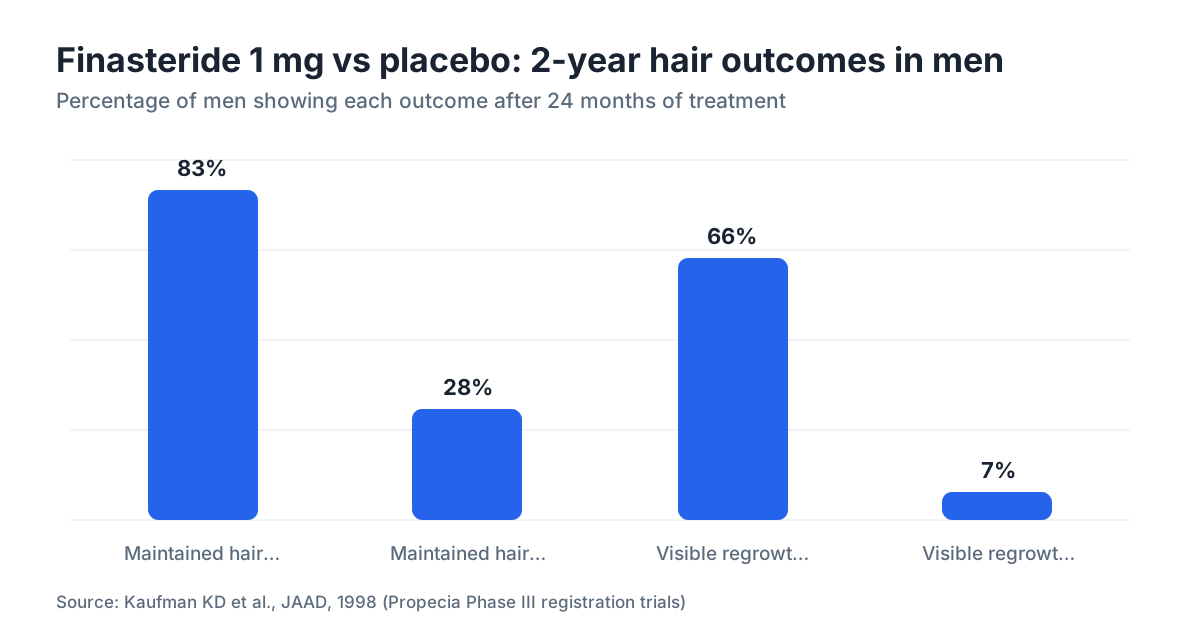
TL;DR: Finasteride is an FDA-approved oral medication that blocks the enzyme converting testosterone to DHT, the hormone that shrinks hair follicles in male pattern baldness. At 1 mg daily, it slows or stops hair loss in roughly 83% of men and regrows hair in about 66% over two years. Women of childbearing age cannot take it safely.
What is finasteride and what is it approved for?
Finasteride is a synthetic 4-azasteroid compound that blocks type II 5-alpha reductase, the enzyme responsible for converting testosterone into dihydrotestosterone (DHT) inside hair follicles, the prostate, and several other tissues. Lower DHT means less follicle miniaturization, which means hair stays in the growing phase longer.
The FDA first approved finasteride 5 mg (brand name Proscar) in 1992 for benign prostatic hyperplasia, essentially an enlarged prostate. Then in 1997, the FDA approved finasteride 1 mg (brand name Propecia) specifically for androgenetic alopecia in men, the gradual, pattern-driven hair loss that affects roughly 50 million men in the United States [1]. That 1 mg dose is lower than the prostate dose on purpose: it's enough to suppress scalp DHT substantially without suppressing it as aggressively throughout the body.
Important distinction: FDA approval covers men only. The FDA has not approved finasteride for hair loss in women, though some dermatologists do prescribe it off-label to postmenopausal women. For the full breakdown of how DHT drives follicle miniaturization, see our article on dht blocker.
Generic finasteride 1 mg became available in the U.S. after Merck's Propecia patent expired in 2013. That matters because price dropped dramatically, which is now one of the more patient-friendly parts of the whole treatment landscape.
How does finasteride actually stop hair loss?
DHT is the main driver of androgenetic alopecia. It binds to androgen receptors in hair follicles with roughly five times the affinity of testosterone, triggering a signaling cascade that progressively shortens each hair's growth cycle [2]. Follicles produce finer, shorter hairs with each cycle until they stop producing visible hair entirely. If you want a broader look at what's happening, the what causes hair loss article walks through the full picture.
Finasteride doesn't block DHT at the receptor. It goes one step earlier. It binds to the type II 5-alpha reductase enzyme and stops it from catalyzing the conversion of testosterone to DHT. In clinical trials, finasteride 1 mg reduced serum DHT by approximately 65% and scalp DHT by approximately 60% [3]. That level of suppression is enough to meaningfully slow miniaturization in most men.
Here's what that means in practice. Finasteride doesn't immediately grow new hair. What it does first is slow, then halt, the progressive thinning. If DHT suppression is sustained long enough, follicles that have miniaturized but haven't died may partially recover and produce thicker, longer hairs again. That recovery is what people call "regrowth," though the more precise description is that miniaturized follicles regain some function. Terminal follicles that have been completely destroyed don't come back.
This is also why the drug works better the sooner you start it. Men in earlier receding hairline stages have more viable follicles to preserve.
What do clinical trials actually show for hair regrowth?
The main registration trials for Propecia ran for two years and enrolled over 1,500 men aged 18 to 41 with mild to moderate vertex and frontal hair loss. Results from those trials, submitted to and reviewed by the FDA, showed that 83% of men taking finasteride 1 mg maintained their hair count versus baseline, compared to 28% of men taking placebo [3]. That 28% figure is a reminder that hair loss keeps moving without treatment.
On actual regrowth, roughly 66% of men on finasteride saw increases in hair count after two years in the vertex (top of scalp) region. Frontal hairline results were more modest: statistically significant but smaller in magnitude. Men who continued for five years in an extension study held onto those gains, and men who stopped saw the benefits reverse within 12 months.
A 2019 real-world study of 3,177 men treated at hair loss clinics in Japan confirmed broadly similar numbers: 91.5% showed no further progression after one year, and roughly 68% showed visible improvement [4]. Real-world outcomes tend to be slightly messier than trial outcomes because adherence varies, but the direction is consistent.
Worth saying plainly: finasteride is not a cure. It works only while you take it. Stop taking it and DHT levels return to baseline within roughly one to two weeks, and the miniaturization process resumes. Most men who benefit end up taking it indefinitely.
For those wondering how finasteride compares to or combines with topical minoxidil, which works through a completely different mechanism, the finasteride and minoxidil article covers the combination evidence specifically.
What are the real side effects of finasteride?
This is where honest conversation matters more than reassurance. The FDA-approved label for finasteride 1 mg lists sexual side effects in the clinical trial population at the following rates: decreased libido in 1.8% of men on drug versus 1.3% on placebo; erectile dysfunction in 1.3% versus 0.7%; decreased ejaculate volume in 1.2% versus 0.4% [3]. Those numbers look small but they're not trivial for the men who experience them.
The more contested issue is Post-Finasteride Syndrome (PFS), a term for a cluster of symptoms, sexual, cognitive, and psychological, that some men report persisting even after stopping the drug. The FDA added a label update in 2012 noting that sexual side effects may persist after discontinuation [5]. The Post-Finasteride Syndrome Foundation has petitioned for further study. The honest scientific situation is that large-scale controlled data on PFS prevalence doesn't exist yet. Most of what's published is case series and survey data, which can't establish causality or population-level rates. A 2020 review in the Journal of the American Academy of Dermatology (JAAD) acknowledged the syndrome's existence while noting that the evidence base remains limited [6].
Other documented side effects include breast tenderness or enlargement (gynecomastia) in less than 1% of men in trials. Finasteride also lowers PSA (prostate-specific antigen) levels by approximately 50%, which matters clinically: a man on finasteride who gets a PSA test should tell his doctor, because the lab value needs to be doubled to compare it to normal reference ranges [3].
The 5 mg dose used for prostate conditions carries higher rates of these same side effects. Most of what you'll read in alarming online forums conflates the 5 mg prostate data with the 1 mg hair loss data. They're not the same.
For women of childbearing potential: finasteride is classified FDA Pregnancy Category X. Animal studies showed clear teratogenicity affecting male fetal genitalia. Pregnant women shouldn't even handle crushed finasteride tablets [1]. This isn't a theoretical risk.
Who is a good candidate for finasteride?
The straightforward case is an adult man with androgenetic alopecia, typically showing Norwood scale patterns II through V, who still has thinning follicles rather than completely bald areas. The drug preserves and may recover living follicles. It can't resurrect dead ones.
Age matters somewhat. Younger men tend to respond better partly because their follicles have had less cumulative miniaturization damage. But men well into their 50s and 60s can still benefit, particularly in maintaining what they have.
Men with a history of liver disease should discuss it with their physician. Finasteride is metabolized hepatically, and while routine liver monitoring isn't standard practice for healthy men, liver impairment could affect drug clearance.
Finasteride is not appropriate for premenopausal women seeking hair loss treatment. Off-label use in postmenopausal women is a real clinical practice, and some dermatologists do prescribe it in that context, but the evidence base is much thinner than for men, and that conversation belongs with a dermatologist, not a search results page.
Men considering finasteride should also be aware of the family planning implications: while finasteride doesn't appear to affect sperm counts in most men at 1 mg, some men with fertility concerns choose to pause treatment when actively trying to conceive. That's worth discussing with a physician.
If you're earlier in the research phase and not sure whether your hair loss pattern even fits this treatment, an AI-based screening tool like the one at MyHairline can help you map your loss pattern before you talk to a doctor.
How is finasteride taken and what dosage is correct for hair loss?
For hair loss, the dose is 1 mg once daily. You take it with or without food. It doesn't matter. There's no loading dose. Most men take it every day at roughly the same time out of habit rather than pharmacological necessity, since the drug's half-life is around five to six hours but its effects on DHT suppression persist beyond that [3].
The 5 mg tablets (Proscar) are sometimes divided into quarters to approximate a 1.25 mg daily dose, which some men do purely to reduce cost. That dose is higher than the approved 1 mg but is commonly discussed in dermatology practices as a practical workaround. It's not FDA-approved at that dose for hair loss, and tablet-splitting isn't perfectly precise, but many dermatologists consider it clinically reasonable.
There's also topical finasteride, compounded by specialty pharmacies, which applies the drug directly to the scalp. Topical formulations show lower systemic DHT suppression in small studies, which has attracted attention from men worried about systemic side effects. The evidence base for topical finasteride is still building. It doesn't have standalone FDA approval for hair loss as of mid-2025, though it's available in some countries.
Expect to wait. Most men see meaningful results only after six to twelve months of consistent daily use. Some see stabilization first, regrowth second. If you've been taking it for 12 months with no response whatsoever, that's a reasonable point to reassess with your dermatologist rather than commit to another year.
How much does finasteride cost, and is it covered by insurance?
Generic finasteride 1 mg is now genuinely affordable. GoodRx and pharmacy discount programs typically price a 30-day supply of generic finasteride 1 mg at $10 to $30 at major U.S. pharmacies as of 2025, depending on the pharmacy and whether you use a coupon. Branded Propecia still lists above $80 per month at some pharmacies.
Insurance coverage is inconsistent and often absent. Most health insurance plans classify finasteride 1 mg for hair loss as a cosmetic use and exclude it. Finasteride 5 mg for BPH is more commonly covered because it's treating a medical condition, which is another reason some men under physician supervision split higher-dose tablets.
Telehealth hair loss platforms, which have proliferated since 2020, typically charge a monthly subscription that bundles a physician consultation and prescription fulfillment. Prices range from roughly $20 to $50 per month all-in for generic finasteride through those channels, though they vary and can change.
The cost math over time is one of the strongest arguments for finasteride over hair transplants as a first-line intervention. A hair transplant costs $4,000 to $15,000 or more and doesn't prevent further loss of non-transplanted follicles. Many surgeons insist patients be on finasteride anyway to protect existing hair. See the hair transplant article for a full breakdown of what transplants actually involve.
Can you take finasteride and minoxidil together?
Yes, and many dermatologists consider the combination standard of care for men with moderate to significant androgenetic alopecia. The drugs work through entirely different mechanisms: finasteride reduces DHT, minoxidil extends the anagen (growth) phase and improves follicular blood flow. There's no pharmacological interaction between them.
A 2022 randomized controlled trial published in JAMA Dermatology found that low-dose oral minoxidil (0.25 mg to 5 mg daily) in combination with finasteride produced greater hair density improvements than either drug alone, though the combination also carries additive side effect risks [7].
The practical question is which to add if you're already on one. Men who've been on finasteride for a year and want to push results further often add topical minoxidil as the next step. Men with more aggressive loss may start both together under physician guidance.
For a thorough look at minoxidil for men, including how topical versus oral options compare, that article covers the minoxidil side of the equation. And if you're worried about minoxidil's own side effect profile, minoxidil side effects is worth reading before you start.
How is finasteride different from other hair loss medications?
The hair loss medication landscape has three main prescription options in the U.S.: finasteride (oral), dutasteride (oral, off-label for hair), and minoxidil (topical and oral, FDA-approved). Each has a distinct mechanism.
Dutasteride blocks both type I and type II 5-alpha reductase, compared to finasteride's type II-only inhibition. That means it suppresses DHT more aggressively, around 90% versus finasteride's 65% [2]. A 2019 meta-analysis in the Journal of the European Academy of Dermatology and Venereology found dutasteride 0.5 mg superior to finasteride 1 mg in hair count improvement, but it carries a broader side effect profile and is not FDA-approved for hair loss in the U.S., meaning it's prescribed off-label [8].
Spironolactone, an anti-androgen used in women with androgenetic alopecia, blocks androgen receptors rather than 5-alpha reductase. It's not appropriate for men because of feminizing effects.
Over-the-counter options like saw palmetto are sometimes marketed as natural DHT blockers. The evidence is weak. A small study found some DHT suppression, but no trial has come close to the finasteride efficacy data [9]. If you're curious about the broader supplement landscape, hair loss supplements summarizes what the evidence actually says.
For a detailed comparison of the full finasteride category, the finasteride hub article covers all the variants and formulations in one place.
Does finasteride work for receding hairlines specifically?
The short answer is yes, but less dramatically than for vertex (crown) thinning. The original Propecia trials measured outcomes at both the vertex and the frontal scalp separately. Vertex results were stronger in both hair count and clinical photography scoring. Frontal hairline results were statistically significant but smaller in absolute terms [3].
Why the difference? DHT sensitivity is not uniform across the scalp. The vertex is typically more androgen-sensitive, which is why pattern baldness almost always starts or concentrates there. Frontal follicles respond to the same DHT pathway but may be slightly less responsive to intervention.
That said, finasteride does meaningfully slow frontal recession in most men, even if it's less likely to produce dramatic regrowth at the hairline than at the crown. Stopping further recession at the temples is a legitimate outcome worth having. For men at earlier Norwood stages with a mildly receding hairline, starting finasteride sooner rather than later is the most rational strategy, precisely because you're preserving follicles that still have full function.
If you're still mapping your loss pattern, the receding hairline article explains how to characterize what you're seeing and which treatments are typically appropriate at each stage.
What happens when you stop taking finasteride?
DHT levels return to baseline within one to two weeks of stopping finasteride [3]. From that point, the miniaturization process resumes. Within 12 months of stopping, most men return to approximately the same level of hair loss they would have had if they'd never taken the drug. Some lose hair faster initially, which some men describe anecdotally as a shed, though the mechanistic explanation for that pattern is less clear than the general trend.
There's a notable exception in the context of hair transplants. Men who've had a transplant and stop finasteride may keep the transplanted hair (those follicles are genetically resistant to DHT since they were taken from the donor zone) but lose further ground on native non-transplanted follicles, which can create an odd distribution problem.
The implication of stopping is the main reason dermatologists frame finasteride as a long-term commitment rather than a course of treatment. If you know you'll stop within a year or two, the cost-benefit calculation changes because you're essentially renting the results.
Some men stop due to side effects and experience resolution of those side effects after stopping. Others, a smaller group, report persistent effects, which is the PFS concern discussed earlier. Anyone experiencing side effects should discuss them with their physician before stopping abruptly, since there may be management options worth trying first.
Can women take finasteride for hair loss?
In postmenopausal women, yes, sometimes, as an off-label use. In premenopausal women of childbearing potential, no.
The FDA has explicitly not approved finasteride for hair loss in women. The Pregnancy Category X classification means the teratogenic risk in male fetuses is severe enough that the drug shouldn't be taken by women who could become pregnant, and even skin contact with crushed tablets is flagged on the label [1].
For postmenopausal women, small studies and case series suggest finasteride can slow androgenetic alopecia. A double-blind trial published in the British Journal of Dermatology found no significant benefit over placebo in postmenopausal women, though other smaller studies have been more positive [6]. The evidence is genuinely mixed. Dermatologists who prescribe it in this population typically do so after a careful risk-benefit discussion and when other options like minoxidil haven't provided sufficient benefit.
Women experiencing hair loss have different underlying causes more often than men do. Telogen effluvium from nutritional deficiency, thyroid dysfunction, or postpartum hormonal shifts is very common in women and doesn't respond to finasteride at all. Getting the right diagnosis first is non-negotiable.
At MyHairline, the free AI hair analysis tool can help women identify whether the loss pattern looks more like androgenetic alopecia or a diffuse effluvium type, which changes the treatment conversation entirely.
Sources
- FDA, Propecia (finasteride 1 mg) Prescribing Information
- Traish AM et al., Journal of Sexual Medicine, 2011, DHT androgen receptor affinity
- Kaufman KD et al., JAAD 1998, Finasteride Phase III trials (Propecia registration studies)
- Yanagisawa M et al., Journal of Dermatology 2019, Real-world finasteride outcomes in 3,177 men
- FDA Drug Safety Communication, June 2011, Finasteride label update on persistent sexual side effects
- Fertig RM et al., JAAD 2020, Post-Finasteride Syndrome review
- Randolph M & Tosti A, JAMA Dermatology 2022, Low-dose oral minoxidil and finasteride combination
- Gubelin Harcha W et al., JEADV 2019 meta-analysis, Dutasteride vs finasteride for AGA
- Prager N et al., Journal of Alternative and Complementary Medicine 2002, Saw palmetto for AGA
- American Academy of Dermatology, Hair loss treatment guidelines