
TL;DR: Finasteride is not available over the counter in the United States, the United Kingdom, or most countries. It requires a prescription because of real hormonal risks, including sexual side effects and risks during pregnancy. You can get it through a doctor visit, a telehealth platform, or a licensed online pharmacy, usually for $10, $30 a month generic.
Is finasteride available over the counter?
No. Finasteride is a prescription-only medication in the United States, the United Kingdom, Canada, Australia, and the European Union. You cannot legally buy it off a pharmacy shelf the way you'd buy minoxidil foam or a biotin supplement.
The FDA approved finasteride 1mg (brand name Propecia) for male-pattern hair loss in 1997, and the 5mg version (Propecia and Proscar) for benign prostatic hyperplasia in 1992. Neither version has ever been reclassified to over-the-counter status. [1] The drug remains Schedule H in India and a POM (prescription-only medicine) in the UK. The reasons are not arbitrary: finasteride blocks the conversion of testosterone to dihydrotestosterone (DHT), a systemic hormonal effect that carries documented risks a prescriber needs to evaluate before you start. [2]
If you see a website offering finasteride without asking you for any medical information or a prescription, that site is operating illegally or the product is counterfeit. Walk away.
For a broader picture of how finasteride works and what it does to DHT, that full explainer covers the mechanism in detail.
Why is finasteride prescription-only?
The short answer: it changes your hormone levels, and those changes reach well past your scalp.
Finasteride inhibits the enzyme 5-alpha reductase, which your body uses to convert testosterone into DHT. DHT is the androgen primarily responsible for androgenetic alopecia (male-pattern baldness) and prostate enlargement. Reducing it can slow or reverse hair loss, but DHT also has other roles, including in sexual function and fetal development. [2]
The FDA label for finasteride 1mg lists sexual side effects, including decreased libido, erectile dysfunction, and ejaculation disorders, in approximately 3.8% of men in clinical trials versus 2.1% in the placebo group. [1] A smaller but real concern is post-finasteride syndrome, a condition some men report where sexual and neurological side effects persist after stopping the drug. The evidence base here is still debated, but the FDA updated finasteride labels in 2012 to include persistent sexual side effects as a warning. [1]
The most serious absolute risk is to pregnant women. Finasteride is teratogenic: even skin contact with crushed tablets can cause genital abnormalities in a male fetus. Women who are or may become pregnant must not handle crushed or broken finasteride tablets. [1] That risk alone is a strong regulatory reason to keep this out of open-shelf retail.
None of this means finasteride is unusually dangerous for most men. Millions take it safely. But the risk profile is real enough that regulators in every major market have decided a prescriber needs to be in the loop. Understanding what DHT actually does helps explain why the prescription requirement exists.
How effective is finasteride for hair loss?
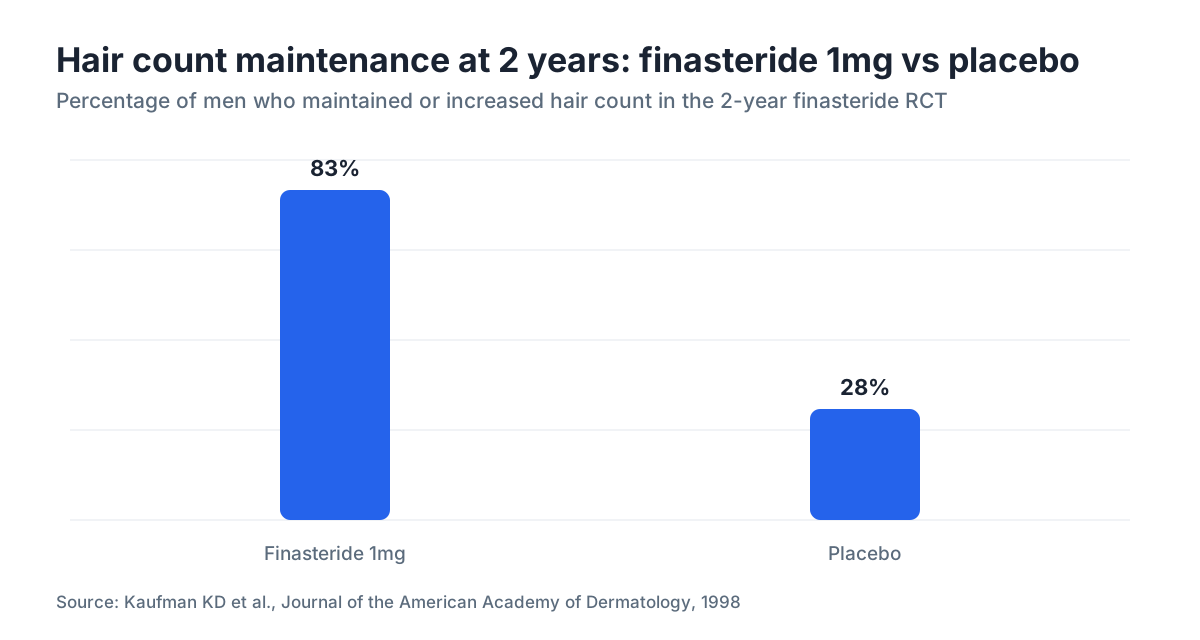
Finasteride is the most evidence-supported oral treatment for male androgenetic alopecia (pattern hair loss). A 2-year trial published in the Journal of the American Academy of Dermatology found that 83% of men taking finasteride 1mg daily maintained or increased hair count, compared with 28% of men on placebo. [3] Hair counts increased by a mean of 107 hairs over a 1-inch circle at the crown.
The 5-year follow-up to that study found continued improvement through years two and three, with some plateau thereafter. Men who stopped finasteride lost the gains within 12 months, meaning it works only while you take it. [3]
For women, the picture is much murkier. Finasteride is not FDA-approved for hair loss in women, though dermatologists do prescribe it off-label in post-menopausal women. The teratogenicity concern makes it a non-starter in women of childbearing potential without reliable contraception. Evidence in women is weaker: a 2012 randomized controlled trial in postmenopausal women found no statistically significant benefit over placebo at 1mg. [4] Some clinicians use 2.5mg or 5mg off-label in certain women with the right risk profile.
Combining finasteride with minoxidil for men is the standard evidence-based stack. One randomized trial found the combination produced better hair count outcomes than either drug alone. [5]
What does finasteride cost without insurance?
Generic finasteride 1mg is cheap. The Propecia patent expired years ago and generic versions are widely available.
| Source | Monthly cost (approx.) | Prescription required? |
|---|---|---|
| Local pharmacy (GoodRx/generic) | $10, $25 | Yes |
| Telehealth platform (Hims, Keeps, etc.) | $20, $40 (incl. consult) | Yes (issued by platform MD) |
| Brand-name Propecia | $60, $90+ | Yes |
| Unverified overseas site | Unknown | Legally no, but risky |
GoodRx lists generic finasteride 1mg (30 tablets) at most major US pharmacies for under $20, sometimes as low as $10 at Costco or Walmart with a coupon. [6] The telehealth premium is mostly paying for the physician's time, not the drug itself.
You don't need to pay brand-name prices. Propecia and generic finasteride contain identical active ingredients at the same dose. The FDA's bioequivalence standards require generic drugs to perform the same as the reference brand. [7]
If cost is a barrier, GoodRx, RxSaver, and similar discount programs can drop what you pay at the pharmacy counter to a few dollars. Some manufacturers also run patient assistance programs, though given how cheap the generic is, those programs are mostly relevant for the 5mg prostate dose.
How do you get a finasteride prescription legally?
Three realistic paths exist, each with different tradeoffs.
In-person doctor visit. Your primary care physician or a dermatologist can evaluate you, confirm the diagnosis of androgenetic alopecia, review your medical history, and write a prescription in a single visit. This is the most thorough option, especially if your hair loss pattern is unusual or you have other health conditions. The downside is time: getting a dermatology appointment can take weeks in many cities.
Telehealth platforms. Companies like Hims, Keeps, Roman, and dozens of others offer an asynchronous or synchronous medical visit, after which a licensed physician in your state can prescribe and ship finasteride directly to you. The process usually takes 24 to 72 hours. These platforms are legitimate and legal as long as they are using actual licensed physicians, which they are required to do under US state medical board rules. The consultation itself is often free or $5, $20, and the medication cost is similar to pharmacy retail. [6]
Your dermatologist via telehealth. Some dermatology practices now offer teledermatology for follow-up prescriptions. If you've already been seen in person and have a relationship with a dermatologist, this is often the easiest ongoing path.
If you've been losing hair for a while and aren't sure whether you're dealing with androgenetic alopecia, telogen effluvium, or something else entirely, that distinction matters before you start a long-term prescription. A prescriber can help sort it out, and so can understanding what causes hair loss in the first place.
MyHairline's free AI hair scan (/scan) can help you visualize your hair loss pattern before you meet with a provider, so you walk into the conversation knowing roughly where you stand.
Are there any countries where finasteride is available without a prescription?
A small number of countries have more permissive pharmacy frameworks where pharmacists have wider dispensing authority, and finasteride may be obtainable with a pharmacist consultation rather than a formal physician prescription. Some parts of Southeast Asia and Latin America fall into this category.
That said, buying finasteride abroad and importing it into the US is a gray area. The FDA technically prohibits importing prescription drugs for personal use without authorization, though individual enforcement is rare for small quantities. [7] The bigger practical risk is product authenticity: medications purchased through informal overseas channels have inconsistent quality control.
In the UK, the Medicines and Healthcare products Regulatory Agency (MHRA) classifies finasteride as a prescription-only medicine (POM). Some online pharmacies operating under a GPhC (General Pharmaceutical Council) license offer a digital prescribing service, which is legal, but the drug itself still requires a prescription issued by a registered UK prescriber. [8]
Some EU countries have explored reclassifying finasteride to a pharmacy medicine (a middle tier between prescription and OTC), but as of mid-2026, no major EU market has completed that reclassification.
Bottom line: in the markets where most readers live, you need a prescription, and that's unlikely to change soon.
What are the real risks of buying finasteride without a prescription?
The prescription requirement is more than bureaucratic friction. Skipping it creates two real categories of risk.
The first is medical. Finasteride is contraindicated in several situations: women who are pregnant or may become pregnant, people with certain liver conditions (the drug is hepatically metabolized), and anyone on medications that interact with CYP3A4 pathways. A prescriber checks for those things. You probably don't know to check.
The second is product quality. Counterfeit and adulterated pharmaceuticals are a documented global problem. The FDA's Office of Criminal Investigations regularly seizes shipments of fake medication from unverified online pharmacies. [7] Studies of medications from unlicensed online sources have found wrong doses, unlisted ingredients, and in some cases, no active ingredient at all. You might pay for finasteride and get a placebo, or something worse.
The post-finasteride syndrome discussion also matters here. If you develop side effects and have no prescribing physician on record, you're managing that alone. That's a bad position to be in.
How does finasteride compare to over-the-counter hair loss options?
The honest comparison matters because plenty of OTC products are marketed hard to people losing hair.
| Treatment | OTC? | Evidence level | Approx. monthly cost |
|---|---|---|---|
| Minoxidil 5% topical (men) | Yes | Strong (FDA-approved) | $5, $20 |
| Finasteride 1mg | No (Rx only) | Strong (FDA-approved) | $10, $25 generic |
| Ketoconazole shampoo 1% | Yes | Moderate | $10, $15 |
| Saw palmetto supplements | Yes | Weak | $10, $30 |
| Biotin supplements | Yes | Very weak for AGA | $5, $20 |
| Low-level laser therapy devices | Yes | Moderate (FDA-cleared) | $200, $500 one-time |
The only FDA-approved OTC treatment for androgenetic alopecia in men is topical minoxidil. [9] It works by a different mechanism than finasteride (vasodilation and potassium channel opening rather than DHT reduction), so the two drugs are genuinely complementary rather than interchangeable. [5]
Saw palmetto is often marketed as a natural DHT blocker. The evidence is real but weak: a 2020 systematic review in Dermatology and Therapy found some benefit in small trials, but none approached the effect size of finasteride or minoxidil. [10] There's no reliable dose, no FDA oversight of supplement contents, and no head-to-head RCT against finasteride.
Hair loss supplements are worth understanding, but none replace a proven prescription treatment if you qualify for it.
Oral minoxidil is a separate prescription option worth knowing about, too. Read the full breakdown on oral minoxidil if topical doesn't suit you.
Can women take finasteride for hair loss?
This is genuinely complicated, and any article that gives you a clean yes or no is oversimplifying.
Finasteride is not FDA-approved for hair loss in women. The primary concern is teratogenicity: the drug causes abnormal development of male genitalia in male fetuses. For women of reproductive age without reliable contraception, the risk is considered unacceptable by most guidelines. [1]
For post-menopausal women or women with reliable contraception, some dermatologists prescribe finasteride off-label, typically at 1 to 2.5mg. The American Academy of Dermatology's guidelines acknowledge off-label use but note the evidence is weaker than for men. [4] The 2012 randomized trial in postmenopausal women found no statistically significant improvement with 1mg. Some small studies with higher doses (2.5mg or 5mg) show modest benefit, but the evidence base is thin.
Women experiencing hair loss should see a dermatologist and have hormone levels, thyroid function, and iron studies checked before assuming the cause is androgenetic alopecia. Many women's hair loss has a different cause, including telogen effluvium, that responds to entirely different interventions.
What happens if you stop taking finasteride?
Finasteride does not cure hair loss. It suppresses the hormonal signal driving it. When you stop, DHT levels return to baseline within about two weeks, and the miniaturization process resumes.
Most men who stop finasteride return to their pre-treatment hair loss trajectory within 9 to 12 months. Some report shedding that feels accelerated in the months after stopping, though the science on whether that's a real pharmacological effect or just the resumption of natural loss is mixed.
This is why the decision to start finasteride is worth taking seriously. You're signing up for a long-term medication. If you've been on it for five years and stop, you lose five years of protection. Some men are fine with that tradeoff; others aren't. Have that conversation with a prescribing physician before starting rather than after.
If hair loss has already progressed significantly before treatment, finasteride can slow further loss and sometimes modestly regrow hair, but it won't restore a fully receded hairline. At that point, a hair transplant consultation becomes worth having alongside any medical treatment.
What should you watch for when using finasteride?
Side effects are real, though most men don't experience them. The FDA label cites sexual side effects in roughly 3.8% of men in clinical trials. [1] That's not zero, and it's worth knowing about before you start.
Things worth monitoring in the first 3 to 6 months:
- Libido changes
- Difficulty achieving or maintaining an erection
- Changes in ejaculate volume
- Breast tenderness or enlargement (gynecomastia, rare)
- Mood changes (reported anecdotally, less documented in RCTs)
If any of these appear, don't just quietly stop. Talk to your prescriber. Some effects resolve on their own; others warrant a different approach.
Finasteride also affects PSA (prostate-specific antigen) levels, reducing them by roughly 50%. If you're a man over 50 who gets regular PSA testing for prostate cancer screening, your doctor needs to know you're on finasteride, because the PSA reference ranges don't apply without adjustment. [1]
The combination of finasteride and minoxidil is worth reading about if you're considering starting both at once. The monitoring considerations overlap but aren't identical.
What's the difference between finasteride 1mg and finasteride 5mg?
Same molecule. Different dose. Different approved indications.
Finasteride 1mg (Propecia) is FDA-approved for male androgenetic alopecia. Finasteride 5mg (Proscar) is FDA-approved for benign prostatic hyperplasia (BPH, enlarged prostate). [1]
A common cost hack that circulates online: buy 5mg tablets and cut them into quarters or fifths to approximate the 1mg dose. The math works out to significant savings, sometimes 80% less per dose. Some prescribers are fine with this approach; others prefer their patients to take the pharmaceutical-grade 1mg tablet because the drug distribution within a scored or unscored tablet isn't perfectly uniform when cut.
If you go the splitting route, finasteride tablets are not scored at 5mg, which means the cut pieces may not be exactly equal. The clinical significance of that minor variation is probably low given finasteride's long half-life and the fact that DHT suppression is close to maximal at doses above 0.2mg anyway, but it's something to discuss with your prescriber rather than deciding alone.
For the receding hairline specifically, 1mg is the studied dose and the one FDA-approved for that indication.
Sources
- FDA, Propecia (finasteride 1mg) full prescribing information
- NIH StatPearls, Finasteride (mechanism of action)
- Kaufman KD et al., Journal of the American Academy of Dermatology, 1998 (2-year finasteride trial)
- American Academy of Dermatology, Hair Loss Guidelines
- Olsen EA et al., Journal of the American Academy of Dermatology, 2006 (finasteride + minoxidil combination trial)
- GoodRx, finasteride price comparison page
- FDA, Buying Medicine from Outside the United States
- FDA, Minoxidil OTC drug facts approval
- Evron E et al., Dermatology and Therapy, 2020 (saw palmetto systematic review)