
TL;DR: Topical minoxidil, rubbed into the beard area once or twice daily, can thicken and lengthen facial hair in men with sparse patches. A 2016 randomized controlled trial found 3% minoxidil grew significantly more beard hair than placebo at 16 weeks. Expect results at 3 to 6 months. Shedding, skin irritation, and systemic absorption are real. Read this before you spend a dollar.
Does minoxidil actually grow beard hair?
Yes, and there's a real trial behind it, more than Reddit anecdotes.
Minoxidil is FDA-approved for scalp hair loss, but dermatologists have used it off-label on the beard for years [1]. The mechanism is the same on the face as on the head. Minoxidil opens potassium channels, widens local blood vessels, and stretches out the anagen (growth) phase of the follicle. It can also wake up follicles that are producing weak, wispy hairs [2].
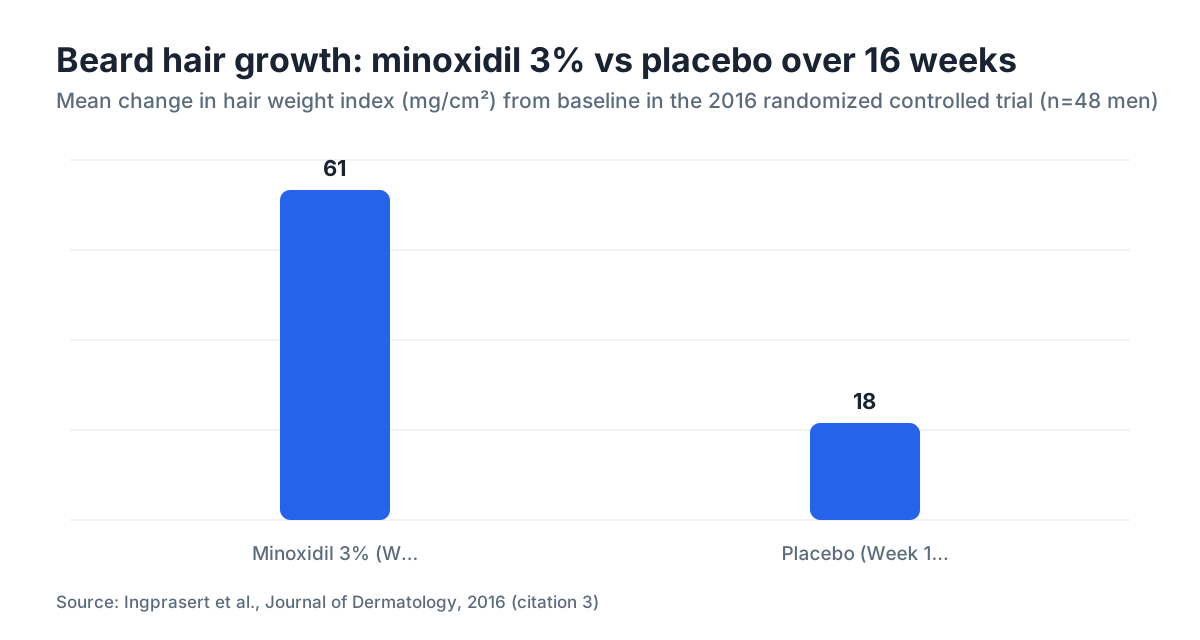
The best direct evidence is a randomized, double-blind, placebo-controlled trial published in the Journal of Dermatology in 2016 [3]. Researchers put 48 men with thin beards on either 3% topical minoxidil lotion or placebo, twice daily, for 16 weeks. At week 16, the minoxidil group had a higher total hair count and a higher hair weight index than placebo. The authors wrote that "topical minoxidil lotion 3% is effective for beard enhancement."
That's a proper RCT with a control arm. It's small, and it used 3% rather than the 5% most men buy. The direction of the effect is clear anyway, and it lines up with what dermatologists see in the chair.
Here's the honest limit. Minoxidil does not build new follicles. If a patch of your face has no follicles, nothing topical will fix it. What minoxidil does is turn thin, short, vellus-type hairs into thicker, longer ones from follicles that already exist. Most men with a patchy beard have follicles in those patches. They're just producing weak hair. That's the group this works for.
How does minoxidil work on facial hair specifically?
Beard follicles love androgens, which flips the script from your scalp. On the scalp, DHT shrinks follicles and drives balding. On the face, androgens grow the beard. That's why finasteride, which blocks DHT, can thin some men's beards a little while it protects their hairline [4].
Minoxidil mostly sidesteps the hormone question. It works on the follicle directly by opening ATP-sensitive potassium channels, relaxing the smooth muscle in nearby blood vessels and bringing more blood to the area [2]. More blood means more oxygen and nutrients at the root. Minoxidil also appears to raise vascular endothelial growth factor (VEGF) and other growth signals that keep the follicle in its active phase longer [10].
Since beard follicles aren't under attack from DHT the way scalp follicles are in male pattern baldness, minoxidil on the face works with the follicle's own biology instead of fighting a hormonal current. That's likely why some men see a faster or bigger jump on their beard than they expected from their scalp results.
What this means for you: if your patchiness comes from genetics and lazy follicle output, minoxidil has a real shot. If it comes from alopecia areata, an autoimmune condition that leaves smooth bald circles [9], you need a dermatologist and a different plan before you touch minoxidil.
What concentration and form of minoxidil should you use for beard growth?
The 2016 trial used 3% [3]. Most men use 5%, because that's what sits on the shelf over the counter and what the FDA cleared for men's scalp use [1]. No beard study has ever put 3% against 5% head to head. The honest read: 5% is probably at least as effective and maybe more, but you'll also absorb more of it, which matters for side effects.
Liquid or foam. The liquid solution soaks into skin faster and is easier to steer onto a specific patch. The foam skips propylene glycol, the ingredient that irritates a lot of people, so it's gentler. Both grow hair. On skin rather than dense hair, many men find the liquid easier to aim and let dry.
Oral minoxidil is prescribed off-label for hair loss at low doses (0.625 mg to 2.5 mg daily), and some dermatologists use it for beards too [5]. Start topical. Oral minoxidil carries a heavier systemic load, including fluid retention and a faster heart rate, and you should only take it with a prescription and monitoring. The oral minoxidil guide covers the differences.
Here's the quick version:
| Form | Concentration | Rx required? | Main tradeoff |
|---|---|---|---|
| Topical liquid | 3% or 5% | No (OTC) | Propylene glycol can irritate skin |
| Topical foam | 5% | No (OTC) | Gentler on skin, slightly less penetration |
| Oral tablet | 0.625-2.5 mg | Yes | Systemic absorption, more side effects |
My default for most men: 5% topical, once daily to start, on the beard area. See how your skin handles it before you go twice daily.
How do you apply minoxidil to your beard correctly?
Application is simple, but a few details change both your results and your safety.
Start with a clean, dry face. Minoxidil soaks into dry skin better. Put about 1 mL of liquid (one dropper, the standard scalp dose) across the patch you want to treat. With foam, roughly half a capful covers the face. Rub it in with your fingertips.
Wash your hands right after, thoroughly. This isn't optional. Minoxidil on your palms rubs off onto everything you touch, and palm skin absorbs it. The FDA has adverse event reports tying contact transfer to unwanted hair growth in female partners of men who skipped the handwashing step [6].
Leave it on for at least four hours before you wash your face. A lot of men apply at night and rinse in the morning, which is convenient and skips the greasy daytime look. If you moisturize or use sunscreen, put minoxidil on first, let it dry 15 to 20 minutes, then layer the rest.
Never apply to broken, sunburned, or irritated skin. Damaged skin absorbs the drug fast and can push your blood levels into a range that touches your heart rate and blood pressure.
For how minoxidil works on the scalp, including dosing and the FDA context, see minoxidil for men.
How long does minoxidil take to grow a beard?
This is slow. Settle in.
Most men spot fine new hairs at 8 to 12 weeks. Real thickness usually needs 3 to 6 months of daily use. The 2016 RCT measured its results at 16 weeks and found significant differences there [3], so four months is a fair point to judge whether it's working.
The hair cycle explains the wait. Minoxidil stretches anagen, but follicles still cycle. When you start, some follicles sit in telogen (the resting phase) and won't respond until they enter anagen. Others shed briefly (yes, the minoxidil shed happens on the face too) before they grow back thicker.
A rough map of what to expect:
| Timeframe | What to expect |
|---|---|
| Weeks 1-4 | Little visible change; some dryness or mild irritation |
| Weeks 4-8 | Possible shedding of existing thin hairs |
| Weeks 8-16 | Fine new hairs appear; patches start filling |
| Months 4-6 | Real thickness gains if it's working |
| Month 12+ | Peak density; most of what you'll get |
Six months of consistent use and nothing to show for it? Minoxidil probably isn't your answer. Stopping there is a reasonable call.
What are the side effects of using minoxidil on your face?
The side effects are real, and you should walk in knowing them. The minoxidil side effects guide covers the full list. Here's what's specific to the face.
Skin reactions top the list. Facial skin is more sensitive than the scalp, and the propylene glycol in the liquid often brings dryness, flaking, or contact dermatitis. Switching to foam usually fixes it. Some men get red, itchy skin. If the irritation is bad, stop, let the skin heal, then try again with foam or a lower strength.
Systemic absorption is the concern that matters most. Facial skin is thinner and more vascular than the scalp, so minoxidil can reach your bloodstream at higher rates from the face [2]. Systemic minoxidil drops blood pressure and speeds up the heart. Most men using 1 mL of 5% a day won't feel a thing, but if you have any history of heart disease, low blood pressure, or take blood pressure meds, talk to a doctor first. That's pharmacology, not hand-wringing.
Hair where you don't want it. Minoxidil can cause hypertrichosis, meaning growth in places you didn't aim for. On the face that usually means cheek hair creeping too high or stray hairs at the edges of where you applied. Skip the handwashing and you may find faint hair on the backs of your hands.
The beard shed. Around weeks 4 to 8, some men lose thin beard hairs before the new ones come in. It's the same telogen effluvium mechanism as the scalp shed, explained in detail at telogen effluvium. Temporary, but rattling if nobody warned you.
Eyes. If liquid runs toward your eyes, rinse right away. Keep both foam and liquid clear of the eye area.
Do you have to use minoxidil forever to keep the beard results?
Pretty much, if you want to hold the gains.
Minoxidil doesn't rebuild your follicles permanently. It changes the hair cycle only while the drug is in your skin. Stop, and follicles drift back to their old behavior over about 3 to 4 months. The hairs minoxidil grew will shed, and your beard slides back toward baseline.
Same deal as scalp minoxidil. It's maintenance, not a cure. Some men are fine with that bargain. Others decide a patchy beard beats a daily chore for life.
One possible exception: a few dermatologists think that using minoxidil while your beard is still naturally filling in (usually your mid-20s) might nudge the natural timeline and lock in some of the gain. There's no solid data on that for the beard. Plan on staying on it if you want to keep the results, and treat any retained gain as a bonus.
Can women use minoxidil for facial hair growth?
Two very different questions hide inside this one.
For women who want more facial hair (gender-affirming reasons, or personal preference), minoxidil runs on the same follicle mechanism, and there's no biological reason it wouldn't grow hair on the face. But almost nothing has been published on intentional female beard growth with minoxidil. The evidence there is basically case reports and anecdote.
For women worried about getting minoxidil on their face by accident, from a partner's application, that worry is fair. Unwanted facial hair is a documented effect of minoxidil exposure in women, and it's part of why the 2% strength was historically sold for women instead of 5% [1]. If a man in the house treats his beard, the women around him should avoid skin contact with the treated area until it's fully dry.
Pregnant and breastfeeding women should not use minoxidil at all. The FDA label spells that out [1].
How does minoxidil for beard growth compare to other options?
There aren't many real alternatives, and minoxidil is the only one with a beard-specific trial.
Dermarolling (microneedling) gets paired with scalp minoxidil to boost absorption, and some men bring it to the beard. One small RCT found dermaroller plus minoxidil beat minoxidil alone on the scalp [7]. For beards, it's anecdote only. Rolling the face carries more irritation and infection risk than the scalp. If you try it, use a clean roller, 0.5 mm max depth, and wait 24 hours before applying minoxidil so you're not driving the drug through freshly opened skin.
Platelet-rich plasma (PRP) injections get used for beard enhancement by some clinics. Beard-specific evidence is thin. PRP for scalp hair has a modest track record but needs repeat sessions and runs roughly $500 to $1,500 per session in the US, with several sessions needed.
Beard transplants are the only permanent route. A surgeon moves follicles from the back of the scalp into the beard. Results can look great, but costs run from about $3,000 to $15,000 depending on graft count and where the surgeon practices [8]. The hair transplant guide walks through the procedure. That's a far bigger step than a topical drug.
Testosterone grows facial hair in transgender men and in men with clinically low testosterone. If your levels are normal, more won't thicken your beard, and it carries real risk. This isn't a beard strategy for men with normal hormones.
Minoxidil is the only option here with a published RCT for the beard, which makes it the sensible first move for most men.
| Option | Evidence for beard | Rough US cost | Permanent? |
|---|---|---|---|
| Topical minoxidil | One RCT (3%, 2016) | $90-180/year | No |
| Dermaroller + minoxidil | Scalp RCT only | Adds ~$20-40 | No |
| PRP injections | Sparse | $500-1,500/session | No |
| Beard transplant | Surgical outcomes | $3,000-15,000 | Yes |
Is minoxidil for beard growth FDA-approved?
No. The FDA approved topical minoxidil only for androgenetic alopecia on the scalp: 5% for men, 2% for women [1]. Beard growth is off-label.
Off-label prescribing is legal and routine in dermatology. Doctors can recommend a drug for uses beyond its label when the evidence supports it. Topical minoxidil is OTC, so you don't even need a prescription to buy it, but that doesn't make beard use officially approved.
This matters in three practical ways. The label won't give you beard dosing. Insurance won't cover it for this. And the manufacturer has no duty to study or report beard-related side effects. You're operating outside the formal safety-data system when scalp minoxidil goes on your face.
That doesn't make it a bad idea. It means you have to be your own careful observer. Heart palpitations, dizziness, swelling in your lower legs, or unexplained weight gain? Stop and see a doctor. Those point to systemic minoxidil effects that need attention.
And do the math if you treat both areas. Two applications of 1 mL of 5% minoxidil put 100 mg of the drug on your skin per day. That's a meaningful systemic load. Keep your doctor in the loop.
Myhairline.ai's free AI hair scan (/scan) can map your current hair and beard pattern before you start, so you have a real baseline to track against over the coming months.
What does the real-world experience look like, and who should not try this?
The men who do best already have some beard coverage with a few clear patchy zones, and most are under about 35. Younger men whose beards are still filling in seem to respond faster, probably because their follicles are already primed to switch on.
Men with near-zero beard across the whole face usually walk away disappointed. Minoxidil can't build follicles from nothing. If your father and every uncle on both sides had no beard by their 30s, genetics is running the show, and minoxidil will do little you can see.
Here's who should skip it.
Men with known heart disease or arrhythmias. Minoxidil is a vasodilator, and even topical doses can reach the bloodstream in people with a compromised heart.
Men on blood pressure medication. A topical vasodilator can stack on top of your meds and drop your pressure further, sometimes hard.
Men with a broken skin barrier on the face, like active eczema, psoriasis in the beard, or rosacea. Damaged skin absorbs minoxidil at rates you can't predict.
Anyone under 18. Minoxidil isn't studied in teens for this, and beard development is still unfolding at that age.
If you're in any of those groups, this is a real conversation with a dermatologist or your GP before you start, not a solo experiment. OTC doesn't mean low-stakes for everyone.
Dealing with scalp thinning alongside a sparse beard? It helps to see how what causes hair loss ties the two together, since DHT and androgen sensitivity hit the scalp and the face in opposite directions. If you're weighing a DHT blocker to protect your scalp while you run minoxidil on your beard, know that finasteride and minoxidil often ride together for scalp hair, as covered in finasteride and minoxidil. Just remember finasteride can thin some men's beards a touch. That's the trade-off to weigh.
Sources
- FDA, Rogaine (minoxidil) label and approved indications
- StatPearls (NCBI Bookshelf), Minoxidil pharmacology and mechanism of action
- Ingprasert S et al., Journal of Dermatology 2016, RCT of 3% topical minoxidil for beard enhancement
- StatPearls (NCBI Bookshelf), Finasteride mechanism and DHT inhibition
- Randolph M, Tosti A, Journal of the American Academy of Dermatology 2021, oral minoxidil review
- FDA MedWatch, minoxidil adverse event reports including contact transfer causing hair growth in partners
- Dhurat R et al., International Journal of Trichology 2013, RCT of dermaroller plus minoxidil vs minoxidil alone for androgenetic alopecia
- American Board of Hair Restoration Surgery, hair transplant costs
- American Academy of Dermatology, hair loss types and treatments overview
- Suchonwanit P et al., Drug Design Development and Therapy 2019, minoxidil mechanisms and use