

TL;DR: Telogen effluvium is temporary, diffuse shedding triggered by physical or emotional stress, nutritional gaps, hormonal shifts, or illness. Most cases clear up within 3 to 6 months after the trigger is gone. No drug cures it. Fixing the root cause, correcting deficiencies, and waiting does. Shedding past 6 months needs a dermatologist to rule out other conditions.
What is telogen effluvium and why does it happen?
Telogen effluvium is diffuse hair shedding that happens when a large number of follicles shift at once from the growing phase (anagen) into the resting phase (telogen) [1]. Normally 5 to 15 percent of your scalp hairs sit in telogen at any moment [9]. A big stressor can push that past 30 percent, and two to three months later, those follicles let go together.
That two-to-three-month lag confuses almost everyone. You lose a clump of hair in February, panic for weeks, then remember the COVID infection, the surgery, or the crash diet from November. The lag is baked into follicle biology. It does not mean the trigger is still active [1].
Common triggers include [2]:
- Fever or serious illness (COVID-19 set off a wave of TE cases after 2020)
- Childbirth (postpartum TE is the best-documented variant)
- Rapid weight loss or eating below roughly 1,200 kcal a day
- Iron deficiency or low ferritin, even without clinical anemia
- Thyroid disease (both underactive and overactive)
- Severe protein restriction
- Major surgery or physical trauma
- Psychological stress bad enough to wreck sleep and cortisol rhythms
- Certain medications, including anticoagulants, retinoids, and beta-blockers
The trigger matters because no topical or oral treatment outruns an ongoing cause. The body is not malfunctioning here. It's triaging. Hair is metabolically expensive, so under real physiological stress the body sets it aside. Fix the stress and the follicles come back on their own.
For a broader look at how different conditions produce hair loss, see our guide to what causes hair loss.
How is telogen effluvium different from permanent hair loss?
Telogen effluvium does not destroy follicles. That single fact separates it from the loss people actually fear. The follicle is still there, still viable, just parked in a long resting state. Once the trigger clears, it re-enters anagen and grows a new shaft [1].
Androgenetic alopecia (pattern hair loss) is a different animal. DHT shrinks the follicle over years until it can no longer make a visible hair. It follows a recognizable pattern: thin at the temples and crown in men, wider at the part line in women. TE sheds uniformly across the whole scalp, including the back and sides. You can lose a lot of volume with TE but rarely go bald from it.
The two overlap. Someone with mild genetic hair loss can have a TE episode that suddenly exposes thinning that was hidden before. That combination is common and genuinely confusing. A dermatologist can usually tell them apart with a pull test, a trichoscopy exam, or by reading whether hairs shed with a white anagen bulb versus a club-ended telogen bulb, which points to ordinary TE.
If you have widening part lines, temple recession, or a pattern that does not fit diffuse shedding, read our breakdown of telogen effluvium versus pattern loss to see where you stand.
What is the typical timeline for recovery?
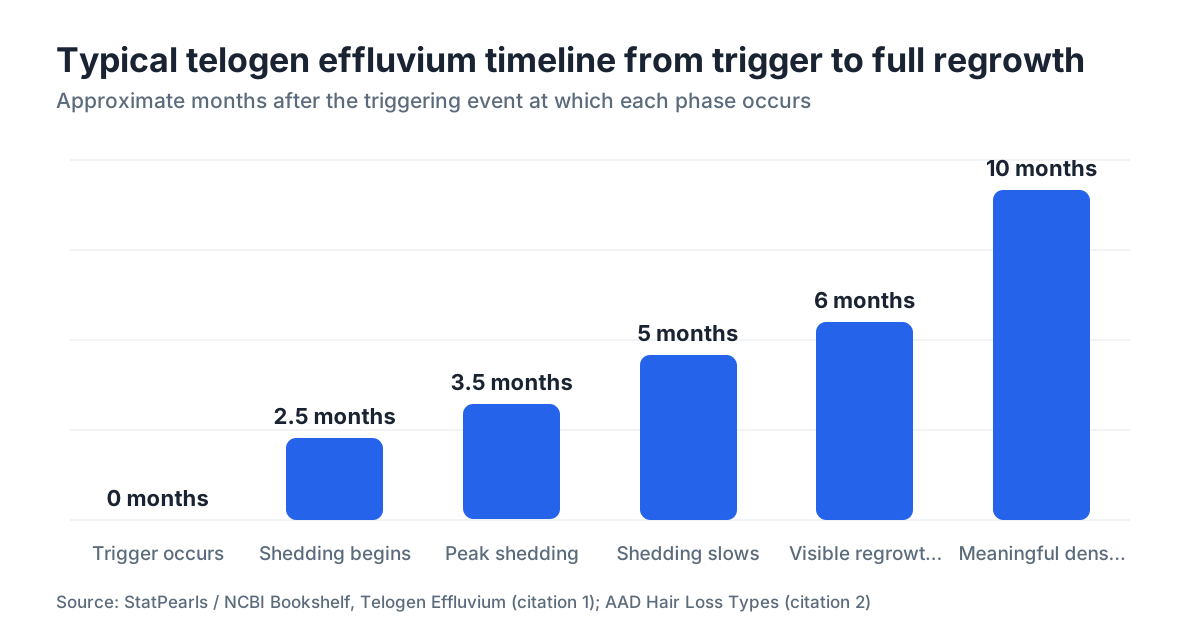
Most acute telogen effluvium clears within 3 to 6 months of removing the trigger [2]. Some people see regrowth by month 4. Others feel like nothing is happening for half a year, then watch a sudden change. Both are normal.
Recovery feels slow because new anagen hairs grow about 1 centimeter a month [3]. Even if every follicle restarted growth on the same day, it would take 6 to 12 months for those hairs to get long enough to add real volume. The hair is regrowing. You just can't see it yet.
Chronic telogen effluvium means diffuse shedding lasting longer than 6 months [2]. It's less common, and the triggers tend to be ongoing rather than acute: iron deficiency that was never corrected, undiagnosed thyroid disease, chronic undereating. A subset of people have idiopathic chronic TE where no trigger ever turns up, and that is genuinely frustrating. Nobody has clean data on how that group resolves. Most dermatologists report it eventually stabilizes and reverses, often over one to two years.
Believing the timeline is half the fight. The hardest part of recovering from TE is not a treatment protocol. It's resisting the urge to do something destructive out of panic while you wait.
What actually fixed it: the steps with real evidence behind them
No FDA-approved drug is indicated specifically for telogen effluvium [4]. That sounds alarming and is actually reassuring: the condition does not need a drug. It needs the underlying cause removed or corrected. Here's how that breaks down in practice.
Identify and remove the trigger. Obvious, and yet plenty of people skip it. A basic lab panel is worth running: complete blood count, ferritin (more useful than hemoglobin, because ferritin drops first), thyroid-stimulating hormone, vitamin D, and zinc. Some dermatologists also check B12. Serum ferritin below 30 ng/mL is associated with increased hair shedding, and some practitioners target above 70 ng/mL for recovery, though the exact cutoff is debated [5].
Correct nutritional deficiencies, especially iron. Iron repletion is one of the most consistently supported moves in TE. A review in the Journal of the American Academy of Dermatology by Rushton found that iron deficiency is a common and correctable contributor to hair shedding [5]. If your ferritin is low, an iron supplement with vitamin C on an empty stomach can raise it within 2 to 3 months, though full repletion often takes 4 to 6.
Eat enough protein. Hair is almost entirely keratin. Severe protein restriction from extreme diets, careless vegan transitions, or bariatric surgery directly stalls follicle cycling. Aim for at least 0.8 grams of protein per kilogram of body weight. Many dietitians suggest 1.2 to 1.6 g/kg while recovering from heavy shedding.
Treat thyroid disease. If TSH comes back abnormal, managing the thyroid condition with your physician is the main intervention. Hair does not reliably return until thyroid hormone is stable.
Minoxidil (optional, not curative). Topical minoxidil shortens the telogen phase and can speed up visible regrowth in some TE patients. It does not fix the root cause. If you use it, know that some volume you gain may partially reverse when you stop, because minoxidil extends anagen rather than permanently resetting the follicle. More on what to watch for is in our minoxidil side effects article. Men considering it as an add-on should read minoxidil for men.
Reduce stress in a practical way, not a performative one. Psychological stress triggers TE through cortisol-driven disruption of the hair cycle [6]. Telling someone to relax is easy. Actually doing it is not. What has data behind it: steady sleep (7 to 9 hours), regular moderate exercise, and, when clinical anxiety or depression is present, real mental health treatment. Scalp massage has one small supporting study (4 minutes daily for 24 weeks changed measured hair thickness in a 2016 Japanese pilot) [7], though the sample was tiny and the mechanism unclear.
What wastes your money. Biotin supplements do nothing for shedding if you aren't biotin-deficient. The FDA has warned that high-dose biotin can throw off lab test results [4]. Most expensive "hair vitamin" blends are marketing. The one exception is a documented deficiency in a nutrient the formula contains, and even then a cheap individual supplement does the same job. For the full breakdown, see hair loss supplements.
Can minoxidil or finasteride speed up recovery?
Minoxidil, yes, a little. Finasteride, no. That's the short version.
Minoxidil is sometimes used off-label during TE recovery. It can visibly speed regrowth by shortening telogen and holding more follicles in anagen longer. The FDA has approved topical minoxidil (5% for men, 2% for women) for androgenetic alopecia, not TE [4]. That doesn't mean it can't help. It means the evidence base for TE specifically is thin.
Finasteride works by blocking the conversion of testosterone to DHT, the mechanism behind androgenetic alopecia [8]. TE is not a DHT-driven condition. Using finasteride for pure TE has no clear rationale. If you have documented pattern loss layered on top of a TE episode (which happens), finasteride addresses the pattern loss while the TE resolves on its own.
Anyone running both drugs for coexisting pattern loss can read our finasteride and minoxidil guide.
Oral minoxidil at low doses (0.625 to 2.5 mg daily) is gaining traction for diffuse shedding, and some dermatologists report good results for TE patients who want faster density recovery. The evidence is early: mostly retrospective case series, not randomized trials. Our oral minoxidil article walks through what the current data shows.
The honest answer: neither drug cures TE. They manage symptoms or a coexisting condition while the body does the real repair work.
How long does the shedding phase actually last?
Active shedding in acute TE peaks 2 to 3 months after the trigger, then slows over the next 2 to 3 months [2]. The total shedding window runs roughly 3 to 6 months from onset. It fades rather than stopping cold. You go from 300 to 400 hairs a day at peak, down to 100, then back into the normal 50 to 100 range.
Eight months in with no slowdown is the line. That's when you push for a thorough workup instead of assuming patience will do the job. Chronic TE can feed itself: the distress of watching your hair fall out becomes its own stressor, which keeps the cycle going. Some dermatologists treat this head-on and fold short-term anxiety management into the plan.
A simple daily count helps here, as data rather than as a source of dread. Comb for 1 minute into a sink over a white towel and count the hairs. If your count trends down across a 4-week stretch, that's evidence of recovery even when nothing feels different.
Photos from the same angle under the same light every 4 weeks are another honest tracker. Scalp-surface volume lags actual follicle activity by a full growth cycle, so the mirror is always behind the biology.
Does diet actually matter for telogen effluvium?
Yes, meaningfully. The strongest diet evidence in TE sits with iron, ferritin, and protein, with reasonable support for a few other nutrients [5][10].
Iron and ferritin: ferritin below 30 ng/mL correlates with more shedding. Heme iron (red meat, shellfish) absorbs far better than non-heme iron from plants. Vegetarians and vegans often need supplementation to reach the ferritin levels tied to recovery.
Zinc: deficiency is linked to hair loss and is more common than people think, especially in those who eat little meat or have gut conditions that block absorption. But too much zinc can cause hair loss by crowding out copper, so supplementing without testing first is a bad idea.
Vitamin D: low D is common in people with TE, though the direction of cause isn't settled. Some studies show an association between vitamin D deficiency and alopecia areata specifically; the TE evidence is softer. Correcting a deficiency is low risk and pays off elsewhere in your health anyway.
Calories: any diet under roughly 1,200 kcal a day risks triggering TE regardless of micronutrients. Crash diets, liquid fasts, and post-bariatric periods are all high-risk windows. Eating at maintenance with enough protein is boring advice that directly supports follicle cycling.
Before spending on proprietary blends, read hair loss supplements.
What blood tests should I ask for?
A targeted panel beats a general "hair panel" from a direct-to-consumer lab, because you want a clinician reading the results in context. Here's what most dermatologists focused on hair loss actually order [2][5]:
| Test | What it tells you | Target range for hair health |
|---|---|---|
| Ferritin | Iron stores in tissue | Some practitioners target >70 ng/mL for hair |
| CBC | Rules out anemia | Hemoglobin >12 (women), >13.5 (men) g/dL |
| TSH | Thyroid function | 0.5 to 4.5 mIU/L (lab-dependent) |
| Free T3 / Free T4 | Active thyroid hormone | Lab-specific reference range |
| Vitamin D (25-OH) | D status | >30 ng/mL, ideally 40-60 |
| Zinc (serum) | Zinc status | 70-120 mcg/dL |
| Vitamin B12 | B12 status | >300 pg/mL to avoid neurological risk |
| ANA (if indicated) | Autoimmune screen | Negative preferred |
These are general clinical reference ranges and vary by lab. Your physician's read of your specific results matters more than hitting any single number.
If all of these come back normal and you still shed heavily past 6 months, a dermatologist may do a scalp biopsy to rule out scarring alopecia or alopecia areata. Those are different conditions with different treatment paths.
What about postpartum telogen effluvium specifically?
Postpartum TE is one of the most common and distressing hair loss experiences women face, with estimates of 40 to 50 percent of new mothers affected [12]. During pregnancy, high estrogen and progesterone hold most hairs in anagen, which is why many pregnant women notice thicker hair. After delivery, hormones drop sharply and a large group of follicles enter telogen together. Shedding usually starts 2 to 4 months postpartum and peaks around month 4.
The reassuring part: postpartum TE almost always resolves by 12 months postpartum [12]. The follicles were never damaged. A hormonal event just synchronized them. No treatment is required, though many new mothers are iron-depleted after delivery, so checking ferritin and supplementing if it's low is sensible.
Breastfeeding adds caloric and nutritional demand, which can drag out deficiencies if intake doesn't keep up. Eating enough while nursing can feel counterintuitive when you're eager to lose the pregnancy weight, but it's directly tied to hair recovery.
Still shedding at 12 months postpartum, or seeing your hairline pull back? That's worth investigating. A receding hairline in women can point to something other than postpartum TE; see receding hairline for when to look further.
When should I see a dermatologist instead of waiting it out?
You can safely wait out a suspected TE episode if you can name a clear trigger from 2 to 3 months prior, the shedding is diffuse rather than patterned, and you're under 6 months in. Run the blood panel above on your own or through a GP.
See a dermatologist promptly if any of these are true:
- Shedding continues past 6 months with no clear slowdown
- You see patchy loss rather than diffuse thinning
- There's scalp inflammation: itching, redness, scaling, or tenderness
- You've lost more than half your visible scalp coverage
- You're shedding eyebrows or body hair alongside scalp hair (which can suggest alopecia areata or a systemic condition)
- Your hairline is receding in a defined pattern (which points to androgenetic alopecia rather than TE)
A board-certified dermatologist, ideally one who specializes in hair loss, can do a trichoscopy in-office to examine follicle architecture, check for miniaturization, and separate TE from other conditions with confidence. You cannot make this call reliably from photos alone.
For a starting read before you book, the free AI scan at MyHairline can give you an early sense of shedding pattern and density. It does not replace a clinical exam.
To understand the full range of causes behind different presentations, what causes hair loss is worth reading before your appointment.
Is there anything that genuinely sped up my regrowth?
Here's the honest accounting of what has evidence behind it versus what's anecdote.
Things with at least modest supporting evidence:
- Correcting documented deficiencies (iron, vitamin D, zinc, B12): the evidence is good. Studies consistently show that normalizing ferritin is associated with better shedding outcomes [5][10].
- Adequate protein (1.0 to 1.6 g/kg a day): indirect but a strong rationale, given keratin is protein.
- Topical minoxidil: shortens telogen and speeds visible density, without touching the root cause. Expect 4 to 6 months before any visible benefit.
- Scalp massage: the 2016 Aderans pilot showed increased hair thickness with 4 minutes of standardized massage daily over 24 weeks [7]. The sample was 9 men and the mechanism is debated, but it costs nothing.
- PRP (platelet-rich plasma): some randomized trials show benefit for androgenetic alopecia. Evidence specifically for TE is limited, and sessions run $500 to $2,500 with no insurance coverage. Not where I'd start.
Things with little to no credible evidence for TE:
- Biotin supplements without deficiency: no demonstrated effect on shedding in non-deficient people [4]
- Caffeine shampoos: preliminary, small studies, unclear effect size
- Red light (LLLT) devices: FDA-cleared for androgenetic alopecia, minimal data for TE
- Ketoconazole shampoo: useful for androgenetic alopecia and scalp inflammation, not for TE directly
The honest answer for most people: correcting deficiencies, eating enough protein, managing stress, and waiting is the combination that works. The timeline runs 4 to 7 months post-trigger. No shortcut compresses that window by more than a month or two.
For an AI-assisted look at your specific pattern and density, MyHairline's free scan can help you figure out what you're dealing with before you commit to any treatment.
Will my hair fully grow back?
In acute TE with a clear, resolved trigger: yes, in the large majority of cases [1][2]. Full recovery is the expected outcome, not the exception.
The catch is what "full recovery" means. Your hair returns to what it was right before the TE episode. If you had early androgenetic alopecia mostly hidden before TE thinned you out, the density you had before may have included camouflage that pattern loss will keep chipping away at. The TE resolves; the underlying pattern loss keeps going on its own track.
For chronic idiopathic TE past a year, the prognosis is less predictable, but most case series report eventual stabilization. The American Academy of Dermatology notes that hair loss from telogen effluvium is temporary and that hair usually regrows after the cause is found and treated [2].
Age factors in. Women in perimenopause can have TE episodes triggered by hormonal shifts, and those can blend into hormonally driven diffuse thinning that isn't classic TE. If you're in your late 40s or 50s and shedding hard, add a hormone panel to the standard workup.
For comparison, the conditions that do cause permanent loss are scarring alopecias (lichen planopilaris, frontal fibrosing alopecia) and long-untreated androgenetic alopecia. Those are not TE. Getting the diagnosis right, which a dermatologist can do, is the single most useful step you can take.
Sources
- StatPearls (NCBI Bookshelf), Telogen Effluvium
- American Academy of Dermatology, Hair Loss Types
- NCBI, Physiology, Hair, StatPearls
- U.S. Food and Drug Administration
- Rushton DH, Journal of the American Academy of Dermatology, Iron deficiency and hair loss
- Peters EMJ et al., PLOS ONE, Stress and the hair cycle
- Koyama T et al., ePlasty (Aderans Research Institute), Standardized Scalp Massage Results in Increased Hair Thickness
- MedlinePlus (U.S. National Library of Medicine), Finasteride
- Headington JT, JAMA, Transverse microscopic anatomy of the human scalp and hair cycle phases
- Trost LB et al., Journal of the American Academy of Dermatology, Role of nutritional deficiencies in hair loss
- Grover C, Khurana A, Indian Journal of Dermatology Venereology and Leprology, Telogen effluvium review