

TL;DR: Transplanted follicles come from DHT-resistant scalp, so they usually last a lifetime once established. Studies following patients 6 to 10 years show graft survival above 90%. The catch: your untransplanted native hair keeps thinning with age. That contrast is what makes a transplant look patchy over time, unless you protect the surrounding hair with medication or plan for future sessions.
Do hair transplants last permanently?
Yes, with a caveat most clinics undersell.
Transplanted follicles come from the back and sides of the scalp, a region called the donor zone. Those follicles are genetically programmed to resist DHT, the hormone that drives male and female pattern hair loss. DHT cannot shrink them the way it shrinks follicles on the top of the scalp [1]. When a surgeon moves them into a bald or thinning area, they carry that resistance with them. That is the entire biological rationale behind hair transplantation.
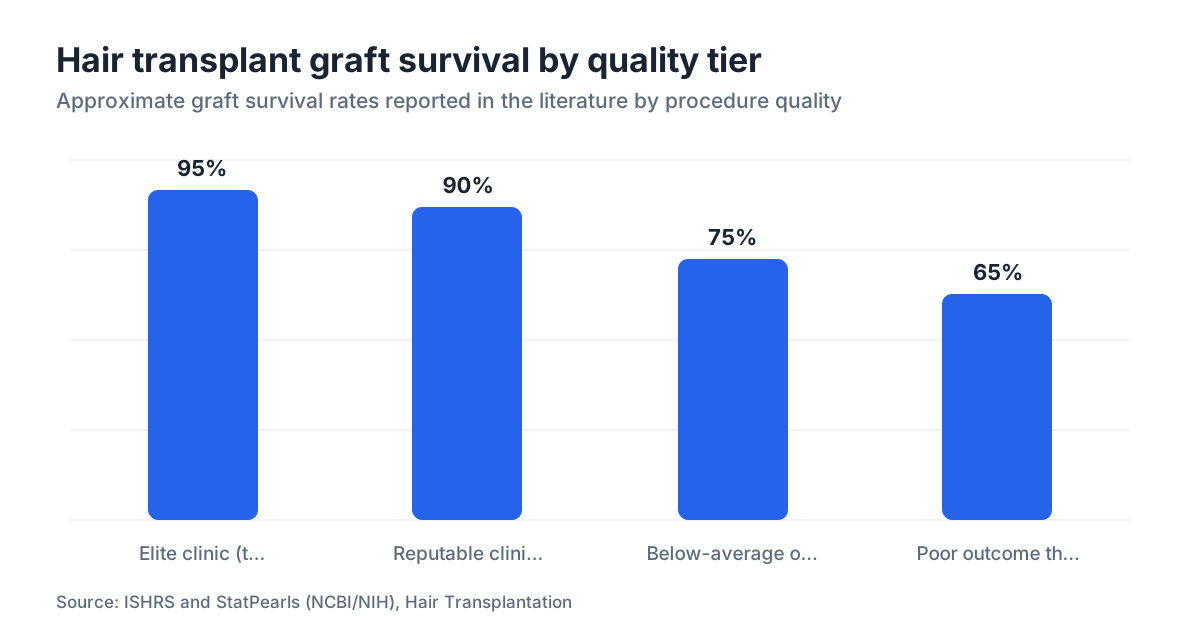
Long-term data backs this up. Follicular unit extraction series report graft survival consistently above 90% in multi-year follow-up [2]. Older follicular unit transplantation (strip) series tracking patients beyond 10 years show similar durability. The follicles do not suddenly quit at year 15.
Now the caveat. The native hair around your transplant keeps thinning. Nobody says this clearly at the consultation. If you had the procedure as a Norwood 3 and progress to a Norwood 5 over the next decade, those transplanted islands of hair will look increasingly stranded against a widening bald background. The transplant did not fail. The disease continued. Those are two different things, and conflating them is the single biggest source of patient disappointment. Understanding what causes hair loss in the first place helps you set realistic expectations from day one.
What is the typical graft survival rate?
Most published data puts graft survival between 85% and 95% when the procedure is done well [2][3]. Some experienced surgeons report above 95% for FUE in controlled conditions. Below 80% is a poor outcome, usually a sign of technical problems: grafts that dried out on the back table, bad angulation, or recipient sites packed too dense.
A few numbers worth knowing:
- A standard session transplants roughly 1,500 to 4,000 grafts, depending on donor supply and the area being covered.
- Each graft holds 1 to 4 hairs (natural follicular units), so 2,500 grafts might add 5,000 to 7,500 individual hairs.
- At 90% survival, that patient keeps roughly 4,500 to 6,750 of those hairs long term.
You cannot verify graft survival in the mirror at month two. Nearly all transplanted hairs shed 2 to 8 weeks after surgery before they regrow. This is telogen effluvium, a normal part of the healing cycle [4]. Visible results start around month 4 to 6. Final density does not show until month 12 to 18. Patients who panic at month 3 and assume the transplant failed are almost always looking at normal post-op shedding. Read more about telogen effluvium if this phase worries you.
How long before you see the real result?
This is one of the most searched questions, and the honest timeline surprises people. Meaningful growth starts around month 4. Most patients hit 60 to 70% of their final result by month 9 to 12. The full picture, texture and density included, takes 12 to 18 months.
| Timeframe | What is happening |
|---|---|
| Days 1-14 | Crusting and scabbing at recipient and donor sites |
| Weeks 2-8 | Transplanted hairs shed (shock loss, normal) |
| Months 2-4 | Dormant period; area may look worse than pre-op |
| Months 4-6 | New hairs break through, early density visible |
| Months 9-12 | Significant growth, most patients see 60-70% of final result |
| Months 12-18 | Final result, full texture and curl pattern restored |
Some patients, particularly those over 50 or with very coarse hair, see the last 20 to 30% of growth arrive between months 12 and 18. Going in expecting a finished result at 6 months is a setup for premature disappointment.
The dormant stretch between week 4 and month 4 is the hardest part psychologically. The original hairs have shed, the new ones have not emerged, and the scalp can look balder than it did before the operation. Temporary. Expected. Not a sign of failure.
FUE vs FUT: does the technique affect how long results last?
No. Both FUE (follicular unit extraction) and FUT (follicular unit transplantation, the strip method) harvest from the same DHT-resistant donor zone, so the long-term durability of established grafts is comparable [3]. The transplanted follicle does not know or care how it was harvested.
What differs is the harvesting and its trade-offs.
FUT removes a strip of scalp and dissects it into individual follicular units under microscopes. Transection rates (accidentally cutting through a follicle during dissection) can be lower with experienced technicians because the follicle is clearly visible in the strip. The trade-off is a linear scar at the back of the head.
FUE punches out individual follicular units one at a time. No linear scar, faster healing, and you can wear your hair very short. The transection risk is slightly higher and depends heavily on the surgeon's skill and the punch size.
Where FUE has a real disadvantage is donor management. Because it harvests from a wider spread, aggressive extraction can deplete or visibly thin the donor zone, leaving less reserve for future sessions. That matters enormously if you are young and will likely need a second procedure. A good hair transplant consultation includes an explicit conversation about preserving donor supply.
For most patients at a reputable clinic, the technique choice is about scarring and recovery preference, not how long the hair lasts.
Why does a hair transplant look worse over time for some people?
Because hair loss is a progressive disease, and a transplant redistributes existing hair. It does not cure anything. This is the section clinics have the least reason to spend time on.
Get a transplant at 28 and do nothing to slow your ongoing loss, and two things happen at once over the next decade:
- Your transplanted hair grows reliably, because those follicles resist DHT.
- Your native hair in and around the transplanted area keeps thinning, because those follicles do not.
The result is a patchwork: dense transplanted hair sitting next to thinning or absent native hair. That looks worse than a uniform thin appearance. In some cases it looks worse than no transplant at all.
This is why most dermatologists and hair restoration surgeons want you on medical therapy before or right after a transplant. Finasteride and minoxidil do nothing for the transplanted hair (it needs no help). They slow the loss of the surrounding native hair, which keeps the result looking continuous [5]. A transplant plus ongoing medication is the standard of care at quality clinics, not an upsell.
Read how finasteride works and what finasteride and minoxidil together add to a transplant result.
Does age matter for how long a hair transplant lasts?
Age affects two things: how likely the result is to look good long term, and how predictable the donor zone is.
Young patients (early to mid 20s) are the highest-risk group for long-term dissatisfaction. Not because the grafts fail. Because the final extent of their loss is unknown. A 23-year-old at Norwood 3 might be a Norwood 5 or 6 by 40. If the surgeon fills the current pattern aggressively, there may not be enough donor hair left to cover the eventual pattern, and the transplanted hairline ends up orphaned in the middle of a bald scalp.
Reputable surgeons get cautious with young patients for exactly this reason. The American Academy of Dermatology advises that candidates for hair restoration surgery be fully counseled about progressive hair loss before proceeding [6].
Older patients (late 40s and beyond) usually have a stable, predictable pattern. The surgery is easier to plan, expectations are easier to meet, and one well-executed session often finishes the job. The trade-off is a smaller donor supply and sometimes slower healing. But the long-term look is often more durable, simply because the disease has largely run its course.
If you are unsure where you fall on the hair loss spectrum, a free AI hair loss analysis from MyHairline gives you a starting Norwood estimate and flags whether your pattern looks stable or progressive before you book any consultations. Go to /scan.
Can a hair transplant fail entirely?
Yes. Poor outcomes exist, and they are more common than the industry admits publicly.
The usual causes of genuine failure:
Poor graft handling. Follicular units are living tissue. They die if stored at the wrong temperature, kept out of the body too long, or dried out during placement. Some high-volume "hair mills" rush this step. Graft viability drops significantly after hours outside the body without proper storage solutions [3].
High transection rates. Follicles damaged during extraction will not grow. A transection rate above 10 to 15% is a problem.
Recipient density too high. Packing too many grafts per square centimeter starves follicles of blood supply. Experienced surgeons know the safe upper density for each area.
Infection and poor aftercare. Uncommon but possible. Following post-op instructions matters.
Choosing an unqualified provider. This is the big one. Hair transplantation is not a licensed specialty in most countries. Anyone with a medical license can technically perform one. Checking credentials through the International Society of Hair Restoration Surgery (ISHRS) and looking for board-certified dermatologists or plastic surgeons is the minimum due diligence [7].
If a transplant does fail or produce thin density, repair procedures exist but are technically demanding, and they depend entirely on how much donor hair remains.
How many hair transplant sessions will you need over a lifetime?
One session is enough for some patients. Two or three is realistic for many. Planning from the start is what decides whether you run out of donor hair before you run out of hair loss.
The average donor zone holds roughly 6,000 to 12,000 grafts available for transplant, though this varies a lot by individual [8]. A single session might use 1,500 to 4,000 of those. If you are young and still progressing, a surgeon who burns 4,000 grafts in your first session at 24 may leave you with almost nothing at 40 when you need a second round.
This is why donor conservation is a serious topic in the field. Ethical surgeons plan each session with future ones in mind. They may deliberately use fewer grafts and spread extractions evenly, even if that means a less dramatic first result, to protect supply.
Body hair transplantation (chest, beard) exists as a supplement when scalp donor supply is exhausted. But body hair grafts behave differently and results are inconsistent. It is a last resort, not a routine plan B.
Ask any surgeon you consult, specifically, what your estimated total donor supply is and how their session plan accounts for future loss. If they cannot or will not answer that, find a different surgeon.
What medications help a hair transplant last longer?
Medications do not extend the life of transplanted follicles, which are already permanent. They protect the native hair that surrounds and fills in your transplant, keeping the overall result looking good longer.
The two FDA-approved options are finasteride (oral, 1mg/day) and minoxidil (topical 2% or 5%, or oral off-label) [9][10].
Finasteride blocks the conversion of testosterone to DHT, the hormone directly responsible for follicle miniaturization in androgenetic alopecia. The approval covers men only, and the drug is contraindicated in women who are or may become pregnant. The Phase III trials behind approval showed statistically significant improvements in hair count at 2 years versus placebo [9]. Most dermatologists want men on finasteride before or right after a transplant if they care about keeping their non-transplanted hair.
Minoxidil extends the anagen (growth) phase of the hair cycle and widens blood vessels around follicles. It does not touch DHT. It works by a separate mechanism. The 5% topical is FDA-approved for men; the 2% version for women [10]. Learn more about minoxidil for men, including what the early weeks look like, and read minoxidil side effects before starting.
Finasteride plus minoxidil after a transplant is not mandatory. In practice it is the most reliable way to make a result age well over 10 to 20 years. Stop either drug and the native hair it was protecting starts thinning again within months [5].
DHT-blocking supplements and DHT-blocking shampoos get marketed hard but have no meaningful clinical trial evidence behind them. If you want to see what the evidence actually shows, read hair loss supplements and DHT blocker.
How much does a hair transplant cost and does price relate to how long it lasts?
In the United States, hair transplants typically cost between $4,000 and $15,000 per session. The wide range reflects surgeon experience, location, session size, and technique [11]. Popular medical tourism destinations (Turkey, India, Thailand) advertise procedures at $1,500 to $4,000 all-in.
Price does not directly make grafts last longer. It correlates with the quality controls that affect graft survival. Higher-cost reputable practices usually mean more experienced surgeons doing the extractions personally, better graft storage protocols, lower patient volume per day, and follow-up care included.
The worry with very low-cost clinics, especially some high-volume international operations, is not the country itself. It is a business model that sometimes runs on volume over quality: huge sessions completed fast, technicians doing most of the work, grafts spending too long outside the body. The ISHRS has warned about "black market" hair transplant tourism where non-physicians perform procedures, with serious complication risks [7].
Hair transplants are not covered by insurance because they are cosmetic. No FDA rule classifies them otherwise.
Here is the honest framing. A $15,000 transplant at a reputable U.S. surgeon is not automatically better than a $6,000 one at a well-credentialed clinic. But a $2,000 all-inclusive package at an unknown clinic is a real gamble. Verify surgeon credentials, ask for before and after photos of their own patients, and read the ISHRS patient resources before committing.
What is the difference between a receding hairline transplant and a crown transplant in terms of longevity?
Location changes how a transplant ages, even though the grafts themselves are equally permanent.
Hairline transplants (frontal zone) are among the most durable-looking results long term. The hairline is stable once established, and modest graft numbers make a large cosmetic difference. The catch: the hairline is the most visible area on your head, so any progression behind it shows immediately. A hairline designed with age-appropriate recession, rather than a straight juvenile line, ages more gracefully as the surrounding hair thins.
Crown transplants are a different animal. The crown is the last area to fill in (often the full 18 months) and the first to look diffuse again if the surrounding native hair keeps thinning. It also needs far more grafts to cover than the hairline because the area is larger. Many surgeons are reluctant to transplant the crown in young patients for that reason: high donor cost, high progression risk, and a future session may be impossible if supply runs out.
If you are deciding where to spend limited grafts, most surgeons prioritize the frontal third because it frames the face and drives perceived appearance. The crown, while bothersome, matters less. Have this conversation explicitly with any surgeon before agreeing to a plan.
If you have a receding hairline and are weighing surgery against medication at your current stage, the stage of loss matters enormously to that decision.
What can you do to protect a hair transplant long term?
Once the grafts are established (usually by month 12), the transplanted hair needs no special protection because it resists DHT. What needs protecting is everything around it.
The steps that actually matter:
Start or continue finasteride if you are a man with androgenetic alopecia. This is the single highest-impact move for preserving the native hair that fills in around your transplant. The finasteride studies show it stabilizes hair loss in roughly 83 to 86% of men who take it consistently [9].
Use minoxidil for an additive benefit. The combination beats either one alone at maintaining non-transplanted hair over time [5].
Avoid prolonged crash diets and severe nutritional deficiencies. Protein deficiency and rapid weight loss are documented triggers of telogen effluvium, which temporarily sheds both native and transplanted hair (though the transplanted hairs grow back).
Protect the scalp from UV. There is no strong evidence that sun exposure destroys transplanted follicles, but chronic UV damages scalp skin, and a healthy scalp supports hair health generally. A hat or scalp SPF for long sun exposure is sensible.
Do not massage or scrub the scalp in the first 10 to 14 days post-op. After that, normal washing is fine and actually encouraged.
Stay consistent. The most common way people waste a transplant is not graft failure. It is progressive native hair loss that never got treated. A transplant without a medical plan is a partial answer.
Sources
- American Academy of Dermatology, Hair Loss overview
- National Center for Biotechnology Information (NCBI/NIH), StatPearls: Hair Transplantation
- International Society of Hair Restoration Surgery (ISHRS)
- StatPearls (NCBI/NIH), Telogen Effluvium
- Journal of the American Academy of Dermatology
- International Society of Hair Restoration Surgery, patient safety resources
- National Center for Biotechnology Information (NCBI/NIH), StatPearls: Hair Transplantation
- DailyMed (U.S. National Library of Medicine), Propecia (finasteride) label
- DailyMed (U.S. National Library of Medicine), minoxidil topical solution label
- American Society of Plastic Surgeons, procedure cost information