TL;DR: No natural method fully blocks DHT the way finasteride does, but a few have real evidence behind them. Saw palmetto and pumpkin seed oil show modest DHT-reducing effects in clinical studies. Diet and lifestyle changes that lower inflammation and improve scalp circulation help too. For significant hair regrowth, combining natural options with proven medical treatments gives the best results.
What is DHT and why does it cause hair loss?
DHT stands for dihydrotestosterone. It's a hormone your body makes when an enzyme called 5-alpha reductase converts testosterone into a stronger form. In follicles that are genetically sensitive, DHT binds to androgen receptors and slowly miniaturizes the follicle, shortening each growth phase until the hair it makes is barely visible. That process is androgenetic alopecia, or male and female pattern hair loss, and it affects roughly 50 million men and 30 million women in the United States [1].
Here's the catch: DHT isn't harmful everywhere. It drives prostate development, body hair, and other androgen functions your body needs. The damage is site-specific. Scalp follicles in genetically susceptible people read DHT as a signal to shrink. Follicles on the back and sides of the head barely react to it, which is why the classic horseshoe pattern of baldness shows up the way it does.
Know your pattern before you spend a dollar. It helps to figure out where you sit on the Norwood scale. Early stages (Norwood 1-3) give natural methods a real shot at slowing things down. Norwood 4 or beyond, and natural options alone are unlikely to move the needle.
For the full list of reasons hair falls out beyond DHT, the what causes hair loss guide covers the rest of the picture.
Can you actually block DHT naturally?
Honest answer: you can dial DHT activity down somewhat with natural approaches, but you cannot shut it off the way a 5-alpha reductase inhibitor like finasteride does. Finasteride at 1 mg/day suppresses serum DHT by about 70% [2]. The best natural options in clinical trials land somewhere between 20% and 45% reduction in the relevant markers, and not all of them measure serum DHT directly.
That's not nothing. If you're in the early stages of thinning and you want to slow progression without pharmaceutical side effects, a partial cut in DHT activity at the scalp can matter. What the evidence won't support is the claim that natural DHT blockers fully stop or reverse established miniaturization.
What's a waste of money: biotin supplements if you're not deficient, most "DHT blocking" shampoos with no peer-reviewed evidence, and any supplement promising complete regrowth. The FTC has gone after hair loss products making unsupported claims, and the FDA requires proof of safety and efficacy for drugs, though dietary supplements skate under a much lower bar [3].
Want to see how much your scalp has actually thinned before picking a strategy? MyHairline's free AI hair scan gives you a baseline reading in under two minutes.
Which natural DHT blockers have actual clinical evidence?
Here's where the evidence separates the useful from the hype.
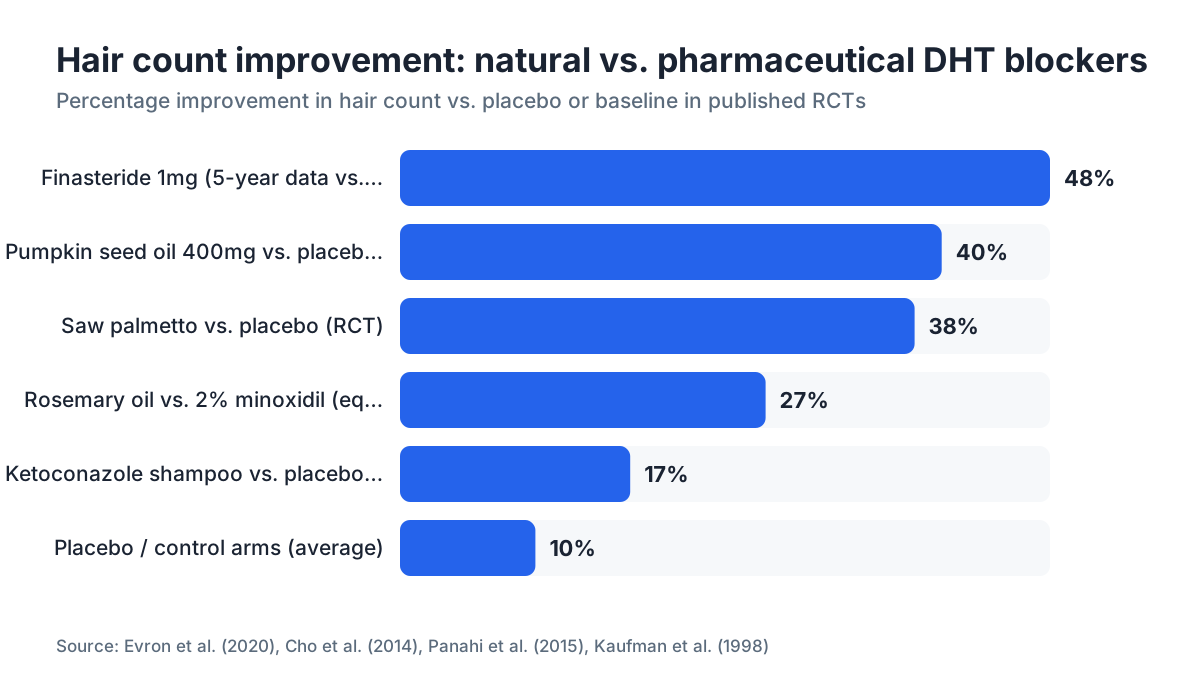
Saw palmetto (Serenoa repens) This is the most studied natural 5-alpha reductase inhibitor. A 2020 systematic review in the Journal of Dermatological Treatment found saw palmetto improved hair density and patient satisfaction across multiple studies, with one randomized controlled trial showing a 38% improvement in hair count versus 14% in the placebo group [4]. The proposed mechanism is inhibition of both Type I and Type II 5-alpha reductase, the same targets finasteride hits, just much weaker. Trial doses run from 160 mg to 320 mg of standardized extract daily. It's well tolerated in most people. If you're going to try one natural supplement, this has the strongest case.
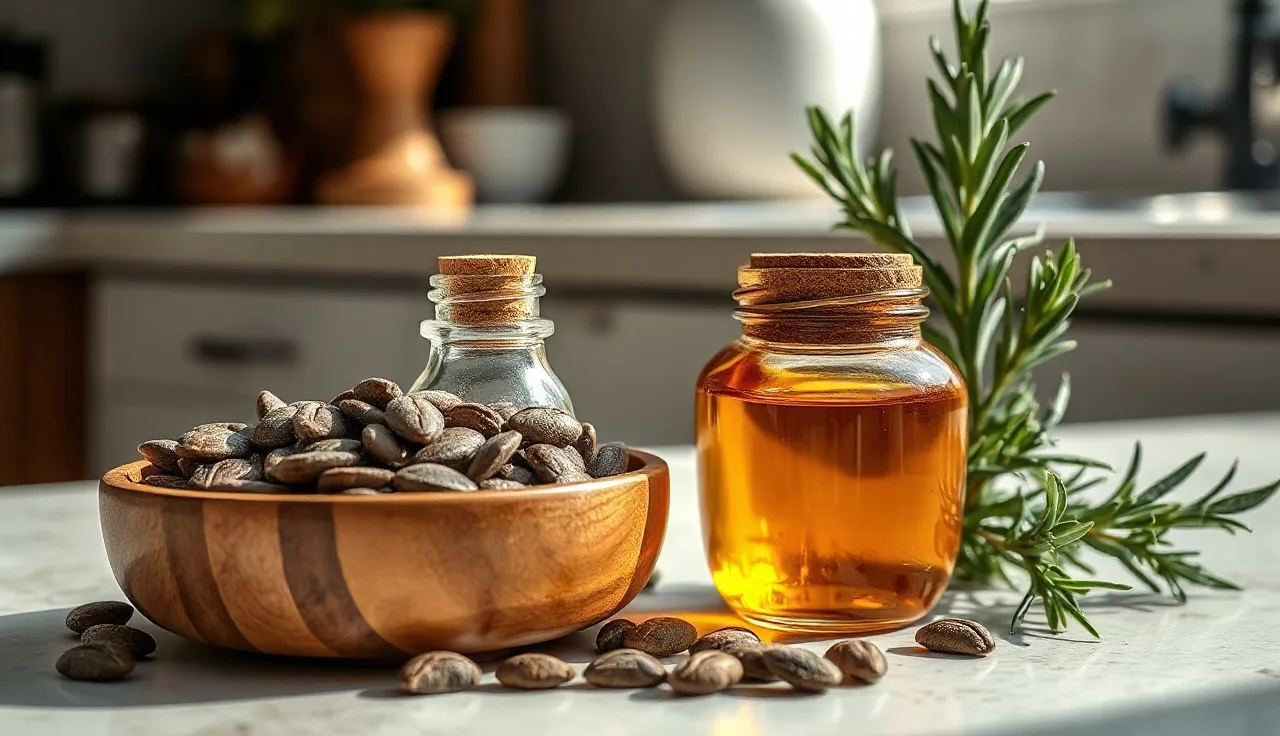
Pumpkin seed oil A 2014 randomized controlled trial in Evidence-Based Complementary and Alternative Medicine followed 76 men with androgenetic alopecia for 24 weeks. The group taking 400 mg of pumpkin seed oil daily saw a 40% increase in hair count against 10% in the placebo group [5]. The researchers think the effect comes from phytosterols and fatty acids that inhibit 5-alpha reductase, though the mechanism isn't fully confirmed. It's a genuinely encouraging study. It also needs replication in larger trials.
Rosemary oil A 2015 randomized controlled trial in Skinmed compared rosemary oil to 2% minoxidil over 6 months in men with androgenetic alopecia. Both groups showed statistically similar increases in hair count by month 6 [6]. Rosemary oil doesn't directly block DHT. It appears to improve scalp microcirculation and may quiet follicular inflammation. Applied to the scalp daily with a carrier oil, it's low risk and fairly well evidenced for its category.
Green tea (EGCG) Epigallocatechin gallate, the active catechin in green tea, has shown 5-alpha reductase inhibition in lab studies and some animal models. Human clinical evidence is thin. Drinking green tea is not a meaningful DHT intervention on its own, though it's a reasonable anti-inflammatory habit.
Pygeum (Prunus africana) Used more often for benign prostatic hyperplasia, pygeum contains phytosterols that inhibit 5-alpha reductase in vitro. Human hair-specific trials are essentially absent. Low priority.
The table below summarizes the evidence level for each natural option.
| Natural option | Best evidence level | DHT reduction (approximate) | Evidence quality |
|---|---|---|---|
| Saw palmetto | RCT + systematic review | Moderate (mechanism confirmed) | Good |
| Pumpkin seed oil | 1 RCT (n=76) | 40% hair count gain vs 10% placebo | Moderate |
| Rosemary oil (topical) | 1 RCT vs. 2% minoxidil | Comparable to 2% minoxidil at 6 mo | Moderate |
| Green tea / EGCG | Lab / animal only | Unknown in humans | Weak |
| Pygeum | In vitro only | Unknown in humans | Very weak |
How does diet affect DHT levels?
Diet influences DHT through two pathways: it affects testosterone (DHT's precursor) and it affects how much 5-alpha reductase activity your body runs. Neither effect is dramatic on its own. Together, they're enough to take seriously.
Foods that may lower DHT activity:
Lycopene-rich foods (cooked tomatoes, watermelon) have shown 5-alpha reductase inhibiting properties in prostate research, and the same pathway runs in follicles. One study found lycopene supplementation reduced 5-alpha reductase activity in prostate tissue [7], though scalp-specific data is absent.
Zinc belongs here. Zinc deficiency impairs 5-alpha reductase regulation and has been linked to hair loss on its own [8]. Getting enough zinc through food (oysters, pumpkin seeds, beef) is sensible. Supplementing above the recommended upper limit of 40 mg/day creates its own problems, including copper depletion [13].
Flaxseed contains lignans that act as weak androgen receptor blockers. The human hair evidence is indirect, but ground flaxseed in the diet is low-risk.
Foods and habits that raise DHT:
High-glycemic diets spike insulin, which stimulates androgen production. There's observational evidence that high glycemic index diets track with worse androgenetic alopecia, though causation is hard to isolate [9]. Processed carbohydrates and added sugars are worth cutting for reasons beyond hair anyway.
Alcohol, especially in excess, raises testosterone conversion to DHT and depletes zinc. Moderate or no alcohol is genuinely better for managing androgenetic alopecia.
Chronically high cortisol from poor sleep and stress promotes androgen dysregulation. Sleep is not a glamorous fix, but consistently getting less than 7 hours affects hormone balance in documented ways. This one is free and underused.
Does saw palmetto actually regrow hair, or just slow loss?
Both, to a degree. The 2020 systematic review cited above noted improvements in hair density scores, more than plain stabilization [4]. The honest framing: saw palmetto is more reliable at slowing miniaturization than at driving obvious regrowth, especially once follicles are already badly shrunk.
Timeline matters. Most trials that showed positive results ran at least 24 weeks. Hair cycles are slow. A follicle's anagen (growth) phase runs 2 to 7 years, and you need multiple cycles to see a real change in density. If you try saw palmetto for 6 weeks and see nothing, that's not a failed experiment. Three to six months is the minimum reasonable window.
Dose in positive trials was consistently 160-320 mg of a standardized liposterolic extract. Whole berries, saw palmetto teas, and low-quality capsules with no standardization are unlikely to match those results. This matters more than most people realize at the supplement shelf.
For how this stacks up against pharmaceutical options, the DHT blocker guide runs saw palmetto vs. finasteride head-to-head.
What lifestyle changes reduce DHT naturally?
Lifestyle changes work through the same hormonal pathways as supplements. They're just slower and less targeted. That doesn't mean skip them.
Exercise. Regular moderate aerobic exercise lowers circulating insulin and inflammation, both of which affect androgen metabolism. Very high-intensity resistance training without enough recovery can temporarily spike testosterone and DHT, though the long-term hair impact of a normal gym routine in healthy people is probably negligible. The creatine question comes up here too. One small study found creatine supplementation raised DHT by about 56% relative to baseline in rugby players, though absolute levels stayed in the normal range [10]. The does creatine cause hair loss article covers that evidence in full.
Scalp massage. A 2019 study published in ePlasty found that 4 minutes of standardized scalp massage daily over 24 weeks increased hair thickness in nine men [11]. The mechanism is mechanical: massage stretches dermal papilla cells and may switch on hair-cycle genes. It doesn't block DHT, but it improves the environment miniaturized follicles are working in. Pair it with rosemary oil and you cover two separate mechanisms at once.
Sleep and stress. Chronic stress raises cortisol, which suppresses sex hormone-binding globulin (SHBG). Lower SHBG means more free testosterone available to convert to DHT. This is documented physiology, not speculation. Seven to nine hours of sleep and real stress reduction (exercise, meditation, a consistent schedule) all help stabilize SHBG.
Cut the DHT-promoting habits. Smoking, heavy alcohol, and high-glycemic eating all tilt the androgen environment the wrong way. Old advice. Still real.
Can you block DHT topically with shampoos or oils?
The concept is sound: inhibit 5-alpha reductase in the scalp itself instead of systemically, and you might get local DHT reduction without whole-body side effects. The problem is that most "DHT blocking shampoos" sit on the scalp for 2 to 3 minutes and then rinse off. That contact time is probably too short for meaningful follicular penetration.
Ketoconazole shampoo (the active ingredient in Nizoral) is the exception worth taking seriously. It's an antifungal that also shows 5-alpha reductase inhibiting properties in vitro, and a 1998 randomized trial found 2% ketoconazole shampoo used every 2-4 days produced hair density improvements comparable to 2% minoxidil in men with androgenetic alopecia [12]. It comes over the counter at 1% or by prescription at 2%. This is the one topical with enough evidence to earn a spot in a low-intervention protocol.
Rosemary oil applied to the scalp daily and left on (not rinsed) is where topical rosemary earns its keep. The 2015 trial that matched it to 2% minoxidil used a leave-on application [6]. Rinsing it off defeats the point.
Coconut oil shows up in this space a lot. There's some in vitro evidence it inhibits 5-alpha reductase, and it works as a carrier for other ingredients, but standalone hair regrowth evidence in humans doesn't exist.
What about supplements sold as DHT blockers? Are they worth buying?
The hair loss supplement market is enormous and mostly unregulated. The FDA does not require supplement makers to prove efficacy before selling, only that the product is safe [3]. So a product can call itself a "DHT blocker" and contain ingredients with zero human clinical evidence, as long as it doesn't claim to treat or cure a disease.
Ingredients that show up in reputable formulations with at least some supporting evidence: saw palmetto (standardized extract), pumpkin seed oil, zinc (if you're deficient), biotin (only if you have a biotin deficiency, which is rare), and beta-sitosterol (a phytosterol with modest 5-alpha reductase inhibition data).
Ingredients that are mostly marketing filler: collagen supplements for androgenetic alopecia (oral collagen doesn't reach the follicle in any meaningful way), most proprietary "DHT shield" blends with undisclosed dosing, and megadoses of any single nutrient.
Before buying, check three things: whether the ingredients have human RCT data, what dose the positive studies used, and whether the label lists a standardized extract or just "500 mg saw palmetto berry" with no active content spelled out. Dosage and standardization are where cheap products fall apart.
For a full breakdown of what to look for and what to skip, hair loss supplements works through the whole category.
When should you consider medical treatments instead?
Natural methods make sense as a starting point or an add-on when you're in early stages (Norwood 1-2), when pharmaceutical side effects are a real concern, or when you want to do something while you weigh your options. But there's a point where waiting costs you follicles you can't get back.
Finasteride at 1 mg/day is the most proven oral DHT blocker available. It suppresses DHT by about 70%, and a 5-year trial showed 48% of men taking it had increased hair count versus baseline, while 42% held onto what they had [2]. The finasteride guide covers dosing, side effects, and who's a good candidate. Finasteride carries real side effect considerations, including sexual dysfunction in a subset of users, which is exactly why some men try natural alternatives first.
Minoxidil works differently. It's a vasodilator, not a DHT blocker, but it's often paired with DHT-blocking strategies. The combination of finasteride and minoxidil beats either one alone in trials. The finasteride and minoxidil guide covers combined protocols.
If your hair loss isn't androgenetic in origin, DHT-blocking approaches do essentially nothing. Telogen effluvium, for example, is a shedding condition driven by stress, illness, or nutritional deficiency, not DHT, and it needs a completely different plan.
For hair loss that's been progressing for years with heavy visible thinning, a hair transplant may be the only realistic route to coverage. Natural DHT blockers after a transplant can help protect the native hair you still have.
When a natural protocol has run at least 6 months with no visible stabilization, a dermatologist is the right next stop. The American Academy of Dermatology's guidance on androgenetic alopecia is a good benchmark for which treatments have enough evidence to be recommended [1].
What's a realistic natural DHT-blocking routine that combines the best evidence?
Here's what a well-built natural protocol looks like based on the available evidence. This is not a prescription, and individual responses vary a lot.
Daily oral:
- Saw palmetto 160-320 mg standardized liposterolic extract
- Pumpkin seed oil 400 mg (or 1-2 tablespoons of whole pumpkin seeds)
- Zinc (if dietary intake is low): 15-25 mg daily, not exceeding 40 mg
Topical, daily or every other day:
- Rosemary essential oil (3-5 drops diluted in a tablespoon of a carrier like jojoba), massaged into the scalp and left on at least 2 hours or overnight
- Scalp massage 4 minutes daily
2-3 times per week:
- Ketoconazole 1-2% shampoo, left on 3-5 minutes before rinsing
Diet adjustments:
- Cut high-glycemic foods and added sugars
- Add lycopene-rich foods (cooked tomatoes)
- Limit alcohol
- Prioritize zinc-rich foods: oysters, beef, pumpkin seeds
Habits:
- 7-9 hours of sleep
- Regular moderate exercise
- Manage chronic stress with whatever actually works for you
What to expect. Shedding stabilizes within 3-4 months if the protocol is working. Modest density improvement is possible at 6-12 months. Significant regrowth from a fully miniaturized follicle is unlikely without a pharmaceutical component. Track your progress with photos taken in the same lighting every 8 weeks. Hair change is slow enough that you can't see it day-to-day, only across months.
Before starting any new supplement, especially if you take medications or have existing health conditions, talk to a doctor. Saw palmetto can interact with blood thinners and may affect PSA tests used to screen for prostate cancer.
Sources
- American Academy of Dermatology, Hair loss: Who gets and causes
- Kaufman KD et al., Journal of the American Academy of Dermatology, 1998 (Finasteride 5-year efficacy trial)
- U.S. FDA, Dietary Supplements: What You Need to Know
- Evron E et al., Journal of Dermatological Treatment, 2020, Saw palmetto systematic review
- Cho YH et al., Evidence-Based Complementary and Alternative Medicine, 2014, Pumpkin seed oil RCT
- Panahi Y et al., Skinmed, 2015, Rosemary oil vs 2% minoxidil RCT
- Schwartz JL et al., Journal of Nutrition, 2008, Lycopene and 5-alpha reductase activity
- Karashima T et al., British Journal of Dermatology, 2012, Zinc and hair loss
- American Journal of Clinical Nutrition, observational data on glycemic index and androgens
- English RS Jr, Barazesh JM, ePlasty, 2019, Scalp massage and hair thickness
- Piérard-Franchimont C et al., Dermatology, 1998, Ketoconazole shampoo and hair density
- U.S. National Institutes of Health, Office of Dietary Supplements, Zinc Fact Sheet