
TL;DR: The two treatments with the strongest clinical evidence are minoxidil (topical or oral) and finasteride. Used together they beat either one alone. Hair transplants are a permanent surgical option once you stabilize loss. Lifestyle changes and supplements help at the margins but won't reverse real recession on their own.
What is actually causing your hairline to recede?
Before you spend a dollar on treatment, know what you're dealing with. The overwhelming cause of a receding hairline in men is androgenetic alopecia, also called male pattern baldness, which affects roughly 50% of men by age 50 [1]. In women it runs at about 40% by age 70 [1]. It's a genetic condition driven by dihydrotestosterone (DHT), a hormone that binds to receptors in hair follicles on the top and front of your scalp and slowly shrinks them over time.
The process is slow and patterned. Follicles in those DHT-sensitive zones produce thinner, shorter hairs with each cycle until they stop producing visible hair at all. The follicle isn't dead, just dormant, which is why early treatment can revive it but late treatment often can't.
Not every receding hairline is androgenetic alopecia. Telogen effluvium causes diffuse shedding after stress, illness, or a dietary crash, and it can thin the hairline temporarily. Traction alopecia from tight hairstyles damages follicles mechanically. Alopecia areata is autoimmune. Treating the wrong condition with the wrong tool wastes months. If you're unsure, a dermatologist can diagnose the cause in one appointment with a dermoscopy exam, and that visit is worth every penny before you start a multi-year treatment regimen.
For a deeper look at everything that can trigger hair loss, what causes hair loss covers the full list.
How do you know how far your hairline has receded?
Dermatologists use the Norwood-Hamilton scale to grade male pattern hair loss from Stage 1 (no recession) to Stage 7 (only a horseshoe of hair at the sides). The scale shapes your options: Norwood 2 or 3 patients are the best candidates for medical therapy because more follicles are still alive and responsive. By Norwood 6 or 7, follicle death is widespread and medication alone won't restore density, though it can protect what's left.
For women, the Ludwig scale grades recession differently, focusing on central parting width and frontal hairline preservation.
You can self-assess roughly using photographs taken under consistent lighting every three months. Photograph from above (the "bird's eye") and from the front. Subtle changes are hard to catch in the mirror but obvious in a side-by-side photo comparison. If you want a structured baseline, MyHairline's free AI scan (/scan) maps your hairline and estimates your Norwood stage from a smartphone photo, which gives you a documented starting point before you begin any treatment.
More detail on how staging affects your treatment path is in the receding hairline guide.
Does minoxidil work for a receding hairline?
Yes, with caveats. Minoxidil is an FDA-approved topical treatment for androgenetic alopecia [2]. It started as a blood pressure pill; the hair growth effect turned up as a side effect in the 1980s. It works by widening blood vessels and prolonging the anagen (growth) phase of the hair cycle. It does not block DHT, so it treats the symptom, not the cause.
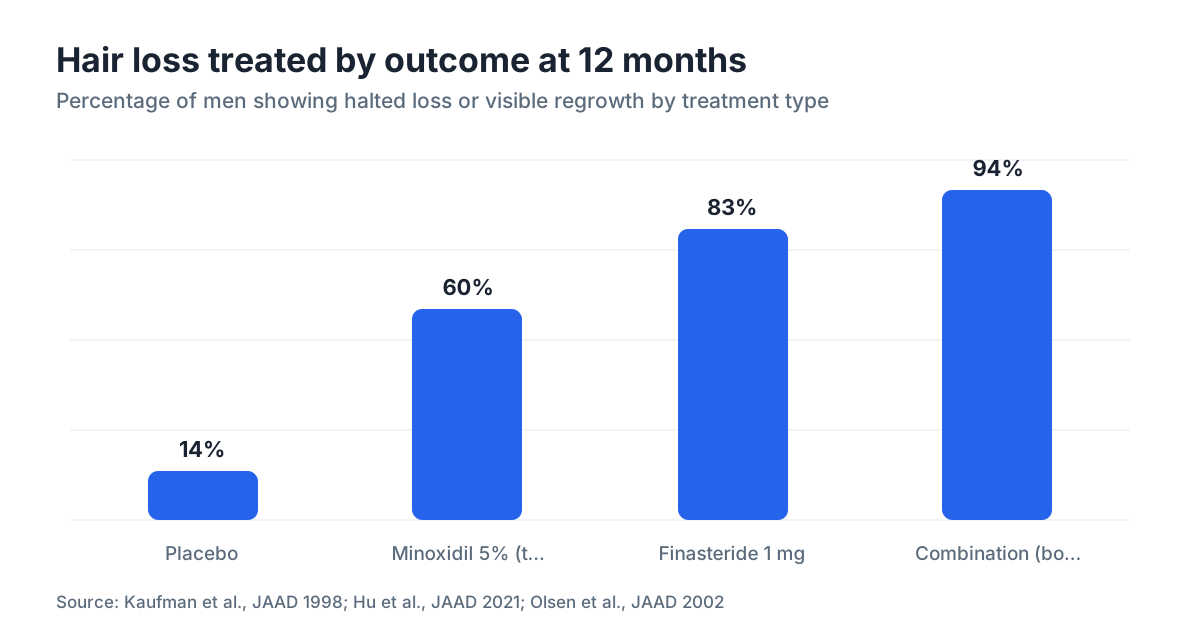
The standard topical dose is 5% solution or foam applied twice daily for men and 2% or 5% once daily for women. Clinical trials show that roughly 60% of men who use 5% topical minoxidil for one year show meaningful hair regrowth or halted loss [3]. The effect is real but modest, and it's maintenance-dependent: stop using it and the hair you gained sheds within three to six months.
Oral minoxidil at low doses (0.625 mg to 5 mg daily) has drawn a lot of attention lately because it's easier to take correctly and may work better for hairline recession than topical formulations. A 2021 review in the Journal of the American Academy of Dermatology found low-dose oral minoxidil effective and generally well-tolerated, though it can cause fluid retention and unwanted body hair growth in some people [4]. It's off-label for hair loss in the US, meaning your doctor prescribes it outside the FDA-approved indication.
Read the full breakdown of minoxidil for men, and check minoxidil side effects before you start, because the side effect profile matters, especially with the oral form. Oral minoxidil has its own article covering dosing and what to expect.
Does finasteride stop a receding hairline?
Finasteride is the other FDA-approved medication for androgenetic alopecia in men. It works differently from minoxidil: it inhibits the enzyme 5-alpha reductase, which converts testosterone to DHT. Less DHT means less follicle miniaturization. The standard dose is 1 mg daily (sold as Propecia, but available as a cheap generic).
The clinical evidence is strong. A one-year placebo-controlled trial in men aged 18 to 41 found that 83% of finasteride users stopped losing hair, and 48% grew visible new hair, compared to continued loss in the placebo group [5]. The effect compounds. Longer use produces better results, and some men keep improving for two to five years.
The catch is sexual side effects. Reported rates in clinical trials sit around 2 to 4% for decreased libido, erectile dysfunction, or ejaculation disorders [5]. Post-marketing reports suggest some men have persistent symptoms after stopping (called Post-Finasteride Syndrome), though solid epidemiological data on how often that happens is limited. The FDA updated the label in 2012 to include post-cessation sexual side effects [12]. Read the FDA-approved label and have an honest conversation with your doctor about your risk tolerance before starting.
Finasteride is not approved for women of childbearing potential because DHT inhibition can cause birth defects.
For the full picture, the finasteride guide covers mechanism, dosing, and side effects in detail. See also DHT blocker if you want to understand the mechanism more.
What happens when you combine minoxidil and finasteride?
They work on different pathways, so combining them makes biological sense. The evidence backs it up. A 2021 randomized controlled trial published in the Journal of the American Academy of Dermatology compared four groups: finasteride alone, minoxidil alone, the combination, and placebo. After 24 weeks, the combination group showed statistically significantly greater hair count improvement than either drug alone [6].
The combination is now the most common recommendation from dermatologists who specialize in hair loss, for men at Norwood 2 to 4 who want the best medical outcome. Over a lifetime it isn't free, running roughly $30 to $80 a month for generic finasteride and generic minoxidil combined depending on your pharmacy, but it costs far less than a hair transplant.
There are also compounded topical products that put both drugs in a single solution, which some men find easier to use consistently. These need a prescription and come from compounding pharmacies, so quality control varies.
The finasteride and minoxidil article covers the combination protocol in detail, including what to expect at 3 months, 6 months, and beyond.
Is a hair transplant the permanent fix for hairline recession?
In the right candidate, yes. A hair transplant moves DHT-resistant follicles from the back and sides of your scalp (the donor zone) to the receding hairline. Because those follicles are genetically programmed to resist DHT, they keep growing in the new location. The results are permanent in that sense.
The two main techniques are FUT (follicular unit transplantation, a strip method) and FUE (follicular unit extraction, individual punch grafts). FUE leaves no linear scar and has a shorter recovery, which is why it's now the dominant method, but it costs more. Prices in the US typically range from $4,000 to $15,000 depending on the number of grafts needed, the surgeon's reputation, and geography [7].
Here's the thing many clinics don't say clearly enough: a transplant doesn't stop ongoing androgenetic alopecia in your non-transplanted hair. If you get a transplant at Norwood 3 without medical therapy and your loss continues to Norwood 5, the transplanted hairline can look stranded in the middle of a bald scalp. Most surgeons recommend continuing finasteride after a transplant for exactly this reason.
The best candidates are men who have stabilized their loss, have enough donor density, and hold realistic expectations about coverage. Norwood 5 to 7 patients may not have enough donor hair to cover all the bald area.
See the hair transplant guide for a full breakdown of techniques, recovery, and how to evaluate a surgeon.
Do shampoos, supplements, or laser devices actually help?
This is where the honest answer gets uncomfortable for a lot of marketers.
Ketoconazole shampoo (1 to 2%, like Nizoral) has weak but real evidence as an adjunct. A small trial found it comparable to 2% minoxidil in hair density improvement [8], though the study was small and the mechanism is debated (probably mild DHT inhibition plus anti-inflammatory effects). It won't transform a receding hairline, but it's cheap and low-risk, so adding it to your routine is reasonable.
DHT-blocking supplements like saw palmetto, pumpkin seed oil, and biotin get heavy marketing dollars. Saw palmetto has some small studies suggesting mild 5-alpha reductase inhibition, but the evidence is far weaker than for finasteride and no large randomized trial has shown meaningful hairline regrowth. The hair loss supplements article goes through the evidence category by category. The short version: if you're genuinely low on iron, zinc, or vitamin D, fixing that deficiency can help. Megadoses when you're not deficient won't.
Low-level laser therapy (LLLT) devices, sold as combs, caps, and helmets at prices from $200 to $3,000, carry an FDA clearance (not approval) for safety, not efficacy. Some small trials show modest improvements in hair count [9]. The effect size is smaller than minoxidil, the mechanism isn't fully understood, and the commitment is real (typically 15 to 30 minutes three times a week). Using LLLT as an add-on to medical therapy is defensible. Using it alone as your main treatment probably leaves results on the table.
Creatine deserves a separate mention because the question comes up constantly. The worry traces to a 2009 study showing creatine raised DHT levels by about 56% over three weeks in rugby players [10]. Whether that translates to faster hair loss in genetically susceptible people is unknown. If you're already on finasteride, the DHT pathway is blocked anyway. If you're not, and you have a strong family history of male pattern baldness, it's a fair thing to think about. More context in does creatine cause hair loss.
What lifestyle changes can slow hairline recession?
No lifestyle change is going to reverse androgenetic alopecia. That's biology. But several factors can speed up loss, and removing them is free.
Chronically high cortisol from poor sleep or heavy psychological stress pushes more follicles into the telogen (shedding) phase. Getting 7 to 9 hours of sleep and managing stress affects your hair cycle directly, more than your mood. Nutritional deficiencies, especially iron deficiency anemia in women, can thin hair noticeably. A ferritin level below 30 ng/mL is often cited by dermatologists as a threshold where hair suffers, though that number isn't an official FDA cutoff.
Smoking is linked to worse androgenetic alopecia in observational studies, possibly through reduced scalp blood flow and oxidative stress. Quitting pays off well beyond your hairline.
Tight hairstyles (braids, weaves, ponytails pulled hard back) cause traction alopecia, which can permanently scar follicles at the hairline with repeated trauma. If your recession tracks precisely along where your hair gets pulled, traction is probably part of it.
Scalp massage is one of those things with surprisingly real supporting data. A 2016 study in Eplasty found that standardized 4-minute daily scalp massage over 24 weeks increased hair thickness [11]. The mechanism is thought to be mechanical stretching of dermal papilla cells. It's free and the risk is zero. Worth doing while you wait for medication to kick in.
How should you choose the right treatment for your situation?
The right answer depends on how much you've lost, your age, your risk tolerance, and your budget.
If your recession is mild (Norwood 2 to 3) and you caught it early, minoxidil plus finasteride gives you the best odds of slowing or partly reversing it. The combination is the standard of care most hair loss specialists would recommend today.
If you're older, further along, or the side effect profile of finasteride worries you, topical finasteride (lower systemic absorption) or oral minoxidil alone are real options worth discussing with a dermatologist.
If you've lost significant hair and want density back, medication alone won't restore it. A transplant consultation makes sense, but only after you've stabilized loss with medication or decided you won't use it long-term.
If you're a woman, finasteride is off the table in most cases (teratogenicity), so minoxidil plus addressing any underlying hormonal or nutritional deficiency is the core approach. Spironolactone is sometimes prescribed off-label for women as an anti-androgen.
The worst move is the most common one: waiting to see how bad it gets. Follicles that have been dormant too long can't be revived. The men and women who get good results almost always started treatment earlier than they felt comfortable admitting they needed it.
How long until you see real results from treatment?
Patience is genuinely required here. It's not a marketing soft-sell, it's the biology of the hair cycle.
Minoxidil takes 3 to 6 months before you see any positive effect. For the first 4 to 8 weeks, many people go through an initial shed (more hairs entering telogen before the anagen boost kicks in) that makes things look worse. This is expected and temporary. Most clinical trials run for 12 months before reporting their endpoint results.
Finasteride works on a similar timeline. Halted loss is often the first thing you'd notice, which is hard to see without baseline photographs. Visible regrowth, if it happens, usually appears between months 6 and 12.
Hair transplant results take 9 to 18 months to fully mature. The transplanted hairs fall out in the first 2 to 4 weeks (shock loss), regrow from month 3 to 4 onward, and reach final density somewhere between 12 and 18 months after surgery.
Here's the practical takeaway. Start early, document your baseline with photos or a tool like the free MyHairline AI scan (/scan), and commit to at least 12 months before judging whether a treatment worked. Quitting at month 4 because you don't see obvious results is how most people waste money and lose the window they had.
| Treatment | First sign of effect | Full result timeline | Permanent? |
|---|---|---|---|
| Topical minoxidil (5%) | 3-6 months | 12 months | No, ongoing use required |
| Oral minoxidil | 3-6 months | 12 months | No, ongoing use required |
| Finasteride 1 mg | 3-6 months | 12-24 months | No, ongoing use required |
| Combination (both) | 3-6 months | 12-24 months | No, ongoing use required |
| FUE hair transplant | 3-4 months (regrowth) | 12-18 months | Yes (transplanted hair) |
| Low-level laser therapy | 3-6 months | 12 months | No, ongoing use required |
What are realistic expectations for fighting a receding hairline?
Here's the honest version most content in this space won't say directly.
Medical treatment for androgenetic alopecia is maintenance, not cure. The best outcome with finasteride and minoxidil combined: you stop losing ground, you regrow some of what you lost in the past year or two, and you keep that result as long as you take the medication. The moment you stop, loss resumes.
Hair transplants give you permanent coverage in transplanted zones, but they don't erase the underlying condition. Your non-transplanted hair can still recede, which is why the hairline design in a transplant has to plan for future loss patterns.
No treatment reliably restores a Norwood 6 or 7 scalp to a full head of hair. Scalp micropigmentation (a tattoo technique that mimics a shaved head with follicles) is a non-surgical option some men use at advanced stages, and it looks surprisingly good when a skilled technician does it.
The American Academy of Dermatology is blunt about the ceiling: "There is no cure for hair loss from androgenetic alopecia" [1]. The goal is to keep what you have and improve what you can, not to expect a 25-year-old hairline at 45. Set realistic expectations upfront and you'll actually stay on treatment long enough for it to work, instead of quitting out of disappointment at month 6.
Sources
- American Academy of Dermatology, Hair Loss Overview
- FDA, Approved Drug Products (minoxidil topical solution)
- Olsen EA et al., Journal of the American Academy of Dermatology, 2002 to 5% minoxidil vs 2% minoxidil randomized trial
- Randolph M and Tosti A, Journal of the American Academy of Dermatology, 2021, Oral minoxidil for hair disorders review
- Kaufman KD et al., Journal of the American Academy of Dermatology, 1998, Finasteride 1 mg randomized controlled trial
- Hu R et al., Journal of the American Academy of Dermatology, 2021, Combination finasteride and minoxidil RCT
- American Society of Plastic Surgeons, Hair Transplant Cost Statistics
- Piérard-Franchimont C et al., Dermatology, 1998, Ketoconazole shampoo vs minoxidil trial
- Avci P et al., Lasers in Surgery and Medicine, 2014, LLLT for androgenetic alopecia review
- van der Merwe J et al., Clinical Journal of Sport Medicine, 2009, Creatine supplementation and DHT
- Koyama T et al., Eplasty, 2016, Standardized scalp massage for hair thickness
- FDA, Drug Safety and Availability, Finasteride label update 2012