
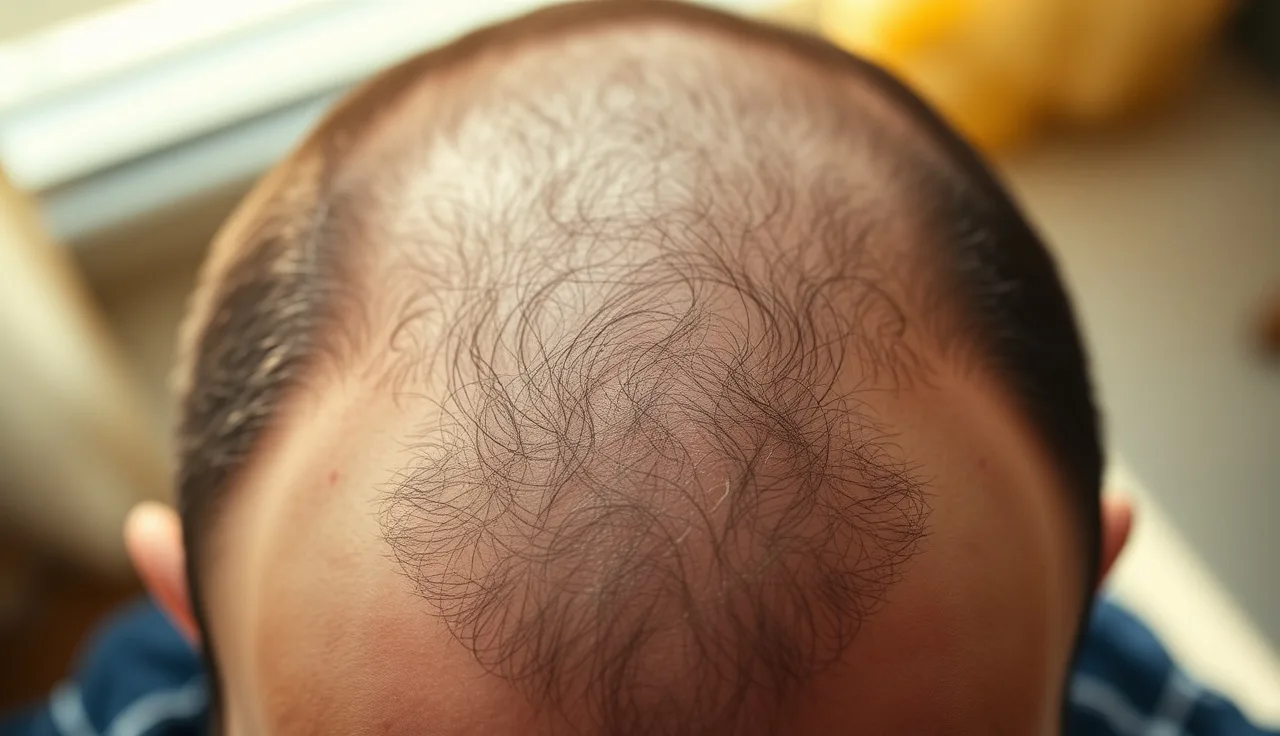
TL;DR: Hair loss from scalp inflammation is often reversible, especially when treated early. Seborrheic dermatitis, scalp psoriasis, and superficial folliculitis respond well to targeted anti-inflammatory treatment. Scarring forms like lichen planopilaris can destroy follicles permanently if ignored. The one variable that decides everything: whether the follicle is still alive when treatment starts.
What is scalp inflammation, and why does it cause hair loss?
Scalp inflammation is not one diagnosis. It is a category of conditions where immune activity, infection, sebum overproduction, or physical damage sets off an inflammatory response in the skin around hair follicles. That matters because the follicle is exquisitely sensitive to its local environment. When inflammatory cytokines flood the tissue around a follicle, they can push healthy anagen (growing) hairs into the telogen (resting) phase early, restrict blood supply to the dermal papilla, and in severe cases trigger fibrosis that replaces the follicle with scar tissue. [1]
The American Academy of Dermatology recognizes several distinct scalp conditions that involve inflammation. Seborrheic dermatitis, scalp psoriasis, tinea capitis (fungal infection), folliculitis, lichen planopilaris, and discoid lupus erythematosus are the common ones. Each has a different mechanism underneath it, and that difference decides whether your hair grows back. [2]
Here is a useful way to picture it. Inflammation runs on a spectrum from temporary to destructive. On one end, dandruff-level seborrheic dermatitis irritates the skin but rarely attacks the follicle bulb directly. On the other end, lichen planopilaris aims T-cells straight at the follicular epithelium and wipes it out. Where your condition sits on that spectrum is the single biggest factor in whether reversal is realistic.
Some inflammation-driven shedding looks a lot like telogen effluvium, because the mechanism (follicles dropping into the resting phase early) overlaps. The difference is the trigger. Telogen effluvium usually follows a systemic stress event, while inflammation-driven shedding comes from ongoing local damage at the scalp. Knowing what causes hair loss in your specific case is step one to picking the right treatment.
Which types of scalp inflammation can be reversed?
Most of them. The catch is that treatment has to start before the follicle is destroyed for good.
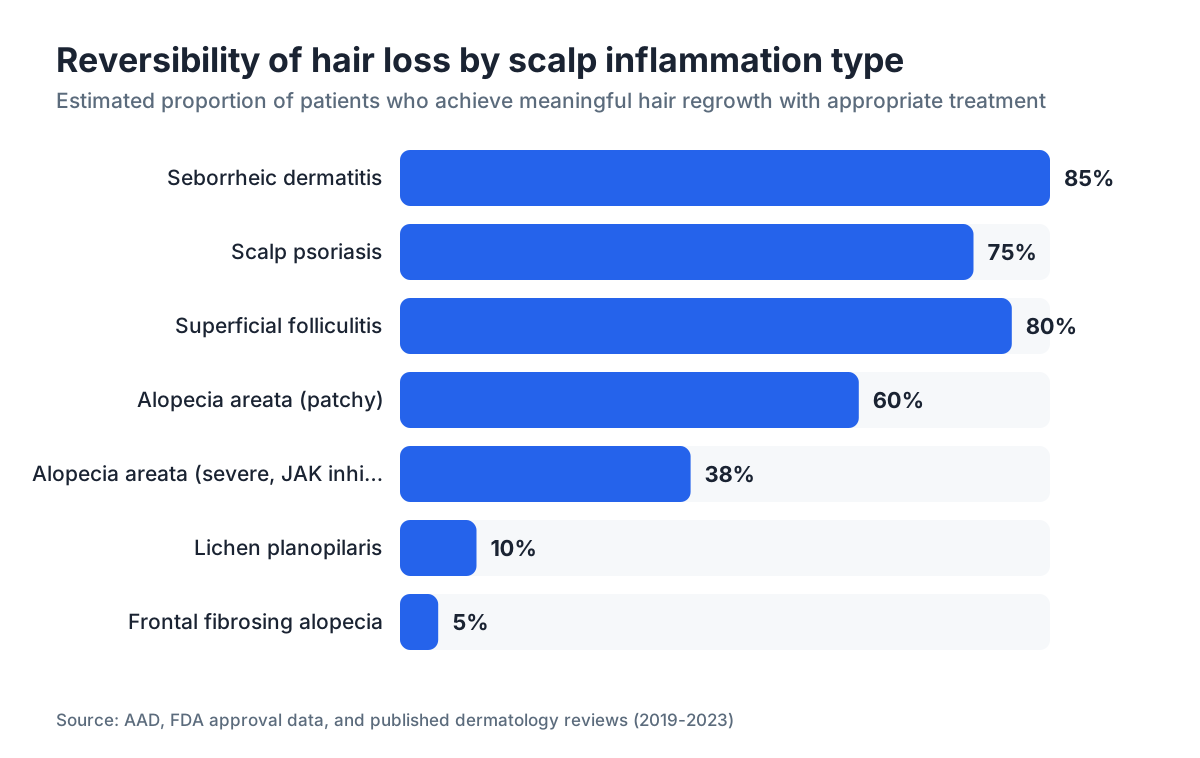
Seborrheic dermatitis is the most common form and the most reversible. It comes from an overgrowth of Malassezia yeast plus excess sebum, which creates chronic low-grade inflammation. The follicles are not the primary target. Antifungal shampoos control the yeast, and hair regrowth follows once the inflammation settles. [3]
Scalp psoriasis produces thick, inflamed plaques. It does not usually scar follicles, but the chronic inflammation and the mechanical trauma from scratching drive real shedding. With topical corticosteroids, vitamin D analogs, and biologics in moderate-to-severe cases, most patients regrow a substantial amount of hair. [2]
Folliculitis (bacterial or fungal infection of the follicle opening) reverses in its non-scarring forms. Superficial bacterial folliculitis clears with topical or oral antibiotics and leaves no permanent loss. Folliculitis decalvans is a different animal and can leave bald patches for good.
Alopecia areata is immune-mediated inflammation aimed at anagen follicles. The follicles are shut down, not destroyed. Regrowth rates swing widely. A 2023 report in JAMA Dermatology found baricitinib, a JAK inhibitor the FDA approved in 2022, produced at least 80% scalp hair coverage in roughly 35 to 40% of patients with severe disease. [10] Better than older options, and still far from a sure thing.
Lichen planopilaris and frontal fibrosing alopecia are the ones dermatologists lose sleep over. These are primary cicatricial (scarring) alopecias, where the inflammation destroys the follicle stem cell niche directly. Once scar tissue replaces the follicle, no approved treatment brings it back. The goal shifts to stopping progression, not recovering lost ground. [5]
How do doctors diagnose the specific cause of scalp inflammation?
Diagnosis matters more than almost any other step, because the wrong treatment does nothing at best and makes things worse at worst. Steroids that help psoriasis can flare tinea capitis. Antifungals do nothing for lichen planopilaris.
A board-certified dermatologist usually works from clinical history, dermoscopy (a magnified in-office look at the scalp), and a scalp biopsy. Dermoscopy spots follicular plugging, perifollicular scaling, or vascular patterns tied to specific conditions, all without an incision. [6] When dermoscopy is inconclusive, a 4mm punch biopsy of an active area is the definitive test. Pathology can confirm cicatricial changes, name the specific immune infiltrate, or reveal fungal hyphae under staining.
Blood tests get added sometimes: ANA panels for lupus, thyroid function (hypothyroidism can worsen seborrheic dermatitis and cause its own shedding), iron studies, and zinc levels. These rule out systemic problems that would sabotage any topical treatment.
Want to organize what you are seeing before the appointment? A free AI hair analysis like the one at MyHairline can help you map your scalp and bring a structured record to your dermatologist. It is a starting point for the conversation, not a substitute for a biopsy.
One practical note. The sooner you chase a diagnosis, the better. Every month of active cicatricial inflammation narrows the window for saving follicles.
What treatments actually reverse inflammation-related hair loss?
Treatment hinges entirely on the diagnosis. A handful of options have solid support behind them.
Medicated shampoos are first line for seborrheic dermatitis and tinea capitis. Ketoconazole 1% (over-the-counter) and 2% (prescription), selenium sulfide, zinc pyrithione, and ciclopirox all have clinical data behind them. [3] Use them on a schedule, more than when you notice flaking. The Malassezia overgrowth driving seborrheic dermatitis is chronic, so the maintenance is too.
Topical corticosteroids cut inflammation in psoriasis, alopecia areata, and early cicatricial conditions. High-potency options like clobetasol propionate 0.05% solution get prescribed for scalp use. Long-term use carries real risks: skin atrophy, hypopigmentation, and systemic absorption through the scalp. There is a reason these are prescription-only. [2]
JAK inhibitors are the biggest development in inflammatory alopecia in a decade. Baricitinib (Olumiant) got FDA approval for severe alopecia areata in June 2022, the first systemic drug approved for any alopecia areata indication. [4] Ritlecitinib (Litfulo) followed in 2023 for patients 12 and older. They are not for everyone. The FDA label carries a boxed warning about serious infections, malignancy, and thrombosis, and prescribing takes shared decision-making. [4]
Minoxidil does not reduce inflammation, but it lands in treatment plans anyway because it prolongs the anagen phase and may improve follicular blood supply. Once seborrheic-dermatitis shedding is under control, topical minoxidil can help hair re-enter growth cycles faster. Read up on minoxidil for men and the potential minoxidil side effects before you start. Some dermatologists use low-dose oral minoxidil off-label (0.625 to 2.5mg daily).
Intralesional corticosteroid injections (usually triamcinolone acetonide 5 to 10 mg/mL) are a workhorse for alopecia areata and early lichen planopilaris. The injections go directly into active areas every 4 to 8 weeks. Response for patchy alopecia areata is reasonable, with roughly 50 to 60% of patients showing some regrowth, though long-term remission evidence is thin. [5]
Antibiotics and antimalarials get used in cicatricial alopecias to calm the immune response and control bacterial overgrowth. Hydroxychloroquine is common off-label in lichen planopilaris and discoid lupus, with disease stabilization in a fair share of patients, though regrowth is rare once scarring sets in. [5]
Light therapy (PUVA and narrowband UVB) has evidence for scalp psoriasis and sometimes gets used for alopecia areata. Home-use scalp devices have not matched the evidence base for clinical phototherapy yet.
How long does it take for hair to grow back after scalp inflammation is treated?
The honest answer: it depends on the condition, how long it was active, and how complete the response is. Nobody can hand you a fixed date.
Hair grows at roughly 1 centimeter per month. [7] Even after inflammation fully resolves, the follicle has to cycle back into anagen, start building a new shaft, and grow it long enough to see. That takes 3 to 6 months before you notice visible change and 12 to 18 months before you can properly judge the outcome.
Seborrheic-dermatitis shedding usually shows meaningful regrowth within 6 to 12 months of consistent treatment. Alopecia areata is less predictable. Patchy disease often resolves within a year, sometimes without treatment at all, but extensive or universal disease runs a much more variable course.
For cicatricial alopecias, the realistic goal is stability, not regrowth. If treatment stops new scarring, that is a win even if density does not return.
One thing reliably drags out recovery: quitting treatment too soon. People stop the medicated shampoo or the topical steroid the moment symptoms improve, which lets the inflammatory process restart and re-damage follicles that were just starting to recover.
Can scalp inflammation cause permanent hair loss?
Yes. This deserves a blunt answer.
Primary cicatricial alopecias, including lichen planopilaris, frontal fibrosing alopecia, central centrifugal cicatricial alopecia (CCCA), and folliculitis decalvans, destroy the follicle's stem cell reservoir in the bulge region of the outer root sheath. [5] Without those stem cells, the follicle cannot regenerate. A 2021 review in Dermatology and Therapy stated that "the permanent destruction of follicular epithelium in cicatricial alopecia necessitates early aggressive treatment to preserve follicular density." [5] The literature is consistent: delays in treatment track directly with worse outcomes.
Even non-scarring conditions can leave semi-permanent thinning if they are severe and longstanding enough to disrupt follicle cycling over and over. Chronic alopecia areata across many years, for instance, can drive follicular miniaturization that is hard to reverse, though not impossible.
Here is the practical takeaway. If your scalp is inflamed and shedding, a dermatologist visit in the next few weeks beats six months of waiting to see if it clears on its own. The window matters.
For people who end up with permanent follicle loss in specific areas, a hair transplant may be an option. Cicatricial scarring complicates candidacy, though, because donor follicles get placed into potentially hostile tissue. Get a specialist evaluation before considering surgery on an inflamed scalp.
What home remedies and lifestyle changes actually help scalp inflammation?
The evidence base for home remedies is genuinely thin, so I will be specific about what has data and what does not.
Tea tree oil has limited but real evidence for cutting Malassezia density when it is built into a shampoo at 5% concentration. A randomized controlled trial in the Journal of the American Academy of Dermatology found 5% tea tree oil shampoo reduced dandruff severity scores significantly against placebo. [8] At that strength it is also a potential allergen, and applying it undiluted is a common cause of contact dermatitis.
Diet comes up a lot. There is some signal that high-glycemic diets worsen seborrheic dermatitis by feeding yeast overgrowth. The evidence is observational and not strong enough to replace medicated treatment, but cutting refined sugar and processed carbs is unlikely to hurt and might help.
Regular gentle washing helps. Letting sebum and Malassezia pile up makes things worse. Daily or every-other-day washing with a mild or medicated shampoo suits most inflammatory scalp conditions.
Scratching is a real problem. It drives in bacteria, mechanically disrupts recovering follicles, and adds trauma to already inflamed tissue. Keep your nails short and use cold compresses during flares to blunt the urge.
Sunlight has a mild anti-inflammatory effect on psoriasis specifically, through UV-mediated immune suppression. Brief, non-burning sun exposure on an affected scalp is not harmful for psoriasis patients and may give small benefit, but it is not a standalone treatment.
Curious about hair loss supplements? The evidence for supplements in inflammation-driven hair loss is weak. Biotin, marketed hard, has no good clinical data for inflammation-related shedding in people who are not biotin-deficient. Zinc has a small evidence base for seborrheic dermatitis but is barely studied for hair regrowth itself.
Does minoxidil or finasteride help with inflammation-related hair loss?
Neither drug targets inflammation directly, but both come up often enough that they need a straight answer.
Minoxidil is a vasodilator that stretches out the anagen phase of the hair cycle. It does not reduce inflammation or treat any underlying condition. What it can do is support recovery once inflammation is controlled, helping follicles that got knocked into telogen cycle back into growth sooner. The FDA approved topical minoxidil 2% and 5% for androgenetic alopecia, not for inflammatory alopecia. Dermatologists use it off-label here, and the logic holds up, but controlled trial evidence specific to inflammatory conditions is limited. [9]
Finasteride blocks DHT and works for androgenetic (pattern) hair loss. It has no real anti-inflammatory mechanism and is not a primary treatment for inflammatory alopecia. Where it can help indirectly: if someone has both androgenetic alopecia and an inflammatory condition (common), treat the androgenetic part with finasteride while treating the inflammation separately. See finasteride and DHT blockers for that context.
For a receding hairline complicated by scalp inflammation, most dermatologists go with the combination approach: control the inflammation first, then tackle androgenetic pattern loss. Jumping to finasteride and minoxidil before the inflammation is calm produces murky results and makes it hard to tell what is working.
One more thing. If you have a receding hairline, get a dermoscopy evaluation to check whether inflammation is part of the picture before you assume it is pure androgenetic alopecia. The two coexist all the time.
What does the research say about long-term reversal rates?
Honest answer: evidence quality swings enormously by condition.
Seborrheic dermatitis has the strongest case for reversibility. Consistent antifungal shampoo controls the condition in the large majority of patients, and the shedding tied to active disease resolves as symptoms clear. [3]
Alopecia areata has the messiest data. Patchy alopecia areata shows spontaneous remission in roughly 50% of cases within one year, but recurrence runs high. [11] Extensive disease (over 50% of the scalp) has a much lower remission rate without treatment. The 2022 FDA approval of baricitinib changed the picture for severe disease: trials showed 35 to 40% of patients reaching 80% or greater scalp coverage at 36 weeks. [4]
Cicatricial alopecias have the weakest reversal data because, by definition, follicle loss is permanent once it happens. Studies focus on stability, not regrowth. Hydroxychloroquine shows stabilization in 40 to 60% of lichen planopilaris patients in observational series, but those studies are not randomized and quality varies. [5]
Frontal fibrosing alopecia deserves a specific mention. It is one of the fastest-growing diagnoses in dermatology clinics, hitting mostly postmenopausal women, and the cause is still not fully established. The hairline recession it causes is usually permanent, which makes early recognition genuinely important.
Practical read: if you have had active scalp inflammation for under 6 months with no scarring yet, the data supports a real expectation of meaningful recovery with the right treatment. Past 12 to 18 months of untreated cicatricial disease, the odds of regrowth are poor.
How do you tell if your hair loss is from inflammation or from pattern baldness?
This is a real diagnostic challenge, because the two coexist constantly.
Pattern baldness (androgenetic alopecia) follows predictable distributions, scored by the Norwood scale in men and the Ludwig scale in women. It runs on follicular miniaturization driven by DHT sensitivity, usually with no scalp redness, scaling, itching, or pain. The scalp surface looks and feels normal.
Inflammatory hair loss tends to bring visible scalp changes: redness, flaking, crusting, pustules, or smooth scarred patches that look different from the skin around them. Scalp itch or burning is common in active inflammatory conditions and unusual in pure androgenetic alopecia. [2]
Still, a dermoscopy-trained eye can catch subtle perifollicular inflammation, follicular plugging, and early scarring that are invisible to the naked eye. A dermatologist running a dermoscope for even a 5-minute look can shift the diagnostic picture.
Pattern is the other clue. Androgenetic alopecia in men thins mainly at the temples and vertex, following the Norwood stages. Inflammatory conditions may follow a completely different pattern, sparing the androgenetically vulnerable areas or hitting only patchy regions.
If you have any symptoms (itch, burn, tenderness, visible scaling) alongside your hair loss, treat the pure-androgenetic-alopecia assumption with skepticism until a dermatologist has looked at your scalp.
When should you see a dermatologist about scalp inflammation and hair loss?
Short answer: sooner than most people do.
Most people wait 6 to 12 months before getting evaluated, hoping the shedding sorts itself out. That wait is fine for mild, temporary shedding with no visible scalp changes. It is not fine when you have visible scalp symptoms (redness, scaling, crusting, pustules) or when shedding is getting worse week over week.
See a dermatologist promptly if you notice any of these: smooth, shiny patches of scalp where the follicle openings are no longer visible (a sign of possible scarring); pustules or crusting that will not clear with over-the-counter antifungals; burning or pain rather than plain itch; or hair coming out with a white sheath attached to the root (a sign of active follicular involvement).
For cicatricial conditions specifically, the AAD advises evaluation within weeks of noticing new activity, not months. The permanence of follicle loss in these conditions makes treatment timing more consequential than in almost any other dermatological problem. [2]
Before your appointment, photograph your scalp with your phone every 2 weeks under the same lighting. That gives your dermatologist a timeline a single visit cannot, and it shows whether the condition is active or stable. For a more structured way to track it, MyHairline's free AI scan can generate a report with pattern mapping to bring along.
Sources
- National Institutes of Health, National Library of Medicine, Trüeb RM, 'Oxidative Stress in Ageing of Hair', International Journal of Trichology, 2009
- American Academy of Dermatology, Hair Loss Resource Center
- Journal of the American Academy of Dermatology, Schwartz JR et al., 'Ketoconazole shampoo and seborrheic dermatitis', 2019 (NIH PubMed indexed)
- U.S. Food and Drug Administration, FDA Approves First Systemic Treatment for Alopecia Areata (Baricitinib/Olumiant), June 2022
- Dermatology and Therapy, Harries M et al., 'Management of Primary Cicatricial Alopecias', 2021
- National Institutes of Health, National Library of Medicine, Rudnicka L et al., 'Atlas of Trichoscopy', Springer, 2012 (NIH PubMed reference)
- American Academy of Dermatology, Hair Loss Resource Center (Hair growth cycle overview)
- Journal of the American Academy of Dermatology, Satchell AC et al., 'Treatment of dandruff with 5% tea tree oil shampoo', JAAD 2002 (NIH PubMed indexed)
- U.S. Food and Drug Administration, Drugs@FDA Database, Minoxidil Topical Solution
- JAMA Dermatology, King B et al., 'Baricitinib for Alopecia Areata', 2023 (NIH PubMed indexed)
- National Institutes of Health, National Institute of Arthritis and Musculoskeletal and Skin Diseases, Alopecia Areata