

TL;DR: Yes, telogen effluvium is reversible in almost every case. Once the trigger clears (crash diet, illness, surgery, childbirth, severe stress), hair typically regrows within 3 to 6 months. Chronic cases lasting more than 6 months take longer but still usually resolve. Permanent loss from telogen effluvium alone is rare because the follicles are never destroyed.
What exactly is telogen effluvium and why does hair fall out?
Your scalp holds somewhere between 80,000 and 120,000 hairs, and at any moment roughly 85 to 90% of them are in the active growing phase called anagen. The rest are resting or shedding, a phase called telogen. You shed 50 to 100 hairs a day and never notice, because new ones are always pushing up behind them.
Telogen effluvium happens when something shocks the system and forces a big chunk of growing hairs to quit early and drop into telogen all at once. Two to four months later, those resting hairs reach the end of their cycle and let go together. That delay is why the shedding feels sudden and alarming even though the real trigger happened months back. [1]
The biology is simple. Dermatologists call the triggering shock a "noxious event", and it can be almost anything: childbirth, major surgery, a high fever from flu or COVID-19, a crash diet below about 1,000 calories a day, rapid weight loss of more than 20 pounds, iron deficiency, thyroid trouble, or long stretches of psychological stress. [2] The follicles themselves survive. That single fact is what makes this condition reversible, and it's the thing most people miss when they panic.
Learn more about the full range of causes in our guide to what causes hair loss.
Is telogen effluvium actually reversible?
Yes. Acute telogen effluvium is a self-limiting condition, and the dermatology literature is consistent on that point. The American Academy of Dermatology states that hair lost to this condition grows back, and the main variable is how fast you find and fix the trigger. [2]
The mechanism is not mysterious. The follicle is intact. Once it finishes resting, it re-enters anagen and grows a fresh shaft. Hair grows about half an inch (1.25 cm) a month, so even when regrowth starts on time you won't see it at surface length for weeks. Getting back to your old density can take 12 to 18 months from the moment the trigger cleared, purely because hair grows slowly. [1]
A 2013 review in the Journal of Clinical and Aesthetic Dermatology put the recovery window for acute telogen effluvium at 3 to 6 months after the trigger resolves, with most patients reaching full regrowth by the 12-month mark. [3] Nobody should expect a full head of hair two months in. That gap between expectation and biology drives a lot of needless panic.
One honest caveat. If the cause is never addressed, the shedding can drag on and, rarely, settle into a chronic pattern. Chronic telogen effluvium is still usually reversible. The timeline just stretches.
How long does telogen effluvium take to reverse?
Two things set the timeline: how long the trigger lasted, and how fast you correct it.
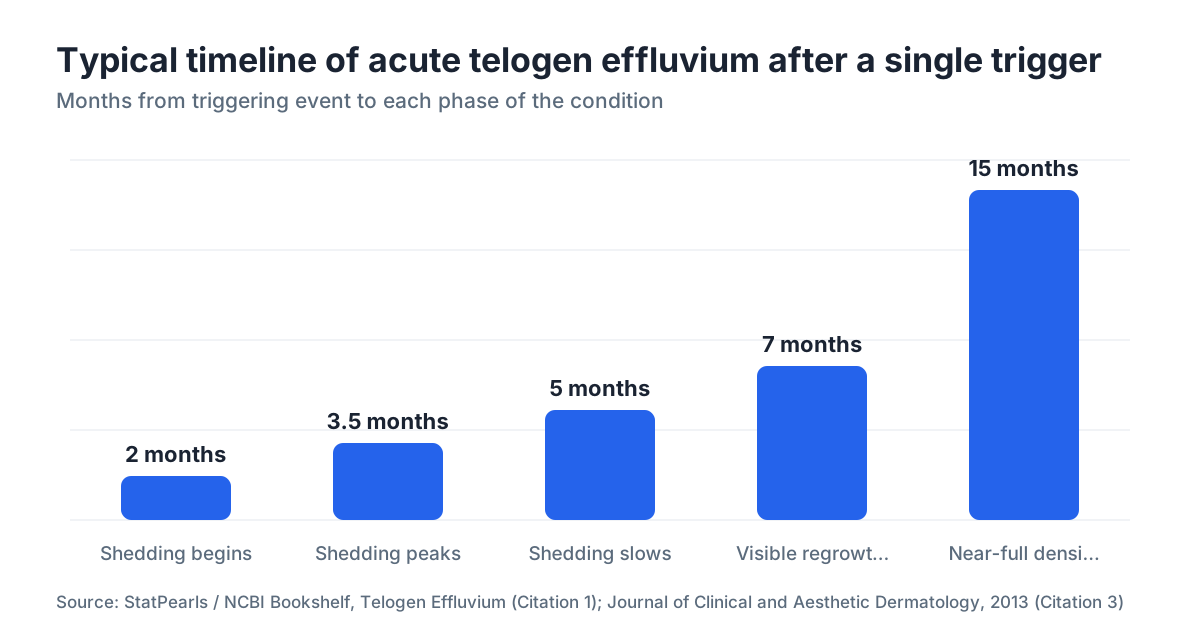
For a single, time-limited event like childbirth or surgery, the sequence usually runs like this:
| Phase | Timing from trigger |
|---|---|
| Shedding begins | 2 to 4 months after trigger |
| Shedding peaks | 3 to 4 months after trigger |
| Shedding slows | 4 to 6 months after trigger |
| Visible regrowth starts | 6 to 8 months after trigger |
| Near-full density restored | 12 to 18 months after trigger |
That 2 to 4 month lag before shedding starts is a well-documented feature of the condition, and it matches the normal length of the telogen phase. [1] It also explains why people can't connect the shedding to the right cause. They look back two weeks instead of two to four months.
Postpartum telogen effluvium, one of the most common triggers, peaks 3 to 4 months after delivery and clears within 12 months in most women with no treatment at all. [4]
Chronic telogen effluvium, defined as diffuse shedding lasting more than 6 months, takes longer and usually means the original trigger is still active. A thyroid condition nobody treated. Ongoing iron deficiency. Continued dieting. Fix the underlying issue and the cycle normalizes, but density may take 18 months or more to fully return.
What triggers telogen effluvium and does the type of trigger affect recovery?
The type of trigger matters mostly because it decides how easy the trigger is to remove. It doesn't change the follicle biology. A follicle knocked into telogen by childbirth behaves the same as one knocked in by a crash diet.
Triggers fall into three buckets:
Events that end on their own: Childbirth, surgery, high fever, COVID-19. These are finite. Once the event passes, the trigger is gone and recovery starts on schedule. Cleanest outcomes of the bunch.
Nutritional deficiencies: Iron deficiency is the most studied and the most common nutritional cause. A 2006 review in the Journal of the American Academy of Dermatology found a statistically significant link between low ferritin and telogen effluvium. [5] Ferritin below 30 ng/mL is often named as the floor for healthy hair cycling, though some dermatologists push for levels above 70 ng/mL (the evidence on the exact number is inconsistent, so treat it as a target, not a rule). Correct the deficiency and hair follows, but moving ferritin itself takes 3 to 6 months of supplementation.
Ongoing stressors: Thyroid disorders (both overactive and underactive can trigger shedding), severe psychological stress, and continued restrictive dieting. These run until treated. Recovery from effluvium tied to untreated hypothyroidism, for instance, won't begin until thyroid levels are stable on medication, which can take weeks to months to dial in.
Medications trip up a lot of people. Beta-blockers, retinoids, anticoagulants, and certain antidepressants are all linked to telogen effluvium. [6] If a drug is the cause, talk to the prescribing physician before stopping anything. Quitting suddenly can cause worse problems than the shedding.
For a detailed look at telogen effluvium and how it differs from other types of hair loss, that overview covers diagnosis and triggers in depth.
How is telogen effluvium different from permanent hair loss?
This is the question that keeps people up at night, so here's a clear answer.
Telogen effluvium and androgenetic alopecia (the hereditary type behind a receding hairline in men and diffuse crown thinning in women) often show up in the same person at the same time, which makes them hard to pull apart. The differences that matter:
Pattern: Telogen effluvium thins everywhere, with no specific shape. If you're losing hair at the temples or crown while the sides stay thick, that pattern points to androgenetic alopecia, which does not reverse on its own. [2]
Miniaturization: Androgenetic alopecia shrinks follicles, so each new hair grows shorter, finer, and lighter over years. Telogen effluvium never miniaturizes follicles. A dermatologist can confirm this with dermoscopy.
Timing: Telogen effluvium hits with a surge of shedding fairly soon after a trigger. Androgenetic alopecia creeps along over years.
The pull test: A dermatologist may grasp about 60 hairs from several scalp areas and study the roots under a microscope. More than 25% telogen hairs with a club-shaped root points to active effluvium rather than scarring or androgenetic causes. [7]
Scarring alopecias (lichen planopilaris, central centrifugal cicatricial alopecia) destroy the follicle and do not reverse. Telogen effluvium is not a scarring alopecia. The follicle stays alive through the whole episode.
If you're worried a receding hairline is part of the picture, our receding hairline guide walks through how to tell the difference.
Can anything speed up recovery from telogen effluvium?
The single most effective move is fixing whatever caused it. That sounds obvious, and it gets underemphasized anyway. No topical or supplement will outrun an ongoing iron deficiency or uncontrolled thyroid disease.
Beyond that, here's what the evidence actually supports:
Iron and ferritin: If your ferritin is low, correcting it with supplementation (usually 150 to 200 mg of elemental iron daily, in split doses, with vitamin C to help absorption) is the closest thing to a proven fix for nutritionally driven effluvium. [5] Get tested before you supplement. Iron overload is a real risk, and excess iron does nothing for hair.
Minoxidil: Topical minoxidil (2% or 5%) extends the anagen phase and can soften the visible impact of shedding. It's not a cure for the trigger, but it can support the cycle during recovery. The FDA has approved topical minoxidil for hair loss. [8] Some dermatologists prescribe low-dose oral minoxidil off-label for diffuse shedding. To understand the full picture, the oral minoxidil and minoxidil for men guides are worth reading, and check the minoxidil side effects before starting.
Protein and calories: If a crash diet was the trigger, getting back to adequate protein (at least 0.8 g per kilogram of body weight per day, per standard dietary guidelines) is the foundation. Hair is mostly keratin. You can't build it without dietary protein.
Stress reduction: Sleep, exercise, and where you can, addressing the source of chronic stress genuinely matter. Elevated cortisol is thought to disrupt the hair cycle, though the exact human mechanism is still being worked out. [9]
What doesn't help: Expensive shampoos, keratin treatments, and biotin supplements in people who aren't biotin-deficient. Biotin deficiency is rare in adults who eat normally. Unless your bloodwork shows a deficiency, biotin has no meaningful evidence for telogen effluvium, and the American Academy of Dermatology says the same. [10]
If you're eyeing supplements marketed for hair loss, the hair loss supplements article separates what's backed by evidence from what isn't.
Does chronic telogen effluvium reverse on its own?
Chronic telogen effluvium, diffuse shedding that runs past 6 months, is less common than the acute form and more frustrating to manage. It's still reversible in most cases.
A 1996 case series by Whiting in the Journal of the American Academy of Dermatology followed 355 patients with chronic telogen effluvium and found that the majority eventually saw spontaneous or treatment-related resolution. [11] Recovery in chronic cases usually hinges on finding a persistent trigger nobody corrected, which is why these patients need a thorough workup: a complete blood count, thyroid function tests (TSH, free T4), ferritin, vitamin D, zinc, and a full review of every medication.
Some chronic cases have no identifiable cause even after a complete workup. These idiopathic cases frustrate patient and clinician alike. They tend to fluctuate, with heavier shedding some months and relative calm others, and they usually resolve eventually, just on a less predictable schedule.
When chronic telogen effluvium sits alongside early androgenetic alopecia, as it often does in women over 40, the two need managing separately. The effluvium will likely resolve. The androgenetic part will not, without treatment like finasteride or a DHT blocker.
When should you see a doctor about telogen effluvium?
See a dermatologist if any of the following fits you.
Shedding has run more than 3 months with no trigger you can name. Shedding after a flu is one thing. Shedding with no obvious cause is another, and it can point to a thyroid problem, an autoimmune condition, or an iron deficiency you didn't know about.
You can name a trigger, but shedding hasn't slowed 6 months after you removed it.
Your part looks visibly wider, or you can see scalp through your hair when you couldn't a year ago. That level of change deserves a professional look to rule out concurrent androgenetic alopecia.
You've got other symptoms riding along with the hair loss (fatigue, weight changes, feeling cold, irregular periods) that hint at a systemic issue.
A board-certified dermatologist is your best first stop. They can run dermoscopy, order the right bloodwork, and do a pull test to gauge the ratio of telogen to anagen hairs. A general practitioner can order blood tests but often isn't trained to read the scalp itself.
Want a quicker first look before booking? The free AI hair analysis at MyHairline can read your photos and help you understand what pattern, if any, you're seeing. It's no substitute for a clinical exam, but it can tell you whether what you're seeing looks like diffuse shedding or more like androgenetic thinning.
Can telogen effluvium come back after it resolves?
Yes. One episode doesn't protect you from the next. Hit another significant trigger, whether it's another illness, another stretch of severe stress, or a new nutritional deficiency, and the same mechanism fires again.
Some people run more sensitive to triggers than others. There's a plausible biological basis: individual variation in hair cycle kinetics means some follicles tip into telogen faster. But the research on who relapses is thin. Nobody has good data on recurrence rates. The closest literature focuses on postpartum cases, where a later pregnancy carries a real risk of another episode.
So the practical takeaway is that keeping your nutrition solid, managing chronic health conditions, and staying on top of iron and thyroid status are ongoing protective habits, not a one-time fix.
One more thing worth knowing. A single episode of telogen effluvium does not cause permanent thinning by itself. Density should return to baseline once the episode fully resolves. If you notice permanent thinning afterward, the likelier explanation is that the episode unmasked early androgenetic alopecia already in progress.
What about telogen effluvium after COVID-19?
Post-COVID hair loss became one of the most searched hair topics after 2020. The mechanism is plain telogen effluvium: the physical stress of a febrile illness plus the psychological stress of being sick shoves a big share of hairs into telogen. The 2 to 4 month lag explains why people lose hair well after they've recovered from the infection itself.
A 2021 study in the Lancet found hair loss was among the most commonly reported symptoms at 6-month follow-up in COVID-19 survivors, affecting 22% of hospitalized patients in that cohort. [12] More severe illness tracked with more hair loss, which fits the general rule that harder physiological stress drives more follicles into telogen.
The good news matches every other acute trigger. The follicles are intact, and regrowth follows. Most post-COVID telogen effluvium clears within 6 to 9 months with no specific treatment. The FDA hasn't approved any treatment aimed at post-COVID hair loss specifically. Management is the same as for any episode.
For a wider view of everything that can push hair into the shed cycle, what causes hair loss covers COVID-19 alongside the other major triggers.
How do doctors diagnose telogen effluvium?
Diagnosis is mostly clinical, meaning it leans on history and physical exam more than any single test.
A dermatologist will ask about the 3 months before the shedding started: major illness, surgery, rapid weight change, new medications, childbirth, diet changes. They'll examine the scalp for pattern (diffuse versus localized), inflammation, scarring, or follicle miniaturization.
The pull test is simple and telling. The clinician grasps about 60 hairs, applies gentle traction, and counts how many come free. Normally fewer than 10% release. In active telogen effluvium, more than 25% release, and the roots under the microscope show the blunt, club-shaped telogen bulb. [7]
Trichoscopy (dermoscopy of the scalp) shows the ratio of single-hair to multi-hair follicular units, hair shaft diameter variability (a marker for androgenetic alopecia), and yellow dots (a marker for androgenetic alopecia or alopecia areata). In pure telogen effluvium, follicle miniaturization is absent.
Bloodwork generally covers complete blood count, ferritin, TSH, free T4, vitamin D (25-OH), zinc, and in women, androgen levels if androgenetic alopecia is also on the table. A low ferritin or an abnormal thyroid result changes management substantially.
A 4mm scalp biopsy comes up occasionally in chronic or unclear cases. In telogen effluvium it shows an increased ratio of telogen to anagen follicles (normally about 15:85, in active effluvium often 30:70 or higher) with no follicle destruction and no significant inflammation. [11]
Sources
- StatPearls (NCBI Bookshelf), Telogen Effluvium
- American Academy of Dermatology, Hair loss
- Journal of Clinical and Aesthetic Dermatology, "Telogen Effluvium: A Review" (2013)
- American College of Obstetricians and Gynecologists, Postpartum Hair Loss
- Journal of the American Academy of Dermatology, "The role of iron in diffuse hair loss" (2006)
- StatPearls (NCBI Bookshelf), Drug-Induced Hair Loss
- DermNet NZ, Telogen effluvium, Hair pull test
- FDA, Drug Approvals and Databases, Minoxidil topical labeling
- Frontiers in Endocrinology, review on stress and the hair cycle (2021)
- American Academy of Dermatology, Hair care and hair loss
- Journal of the American Academy of Dermatology, Whiting DA, "Chronic telogen effluvium" (1996)
- The Lancet, "6-month consequences of COVID-19 in patients discharged from hospital" (2021)