
TL;DR: Yes, there are real treatments for alopecia, but the right one depends entirely on which type you have. Androgenetic alopecia responds well to minoxidil and finasteride. Alopecia areata now has an FDA-approved JAK inhibitor (baricitinib). Some types are reversible; others need long-term management. No treatment is a cure, but several can slow loss or regrow hair significantly.
What is alopecia, and does it have more than one type?
Alopecia just means hair loss. It's a broad label, not a single disease, and that distinction matters enormously because the treatment for one type can be completely useless for another.
The most common form is androgenetic alopecia (AGA), also called male-pattern or female-pattern hair loss. It affects roughly 50 million men and 30 million women in the United States, according to the American Academy of Dermatology [1]. AGA is driven by genetics and the hormone dihydrotestosterone (DHT), which gradually miniaturizes hair follicles over years or decades.
Alopecia areata (AA) is different: it's an autoimmune condition where the immune system attacks hair follicles, typically producing round patches of hair loss. It can progress to alopecia totalis (complete scalp hair loss) or alopecia universalis (loss of all body hair). The National Alopecia Areata Foundation estimates AA affects about 6.8 million Americans [2].
Then there's telogen effluvium, a temporary diffuse shedding triggered by stress, illness, surgery, or nutritional deficiency. Scarring alopecias (like lichen planopilaris or frontal fibrosing alopecia) permanently destroy follicles and need very different management. Traction alopecia comes from chronic mechanical pull on hair.
Knowing which type you have isn't just helpful. It's mandatory before you spend a dollar on treatment.
What treatments work for androgenetic alopecia (male and female pattern hair loss)?
AGA has the best-studied treatment landscape of any hair loss type. Two treatments are FDA-approved and have decades of trial data behind them.
Minoxidil is a topical (and now also oral) vasodilator originally developed for blood pressure. It was the first FDA-approved hair loss treatment, cleared for men in 1988 and women in 1991 [3]. Topical minoxidil 2% and 5% solutions and foam are available over the counter. The mechanism isn't fully understood, but it appears to extend the anagen (growth) phase of the hair cycle and increase follicular size. In a 48-week randomized controlled trial published in the Journal of the American Academy of Dermatology, 5% topical minoxidil produced significantly more hair regrowth than 2% in men with AGA [4]. Results start to show around 3 to 6 months, and stopping the drug causes renewed loss within months. For more on how men use it, see minoxidil for men.
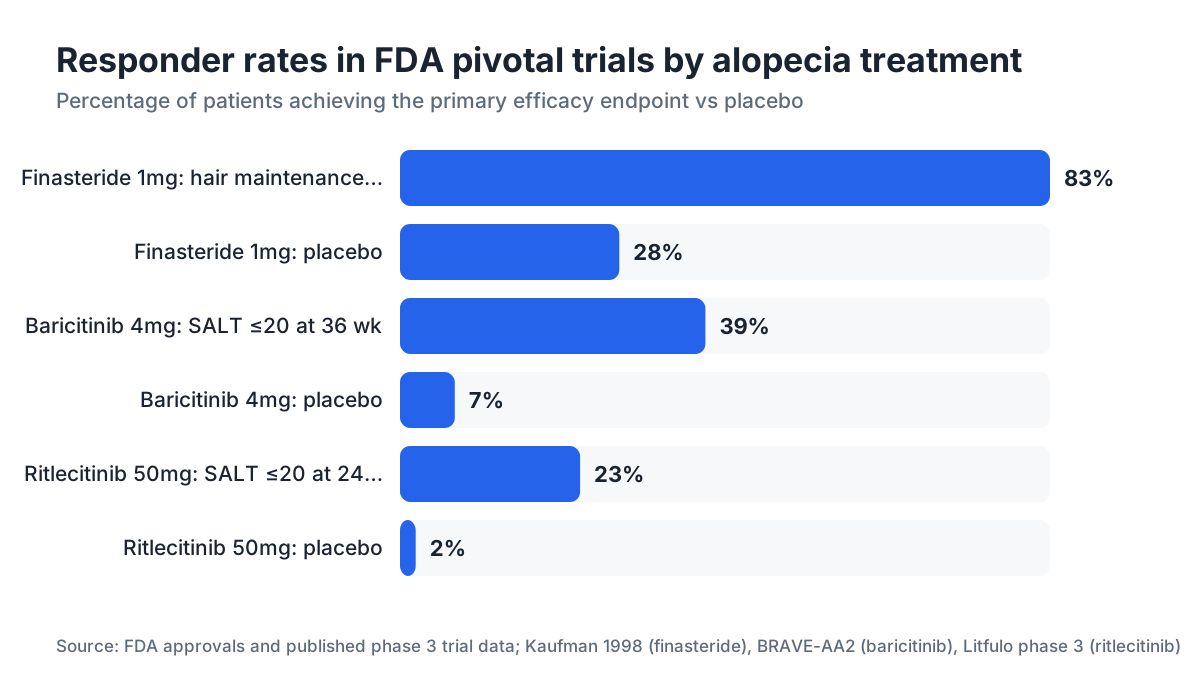
Finasteride is an oral 5-alpha-reductase inhibitor that blocks conversion of testosterone to DHT. It's FDA-approved for men at 1 mg/day (brand name Propecia) and has strong trial data: a two-year phase 3 trial showed 83% of men treated with finasteride maintained their hair count versus 28% on placebo, and 66% showed visible improvement [5]. It's not FDA-approved for premenopausal women because of teratogenicity risk, though it's sometimes used off-label in postmenopausal women. See the full breakdown at finasteride.
Combining both is common clinical practice and supported by trial data showing additive benefit. The combination is more effective than either alone for most men. Read more about that at finasteride and minoxidil.
Low-level laser therapy (LLLT) devices (combs, helmets, caps) are FDA-cleared for AGA. The evidence is real but modest. A 2014 randomized trial in the American Journal of Clinical Dermatology found significant hair density improvement with a 26-beam laser device over 26 weeks. It's not a replacement for minoxidil or finasteride, but it's a reasonable add-on with minimal side effect risk.
Hair transplant surgery (FUT or FUE) permanently moves DHT-resistant follicles from the back of the scalp to thinning areas. It doesn't stop ongoing loss elsewhere, so most surgeons require patients to also be on medical therapy. Costs range from roughly $4,000 to $15,000 or more depending on graft count and clinic. More detail at hair transplant.
Oral minoxidil at low doses (0.25 mg to 2.5 mg/day) is gaining traction as an off-label option with growing evidence behind it. It avoids scalp irritation and compliance problems with topical forms. See oral minoxidil.
What treatments exist for alopecia areata?
Alopecia areata treatment changed meaningfully in 2022. That's when the FDA approved baricitinib (Olumiant, 2 mg and 4 mg oral tablets) specifically for severe alopecia areata, the first systemic drug ever approved for the condition [6]. It's a JAK1/JAK2 inhibitor that blocks inflammatory signaling that drives the autoimmune attack on follicles.
In the BRAVE-AA1 and BRAVE-AA2 phase 3 trials, 38.8% of patients on baricitinib 4 mg achieved a SALT score of 20 or less (meaning at least 80% scalp hair coverage) at 36 weeks, compared to 6.6% on placebo. The FDA label states that baricitinib is indicated for adults with severe alopecia areata, defined as 50% or more scalp hair loss [6].
Ritlecitinib (Litfulo, 50 mg oral daily) received FDA approval in June 2023 for severe AA in patients aged 12 and older [7]. It's a JAK3/TEC inhibitor. In its phase 3 trial, 23% of patients achieved at least 80% scalp coverage at 24 weeks versus 1.6% on placebo. Having an approved option for adolescents is notable because AA frequently starts in childhood.
Before JAK inhibitors, the most commonly used treatments were:
Intralesional corticosteroid injections (typically triamcinolone acetonide): injected directly into bald patches, often every 4 to 6 weeks. These remain first-line for mild, patchy AA in adults. They don't prevent new patches forming elsewhere, but they work reasonably well locally.
Topical corticosteroids and topical minoxidil: often used together for mild cases, especially in children where systemic options carry more risk. Evidence is moderate.
Systemic corticosteroids (oral prednisone): can trigger regrowth but hair typically falls out again after stopping. Not a long-term solution because of side effects.
Anthralin (dithranol) and topical immunotherapy (DPCP or SADBE): older approaches that work by inducing a controlled allergic reaction. DPCP especially has decent response rates (around 40 to 60% in studies) but requires specialist administration and is not FDA-approved for this use.
For most people with mild patchy AA, spontaneous remission within a year happens in roughly 50% of cases, so the decision about how aggressively to treat involves weighing the uncertainty of the natural course against treatment burden.
Can telogen effluvium be treated?
Telogen effluvium is usually self-limiting, which sounds dismissive but is genuinely good news. The trigger (illness, surgery, crash dieting, major stress, thyroid dysfunction, iron deficiency) causes a large proportion of hairs to shift into the resting (telogen) phase simultaneously. Shedding peaks 2 to 3 months after the trigger and typically resolves within 6 to 9 months once the underlying cause is addressed.
The treatment, therefore, is mostly fixing the cause. Iron deficiency is common and underdiagnosed, especially in premenopausal women; a ferritin level below 30 ng/mL is frequently cited as a threshold associated with hair shedding, though the evidence for a specific cutoff is not definitive. Thyroid levels (TSH, free T4) should be checked. Protein intake and caloric adequacy matter.
Minoxidil is sometimes used to speed recovery, but there's no strong trial data for TE specifically. It's a reasonable option if shedding is severe or dragging on beyond 9 months, at which point chronic telogen effluvium (CTE) becomes the more likely diagnosis.
For a deeper look at this condition, telogen effluvium covers the triggers and timeline in more detail.
Are there treatments for scarring alopecias?
Scarring alopecias are the hardest to treat because they destroy the follicle permanently. Once a follicle is replaced by scar tissue, no drug regrows hair there. The goal shifts entirely to halting progression.
Lichen planopilaris (LPP) and frontal fibrosing alopecia (FFA) are the most common types. Standard approaches include topical and intralesional corticosteroids, hydroxychloroquine (an antimalarial with anti-inflammatory effects), and tetracycline-class antibiotics. Finasteride and dutasteride are used for FFA because it may have a hormonal component.
None of these have large randomized controlled trial data. Treatment decisions are made largely from case series and clinical experience. A dermatologist with specific interest in hair disorders (a trichologist or hair loss specialist) is worth finding if you have a scarring condition.
Hair transplant can sometimes be considered for stabilized scarring alopecia, meaning the inflammatory process has been inactive for at least 1 to 2 years. Outcomes are less predictable than for AGA.
How do doctors diagnose which type of alopecia you have?
Getting the diagnosis right is where most people go wrong, especially if they skip the dermatologist and try treatments based on internet research alone.
A board-certified dermatologist will typically start with a scalp examination and pull test (gently pulling 60 or so hairs to count how many come out). Dermoscopy (a handheld skin microscope) has transformed diagnosis accuracy by showing follicular patterns and signs of inflammation invisible to the naked eye.
Blood work usually includes: complete blood count, iron studies (serum ferritin, total iron-binding capacity), thyroid function (TSH), and sometimes zinc, vitamin D, and hormonal panels (DHEA-S, testosterone, prolactin) depending on the clinical picture.
A scalp biopsy is the definitive test for scarring alopecias and sometimes needed to distinguish AA from AGA or other conditions. Two 4 mm punch biopsies from the affected scalp area, processed for both horizontal and vertical sectioning, give the most information.
Tracking your own pattern over time helps too. If you're in the early stages and want to understand where you stand, a free AI hair scan at MyHairline can give you a baseline Norwood or Ludwig stage assessment to bring to your appointment.
Understanding what causes hair loss is a useful primer before your visit.
What do the most effective alopecia treatments actually cost?
Cost varies enormously depending on the treatment type and whether you use brand or generic.
| Treatment | Type | Typical monthly cost (US) | FDA status |
|---|---|---|---|
| Minoxidil 5% topical (generic) | OTC | $10 to $25 | Approved (AGA) |
| Finasteride 1 mg (generic) | Rx | $15 to $40 | Approved (men, AGA) |
| Oral minoxidil 2.5 mg (generic) | Rx off-label | $10 to $30 | Off-label |
| Baricitinib 4 mg (Olumiant) | Rx | $1,800 to $2,200 | Approved (severe AA) |
| Ritlecitinib 50 mg (Litfulo) | Rx | $2,000 to $2,500 | Approved (severe AA) |
| LLLT device (one-time purchase) | OTC/cleared | $200 to $800 | Cleared (AGA) |
| Hair transplant (FUE) | Surgery | $4,000 to $15,000+ one-time | Cleared |
| Intralesional steroids | In-office | $150 to $400 per session | Off-label for AA |
The JAK inhibitors for alopecia areata are expensive without insurance. Eli Lilly (baricitinib) and Pfizer (ritlecitinib) both have patient assistance programs. Ask your dermatologist's office to run a prior authorization before assuming you can't afford them.
Generic finasteride has made AGA treatment much more accessible. A one-month supply runs under $20 at most pharmacies now, compared to over $80 for brand Propecia.
Are there natural or supplement-based treatments with real evidence?
The supplement market for hair loss is enormous and mostly disappointing. That said, a few things have real (if modest) evidence.
Saw palmetto is the most studied natural DHT blocker. A 2002 randomized study found 60% of men taking a saw palmetto-containing compound rated improvement in their hair loss versus 11% on placebo, but the study was small and the compound was not standardized [8]. It probably has a mild 5-alpha-reductase inhibiting effect, but nothing close to finasteride's 70% DHT reduction. For more on DHT-blocking options, see dht blocker.
Biotin (vitamin B7) is heavily marketed for hair. The evidence for biotin supplementation causing hair regrowth exists only in people with true biotin deficiency, which is rare. The FDA has warned that high-dose biotin supplements can interfere with thyroid function lab tests and troponin assays, producing falsely normal results [9].
Iron and ferritin: correcting iron deficiency clearly helps telogen effluvium. There's no good evidence that iron supplementation helps AGA in iron-replete people.
Zinc: modest evidence in zinc-deficient individuals. Supplementation beyond normal levels hasn't shown hair benefit and high-dose zinc can actually cause hair loss.
Pumpkin seed oil: a randomized controlled trial in Evidence-Based Complementary and Alternative Medicine (2014) found men taking pumpkin seed oil capsules had a 40% increase in hair count versus 10% in the placebo group after 24 weeks [10]. Small study, needs replication, but it's one of the better-designed supplement trials in this space.
For a thorough look at what the evidence actually says about supplements, hair loss supplements goes deeper.
What about hair loss from medications, hormones, or specific triggers?
Some hair loss is entirely reversible once the cause is removed. Medication-induced hair loss (from chemotherapy, certain antidepressants, mood stabilizers, blood thinners, retinoids, and others) typically resolves 3 to 6 months after discontinuing the drug, though the timeline varies.
Hormonal causes include hypothyroidism, hyperthyroidism, polycystic ovary syndrome (PCOS), and the postpartum hormonal drop. Treating the underlying condition is the primary intervention. Women with PCOS-related hair loss sometimes benefit from spironolactone, an aldosterone antagonist that also blocks androgen receptors. It's used off-label for female AGA and androgenic alopecia in PCOS, typically at 50 to 200 mg/day.
Traction alopecia from tight hairstyles can recover fully if the tension is removed early. If practiced for years, the follicular damage can become permanent.
If you've heard concerns about specific supplements affecting hair loss, the article on does creatine cause hair loss addresses one frequently asked question in this category.
Receding hairlines specifically, which often signal early AGA, are covered in detail at receding hairline.
What should you actually do if you're losing hair right now?
Start with a dermatologist visit, not a supplement. The single most useful thing you can do is get a diagnosis, because treating the wrong type of alopecia wastes time and money and, in some cases (like using finasteride for a scarring condition), does nothing useful.
If cost or access is a barrier, telehealth dermatology platforms can provide a diagnosis and prescriptions for AGA more cheaply than in-person visits in most states. That's legitimate for straightforward androgenetic alopecia. It's less appropriate for scarring conditions or complex autoimmune presentations that need a biopsy.
For men with AGA who want to be aggressive about keeping their hair: the combination of finasteride plus topical minoxidil is the most evidence-backed regimen available without a specialist procedure. Most men who start both in their 20s or early 30s can maintain their hair at or near current density for many years.
For people with alopecia areata: the JAK inhibitor approvals are genuinely significant progress. If you have severe AA (more than 50% scalp loss) and steroids haven't worked, asking specifically about baricitinib or ritlecitinib is worth doing.
Before your appointment, you can get a free AI-based assessment of your hair loss pattern at MyHairline. It won't replace a diagnosis, but it gives you a clearer picture of your Norwood or Ludwig stage to discuss with your doctor.
And be honest with yourself about timing. Hair loss treatments work best when started early. Regrowing severely miniaturized or lost hair is harder than maintaining what you have.
How long does it take for alopecia treatments to work?
This is where a lot of people give up too early and lose ground they didn't need to lose.
Minoxidil typically takes 3 to 6 months for initial results. At 2 months, you may experience increased shedding, which is normal and reflects the hair cycle shifting. Don't stop. By 6 months, most responders have visible density improvement. Maximum benefit is usually seen at 12 months.
Finasteride works more slowly for regrowth but faster for stopping loss. DHT reduction happens within days of starting, but visible hair changes take 6 to 12 months. Full assessment of finasteride response is typically done at 12 months. The phase 3 trial data cited earlier measured results at one and two years [5].
Baricitinib for alopecia areata: the BRAVE-AA trials measured primary endpoints at 36 weeks. Some patients see meaningful regrowth in the 16 to 24 week range.
Intralesional steroid injections for AA patches: regrowth can begin 4 to 8 weeks after the injection.
Hair transplant: transplanted hairs shed at 2 to 6 weeks post-procedure (expected), then regrow starting around month 3 to 4, with full results at 12 to 18 months.
Patience is not optional. Every treatment in this space takes months to evaluate.
Are there treatments that don't work and are a waste of money?
Yes, and the list is long.
Keratin shampoos and thickening conditioners improve the appearance of hair but do nothing to halt loss or regrow hair. They're cosmetics. Fine to use, but don't confuse them with treatment.
High-dose biotin supplements for non-deficient people: there's no good evidence they grow hair, and as noted above, they can skew lab tests in clinically meaningful ways.
Platelet-rich plasma (PRP) injections are promoted heavily by clinics. The evidence is real but inconsistent. A 2019 meta-analysis in Aesthetic Plastic Surgery found PRP produced significantly more hair density than controls in AGA, but study quality was low and there's no standardized PRP preparation protocol, meaning results vary wildly between providers [11]. I wouldn't make it a first-line treatment. At $500 to $2,000 per session with 3 or more sessions often recommended, it's expensive to try as a primary strategy.
Hair growth serums sold on social media without active ingredients that have trial data behind them (usually everything except minoxidil and ketoconazole) are spending money on marketing.
Any product that promises permanent regrowth from one course of treatment, hair loss reversal from a scalp massage routine alone, or a cure for androgenetic alopecia is making a claim that isn't supported by evidence.
Sources
- American Academy of Dermatology, Hair Loss overview
- National Alopecia Areata Foundation, About Alopecia Areata
- FDA, Drugs section
- Olsen EA et al., Journal of the American Academy of Dermatology, 2002: 5% vs 2% minoxidil in men
- Kaufman KD et al., Journal of the American Academy of Dermatology, 1998: Finasteride phase 3 trial
- FDA Drug Approval: Baricitinib (Olumiant) for severe alopecia areata, 2022
- FDA Drug Approval: Ritlecitinib (Litfulo) for severe alopecia areata, June 2023
- Prager N et al., Journal of Alternative and Complementary Medicine, 2002: saw palmetto randomized study
- FDA Safety Communication: Biotin interference with lab tests
- Cho YH et al., Evidence-Based Complementary and Alternative Medicine, 2014: pumpkin seed oil RCT
- Gupta AK et al., Aesthetic Plastic Surgery, 2019: PRP meta-analysis for AGA
- American Academy of Dermatology, Alopecia areata diagnosis and treatment