

TL;DR: Male pattern baldness follows a predictable path mapped by the Norwood-Hamilton scale, which runs from Stage 1 (no visible loss) to Stage 7 (only a horseshoe rim of hair remains). Crown thinning typically appears at Stage 3 Vertex or Stage 4 and above. Finasteride and minoxidil have the strongest evidence for slowing progression; earlier treatment produces better results.
What is the Norwood scale and why does it matter?
The Norwood-Hamilton scale is the standard classification system for male pattern baldness (androgenetic alopecia). James Hamilton published the original scale in 1951, and O'Tar Norwood revised it in 1975 into the version dermatologists and hair transplant surgeons still use today [1]. It defines seven main stages, plus a few variant patterns, based on where hair loss starts and how far it progresses.
Why does it matter? Because where you sit on the scale tells you a lot about which treatments are likely to help, whether you are a candidate for a hair transplant, and roughly how far your hair loss may progress if you do nothing. A surgeon quoting you a price for a transplant is using this scale to estimate how many grafts you need. A dermatologist prescribing finasteride is thinking about which stages the clinical trials covered.
The scale is not perfect. It was developed mostly on white men, and the variant patterns (especially the Type A variant, where recession moves straight back rather than leaving an island in the front) are not always captured cleanly. But it remains the most widely used and researched tool for this purpose, and understanding it is genuinely useful before you spend money on anything.
What does each Norwood stage actually look like?
Here is a plain-language breakdown of each stage. The distances and descriptions come from the dermatology literature [1][2].
Stage 1: No visible hairline recession. This is the baseline. Most men under 20 sit here.
Stage 2: A slight recession at the temples, forming a slight M-shape. Many men never notice this stage because the change is subtle. Some call it a "mature hairline" rather than balding.
Stage 3: Deeper temple recession. The M-shape is now clearly visible. This is often the first stage that prompts men to seek help.
Stage 3 Vertex: A separate variant where thinning begins at the crown (vertex) while the frontal hairline is still relatively intact. This is where crown thinning first appears on the Norwood map. Many men are surprised to see it in a photo taken from above.
Stage 4: Both frontal recession and crown thinning are visible. A band of hair still separates the two thinning zones, but it is narrowing.
Stage 5: The band of hair between the front and crown becomes thinner and smaller. The two zones are close to merging.
Stage 6: The band is gone. The frontal and crown thinning areas have merged into one large bald zone. Only the sides and back remain.
Stage 7: The most advanced stage. Only a narrow horseshoe rim of hair remains around the sides and back of the head. This hair is typically finer than it once was but is resistant to DHT, which is why it survives.
| Norwood Stage | Crown Thinning Present? | Frontal Recession? | Typical Age of Onset |
|---|---|---|---|
| 1 | No | No | Teens, 20s |
| 2 | No | Mild | 20s |
| 3 | No | Moderate | 20s, 30s |
| 3 Vertex | Yes (early) | Mild, Moderate | 20s, 30s |
| 4 | Yes | Significant | 30s |
| 5 | Yes (expanding) | Significant | 30s, 40s |
| 6 | Yes (merged) | Merged | 40s, 50s |
| 7 | Extensive | Merged | 50s+ |
How common is male pattern baldness at each stage?
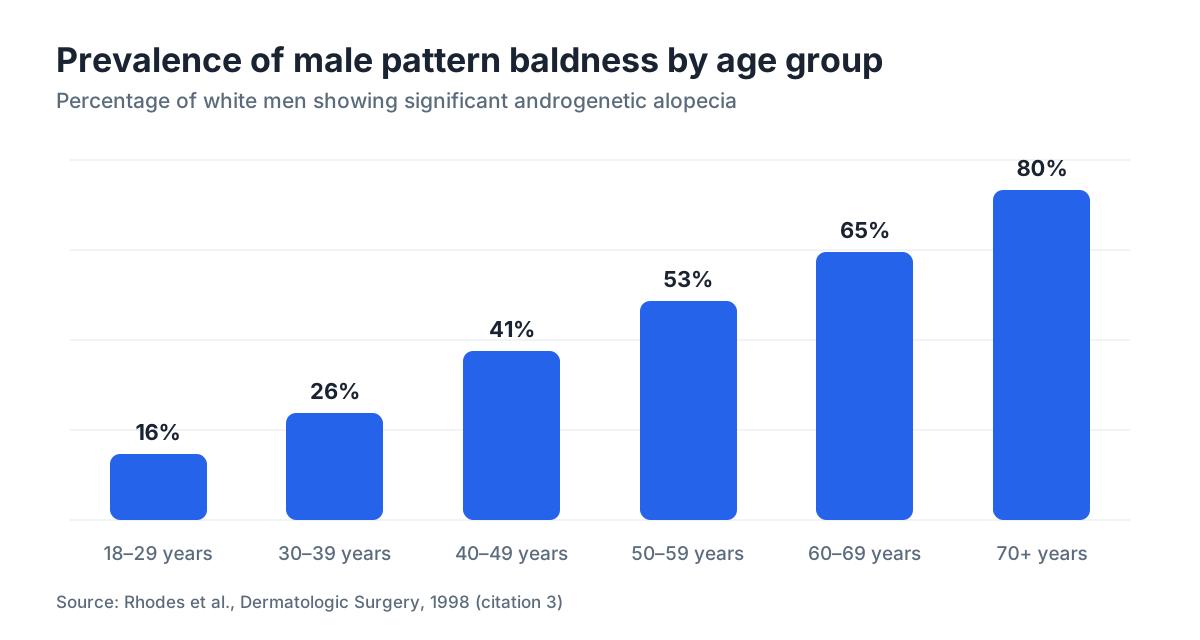
Male pattern baldness is extremely common. A frequently cited figure from a large 1998 study published in Dermatologic Surgery found that roughly 50% of white men over 50 show significant hair loss, with prevalence rising with age [3]. By age 70, that figure is closer to 80%.
A 2001 study examining a Korean population found somewhat lower rates, which supports the clinical observation that androgenetic alopecia varies by ethnicity [4]. Asian and Black men tend to have lower overall prevalence, though the Norwood scale itself was not designed with those populations in mind.
Among men who do develop pattern baldness, crown thinning (Stages 3 Vertex through 5) is one of the most common presentations. A lot of men do not realize crown thinning is happening until someone behind them mentions it or they see a photograph. The crown is genuinely hard to self-examine, which is part of why men often present to dermatologists later for this presentation than for frontal recession.
If you want a quick read on your own pattern, MyHairline's free AI hair scan uses photos from multiple angles, including overhead, specifically because crown thinning is so easy to miss in a mirror.
What causes crown thinning in male pattern baldness?
The cause is the same across all Norwood stages: dihydrotestosterone (DHT), a hormone derived from testosterone via the enzyme 5-alpha reductase [5]. Hair follicles on the top and front of the scalp carry androgen receptors that are sensitive to DHT. Over years, DHT shortens the follicle's growth phase (anagen), producing progressively finer, shorter hairs until the follicle miniaturizes and eventually stops producing visible hair.
The back and sides of the scalp are largely DHT-resistant, which is why the horseshoe pattern exists at Stage 7 and why hair from those areas survives when transplanted to the top.
Genetics drive most of this. The trait is polygenic, meaning many genes contribute, and it is inherited from both sides of the family, more than the mother's side as the old myth claimed. If your father and maternal grandfather both went bald early, your risk is higher than if only one of them did. But genetics is not destiny: some men with a strong family history never progress past Stage 3, and some with no obvious family history reach Stage 6.
For a deeper look at the mechanisms behind this, see our article on what causes hair loss.
One thing worth knowing: crown thinning that appears suddenly or in an unusual pattern, or comes with other symptoms, may not be androgenetic alopecia at all. Alopecia areata, telogen effluvium, and other conditions can also cause crown thinning and require different treatment.
What are the early signs of crown thinning you should watch for?
The first sign is usually not dramatic hair shedding. Most men lose roughly 50-100 hairs per day normally, and androgenetic alopecia does not always accelerate shedding much. Instead, the early signs are about what grows back.
Look for these changes:
Hairs at the crown that seem shorter and finer than they used to be. This is miniaturization happening in real time.
A visible scalp at the crown under bright overhead lighting that you did not notice a few years ago.
A ponytail or bun that feels noticeably thinner at the back of the head.
A part that seems wider than it used to be, particularly at the top of the head.
A photograph taken from above is the most reliable self-check. Take one every few months in the same lighting. That is how you actually track progression.
The earlier you catch it, the more options you have. Stage 3 Vertex or Stage 4 are genuinely good times to start treatment. Waiting until Stage 6 or 7 leaves you with fewer pharmaceutical options and a larger (and more expensive) transplant target area if you go that route.
Which treatments work at which Norwood stages?
This is where most people need honest guidance, because the answer varies significantly by stage.
Stages 1-3 (including 3 Vertex): Minoxidil and finasteride both have strong clinical evidence at these stages. Finasteride's original placebo-controlled trials showed it increased hair count and prevented further loss in men with mild to moderate vertex and frontal thinning [6]. The FDA approved finasteride 1mg (Propecia) specifically for this indication. Minoxidil 5% topical solution is FDA-approved for men as a twice-daily application and has been shown to increase hair count at the vertex in clinical trials [7]. These are the stages where medical treatment has the best chance of meaningful regrowth, more than slowing loss.
Stages 4-5: Medical treatment can still work, especially if the follicles are miniaturizing but not yet gone. You are less likely to see dramatic regrowth at these stages, but preventing further progression is still worth a lot. Hair transplants become a reasonable option here for men who want to restore density that is already gone. The donor supply from the back and sides is still plentiful at these stages.
Stages 6-7: Medical therapy can slow progression and may maintain the remaining hair, but regrowing hair in areas where follicles have been miniaturized for years is difficult. Hair transplants are the main option for visible restoration, though Stage 7 men need careful planning because the donor area is limited relative to the bald zone. Scalp micropigmentation (a tattooing technique that mimics the appearance of a shaved head) is a non-surgical option some men choose at this stage.
Combining finasteride and minoxidil tends to produce better results than either alone. See our comparison of finasteride and minoxidil together for the data on combined therapy.
For the DHT blocker mechanism in more detail, and why some men also look at supplements claiming to block DHT, that article covers what the evidence shows (and does not show).
Does finasteride actually stop crown thinning?
Finasteride (1mg daily, sold as Propecia and generics) is the only oral FDA-approved medication for male pattern baldness [6]. It works by inhibiting type II 5-alpha reductase, which reduces DHT levels in the scalp by roughly 60 to 70%.
The evidence is solid. The original two-year randomized, placebo-controlled trial published in the Journal of the American Academy of Dermatology found that 83% of men taking finasteride maintained their hair count versus continued loss in the placebo group, and 66% showed some increase in hair count [6]. The vertex (crown) showed stronger responses than the frontal hairline in some analyses.
The FDA label states that finasteride "is indicated for the treatment of male pattern hair loss (androgenetic alopecia) in MEN ONLY" and notes that results require continued use; stopping finasteride typically reverses the benefit within 12 months [6].
Side effects are real but less common than internet forums suggest. The FDA label reports sexual side effects (decreased libido, erectile dysfunction, decreased ejaculate volume) in roughly 3.8% of men in clinical trials versus 2.1% in the placebo group. A subset of men report persistent side effects after stopping (called post-finasteride syndrome), which remains an active area of research.
Our detailed article on finasteride covers the dosing, side effect data, and what to discuss with your doctor.
One honest caveat: finasteride works better at slowing crown thinning than at regrowing a completely bald spot. If you have a large bald area at the crown, medication alone probably will not fill it. It is most powerful as a preventive tool started early.
Does minoxidil help with crown thinning specifically?
Yes, and the crown is actually where minoxidil has the most evidence. The original FDA approval of 5% topical minoxidil for men was based on clinical trials specifically measuring vertex hair growth [7]. The mechanism is different from finasteride: minoxidil extends the anagen (growth) phase of the hair cycle and may also widen blood vessels around follicles, though the exact mechanism is not fully understood.
Typical clinical trial results show a meaningful increase in non-vellus hair count at the vertex after 16 to 48 weeks, though response varies widely between individuals. Some men see notable regrowth. Others see mainly stabilization. Nobody has good data on exactly who responds best, but earlier treatment and higher baseline hair density seem to predict better outcomes.
The main practical issue with topical minoxidil is adherence. Twice daily application gets old. Oral minoxidil (0.625mg to 5mg daily, used off-label) has become more popular because it is a single daily pill. See our article on oral minoxidil for the growing evidence base and the different side effect profile (fluid retention, increased heart rate, and hypertrichosis are the ones to know).
For the full rundown on topical options, our minoxidil for men guide covers concentrations, foam versus solution, and realistic expectations.
When is a hair transplant the right option for crown thinning?
Hair transplants are the only option that permanently replaces lost hair. But crown thinning is actually one of the trickier targets for transplantation, and not every surgeon will tell you that upfront.
The crown is a swirling pattern of hair growth that requires a lot of grafts to look natural and dense. The bald spot there tends to expand over time if you are not on medication, which means a transplant done at Stage 4 or 5 may look great at first and then look unnatural as the surrounding native hair continues to fall out around the transplanted area.
Most experienced hair transplant surgeons recommend:
Being on finasteride (or having a documented medical reason you cannot take it) before transplanting the crown, to stabilize the remaining hair.
Waiting until your pattern is relatively stable rather than transplanting in your early 20s when progression is still rapid.
Realistic expectations: filling a large crown bald spot may require 1,500 to 3,000 grafts or more, which is a significant portion of your available donor supply.
For a thorough look at procedure types, costs, and what the results actually look like, see our hair transplant guide.
The Norwood stage is directly relevant here: a Stage 3 Vertex patient with plenty of donor hair and a small crown thinning area is an excellent candidate. A Stage 6 patient needs a surgeon who can plan carefully across both the frontal zone and the crown without exhausting the donor supply.
Can the Norwood scale predict how far your hair loss will progress?
Partly, but not precisely. There is no reliable test that tells you your final Norwood stage. The rate and extent of progression depends on genetics, age of onset, and factors that are not yet fully predictable from any single marker.
What the research does suggest:
Men who begin losing hair before age 30 tend to progress further than those who start later.
Family history on both sides gives some signal, but it is not deterministic.
Stage at a given age is somewhat predictive: a man at Stage 4 by age 35 is more likely to reach Stage 6 or 7 than a man who reaches Stage 4 at age 55.
Looking at older male relatives (father, paternal uncles, maternal uncles) across both sides gives you a rough ceiling for what your pattern might look like.
None of this is certain enough to use as a reason to avoid treatment. If you are at Stage 3 Vertex and losing hair, waiting to see how bad it gets means losing time when treatment is most effective. The Norwood scale is useful for setting expectations and planning, not for justifying inaction.
If you want to track your own progression objectively, consistent overhead photographs every three months are more useful than any app or quiz. MyHairline's free AI hair scan generates a Norwood-stage estimate and tracks changes over time if you upload periodic photos, which is the next best thing to a dermatologist doing it in person.
What about the Norwood Type A variant and other pattern differences?
The standard Norwood scale assumes that recession starts at the temples and separately at the crown, with a bridge of hair in between. The Type A variant is different: recession moves straight back from the front in a uniform line, without ever leaving that front island of hair. Crown involvement comes later in the Type A pattern, if at all.
Type A men often find that standard Norwood stage descriptions do not quite match their appearance, because they do not have the classic M-shape recession. Their hair loss is sometimes slower to progress, and the pattern can look less dramatic until it is quite advanced.
Diffuse thinning is another pattern that the Norwood scale does not capture well. Some men (and this is more common in men with early onset loss) thin diffusely across the entire top of the scalp without a classic recession pattern. This can make staging harder and can also look different from the classic Norwood photographs.
If your pattern does not match the standard stages, it does not mean the treatments are different. Finasteride and minoxidil work across pattern types. But it does mean you should be cautious about using the Norwood photographs as your only reference, and a dermatologist who specializes in hair loss can give you a more accurate classification and plan.
What is the connection between DHT, the Norwood scale, and crown thinning?
The crown (vertex) is particularly sensitive to DHT. Research has shown that follicles in the vertex region of the scalp have higher androgen receptor density than follicles in the occipital (back) region, which is why that area tends to thin first or concurrently with the temples in pattern baldness [5].
This is directly relevant to the Norwood scale: the reason crown thinning gets its own staging variant (3 Vertex) is that a significant subset of men start losing hair there before or instead of developing the classic temple recession. It is not an anomaly. It is a predictable biological pattern.
Blockers that reduce DHT, primarily finasteride and dutasteride, work along this pathway. Minoxidil does not block DHT. It works independently, which is why the combination is often more effective than either alone.
If you are considering supplements marketed as natural DHT blockers (saw palmetto is the most common), the evidence is much weaker than for pharmaceutical options. Our DHT blocker article walks through what the studies actually show, including the methodological limitations of most supplement trials.
Sources
- Norwood OT. Male pattern baldness: classification and incidence. Southern Medical Journal, 1975
- American Academy of Dermatology Association, Hair Loss Resource Center
- Rhodes T et al. Prevalence of male pattern hair loss in 18-49 year old men. Dermatologic Surgery, 1998
- Paik JH et al. The prevalence and types of androgenetic alopecia in Korean men and women. British Journal of Dermatology, 2001
- Sawaya ME, Price VH. Different levels of 5alpha-reductase type I and II, aromatase, and androgen receptor in hair follicles of women and men with androgenetic alopecia. Journal of Investigative Dermatology, 1997
- Kaufman KD et al. Finasteride in the treatment of men with androgenetic alopecia. Journal of the American Academy of Dermatology, 1998
- Olsen EA et al. A randomized clinical trial of 5% topical minoxidil versus 2% topical minoxidil and placebo in the treatment of androgenetic alopecia in men. Journal of the American Academy of Dermatology, 2002
- van Neste D, Fuh V, Sanchez-Pedreno P et al. Finasteride increases anagen hair in men with androgenetic alopecia. British Journal of Dermatology, 2000
- van der Donk J, Passchier J, Knegt-Junk C et al. Psychological characteristics of men with alopecia androgenetica and their modification. International Journal of Dermatology, 1991
- Trüeb RM. Molecular mechanisms of androgenetic alopecia. Experimental Gerontology, 2002
- van Zuuren EJ et al. Interventions for female pattern hair loss. Cochrane Database of Systematic Reviews, 2016