
TL;DR: A receding hairline in men is almost always androgenetic alopecia driven by DHT shrinking hair follicles at the temples and crown. It progresses through the Norwood scale from stage 1 (no loss) to stage 7 (near-total baldness). FDA-approved treatments, minoxidil and finasteride, can slow or partly reverse early loss. Later stages may require a hair transplant.
What is a receding hairline and how common is it in men?
A receding hairline means the front edge of your hair is moving backward, usually starting at the temples before spreading toward the crown. It is not a disease. It is the most common form of hair loss on earth.
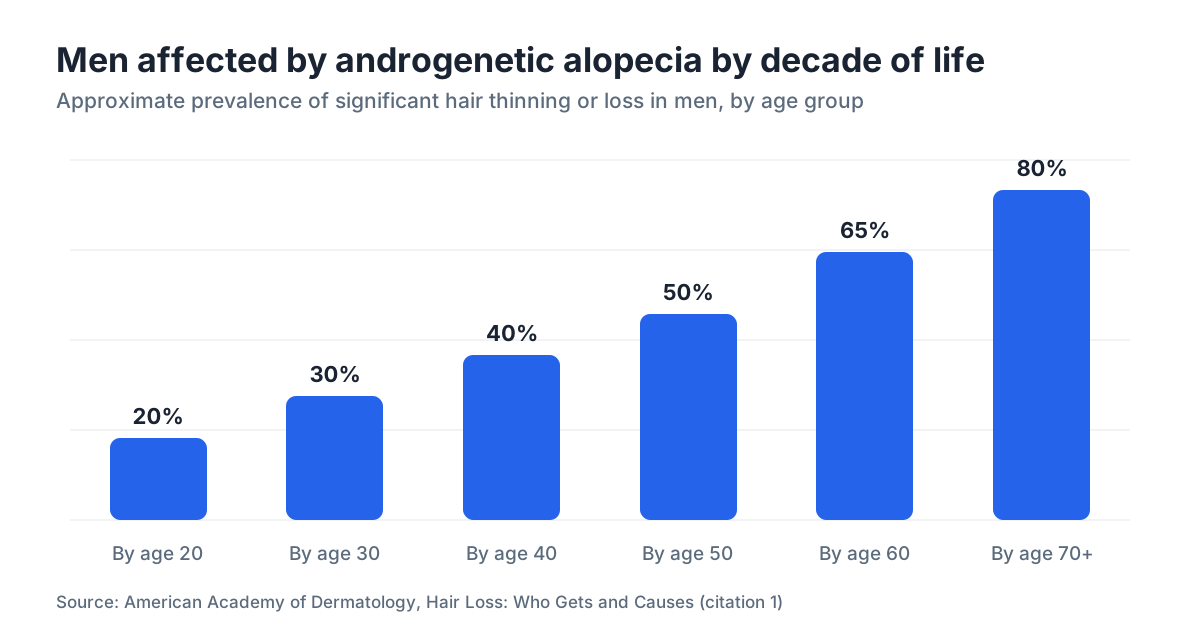
The numbers are stark. By age 50, roughly 85% of men have significantly thinning hair, and about 25% of men with male pattern baldness see noticeable recession before age 21 [1]. That means a receding hairline is statistically normal, even if it does not feel that way when you first notice it in the mirror.
The medical term is androgenetic alopecia, sometimes called male pattern hair loss. "Androgenetic" tells you almost everything: it is driven by androgens (hormones, specifically dihydrotestosterone or DHT) acting on follicles that have a genetic sensitivity to them. You can inherit that sensitivity from either parent, more than your mother's side, which is a persistent myth worth discarding.
Not every hairline that changes is androgenetic alopecia, though. Stress-related shedding (telogen effluvium), scalp inflammation, thyroid problems, and nutritional deficiencies can all push hair back temporarily. The difference matters because the fix is completely different. A receding hairline that arrived six weeks after a major illness or weight-loss diet and shows diffuse thinning rather than a temple-first pattern is probably not androgenetic alopecia. If you're unsure what causes hair loss in your case, that distinction is worth working out before you spend money on treatments.
What does a receding hairline look like at each Norwood stage?
The Hamilton-Norwood scale is the standard classification doctors use. It has seven main stages and gives you a common language for tracking progression and making treatment decisions.
| Norwood Stage | What it looks like | Typical age of first appearance |
|---|---|---|
| 1 | No recession, juvenile hairline intact | Teens to early 20s |
| 2 | Slight recession at temples, triangular areas | Early to mid 20s |
| 2A | Recession begins moving front-to-back, more than temples | Mid 20s |
| 3 | Deeper temple recession, hairline clearly M-shaped | Late 20s to 30s |
| 3 Vertex | Temple recession plus thinning on crown | 30s |
| 4 | More pronounced temples, crown patch expanding, solid band between them | 30s to 40s |
| 5 | Band between temples and crown narrows | 40s |
| 6 | Band disappears, temples and crown merge | 40s to 50s |
| 7 | Only a horseshoe fringe of hair remains on sides and back | 50s and beyond |
Stages 1 and 2 are where medical treatment has the strongest evidence. The follicles are miniaturized but not yet dead. Stages 3 through 5 can still respond well to medication, especially if caught early in the progression. Stages 6 and 7 see very limited medication benefit on the bald areas, and a hair transplant becomes the main surgical option.
You do not have to guess your stage. Photographs taken in consistent lighting every three to six months, compared side by side, are more reliable than memory. Many dermatologists also use a handheld dermoscope to examine follicle density before it is visible to the naked eye.
What actually causes a receding hairline in men?
The short answer is DHT plus genetics. The longer answer explains why some men lose hair fast and others barely notice any change into their 60s.
DHT (dihydrotestosterone) is a byproduct of testosterone converted by an enzyme called 5-alpha reductase. In follicles that are genetically sensitive, DHT binds to receptors inside the follicle and gradually shortens the growth phase of the hair cycle. Each successive cycle produces a thinner, shorter strand until the follicle produces almost nothing. This is called follicular miniaturization [2].
The gene variants that determine follicle sensitivity are found on multiple chromosomes. The androgen receptor gene on the X chromosome (which you do get from your mother) has the strongest single-gene association, but genome-wide studies have found nearly 300 genetic loci involved in male pattern baldness [3]. The upshot: predicting your baldness from your maternal grandfather alone is unreliable. Look at both sides of your family.
Age accelerates the process because testosterone conversion to DHT increases as you get older, and scalp blood flow decreases. Other factors that can worsen or speed up an existing tendency include chronic psychological stress, smoking, poor sleep, and a poor diet, though none of these alone cause androgenetic alopecia. They tip the balance if the genetics are already there.
Things that do NOT cause a receding hairline: wearing hats, washing your hair too often, or using styling products. These are durable myths. Hair shed in the shower was already in the shedding phase; the water did not cause it.
Which treatments actually slow or reverse a receding hairline?
Two treatments have FDA approval specifically for male pattern hair loss. Everything else sits somewhere on a spectrum from promising-but-early-evidence to essentially useless.
Minoxidil (topical and oral)
Minoxidil was the first FDA-approved hair loss treatment, originally a blood pressure drug whose side effect of unexpected hair growth led to a topical formulation. The 5% topical solution applied twice daily is the standard. A 2002 randomized controlled trial published in the Journal of the American Academy of Dermatology found that 5% minoxidil produced 45% more hair regrowth than placebo at 48 weeks [4]. It does not block DHT; it appears to extend the growth phase and increase blood flow to follicles.
Topical minoxidil works best at the crown and less reliably at the temples, which matters if your main concern is a receding front hairline. You should know that upfront. Oral (low-dose) minoxidil at 2.5 to 5 mg daily has shown stronger results in some observational studies, including a 2020 paper in the Journal of the American Academy of Dermatology [5], but it carries more systemic side effects including fluid retention and unwanted facial hair. Read more about minoxidil for men and its side effects before starting.
Finasteride (oral)
Finasteride 1 mg daily blocks 5-alpha reductase and reduces scalp DHT by roughly 60-70% [6]. The five-year trial that got the drug approved found 90% of men on finasteride kept or improved their hair count, while the placebo group declined steadily [6]. It works better at the crown than the hairline, but studies do show meaningful hairline preservation with long-term use.
Finasteride requires a prescription. It can cause sexual side effects, including reduced libido and erectile dysfunction, in around 2-4% of users, and there are reports of persistent side effects after stopping, though the prevalence is debated. The FDA label requires a warning about these risks [7]. You can read the full picture at finasteride.
Combining both
Combining finasteride and minoxidil together has additive evidence. A 2021 randomized trial in JAMA Dermatology found the combination outperformed either drug alone on total hair count at 24 weeks [8]. If you're going to treat, this combination is what most dermatologists reach for first. See the detailed breakdown at finasteride and minoxidil.
DHT-blocking supplements
Saw palmetto, pumpkin seed oil, and similar natural DHT blockers have some small trials behind them. Pumpkin seed oil showed a 40% increase in hair count versus 10% in placebo in a 2014 randomized trial published in Evidence-Based Complementary and Alternative Medicine, though the sample was small (76 men). Saw palmetto has even weaker data. These are not replacements for finasteride; think of them as mild adjuncts or alternatives for men who cannot tolerate prescription medication. The hair loss supplements landscape is cluttered with products that rely on this thin evidence while charging premium prices.
What does not work
Biotin supplementation does nothing for androgenetic alopecia unless you have a genuine biotin deficiency, which is rare. Scalp massages alone have no rigorous RCT evidence. Laser combs and helmets (low-level laser therapy) have FDA clearance as a device, which is not the same as FDA approval, and the evidence is modest at best. Platelet-rich plasma (PRP) looks interesting but lacks standardization; results vary enormously by protocol and provider.
When should you consider a hair transplant for a receding hairline?
A hair transplant makes the most sense once your hairline has stabilized, meaning it has not moved significantly in one to two years, ideally with medication. Operating on an actively receding hairline risks the transplanted front looking disconnected from the native hair behind it as that hair continues to fall.
The two main techniques are FUT (follicular unit transplantation, which takes a strip from the back of the scalp) and FUE (follicular unit extraction, which harvests individual follicles). FUE leaves no linear scar and has largely replaced FUT for most patients, though FUT can yield more grafts per session and may be preferable for those needing large coverage.
For a receding hairline at Norwood stages 2 to 4, a surgeon typically transplants 1,500 to 3,000 grafts for the frontal zone. Cost in the United States runs roughly $6,000 to $15,000 depending on graft count, surgeon experience, and location. There is no single authoritative national average, but American Society of Plastic Surgeons and ISHRS surveys put average procedure costs in this range [9].
The donor supply is finite. A 25-year-old at Norwood stage 3 who transplants without using finasteride may exhaust their donor hair by 45 if their native hair continues to recede around the transplant. This is one reason dermatologists typically want to see medication compliance before and after surgery.
For a full breakdown of what to expect, see hair transplant.
If you want an objective starting point before booking consultations, MyHairline's free AI scan (/scan) can estimate your Norwood stage from photos and flag whether your pattern looks like a candidate for medical treatment, surgical treatment, or both.
What are the best hairstyles for a receding hairline in men?
Hairstyles do not stop hair loss, but they buy time, reduce visibility, and can look genuinely good rather than compensatory. The goal is to work with the shape of your hairline rather than hide it in ways that look obvious.
Short cuts that work well
Short hairstyles for a receding hairline reduce the contrast between thinning areas and thicker areas. When everything is kept at a similar length, there is less visual difference between where the hair is dense and where it is not. A grade 2 to 4 buzz cut is the most efficient option and suits almost every face shape. A textured crop (1 to 2 inches on top, short sides) works well at Norwood stages 2 and 3 because the texture adds the illusion of volume without requiring length that exposes recession.
The French crop and the Caesar cut, both involving a short fringe that sits horizontally across the forehead, are excellent for Norwood 2 to 3 because the fringe visually anchors the hairline without trying to fake density.
Styles to approach with caution
A hard side part draws a line right through your thinnest area. Combovers that drag hair from one side to cover thinning are easy to spot and tend to look worse as the wind picks up. Long hair on top with a shaved undercut can work at stage 2 but highlights temple recession rather than minimizing it by stage 3.
The shaved head option
At Norwood stages 5 to 7, a fully shaved or very closely cropped head is often the cleanest choice aesthetically. It takes the guesswork out of styling, eliminates the visual patchwork of partial coverage, and suits most face shapes reasonably well. Many men who make this choice earlier than they feel "ready" report wishing they had done it sooner.
Scalp micropigmentation
This is a tattooing technique that simulates the appearance of a closely cropped, shaved head by depositing pigment in the scalp in a pattern that mimics follicle dots. It does not restore hair, but at Norwood stages 4 and beyond it can create a convincing visual baseline that lets men wear a very short haircut without the patchwork look. It requires maintenance every few years as the pigment fades.
Can a receding hairline grow back without treatment?
Androgenetic alopecia does not reverse on its own. The follicular miniaturization driven by DHT is a one-way process unless you intervene. Hair shed from miniaturized follicles is not replaced at the same thickness. Waiting to see if it improves is almost always a losing strategy because the window for effective medical treatment narrows as follicles become permanently scarred.
The exception is temporary hair loss from a reversible cause. If your receding hairline arrived quickly after a crash diet, major illness, or a prolonged period of extreme stress, it may be telogen effluvium rather than androgenetic alopecia. Telogen effluvium can cause diffuse shedding that mimics recession and it typically reverses within six to twelve months of the triggering event resolving. A dermatologist can usually distinguish between the two patterns on clinical examination or scalp biopsy.
For true androgenetic alopecia, the clinical evidence is consistent: early intervention with finasteride and/or minoxidil produces the best outcomes. Men who start at Norwood stage 2 or 3 and maintain treatment tend to keep most of that hair for years. Men who wait until stage 5 or 6 have fewer options and less satisfying results from medication alone.
Does creatine cause a receding hairline?
This question circulates heavily in gym communities and deserves a direct answer. One frequently cited study from 2009 (van der Merwe et al., Clinical Journal of Sport Medicine) found that college rugby players taking creatine monohydrate for three weeks had a 56% rise in DHT relative to baseline, with DHT staying elevated for three weeks after loading stopped [10].
That is a real finding from a real study, and it is worth taking seriously. But it is also a single small study (20 participants) that measured DHT levels, not actual hair loss. Nobody has yet published an RCT showing creatine supplementation causes or accelerates androgenetic alopecia in humans. The mechanistic concern is plausible but unproven.
If you have a strong family history of early hair loss and you are taking creatine, that study gives you a reasonable basis for caution. It does not give you a proven causal link. Read the fuller breakdown at does creatine cause hair loss.
How fast does a receding hairline progress?
Rate of progression varies more than most men expect. Some men move from stage 2 to stage 5 in five years. Others stay at stage 3 for decades. There is no reliable way to predict speed from genetics alone, though earlier onset (recession beginning before age 25) tends to correlate with faster overall progression.
The American Academy of Dermatology notes that androgenetic alopecia is a "progressive" condition but acknowledges that progression rate is highly individual [11]. Doctors typically assess rate by asking about the timing of changes, comparing current photographs to old ones, and sometimes using trichoscopy to measure follicle miniaturization density.
On medication, many men find progression slows to nearly zero in the short-to-medium term. The key word is maintenance: finasteride and minoxidil suppress the process while you take them. Stopping either medication typically results in a return to the pre-treatment rate of loss within six to twelve months.
How do you tell if your hairline is just maturing or actually receding?
A maturing hairline is a normal part of development in men in their late teens and early 20s. The juvenile hairline sits very low on the forehead, sometimes flat across. Between ages 17 and 25, it is common for the hairline to move back slightly and develop a slight widow's peak or more defined corners. This is not hair loss.
The giveaway markers that distinguish maturation from recession:
Maturation moves the entire front hairline back by about a centimeter, evenly, without noticeable thinning at the temples. The hair itself stays thick. Recession, by contrast, tends to hollow out the temples first in a progressively deeper M or U shape, and individual hairs in those areas are often visibly finer than the hair at the center.
If you have photos from age 17 to 20 and current photos, compare the temple shape. If the temples look angular and hollow compared to your earlier photos, that is recession. If the hairline just moved back uniformly and the hair texture looks similar, maturation is more likely.
A dermatologist can often settle the question in a single appointment by examining follicle caliber under magnification. If you want a first data point before seeing a doctor, an AI hairline analysis tool (like the free scan at MyHairline, /scan) can give you a baseline assessment of your current Norwood stage from photos.
Are there proven lifestyle changes that help a receding hairline?
Honestly? Lifestyle changes alone will not stop androgenetic alopecia. But a handful of modifiable factors have enough evidence to be worth addressing, especially if you are also using medical treatment.
Smoking is the clearest case. A 2020 meta-analysis in Skin Appendage Disorders found a statistically significant association between smoking and androgenetic alopecia severity, with a pooled odds ratio of 1.88, meaning smokers were nearly twice as likely to have moderate-to-severe hair loss compared to non-smokers [12]. The mechanism likely involves oxidative stress and reduced scalp microcirculation.
Sleep matters for hair cycling. Chronic sleep deprivation raises cortisol, and sustained high cortisol can push follicles into the shedding phase prematurely. This is more relevant to telogen effluvium than androgenetic alopecia, but if stress-triggered shedding is layered on top of genetic recession, addressing sleep is worth doing.
Diet: severe caloric restriction or iron deficiency can accelerate shedding. If you are eating normally and your iron and ferritin levels are normal, micronutrient supplements (biotin, collagen, other hair loss supplements) add very little for androgenetic alopecia. Iron deficiency is common enough in men eating restrictive diets that it is worth a blood test if you are shedding heavily.
Exercise improves circulation and reduces systemic inflammation. There is no controlled trial showing exercise reduces hairline recession, but there is no reason not to.
Sources
- American Academy of Dermatology, Hair Loss: Who Gets and Causes
- National Library of Medicine / StatPearls, Androgenetic Alopecia
- Hagenaars et al., PLOS Genetics 2017, Genetic prediction of male pattern baldness
- Olsen et al., Journal of the American Academy of Dermatology 2002, 5% minoxidil vs 2% minoxidil vs placebo RCT
- Randolph & Tosti, Journal of the American Academy of Dermatology 2021, Oral minoxidil treatment for hair loss
- Kaufman et al., Journal of Investigative Dermatology 1998, finasteride 5-year trial
- U.S. Food and Drug Administration, Propecia (finasteride) prescribing information
- Hu et al., JAMA Dermatology 2021, Combination topical 5% minoxidil and finasteride compared with either alone
- International Society of Hair Restoration Surgery (ISHRS), Practice Census Survey
- American Academy of Dermatology, Hair Loss: Diagnosis and Treatment
- Trieu & Eslick, Skin Appendage Disorders 2021, Smoking and androgenetic alopecia meta-analysis