
TL;DR: Redness, itching, and flaking from minoxidil usually trace back to propylene glycol (PG), the solvent in most standard liquid formulas. Switch to a PG-free glycerin liquid or minoxidil foam and the reaction typically clears in 1-2 weeks, no gap in treatment needed. Clinical trials show glycerin-based foam grows hair as well as the PG versions.
What is propylene glycol and why is it in minoxidil?
Minoxidil, the active ingredient, barely dissolves in water. When the FDA approved topical minoxidil for men in 1988 and women in 1991, the original 2% and 5% liquid solutions used propylene glycol as the main carrier because it keeps minoxidil dissolved, helps it cross the skin, and stretches shelf life [1].
Propylene glycol is a synthetic alcohol. It shows up in cosmetics, foods, and medications, and the FDA considers it generally recognized as safe [10]. Most people tolerate it fine. A meaningful minority don't.
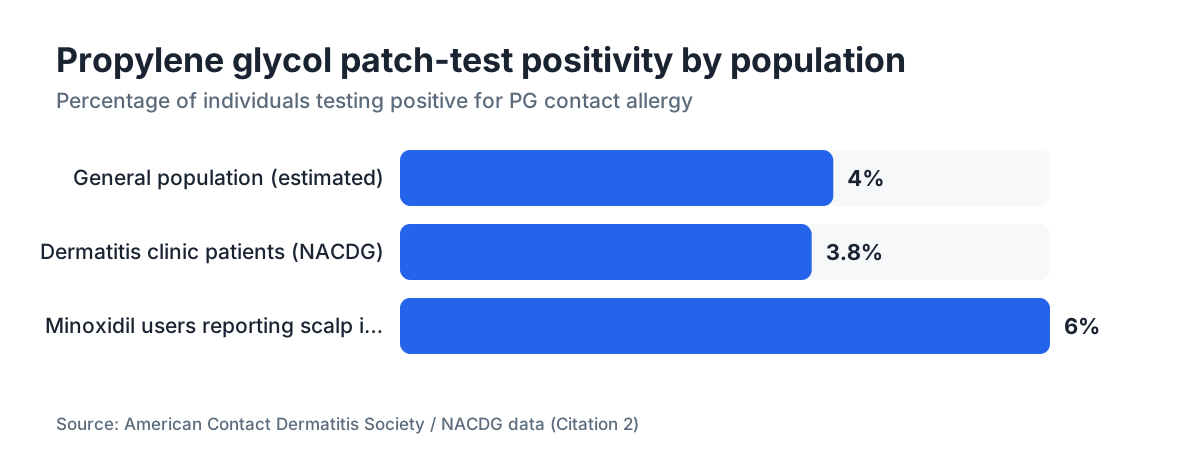
Estimates on how many people react to PG vary. Contact dermatitis literature commonly puts it around 2-6% of the general population showing some skin response to PG, with patch-test positivity in dermatitis patients running as high as 3.8% in European data [2]. Twice-daily minoxidil means daily repeated exposure, which raises the odds of sensitization over time. That's why some users develop the reaction after months of trouble-free use rather than on day one.
Here's the part that matters most. The PG in minoxidil sits at 30-50% of the vehicle, far above the trace amounts in a typical moisturizer. That concentration drives a lot of these reactions.
How do I know if I'm reacting to propylene glycol and not minoxidil itself?
Sort this out first, because the answer changes what you do next.
A true PG allergy or irritant reaction looks like persistent redness, itching, burning, flaking, or small blisters confined to where you applied the liquid. It sits at or near the application site. It tends to get worse over time, not better. People describe a scalp that feels raw, or one that itches for hours after each dose.
Minoxidil itself causes a few specific effects that have nothing to do with PG. The most common is initial shedding, technically telogen effluvium, which starts around weeks 2-8 and signals the drug is working [3]. Minoxidil can also grow unwanted facial hair if the liquid drips onto your face, and in rare cases it drops blood pressure or holds fluid, mostly at high doses. None of these look like a scalp rash.
The cleanest test is this: scalp symptoms on PG-containing minoxidil that clear when you switch to a PG-free version at the same dose mean PG was the culprit. Symptoms that persist after the switch point to minoxidil itself or another ingredient, and that's a dermatologist's call.
For certainty, a dermatologist can patch test you. Small amounts of standardized allergens, including propylene glycol, are taped to the upper back for 48 hours and read at 48 and 96 hours [2]. It's the gold standard, but you don't strictly need it before trying a PG-free formula.
What are the propylene glycol-free minoxidil options available?
Three main routes, and the right one depends on your situation.
Minoxidil foam. The 5% foam (Rogaine foam plus many generics) uses butane and other propellants as the vehicle, with glycerin, cetyl alcohol, and other excipients instead of propylene glycol [7]. It's FDA-approved and the evidence is solid. A 2011 randomized controlled trial in the Journal of the American Academy of Dermatology compared 5% foam to 2% solution in women and found the foam produced significantly greater regrowth, helped partly by the absence of PG irritation improving how consistently women used it [4]. Foam is the most widely available PG-free option, stocked in most pharmacies.
Compounded PG-free liquid. A compounding pharmacy can make a liquid that swaps in glycerin, ethanol, or water for propylene glycol. These aren't FDA-approved finished products, but the active ingredient is identical. Quality rides entirely on the pharmacy. Look for one accredited under 503A or 503B standards.
Oral minoxidil. If topical minoxidil irritates your scalp in every form, oral minoxidil skips skin contact completely. Off-label low-dose oral minoxidil (0.625-2.5 mg daily for women, 2.5-5 mg for men) has a growing evidence base and no contact allergy risk [11]. The trade-off is systemic: fluid retention, heart rate changes, and unwanted body hair are all possible. This is a conversation with a doctor, not a solo switch.
For most people with a PG reaction, foam is the obvious first move. Cheap, everywhere, no prescription.
Does glycerin-based minoxidil work as well as propylene glycol versions?
Yes, with one honest caveat. Propylene glycol was picked partly because it acts as a penetration enhancer, meaning it drags minoxidil across the outer skin barrier toward the follicle. Glycerin doesn't do that the same way, so early worry was that PG-free formulas might deliver less drug.
That worry hasn't shown up in the trials. The 5% foam concentration makes up for any drop in penetration enhancement. Foam studies consistently report hair count and hair weight comparable to liquid solutions [9]. The AAD guidelines list 5% minoxidil foam as a recommended option for both men and women, right alongside the liquid [5].
The caveat: direct head-to-head pharmacokinetic comparisons of PG versus glycerin vehicles are limited. Most good trial data pits foam (PG-free) against the older 2% solution, not 5% PG liquid versus 5% glycerin liquid. So confidence is high but not perfectly symmetrical.
For anyone about to quit treatment over irritation, a PG-free formula you'll actually keep using beats the theoretically stronger one you abandon. Adherence wins.
How do I switch from PG minoxidil to a glycerin or foam formula?
The switch is simple. No taper, no waiting period, no break.
-
Stop the PG liquid. Same day or the next, start the PG-free alternative at the same frequency. Twice daily is standard for liquid and foam, though once-daily foam has supporting evidence too.
-
Apply the foam right. Foam melts fast. Dispense a half-capful into your hand first (your scalp's warmth melts it before you can spread it), then work it into the thinning areas. It should feel dry and leave no residue after a minute or two.
-
Expect the irritation to clear within 7-14 days of stopping PG. If redness and itching hang on past two weeks with the new formula, something else is going on.
-
Don't expect the hair to change overnight. Minoxidil takes 3-6 months for first results and up to 12 months for maximal response, whatever the vehicle [1][5]. A smooth switch with no gap won't reset your progress, and hair you've already regrown won't fall out.
-
If you were also on finasteride or another DHT blocker alongside minoxidil, those keep going unchanged. You're only swapping the topical vehicle.
One practical note on cost. Foam runs slightly higher than generic PG liquid, roughly $20-35 a month against $10-20 for generic liquid. Compounded PG-free liquid ranges wider, $30-70 a month depending on the pharmacy and concentration.
What does a propylene glycol reaction actually look like on the scalp?
Contact dermatitis from propylene glycol comes in two forms: irritant contact dermatitis (more common, a direct chemical irritation) and allergic contact dermatitis (an immune response that worsens with repeated exposure). In practice they look alike.
Typical signs: redness and inflammation at the hairline and across the areas you treated, itching or burning that starts within minutes to hours, flaking that looks like dandruff but is actually inflamed skin shedding, and in worse cases small fluid-filled bumps or weeping patches. Some people notice the reaction tracks exactly where the liquid ran, which is the tell that it's contact-related rather than systemic.
Severe cases can swell the scalp or face, especially around the ears and forehead. That level of reaction means stop the product and see a dermatologist before trying anything else.
This is different from the mild tingling some people feel the first week on minoxidil, which passes on its own. A true PG reaction doesn't fade. It builds.
Can the irritation cause permanent scalp damage or make hair loss worse?
Untreated scalp inflammation isn't harmless. Chronic inflammation around follicles can disrupt the hair cycle and, in severe cases, contribute to scarring. That's a genuine concern with prolonged contact dermatitis.
In reality, it's almost always caught long before that point. Most people quit the product when the irritation gets uncomfortable, well before any permanent follicle damage. A few weeks of PG irritation doesn't destroy follicles.
What chronic inflammation does do, in the everyday sense, is worsen shedding for a while. Inflamed skin speeds up the loss of hairs already sitting in the telogen (resting) phase. So someone reacting to PG may see more hair fall and conclude minoxidil is failing, when the real problem is inflammation masking the results.
Switch to a PG-free formula, let the scalp heal, and that inflammatory shedding usually stops within a month. If you spent your whole trial reacting to PG, here's the honest answer on whether minoxidil works for you: you don't have one yet. Give the PG-free version a full 6-month trial before you decide [5].
For the bigger picture of what's driving your hair loss to begin with, what causes hair loss covers the ground beyond minoxidil.
Are there other ingredients in minoxidil formulas that can cause reactions?
PG takes most of the blame, but it isn't the only suspect.
Ethanol (alcohol) sits in many liquid formulas and can dry out and irritate on its own, especially on sensitive or already-dry scalp skin. Some PG-free compounded liquids use only water and glycerin, which are about the most tolerable excipients you'll find.
Minoxidil foam contains cetyl alcohol and polysorbate 60 among other ingredients [7]. Cetyl alcohol is a fatty alcohol (not the drying kind) and rarely causes trouble, but it can. Fragrance, when a compounded product includes it, is a common contact allergen worth ruling out.
Minoxidil itself can occasionally cause contact allergy, though it's rare next to PG. A review in Contact Dermatitis noted that confirmed patch-test reactions to minoxidil are documented but uncommon [6]. If you cycle through every PG-free format and still react, a dermatologist's testing is the next step.
The FDA prescribing information for topical minoxidil lists the inactive ingredients for each approved formulation, and that's the most reliable place to check what's actually in a product [1].
Should I see a dermatologist before switching, or can I do this on my own?
For a mild to moderate PG reaction with classic contact dermatitis signs, switching to foam or a compounded PG-free liquid on your own is reasonable. The switch itself carries very little risk.
See a dermatologist if the reaction is severe (real swelling, blistering, or spreading past the application area), if symptoms don't clear within two weeks of stopping PG minoxidil, if you want a confirmed patch-test diagnosis before re-exposing yourself to any minoxidil, or if you're eyeing oral minoxidil (that needs a prescription and a physician checking your cardiovascular baseline).
A dermatologist can also rule out lookalike conditions. Seborrheic dermatitis and psoriasis can both mimic contact dermatitis and need different treatment. Seborrheic dermatitis is actually common in topical minoxidil users and can sit right on top of a PG reaction, which muddies the picture.
If you're unsure what you're dealing with and want a starting point before a clinic visit, the free AI hair and scalp analysis at MyHairline helps you document what you're seeing and walk into the appointment with a clearer picture.
What about combining minoxidil with finasteride after the switch?
Swapping your minoxidil vehicle doesn't change the case for combination therapy. The evidence for finasteride and minoxidil together beats either drug alone in androgenetic alopecia. If you were already on finasteride, keep taking it straight through the switch.
If you'd been on minoxidil alone and it was underperforming partly because PG inflammation was blunting results, the switch actually makes the combination question sharper. A clean 6-month trial on PG-free minoxidil gives you an honest baseline to judge against.
Oral finasteride needs a prescription and carries its own side effect profile worth understanding, and topical minoxidil has its own side effects too. Some clinicians now prescribe combination topical finasteride plus minoxidil in compounded formulas, which cuts systemic finasteride exposure. Those combos also come PG-free, though availability shifts by pharmacy.
For a man with a receding hairline and documented PG sensitivity, the most practical path today is PG-free 5% minoxidil foam plus oral or topical finasteride, judged together at 6-12 months. No guarantee of results, but it's the combination the evidence backs hardest.
Comparison: propylene glycol vs. glycerin minoxidil formulas
Here's a direct comparison of the main formula types.
| Feature | PG Liquid (standard) | PG-free Foam | Compounded PG-free Liquid | Oral Minoxidil |
|---|---|---|---|---|
| Contains propylene glycol | Yes | No | No | Not applicable |
| FDA-approved product | Yes (Rogaine + generics) | Yes (Rogaine foam + generics) | No (compounded) | No (off-label) |
| Typical monthly cost | $10-20 | $20-35 | $30-70 | $15-40 (generic) |
| Concentration available | 2%, 5% | 5% | 2%, 5%, custom | 0.625-5 mg |
| Requires prescription | No | No | Varies by state | Yes |
| Contact allergy risk | Higher (PG) | Low | Low | None (topical) |
| Evidence strength | Strong (30+ yrs) | Strong | Moderate | Growing |
For most people with a confirmed or suspected PG reaction, foam is the right first switch: same FDA-approval status, similar cost, no propylene glycol. Compounded liquid makes sense if you prefer the mechanics of a liquid application or need a specific concentration. Oral minoxidil is the move when topical fails outright or can't be tolerated in any form.
If you want the full picture of what minoxidil for men can and can't do before you commit to a formula, that's worth reading alongside this.
Sources
- FDA, Prescribing Information for Minoxidil Topical Solution
- American Contact Dermatitis Society / NACDG patch test data on propylene glycol
- National Library of Medicine / StatPearls: Minoxidil
- Blume-Peytavi U et al., Journal of the American Academy of Dermatology (2011): 5% minoxidil foam vs 2% minoxidil solution in female pattern hair loss
- American Academy of Dermatology, Hair Loss Treatment Guidelines
- Contact Dermatitis journal: Minoxidil as a contact allergen (published review)
- FDA, Over-the-Counter Minoxidil Drug Facts (Rogaine 5% foam labeling)
- Olsen EA et al., Journal of the American Academy of Dermatology: Minoxidil's efficacy across formulations (review)
- National Institutes of Health, MedlinePlus: Propylene Glycol
- Rossi A et al., Dermatology and Therapy: Low-dose oral minoxidil in androgenetic alopecia (2020)