TL;DR: Minoxidil solutions and foams carry a printed expiration date, usually 2 to 3 years from manufacture. Past that date, potency can drop as the active ingredient breaks down. Opened bottles degrade faster in heat, humidity, or light. Use within 12 months of opening. Never use past the printed expiry.
What does the expiration date on minoxidil actually mean?
The expiration date on a minoxidil bottle is a quality guarantee, not a marketing line. It's the date through which the manufacturer, under FDA oversight, promises the product holds at least 90% of its labeled active ingredient and meets every quality spec [1]. Past that date, the promise ends.
For minoxidil, the FDA requires over-the-counter topicals like Rogaine and its generics to carry an expiration date backed by real stability testing, usually accelerated degradation studies run at high temperature and humidity [1]. Most manufacturers set the date 2 to 3 years out from the manufacture date. If it's not printed directly, you can often estimate it from the lot number.
Here's what the date does not mean. It doesn't mean the product turns useless the day after expiry. Pharmaceutical degradation is a curve, not a cliff. But it does mean you're guessing at the concentration past that point. For a drug whose results depend on steady dosing, guessing is a problem.
Does minoxidil actually lose potency over time?
Yes, and the reason is simple chemistry. Minoxidil (2,4-diamino-6-piperidinopyrimidine 3-oxide) is sensitive to oxidation. In liquid form it also depends on an alcohol and propylene glycol carrier that gradually evaporates or shifts in pH [2]. As those excipients change, the drug's stability rides along with them.
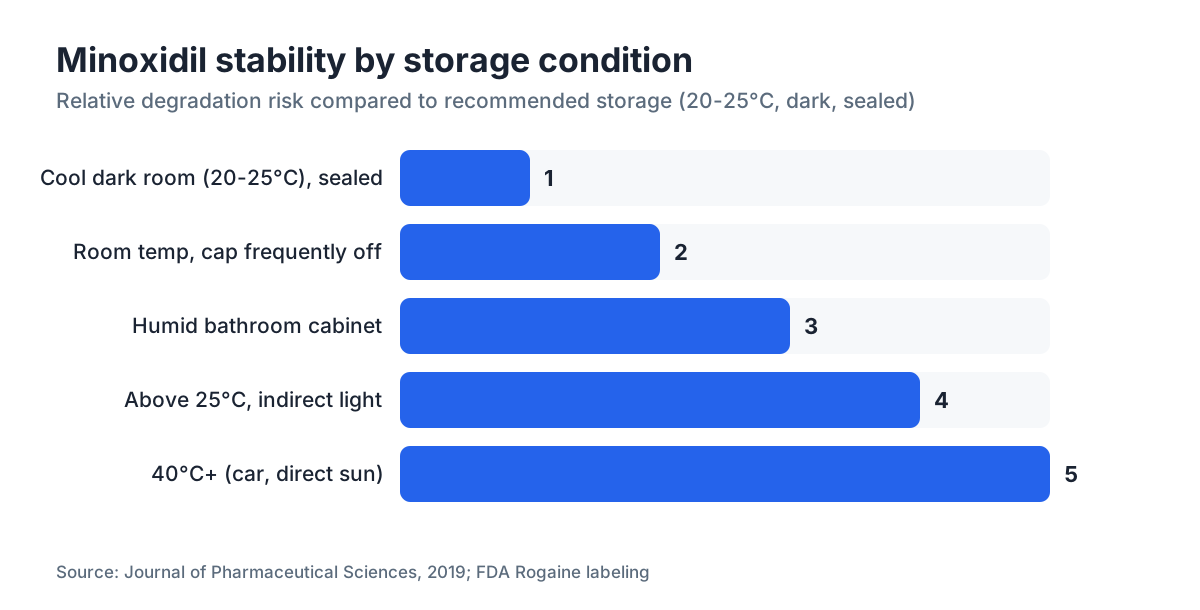
A 2019 stability analysis in the Journal of Pharmaceutical Sciences found that minoxidil in ethanol-based solutions started measurable degradation above 25°C (77°F), with faster loss at 40°C (104°F) [2]. That's roughly the temperature inside a bathroom cabinet in summer. Not an exotic lab condition. A lot of people's medicine cabinets.
Foam adds another variable through its propellant. Every press of an opened canister pulls in a little air. Over months, that oxidative exposure stacks up.
The degradation is real, measurable, and driven by chemistry. It's more than a legal disclaimer.
How much faster does minoxidil degrade after you open it?
Honest uncertainty lives here. Manufacturers test stability on sealed containers under controlled conditions. There's no FDA rule forcing companies to publish post-opening shelf life for OTC topicals, so you won't find a "use within X days of opening" number on the Rogaine label [1].
General pharmaceutical stability science tells us two things speed up once the seal breaks. Air exposure introduces oxygen, which oxidizes the minoxidil molecule. And the temperature and humidity swings in a normal bathroom run far wider than the controlled conditions manufacturers test against [3].
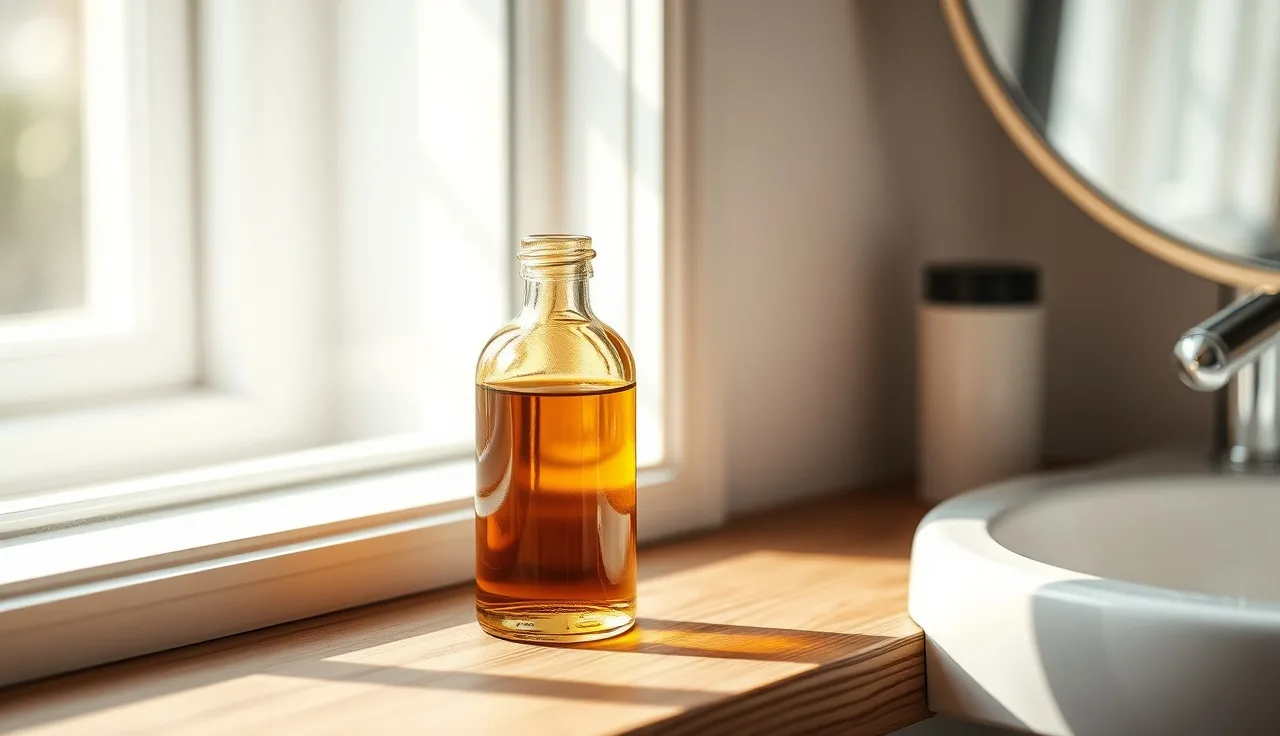
The common clinical guidance, from dermatology writing on medication stability, is to treat opened topical minoxidil as good for about 12 months after first use, assuming reasonable storage [3]. That's conservative, not extreme. If the bottle has been baking on a sunny windowsill or riding in a hot car, cut it shorter.
One practical tell. If a liquid solution darkens (from clear or pale yellow to noticeably deeper color) or picks up a strong new odor, that's chemical change you can see and smell. Foam that won't dispense right or has separated is another red flag.
Does using expired minoxidil cause any harm?
Probably not in the sense of acute poisoning. The degradation products of minoxidil aren't documented as dangerous at the concentrations in a topical bottle [4]. The FDA's general stance on expired medicines is that the main risk is weaker effect, not toxicity, for most stable small-molecule drugs [4].
But "probably not harmful" isn't "definitely fine." Here's the concern people underrate. If you're using degraded minoxidil, you may think you're treating your hair loss while actually delivering a weak dose. Months pass. Your hairline keeps sliding back. You decide minoxidil doesn't work for you, when the real culprit was a dead bottle.
For a drug whose entire mechanism is steady, long-term use, that's a real cost. Follicle miniaturization doesn't pause while you gamble on old product.
If you're also on finasteride or weighing a combination, an unreliable minoxidil supply muddies everything, because you can't tell what's actually working.
What are the best storage conditions to preserve minoxidil potency?
The FDA-approved labeling for Rogaine (both 2% and 5% solution) says store between 20°C and 25°C (68°F to 77°F), away from heat, light, and flame [5]. The foam adds a warning not to store above 49°C (120°F) because of the pressurized canister.
In practice:
- Keep it out of a steamy bathroom. A bedroom dresser drawer beats a bathroom cabinet.
- Keep it away from windows. UV light degrades many drugs, and minoxidil is no exception.
- Never leave it in a car, even briefly in summer.
- Cap it tightly after every use.
Fridge storage (not freezing) sits inside the acceptable temperature range and may slow degradation, but it also thickens liquid solutions and makes them harder to apply. A cool, dark spot at room temperature is the practical answer.
| Storage condition | Effect on minoxidil stability |
|---|---|
| Cool, dark room (20-25°C) | Optimal; matches manufacturer testing |
| Humid bathroom cabinet | Accelerates degradation; avoid |
| Above 25°C / direct sunlight | Measurable potency loss, especially post-opening |
| Refrigerator (4°C) | Slows degradation but may thicken solution |
| Car interior (summer) | High risk of rapid degradation |
For how minoxidil is supposed to be used day to day, the minoxidil for men guide covers dosing, application, and what to expect.
Is minoxidil foam or liquid more stable after opening?
Liquid minoxidil is more exposed to oxidative degradation after opening. The alcohol carrier evaporates over time, slowly concentrating or destabilizing the formulation, and every open-pour use bares more surface to air [2].
Foam sits in a pressurized canister that limits air exposure between uses. That's a stability edge. But the foam's surfactant system can break down too, and a canister run down to low fill may dispense unevenly, giving you less active drug per pump than you'd guess.
Neither format wins by a wide margin on long-term stability. Both should go within the same 12-month post-opening window. Foam has a slight advantage because the canister design cuts repeated air exposure, but that edge shrinks fast if you use the canister slowly over more than a year.
How do you know if your minoxidil has gone bad?
There's no home test that spits out a potency number. What you can do is watch for signs something changed.
Liquid solutions: any darkening past the normal pale yellow, a thicker or cloudier look, or an off smell beyond the usual alcohol scent points to chemical change. Visible floating particles mean discard it, full stop.
Foam: if it comes out as liquid instead of foaming, or shows a separation layer, the formulation has shifted.
The absence of these signs doesn't prove the product is potent. Degradation often happens with no visible cue at all. The expiration date and the 12-month-post-opening estimate are your guardrails precisely because the molecular breakdown is invisible.
If you've used minoxidil steadily and suddenly see more shedding or a stalled regrowth, check whether your supply might be compromised before you conclude the drug quit on you. Shedding can also come from telogen effluvium or other causes with nothing to do with your bottle's potency.
Does the expiration date matter differently for oral minoxidil?
Oral minoxidil (the tablet used off-label for hair loss at low doses, usually 0.625 to 5 mg) is a different animal. Tablets and capsules hold up better than liquids because there's no water or alcohol carrier to shift [6]. Solid doses tolerate small temperature swings better and have held potency well past expiry in the FDA's own shelf-life extension studies on military drug stockpiles [4].
Still, oral minoxidil for hair loss is prescription, not OTC. You get it from a pharmacy with a dispensing date and a label. Follow that label. The prescribing doctor and pharmacist stand behind those instructions in a way OTC guidance doesn't.
For a closer look at the evidence for oral minoxidil, including dosing data and side effect comparisons with topical, that's covered separately.
What do dermatologists actually recommend about using expired minoxidil?
The American Academy of Dermatology doesn't publish a specific position paper on minoxidil expiration. What the AAD does say in its hair loss treatment guidance is that minoxidil has to be used consistently and correctly to produce results, and that stopping treatment loses any gains within months [7].
The message underneath that: a reliable supply matters. A dermatologist treating androgenetic alopecia wants you on a known-good, in-date bottle, not because expired minoxidil will hurt you, but because weak or inconsistent dosing breaks the logic of the treatment.
The FDA's OTC monograph for topical minoxidil (the framework that lets it sell without a prescription) requires the product to meet potency specs through its labeled expiration date. It puts the job of keeping those specs through proper storage on the manufacturer before sale and on you after purchase [1].
"The expiration date... is the date used to define the end of the shelf life" is how the FDA's pharmaceutical guidance phrases it, setting it as a quality threshold, not a suggestion [1].
Should you ever use minoxidil past its expiration date?
Honest answer: not worth the risk, given how cheap minoxidil is now. Generic 5% solution runs about $15 to $25 for a three-month supply at most major pharmacies. Foam runs about $25 to $40 for the same window [8]. These aren't expensive drugs.
Using an expired or degraded product to dodge a $15 to $25 replacement, while hoping it still works, is a bad trade. You're betting months of treatment against a few dollars.
Some pharmacists make an exception for drugs where degradation risk is low and the alternative is going without, like emergency shortages. Minoxidil for hair loss doesn't fit that. There's no emergency, the drug is everywhere, and the cost of weak dosing, while not dangerous, is real.
If money is the real barrier, generic minoxidil is already the budget pick. If you're weighing combination therapy, the finasteride and minoxidil breakdown includes cost comparisons.
Not sure your hair loss even calls for minoxidil? The free AI analysis at MyHairline can map your pattern and show which options fit before you spend a dime.
How should you dispose of old or expired minoxidil?
Don't pour liquid minoxidil down the drain. Minoxidil affects blood pressure at systemic doses, and pharmaceutical runoff is an environmental concern documented by the EPA [9]. The FDA recommends local drug take-back programs for most unused medicines [4].
No take-back program nearby? The FDA's guidance for most medications (with exceptions for high-abuse-risk drugs) is to mix the medicine with something unappealing like coffee grounds or dirt, seal it in a bag, and throw it in household trash [4]. That cuts environmental exposure and keeps it out of reach.
You can find take-back locations through the DEA's online locator at deadiversion.usdoj.gov [10].
For foam canisters: depressurize completely before disposal. Pressurized aerosols shouldn't go in regular trash while they still hold propellant. Check your local municipal waste rules, which vary by state.
What else should you know before relying on minoxidil long-term?
Minoxidil works by stretching out the anagen (growth) phase of hair follicles. It's one of only two FDA-approved treatments for androgenetic alopecia, the other being finasteride [7]. It does nothing about the hormonal driver behind pattern loss, DHT. That's why many clinicians treating heavier recession pair it with a DHT blocker.
Because minoxidil has to be used indefinitely to hold results, the questions around storage and expiration aren't small. Over five or ten years, you'll burn through dozens of bottles. Good storage and timely replacement from the start spare you the slow bleed of gradually dying product.
Earlier in the process and trying to figure out what you're dealing with? The receding hairline guide covers Norwood staging and which treatments tend to fit each stage. For the bigger picture on why hair falls out, what causes hair loss is a good starting point before you commit to anything.
Minoxidil has its own side effect profile too. Scalp irritation, unwanted facial hair, and rare cardiovascular effects are worth knowing before you start. The minoxidil side effects article covers those in clinical detail.
MyHairline's free AI scan (/scan) gives you a baseline read on your pattern, useful context for deciding whether topical minoxidil, oral minoxidil, or a combination fits your situation.
Sources
- FDA, Guidance for Industry: Expiration Dating and Stability Testing for Human Drug Products
- Journal of Pharmaceutical Sciences, minoxidil solution stability study (2019)
- American Journal of Clinical Dermatology, topical drug stability guidance
- FDA, How to Dispose of Unused Medicines
- FDA, Rogaine (minoxidil) 5% topical solution approved labeling
- FDA, Shelf Life Extension Program (SLEP) findings via JAMA Internal Medicine
- American Academy of Dermatology, Hair Loss: Diagnosis and Treatment
- GoodRx, minoxidil pricing data
- US EPA, Pharmaceuticals and Personal Care Products in the Environment
- DEA Diversion Control Division, Drug Take-Back Locator