TL;DR: Minoxidil foam (5%) absorbs faster and leaves less residue than the liquid (2% or 5%) because it skips propylene glycol, the ingredient responsible for most greasiness and scalp irritation. Both forms are FDA-approved and equally effective at regrowing hair. Your choice mostly comes down to scalp sensitivity, whether you have a beard or brows you want to avoid, and price.
What's actually different between minoxidil foam and liquid?
Both foam and liquid deliver the same active ingredient, minoxidil, to your scalp. The formulations around that ingredient are where everything diverges.
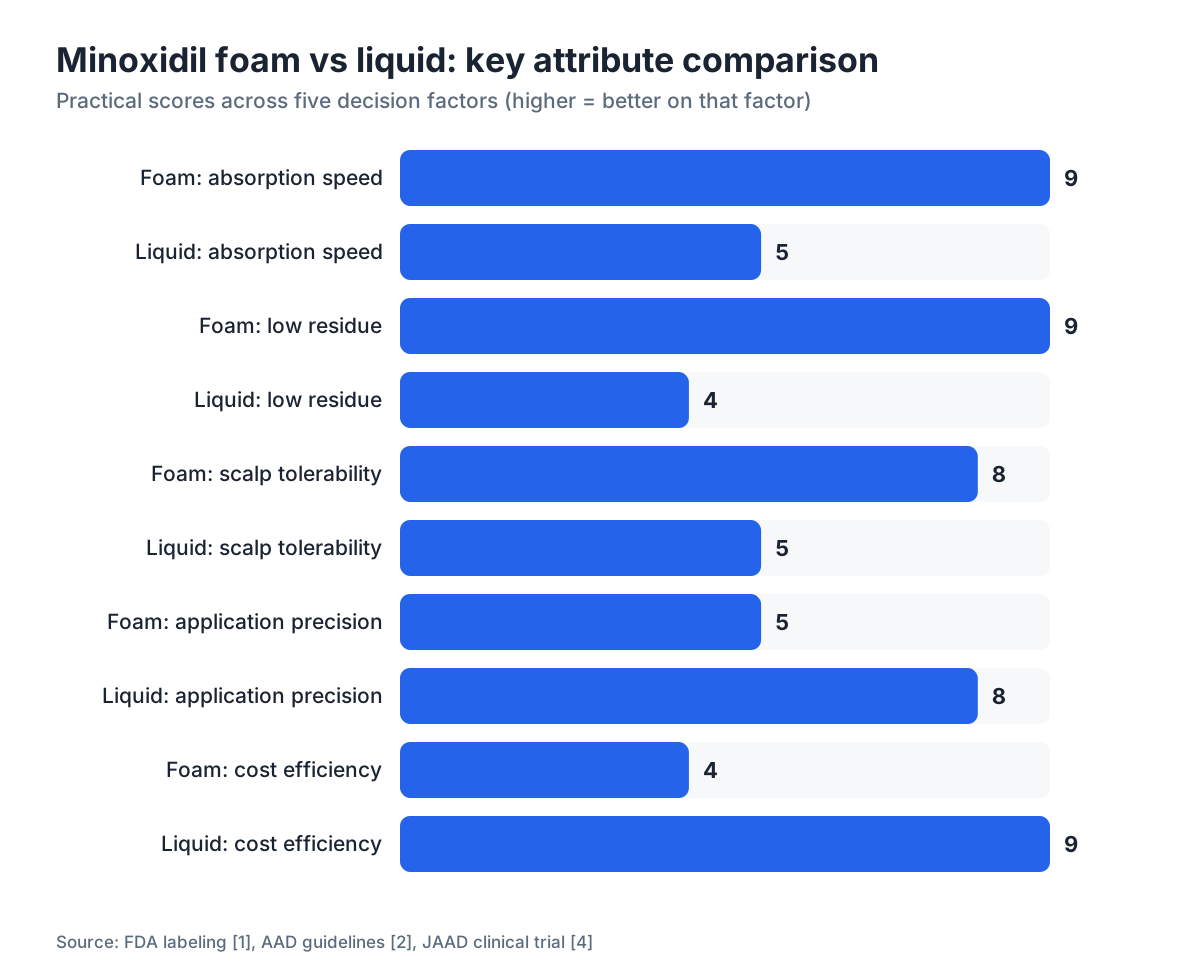
The liquid, which has been around since the FDA first approved topical minoxidil for men in 1988 [1], uses propylene glycol as its primary carrier solvent. Propylene glycol helps minoxidil penetrate the skin, but it also sits on the scalp surface for a while, which is exactly why the liquid feels greasy and can leave a visible residue on hair. Some people also develop contact dermatitis from propylene glycol itself, not from the minoxidil [2].
The foam, approved later and now sold as a 5% strength for both men and women, uses a different delivery system: a mix of alcohol and other excipients that evaporate faster after application. There's no propylene glycol in the standard foam formula [1]. The alcohol volatilizes within a minute or two of contact with skin, which is why the foam feels dry so quickly.
A few other practical differences worth knowing: the liquid comes in 2% and 5% concentrations; the foam is almost exclusively 5%. The liquid dispenses with a dropper or spray, giving you precise placement on thinning spots. The foam dispenses as a light mousse that you spread with fingertips. And the foam usually costs about 20 to 40 percent more per month than the generic liquid, depending on which brand you buy.
Which form absorbs faster into the scalp?
Foam absorbs noticeably faster. In clinical testing done for the FDA approval of 5% minoxidil foam (marketed as Rogaine Foam), subjects reported the product felt dry on the scalp within about 2 minutes of application [1]. Liquid, particularly the propylene glycol version, can take 4 minutes or longer to stop feeling wet, and some people report residue that hangs around for 30 minutes or more.
The mechanism is simple. Alcohol, the main vehicle in foam, has a low boiling point and evaporates at room temperature almost immediately. Propylene glycol is non-volatile. It stays behind until your sebum and sweat eventually clear it.
Faster surface drying doesn't mean the minoxidil itself gets into the follicle faster, though. A pharmacokinetic study published in the Journal of the American Academy of Dermatology found that systemic absorption of topical minoxidil through the skin is low regardless of formulation, generally under 2% of the applied dose [3]. Both forms get minoxidil where it needs to go. The foam just feels more comfortable while doing it.
If you style your hair right after applying in the morning, foam wins by a wide margin. If you apply it before bed, the liquid's slower drying barely matters.
Which one leaves less greasy residue?
Foam, almost always. The greasy or filmy feeling people link to minoxidil comes mostly from propylene glycol, and foam doesn't contain it [2].
Liquid users with finer or lighter hair tend to notice residue the most, because propylene glycol makes strands clump slightly and catch light differently. People with thicker or coarser hair often find the effect minimal. If you use the liquid and the residue bothers you, applying it at night rather than morning helps, because your hair gets washed before anyone sees it.
There are also propylene glycol-free liquid formulas now. Several compounding pharmacies and newer direct-to-consumer brands offer liquids in a different solvent base, often a glycerin and water mixture. These feel less greasy than traditional liquid but still not quite as fast-drying as foam. They're worth knowing about if you want the dropper's precision but can't tolerate the standard liquid.
One honest caveat: some people find the foam itself slightly tacky if they use too much. The recommended dose for the 5% foam is half a capful for the whole scalp. Use a full capful and the extra product sitting on the surface can feel almost as heavy as liquid.
Does foam or liquid work better for hair regrowth?
Head-to-head, there's no strong evidence that one beats the other on actual regrowth. The main registration trial for 5% minoxidil foam, a 52-week randomized controlled study of 352 men with androgenetic alopecia, found that foam produced statistically significant increases in target area hair count compared to vehicle (inactive foam) [4]. Those results were clinically comparable to what earlier trials on 5% liquid had shown, though comparing across different trials has obvious limits.
The American Academy of Dermatology's clinical guidelines list both formulations of topical minoxidil as appropriate first-line treatments for androgenetic alopecia and note that neither has been shown superior in well-controlled direct comparison studies [2].
The real-world factor that matters more than formulation is consistency. Minoxidil works when you apply it twice daily, every day, indefinitely. If the liquid's greasiness means you skip morning doses or quit after three months, the foam wins for you no matter what the absorption kinetics say. Pick the one you'll actually use.
Is foam or liquid better for women?
Women are usually pointed toward the 2% liquid or the 5% foam. The FDA-approved dose for women is 2% liquid twice daily or 5% foam once daily [1]. That once-daily foam dosing is a real convenience advantage for women, especially those who style their hair in the morning.
The propylene glycol problem also tends to hit women harder, simply because many have longer hair where residue shows more. The foam's faster absorption and lack of propylene glycol make it the more popular pick among women who've tried both.
For women using minoxidil on a receding hairline or thinning crown, the foam is easier to work through hair to the scalp with fingertips than aiming a dropper into a part. The dropper does allow more precise application if you're treating one specific area rather than the whole scalp.
One caution specific to women: if you're pregnant or trying to become pregnant, topical minoxidil is generally avoided. The FDA label carries a Pregnancy Category C designation, meaning animal studies showed adverse effects and adequate human studies don't exist [1]. This applies to both forms equally.
Which form causes fewer side effects?
Scalp irritation and contact dermatitis show up more with the liquid, and the main reason is propylene glycol, not minoxidil itself [2]. Studies have found that a meaningful share of users who switch from liquid to foam see their scalp irritation clear up, which points to the vehicle rather than the active ingredient.
Both forms carry the same potential for minoxidil-related side effects: initial shedding (often called the telogen effluvium shed, which usually starts 2 to 8 weeks into treatment and resolves on its own [see telogen effluvium]), unwanted facial hair growth if the product runs onto the face, and in rare cases systemic effects like fluid retention or heart palpitations if enough gets absorbed [1].
Foam has one practical edge for avoiding facial hair: because it doesn't drip, there's less chance of it running down your forehead or temples during application. Liquid, especially near the hairline, can migrate if you're not careful. This matters more for women treating frontal thinning.
For the full picture of what to watch for, the minoxidil side effects article covers both systemic and local reactions in detail.
How should you apply foam vs liquid correctly?
The right technique differs for each form, and getting it wrong cuts how much minoxidil reaches your follicles.
For the liquid: Part your hair in the area you're treating. Draw 1 mL (the dropper should be marked) directly onto the scalp in several small spots across the thinning area. Spread lightly with fingertips. Don't apply to wet hair; the water dilutes the solution and cuts contact time with the scalp. Let it dry for at least 4 minutes before lying down or putting on a hat.
For the foam: Rinse the can with cold water before dispensing if you're in a warm room (heat makes foam collapse). Dispense half a capful onto your fingers or palm, not straight onto your scalp. Work it into the scalp with your fingertips using a light rubbing motion. The foam melts on contact with body heat, which is normal. Wait about 2 minutes before touching your hair.
Both forms: Apply twice daily (once daily for women using 5% foam) to a dry or towel-dried scalp. Wash your hands right after. Don't rinse the scalp for at least 4 hours after applying. If you miss a dose, skip it and resume your next scheduled application. Don't double up.
People treating earlier-stage loss usually get better results than those with advanced hair loss. If you're not sure where you are on the Norwood scale, a tool like MyHairline's free AI hair scan can give you a baseline to track against over time.
How do the costs compare?
Generic minoxidil has pushed prices way down since the patents expired. Here's roughly what you'll pay at major US pharmacies or direct-to-consumer sites as of mid-2025:
| Form | Concentration | Typical monthly cost (generic) | Brand-name equivalent |
|---|---|---|---|
| Liquid | 2% | $5 to $10 | Rogaine 2% liquid |
| Liquid | 5% | $8 to $15 | Rogaine 5% liquid |
| Foam | 5% | $20 to $35 | Rogaine 5% foam |
| Oral tablet | 2.5 mg to 5 mg | $10 to $25 (off-label, Rx required) | No brand equivalent at low dose |
The foam premium is real. Over a year, you might spend $100 to $300 more using foam versus generic liquid. If you're paying out of pocket indefinitely, that gap matters.
For people who genuinely can't tolerate the liquid but want to skip the foam's cost, oral minoxidil is worth raising with a dermatologist. It bypasses scalp application entirely and costs about the same as or less than foam at low doses, though it carries different side effect considerations.
For most people, if the liquid works fine, there's no strong reason to pay extra for foam. If the liquid irritates your scalp or leaves residue that wrecks your routine, the foam's extra cost is almost certainly worth it.
Can you use minoxidil with other hair loss treatments?
Yes, and for many people combining treatments beats minoxidil alone. The most evidence-backed combination is minoxidil with finasteride, a prescription oral medication that blocks DHT, the hormone mainly responsible for androgenetic alopecia. A 2015 randomized controlled trial published in Dermatologic Therapy found that combined therapy produced greater increases in hair count than either agent alone [5]. The finasteride and minoxidil article covers how to stack them.
For those who want to skip prescription medications, DHT blocker supplements like saw palmetto have some limited evidence but a much weaker effect than finasteride. Hair loss supplements generally aren't a substitute for proven treatments, though some may help around the edges.
If you're eyeing a surgical option down the line, minoxidil is sometimes used before and after a hair transplant to help protect non-transplanted hair and reduce post-operative shedding, though protocols vary by surgeon.
If you're on topical minoxidil and want to add finasteride, there are now combination topical products (minoxidil plus finasteride in one solution) sold through some compounding pharmacies and telehealth companies. These can cut the scalp application burden if you're already managing foam or liquid twice a day.
What if minoxidil stops working or isn't working at all?
Give it at least four months before judging it, and ideally twelve. Minoxidil extends the anagen (growth) phase of hair follicles, and follicles need time to shift phase before you see visible change [7]. The initial shedding in weeks two through eight can make things look worse before they get better, which pushes many people to quit early.
If after six months there's genuinely no response, a few explanations are worth checking. Start by confirming the cause of your hair loss: minoxidil works specifically on androgenetic alopecia (pattern baldness). Other causes like telogen effluvium, alopecia areata, or thyroid-related shedding may not respond the same way. The what causes hair loss article walks through how to tell these apart. Next, check your technique and consistency. Many non-responders are applying correctly only some of the time. Then consider whether adding finasteride or switching to oral minoxidil makes sense.
For men with hair loss, especially those at Norwood 3 or 4, combining treatments and starting earlier usually produces the most useful outcomes. Minoxidil does not regrow hair in areas that have been fully bald for many years. It works on miniaturized follicles that still have some function, not on truly dormant ones [10].
If you've been consistent and thorough and still see nothing, see a board-certified dermatologist. Some people carry polymorphisms in the sulfotransferase enzyme that converts minoxidil into its active form; these individuals are genuine non-responders to topical minoxidil and may need a different approach [7]. A dermatologist can also check your scalp for other treatable conditions that may be adding to the loss.
Foam vs liquid: which should you actually choose?
Here's the honest summary after sorting through the evidence.
Choose foam if: your scalp gets irritated by the liquid, you need to style your hair within an hour of application, you have lighter or finer hair where propylene glycol residue shows up, you're a woman who prefers once-daily application, or greasiness is quietly costing you consistency.
Choose liquid if: you're cost-conscious and the residue doesn't bug you, you want to hit a very specific small area with a dropper, you have coarser or thicker hair where the greasiness is barely noticeable, or you're happy applying at night before bed.
There's no version of this where foam is categorically better at regrowing hair. The science doesn't support that. What foam does better is feel comfortable, dry fast, and stay out of your way. If those things matter to you more than saving $15 a month, foam is your answer.
Want to know where your hair loss stands before committing to either? MyHairline's free AI scan can analyze your hairline and give you a Norwood stage estimate, useful context for deciding whether topical minoxidil alone is likely to be enough or whether you need a bigger treatment plan.
Sources
- FDA, Rogaine 5% Minoxidil Foam prescribing and labeling information
- American Academy of Dermatology, Hair Loss: Diagnosis and Treatment guidelines
- Olsen EA et al., 'A randomized clinical trial of 5% topical minoxidil versus 2% topical minoxidil and placebo in the treatment of androgenetic alopecia in men', Journal of the American Academy of Dermatology, 2002
- Olsen EA et al., '5% Minoxidil Foam for Male Pattern Hair Loss', Journal of the American Academy of Dermatology, 2007
- Hu R et al., 'Combined treatment with oral finasteride and topical minoxidil in male androgenetic alopecia: a randomized and comparative study in Chinese patients', Dermatologic Therapy, 2015
- Blumeyer A et al., 'Evidence-based (S3) guideline for the treatment of androgenetic alopecia in women and in men', Journal of the German Society of Dermatology, 2011
- Messenger AG, Rundegren J, 'Minoxidil: mechanisms of action on hair growth', British Journal of Dermatology, 2004
- NIH National Library of Medicine, MedlinePlus: Minoxidil topical
- FDA, Drug Approval Package: Rogaine Extra Strength (Minoxidil) 5% Topical Solution
- Suchonwanit P et al., 'Minoxidil and its use in hair disorders: a review', Drug Design, Development and Therapy, 2019, Dove Medical Press