

TL;DR: Nioxin is a scalp-care shampoo system, not a drug. It won't stop telogen effluvium, because the cause is almost always systemic: crash dieting, surgery, childbirth, or thyroid disease. It can make hair look fuller and keep your scalp cleaner while your hair recovers on its own. No peer-reviewed trial has ever tested Nioxin against telogen effluvium.
What is telogen effluvium and why does it cause so much shedding?
Telogen effluvium is diffuse, temporary hair loss. A large share of your scalp hairs shift early from the growing phase (anagen) into the resting phase (telogen), then drop out two to four months later. [1] Normally about 85 to 90 percent of scalp hairs are in anagen at any moment, and you shed 50 to 100 hairs a day. During an episode, that count can climb past 300 a day.
The trigger is almost always systemic. Rapid weight loss, major surgery, high fever or serious illness, childbirth (postpartum telogen effluvium is the form doctors see most), thyroid trouble, iron deficiency, and heavy psychological stress all show up on the list. [1] The follicles aren't dead. They're idling, which is why full recovery is the normal outcome once the trigger clears.
A chronic form exists too. Shedding that lasts longer than six months gets the label chronic telogen effluvium, and the trigger is often harder to pin down. Women aged 30 to 60 carry most of these cases. [1]
This matters before you spend a dollar. Telogen effluvium is a body problem that surfaces on your scalp. No shampoo changes that. There's a fuller breakdown at telogen effluvium.
What is Nioxin and what does it claim to do?
Nioxin is a professional hair-care brand owned by Wella. It sells a tiered lineup of shampoos, conditioners, and scalp treatments built around one idea: a cleaner, healthier scalp makes hair look better. You can buy it over the counter or through a salon.
The core marketing pitch is that the system clears follicle-clogging sebum, product buildup, and environmental grime, so hair grows in looking fuller. Some formulas add niacinamide (a B vitamin that helps the skin barrier), piroctone olamine (an antifungal used against dandruff), and botanical extracts. The FDA classifies none of these as drugs, so Nioxin is a cosmetic, not a therapeutic product. [2]
That line matters. The FDA requires drug products to prove safety and efficacy in clinical trials before they can make treatment claims. Cosmetics carry no such requirement. Nioxin can legally say your hair looks thicker or fuller. It cannot legally say it treats, reverses, or cures hair loss. [2]
The company sells separate systems by hair type and loss level (Systems 1 through 6), which reads like clinical precision. It isn't. The real difference between systems is the strength of the cleansing agents and which conditioning or treatment ingredients get added. "Thinning hair" is legal marketing language. "Stops or reverses hair loss" would drop it straight into drug territory.
Has Nioxin been tested in clinical trials for telogen effluvium?
No. There is no published, peer-reviewed randomized controlled trial testing Nioxin in people with confirmed telogen effluvium. That's not a special knock on the brand. Most cosmetic hair products never face that kind of testing, because nothing requires them to.
Nioxin has funded internal studies on hair density and appearance, but company-sponsored, unpublished work carries far less weight than independent trials in dermatology journals. When you see a line like "87% of users saw improved thickness," ask four things: who paid for the study, was there a control group, how was thickness measured, and did it publish somewhere other scientists could tear it apart.
So what does have solid trial evidence for telogen effluvium? Mostly the boring stuff: treat the trigger. A 2022 hair loss review in the Journal of the American Academy of Dermatology points to correcting nutritional deficiencies (iron and vitamin D especially), fixing thyroid abnormalities, and removing the stressor as the evidence-based first moves. [3] Minoxidil has some data for telogen effluvium, mostly in chronic cases, though it's thin next to its pattern-loss evidence. [4]
Nioxin sits well below minoxidil on the evidence ladder. Minoxidil is a regulated drug with a known mechanism. Nioxin is scalp care that may improve scalp condition. Useful, sometimes. Different category entirely.
What ingredients in Nioxin could theoretically help during a shedding episode?
There's no telogen effluvium trial, but you can still read the label and judge the ingredients on what they actually do.
Niacinamide is the most defensible one. It improves the skin barrier, calms scalp inflammation, and cuts sebum production in some studies. [5] A healthier barrier won't touch the systemic trigger driving the shed, but an inflamed, greasy scalp isn't doing you any favors either.
Piroctone olamine is an antifungal that works about as well as zinc pyrithione against dandruff. Seborrheic dermatitis can cause its own mild diffuse shedding, so calming that inflammation is reasonable. Have dandruff on top of telogen effluvium? An antifungal shampoo makes sense, brand aside.
Biotin shows up in some Nioxin formulas. The honest picture: applied to the scalp, biotin has no proven effect on hair growth. Swallowed, it only helps if you're genuinely deficient, which is rare on a normal Western diet. The AAD has noted biotin supplements are marketed heavily without good evidence they help people who aren't deficient. [6]
Cleansing agents change by system. Gentler, sulfate-free cleansers put less mechanical and chemical stress on fragile telogen-phase hairs. That's probably Nioxin's most useful trait during a heavy shed: handling the scalp gently so you don't rip out loose hairs any faster than they'd fall on their own.
Nothing in the formula signals follicles out of telogen and back into anagen. That's the exact mechanism you'd need to treat telogen effluvium, and it isn't there.
Nioxin vs. minoxidil for telogen effluvium: how do they compare?
This question comes up constantly, so here's the direct answer: they aren't in the same category. Minoxidil is a drug with a proven mechanism. Nioxin is a cosmetic with none.
Minoxidil is FDA-approved for androgenetic alopecia (pattern loss). [4] It prolongs the anagen phase and enlarges follicles. Some dermatologists use it off-label for chronic telogen effluvium, mostly when shedding drags past six months and the underlying cause can't be fully cleared. That evidence is limited but the mechanism holds up.
Nioxin has no proven mechanism for pushing follicles from telogen back into anagen. It cleans and volumizes. That's the honest scope.
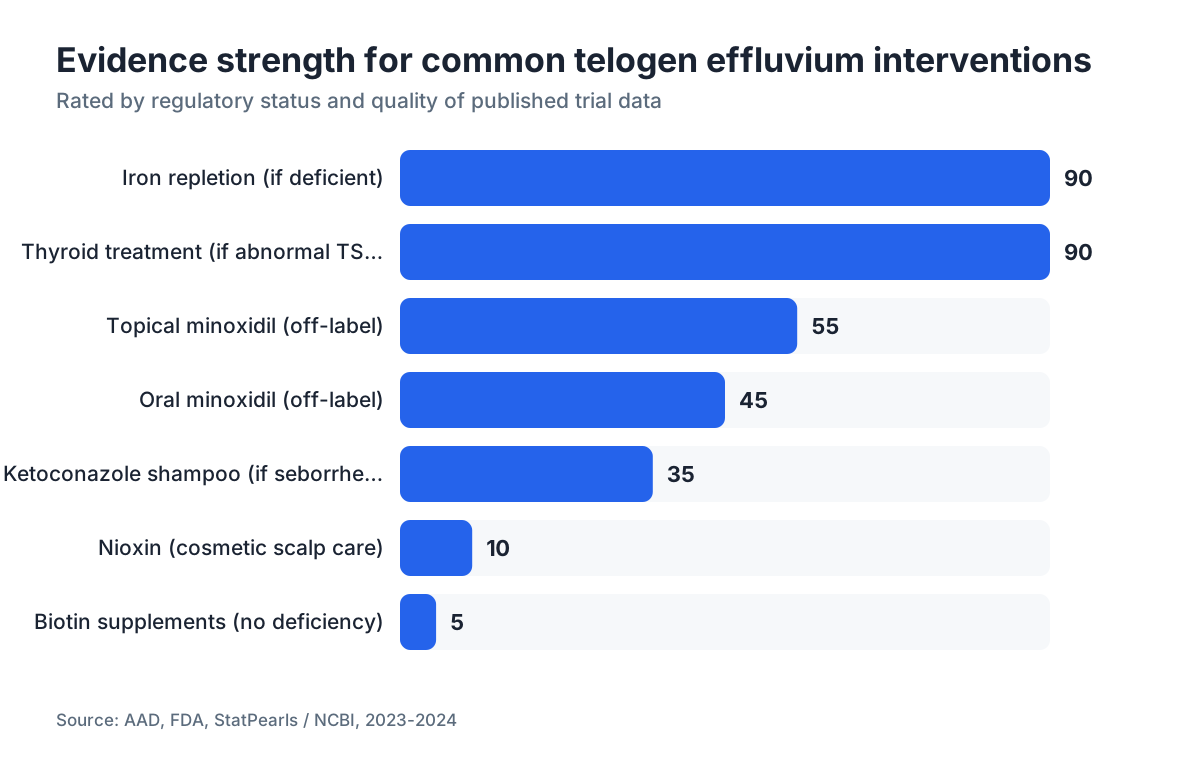
The chart below shows where each option sits on the evidence spectrum for managing a shed.
| Product / Treatment | Regulatory status | Evidence for TE specifically | Can it shift follicles from telogen to anagen? |
|---|---|---|---|
| Nioxin (topical system) | Cosmetic (OTC) | None (no published RCTs for TE) | No demonstrated mechanism |
| Minoxidil 2% or 5% topical | FDA-approved drug (OTC) | Limited off-label data | Yes, prolongs anagen [4] |
| Oral minoxidil (low dose) | Prescription off-label | Small case series, growing interest | Same mechanism, systemic delivery |
| Correcting iron deficiency | Dietary/medical | Strong indirect evidence [3] | Removes the trigger, follicles recover |
| Thyroid treatment | Prescription | Strong for thyroid-driven TE | Removes the trigger |
If your dermatologist suggests adding minoxidil during a long telogen effluvium episode, read minoxidil for men and minoxidil side effects first. The early shedding minoxidil can cause is genuinely confusing when you're already losing hair. Oral minoxidil is an alternative some doctors now reach for.
Will Nioxin make telogen effluvium worse or trigger more shedding?
No, not in any way that matters. Nioxin contains no ingredient known to push growing hairs into the resting phase, so it won't deepen the shed. The fear is understandable when you're watching hair leave in clumps, but the biology doesn't support it.
The cleansing action may loosen hairs already in late telogen, the ones that would have dropped within days regardless. Seeing them come out in the shower feels alarming. It isn't harmful.
The real risk is indirect. Lean on Nioxin as your whole response and you can waste weeks or months not finding the actual trigger: low ferritin, undiagnosed hypothyroidism, a calorie deficit you haven't admitted to. Telogen effluvium from a nutritional deficiency can run indefinitely if the deficiency stays uncorrected. A shampoo can't fix a ferritin level of 12 ng/mL.
So: probably not physically worse. Potentially harmful as a stand-in for real diagnosis.
What should you actually do first when you notice heavy shedding?
See a dermatologist or your primary care doctor and get bloodwork. That's the first move, full stop. A standard telogen effluvium workup runs a complete blood count, ferritin (more telling than hemoglobin, because hair loss happens with low ferritin even without full anemia [3]), thyroid-stimulating hormone (TSH), vitamin D, and zinc. [1]
The pull test is a quick screen: grab 40 to 60 hairs between two fingers and tug gently. More than six coming free points to active telogen effluvium. [1] Trichoscopy (scalp dermoscopy) gives a dermatologist a read on the telogen-to-anagen ratio without a biopsy.
When the picture stays murky, a scalp biopsy can separate telogen effluvium from early androgenetic alopecia or alopecia areata under the microscope.
Once you have a diagnosis and know the trigger, a gentle scalp-care routine (Nioxin or anything similar) is a fine addition. It won't hurt. It just shouldn't be your opening move.
Want a quick way to frame whether your loss looks like telogen effluvium or pattern loss before your appointment? The free AI hair scan at MyHairline can help you organize the question. It isn't a replacement for a clinical exam and bloodwork.
How long does telogen effluvium last, and when will hair come back?
Acute telogen effluvium usually clears within three to six months of removing the trigger. Because there's a two-to-four-month lag between the stressful event and the shedding, regrowth tends to show up three to six months after the shed starts. Total time from trigger to full recovery often lands at six to nine months. [1]
Hair doesn't return all at once. You'll usually spot short, fine regrowth near the hairline and temples first. The texture can feel different from your old hair at the start.
Chronic telogen effluvium (past six months) runs a less predictable course. Some cases fade on their own after one to two years. Others keep going until a still-hidden trigger is found and removed. If your loss lasts longer than six months and standard bloodwork comes back clean, ask for a referral to a dermatologist who specializes in hair disorders. See what causes hair loss for how the possible drivers stack up.
Here's what Nioxin cannot do: shorten this clock. Recovery runs on the biology of the hair cycle and on how well the trigger is controlled. Not on scalp products.
Are there any hair loss treatments that actually help telogen effluvium?
Yes, and they work by fixing the cause, not the hair.
Iron repletion has the most study behind it. A 2002 paper in the Journal of Investigative Dermatology, led by Rushton, found women with hair loss carried significantly lower ferritin levels and that iron correction in deficient women supported regrowth. [7] Most dermatologists now aim for ferritin above 40 to 70 ng/mL during an active shed, though the exact target is still argued over.
Thyroid correction is just as direct. If hypothyroidism is driving the shed, levothyroxine usually resolves it within four to six months of hitting an optimal TSH.
When the trigger can't be fully removed or recovery drags, some dermatologists add topical or oral minoxidil off-label. Low-dose oral minoxidil (0.25 to 1.25 mg/day in women, 2.5 to 5 mg/day in men) has drawn growing interest from a run of open-label trials between 2020 and 2023, though none were telogen effluvium-specific. [8]
Finasteride and DHT blockers don't help telogen effluvium, because the condition isn't about androgen sensitivity. They belong to androgenetic alopecia. See finasteride and dht blocker for that class. Same caution on hair loss supplements: a few carry real nutrients (iron, vitamin D, zinc), but many are proprietary blends with no trial support.
Microneedling has early evidence for androgenetic alopecia and is being explored elsewhere, but the telogen effluvium data is very thin right now.
Is Nioxin worth buying if you have telogen effluvium?
Here's my honest read. If you're already handling the trigger (bloodwork done, deficiency correcting, eating enough, stressor addressed), then a gentle scalp-focused shampoo during recovery is reasonable. Nioxin isn't a scam. It's a well-made cosmetic that can improve scalp condition and make hair look a little fuller through its thickening agents. Plenty of people say it makes their hair feel better during a stretch when their hair feels awful.
But a System 1 kit runs about $40 to $60 at retail, and cheaper gentle shampoos carry similar ingredients. Part of that price is the brand and the salon halo. On a budget, a fragrance-free shampoo with niacinamide or zinc pyrithione plus a gentle conditioner hits most of the same scalp-care goals for less.
If someone sells you Nioxin as a treatment for telogen effluvium, promising it will stop the shed or regrow hair, that claim has no evidence behind it. Be skeptical.
For how Nioxin lines up against the real treatments, the pattern-loss combo of finasteride and minoxidil sits on a different evidence base entirely. Knowing which kind of loss you have decides which tools even apply.
Want to sort out your shedding pattern before your appointment? The free AI scan at MyHairline can help you organize what you're seeing.
What do dermatologists actually recommend for scalp care during a telogen effluvium episode?
The AAD's hair loss guidance stresses gentle handling during an active shed. [6] Skip tight hairstyles, heat styling, and harsh chemical treatments while you're shedding. These don't cause telogen effluvium, but they pile mechanical stress onto fragile hairs already set to release.
On shampoo, dermatologists generally say keep washing on your normal schedule. Cutting back doesn't help. The myth that washing causes the shedding gets it backward; those hairs were leaving anyway. Reach for a gentle, sulfate-reduced formula if your scalp feels irritated. If seborrheic dermatitis is riding along, a zinc pyrithione or ketoconazole shampoo is appropriate and backed by evidence. [1]
Scalp massage earns a mention because it costs nothing. A 2016 pilot study in ePlasty found 4 minutes of standardized daily scalp massage over 24 weeks increased hair thickness in nine healthy Japanese men. [9] The proposed mechanism was mechanical stretching of dermal papilla cells. Tiny study, not telogen effluvium-specific, essentially zero downside, and it slots into any shampoo routine.
Worried your shedding might involve androgenetic alopecia alongside telogen effluvium? The pattern at your scalp is a clue. A receding hairline plus diffuse crown thinning points to a mixed picture a dermatologist should sort out.
Sources
- StatPearls (NCBI Bookshelf), National Library of Medicine - Telogen Effluvium
- U.S. Food and Drug Administration - Cosmetics Overview
- Journal of the American Academy of Dermatology (jaad.org) - Hair loss review 2022
- U.S. Food and Drug Administration - Drugs (minoxidil label)
- National Library of Medicine (PubMed) - Niacinamide and skin barrier function (Gehring, 2004)
- American Academy of Dermatology - Hair loss patient guidance
- Journal of Investigative Dermatology (jidonline.org) - Rushton DH, 2002, iron deficiency and hair loss in women
- Journal of the American Academy of Dermatology (jaad.org) - Oral minoxidil for hair loss review (Randolph & Bhatt, 2021)
- ePlasty (NCBI PMC) - Koyama T et al. 2016, standardized scalp massage increases hair thickness
- Dermatology (Karger) - Pierard-Franchimont C et al. 1998, ketoconazole vs minoxidil for hair density
- American Academy of Dermatology - Hair loss types and diagnosis