TL;DR: Several natural compounds, including saw palmetto, pumpkin seed oil, and green tea extract (EGCG), show measurable DHT-blocking activity in clinical trials. None match the 65-70% DHT reduction finasteride produces, but some show 30-40% inhibition in small studies. They work best as adjuncts to proven treatments, not replacements.
What is DHT and why does blocking it matter for hair loss?
DHT stands for dihydrotestosterone. It's made when the enzyme 5-alpha reductase converts testosterone into a more potent androgen. That conversion happens all over the body, but in hair follicles on the scalp, high DHT sensitivity is the central driver of androgenetic alopecia, the pattern hair loss that affects an estimated 50 million men and 30 million women in the United States [1].
The miniaturization process is slow and one-directional. DHT binds to androgen receptors in the dermal papilla cells at the follicle base, shortening the growth (anagen) phase over successive cycles until the follicle produces only fine vellus hair, then nothing. Block the DHT signal and you slow or stop that process. You don't reverse scarring or follicles that have been dormant for years. That's why starting early matters more than most people realize.
Figure out what causes hair loss in your specific case before you spend money on anything, natural or otherwise. DHT sensitivity is genetic and varies widely. If your hair loss isn't androgenetic, blocking DHT won't help and could be beside the point entirely.
Finasteride, the FDA-approved 5-alpha reductase inhibitor, reduces serum DHT by roughly 65-70% [2]. That's the benchmark every natural alternative gets measured against. Nothing natural comes close to that number. Some compounds do produce statistically significant inhibition that may be worth considering, especially for people who want to skip pharmaceutical side effects.
Which natural ingredients actually have evidence for blocking DHT?
The honest answer: a handful, with wildly varying quality of evidence. Here's a structured look at the ones with at least one published human trial or a well-designed in vitro or in vivo study.
| Ingredient | Proposed mechanism | Best evidence found | Effect size vs. placebo |
|---|---|---|---|
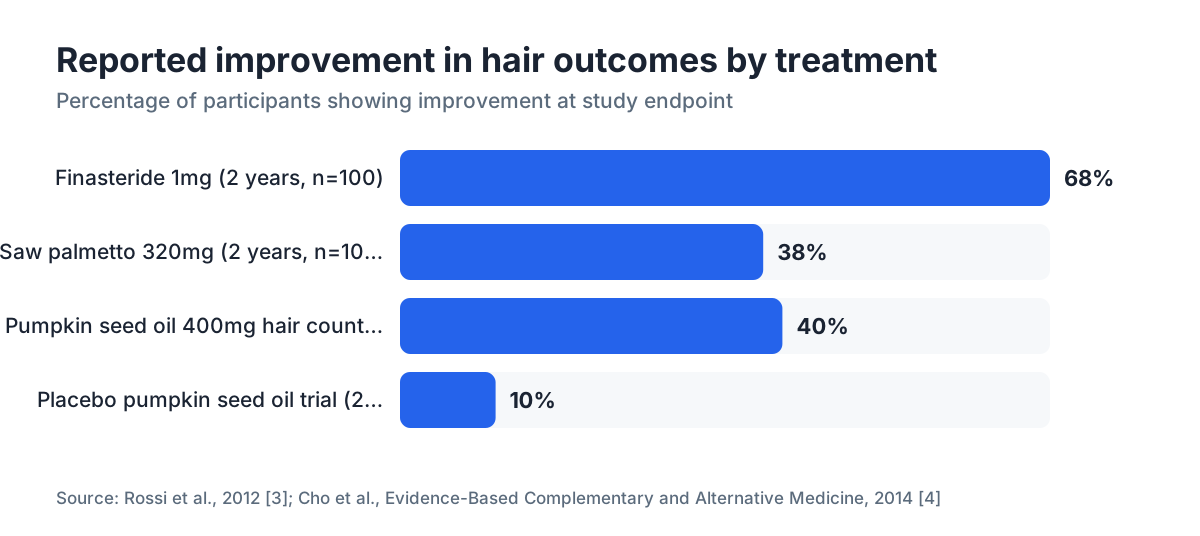
| Saw palmetto (Serenoa repens) | 5-alpha reductase inhibition | RCT, 100 men, 2 years [3] | 38% reported improvement vs. 68% for finasteride |
| Pumpkin seed oil | 5-alpha reductase inhibition (unclear pathway) | RCT, 76 men, 24 weeks [4] | 40% increase in hair count vs. 10% placebo |
| EGCG (green tea extract) | 5-alpha reductase inhibition + direct follicle effects | In vitro, animal models [5] | Not yet established in large human RCT |
| Lycopene | 5-alpha reductase type 1 inhibition | Small human studies, often combined [6] | Modest; inconsistent |
| Beta-sitosterol | Binds DHT competitively | One small RCT [3] | Positive but underpowered |
| Reishi mushroom (Ganoderma lucidum) | 5-alpha reductase inhibition | In vitro only | Promising in lab; no good human data |
| Spearmint tea | Androgen reduction (anti-androgenic effect, studied in PCOS) | Small RCTs in women [7] | Reduces free testosterone, not DHT specifically |
Saw palmetto is the most-studied. Pumpkin seed oil has the most convincing small human RCT. Everything else is either lab data or too underpowered to draw firm conclusions from.
A 2023 review in the Journal of Cosmetic Dermatology summarized evidence on plant-based 5-alpha reductase inhibitors and concluded that while several botanical compounds show inhibitory activity, "the clinical evidence remains limited by small sample sizes, short durations, and heterogeneous outcome measures" [5]. That's an honest read. These aren't cures. They're modest tools.
How well does saw palmetto block DHT compared to finasteride?
Saw palmetto comes from the berry of Serenoa repens and has been used for prostate health for decades. Its hair loss use follows from the same mechanism: it inhibits 5-alpha reductase, the enzyme that makes DHT.
A 2-year randomized trial comparing saw palmetto to finasteride in 100 men with mild to moderate androgenetic alopecia found that 38% of the saw palmetto group improved versus 68% of the finasteride group [3]. That's a real result, and clearly the inferior one.
The studied dose is 320 mg per day of a standardized liposterolic extract. Lower doses and unstandardized products, which is most of what's on store shelves, probably do less. Know that before buying the cheapest bottle you can find.
Saw palmetto's safety profile is generally considered good. The most common side effects are GI-related, mild, and less frequent than finasteride's sexual side effects, which affect a small but real minority of users. For men worried about finasteride side effects specifically, saw palmetto is the most reasonable natural alternative, even though it's substantially weaker.
One caveat matters. Saw palmetto can theoretically affect PSA test results used to screen for prostate cancer, just as finasteride does, though the evidence is thinner. Tell your doctor if you're taking it before any prostate screening.
Does pumpkin seed oil actually regrow hair?
Pumpkin seed oil has one decent human RCT behind it, which is more than most supplements can say.
A 2014 double-blind placebo-controlled trial published in Evidence-Based Complementary and Alternative Medicine enrolled 76 men with androgenetic alopecia. After 24 weeks of 400 mg daily pumpkin seed oil, the treatment group showed a mean 40% increase in hair count compared to 10% in the placebo group [4]. Scalp photographs and investigator assessments backed the result.
The mechanism isn't fully established. Pumpkin seed oil contains phytosterols including beta-sitosterol, delta-7-sterine, and cucurbitacins. Some of these may inhibit 5-alpha reductase or interfere with DHT binding, but the exact pathway hasn't been pinned down.
One study does not make a proven treatment. The trial was small, funded by a supplement manufacturer (a real limitation), and hasn't been replicated at scale. Still, for a food-derived supplement with minimal known risks, pumpkin seed oil is one of the more interesting natural options on the list.
Topical pumpkin seed oil shows up in some formulations too. The evidence for topical use is even thinner than oral, but it's unlikely to cause harm.
What foods have natural DHT-blocking properties?
Diet can influence DHT levels, though the effect sizes are small next to supplements or medications. These are the foods with the best-supported mechanisms.
Green tea contains epigallocatechin gallate (EGCG), a polyphenol that shows 5-alpha reductase inhibition in cell and animal studies [5]. Several cups a day gets you a meaningful EGCG dose, though no human RCT has measured scalp DHT specifically.
Lycopene-rich foods like tomatoes (especially cooked, which raises bioavailability) inhibit 5-alpha reductase type 1 more than type 2 in lab studies [6]. Type 2 is the dominant isoform in hair follicles, so this matters less for hair than for prostate tissue, where type 1 is more active.
Flaxseeds and other sources of lignans act as weak anti-androgens. Dietary lignan intake has been associated with lower free testosterone, which matters because free testosterone is the precursor to DHT.
Zinc deficiency is linked to increased 5-alpha reductase activity. Foods high in zinc, like oysters, pumpkin seeds, and beef, may help normalize that activity if you're deficient. Supplementing zinc when you're not deficient doesn't appear to add benefit, and excess zinc causes toxicity [8].
None of this is a treatment plan on its own. But if you're taking a natural approach seriously, the diet piece is low-cost and supports general health anyway.
Can caffeine or rosemary oil block DHT topically?
Topical approaches get attention because they avoid systemic effects entirely. Two have enough evidence to discuss seriously.
Rosemary oil was compared directly to 2% minoxidil in a 2015 randomized controlled trial of 100 patients with androgenetic alopecia. After 6 months, both groups showed similar hair count increases, and rosemary oil caused significantly less scalp itching than minoxidil [9]. The proposed mechanism includes 5-alpha reductase inhibition and better scalp circulation. This is genuinely interesting data. It doesn't mean rosemary oil equals minoxidil for men in stronger formulations or over longer stretches, but it earns rosemary a seat at the table.
Caffeine applied topically has been shown in lab studies to penetrate the follicle and counteract some testosterone-induced growth suppression in vitro [10]. At least one caffeine-based shampoo (Alpecin) markets itself on this basis. The in vitro data is real. Human RCT data showing meaningful regrowth is thin. Caffeine shampoos are low-risk and cheap, but don't expect a transformation.
Many herbal scalp serums claim DHT-blocking effects with no published evidence at all. Be skeptical of topical products with long ingredient lists and no trial data.
Curious how your scalp and hair loss pattern compare? A free AI hair analysis at MyHairline can help you understand your current stage before deciding where to invest.
How much can natural DHT blockers actually reduce DHT levels?
This is where honesty matters most, because the marketing often wildly overstates the evidence.
Finasteride 1 mg daily reduces serum DHT by roughly 65-70% [2]. Dutasteride reduces it by up to 90% [2]. Those are the pharmaceutical benchmarks.
Saw palmetto's effect on serum DHT in human studies is modest and inconsistent across trials. Some studies show small reductions in free testosterone or DHT metabolites; others show no significant change in serum DHT at all, even when hair outcomes improved slightly [3]. The mechanism may be more local (at the follicle level) than systemic.
Pumpkin seed oil's 2014 trial didn't directly measure serum DHT, so the mechanism behind its observed hair count gain is unclear [4].
EGCG from green tea shows 5-alpha reductase inhibition in vitro at pharmaceutically relevant concentrations, but oral consumption translates poorly to scalp tissue levels.
Here's the honest summary. Natural DHT blockers, if they work at all, likely produce 20-40% inhibition at best, and even that estimate rests on limited data. If you already have significant hair loss, that level of inhibition probably won't reverse it. It might slow early-stage loss in someone with mild sensitivity. Pair that with the dht blocker overview for fuller context on the pharmaceutical options.
Are natural DHT blockers safe? What are the risks?
Generally, yes, with a few caveats you should know.
Saw palmetto at studied doses (320 mg/day) has a good safety record. The most common adverse effects are mild GI symptoms. There are rare case reports of liver injury, but causality hasn't been established firmly. It may have mild anti-androgenic systemic effects, so in theory it could affect hormone-sensitive conditions or interfere with medications that change testosterone levels.
Pumpkin seed oil is a food. At the supplemental dose studied (400 mg/day), no significant adverse effects were reported in the published trial [4].
Green tea extract at high supplemental doses (above 800 mg EGCG/day) has been linked to liver toxicity in case reports. Drinking green tea is fine. Mega-dose EGCG supplements are a different animal.
Zinc supplementation above the tolerable upper intake level of 40 mg/day for adults can cause copper deficiency and other problems [8]. Most hair supplements pack far too much zinc.
Any supplement with anti-androgenic effects could theoretically affect fertility or libido if the hormonal reduction is meaningful. The evidence that natural supplements do this at typical doses is weak, but keep it in mind.
If you're pregnant or trying to conceive, avoid saw palmetto and other anti-androgens. That's the same logic that keeps finasteride away from pregnant women entirely.
For people already on finasteride, adding natural DHT blockers is unlikely to cause harm but probably adds minimal benefit given how strongly finasteride already inhibits the enzyme. If you've had minoxidil side effects and are exploring alternatives, the natural route might be worth trying alongside or before pharmaceuticals.
Do natural DHT blockers work differently for women?
Yes, and the picture is more complicated.
Women with female pattern hair loss do experience androgenetic alopecia, and DHT sensitivity drives it in many of them, but the hormonal picture differs from men. Women have much lower baseline testosterone, and female pattern loss often shows a different distribution and a different degree of androgenic involvement. Some women with pattern loss have completely normal androgen levels.
For women with confirmed hyperandrogenism (like PCOS), reducing androgen activity makes clearer sense. Spearmint tea has shown anti-androgenic effects specifically in PCOS patients by lowering free testosterone and LH in small RCTs [7]. Whether that translates to meaningful hair benefits in PCOS-related loss isn't well established.
Saw palmetto has been studied far less in women. Most of the hair loss trials enrolled men only.
Rosemary oil is one of the more gender-neutral options, since its mechanism doesn't depend entirely on androgen blockade and it's safe for topical use in women.
For women, the more pressing question is often whether the hair loss is androgenetic at all, or from telogen effluvium, nutritional deficiency, thyroid issues, or medications. DHT blocking does nothing for those causes. A proper diagnosis before buying any supplement saves both money and time.
Should you use natural DHT blockers alongside finasteride or minoxidil?
There's no good RCT comparing finasteride alone to finasteride plus natural DHT blockers, so the honest answer is: probably fine, probably minimal added benefit.
The logic for combining them is reasonable in theory. Finasteride handles the systemic DHT suppression aggressively. Something like pumpkin seed oil or rosemary oil might add complementary mechanisms at the follicle level. But when your serum DHT is already down 65-70% from finasteride, the extra gain from also inhibiting the same enzyme naturally is probably small.
Minoxidil works through a completely different mechanism (vasodilation and direct follicle stimulation, not DHT blockade), so combining it with natural DHT blockers involves no meaningful mechanism overlap. If the finasteride and minoxidil combination interests you, the evidence for that pairing is actually strong and beats either one alone.
The practical call: if you're not yet on pharmaceutical treatment and want to try natural options first, saw palmetto and pumpkin seed oil at studied doses are the most defensible choices. If you're already on finasteride, adding naturals is unlikely to hurt but shouldn't be seen as a meaningful upgrade.
One thing that helps both approaches work better: addressing factors that raise DHT or worsen hair loss independent of genetics. Chronic stress drives up androgens. Poor sleep does the same. Scalp health matters for follicle function. These aren't DHT blockers, but they're real.
How long does it take for natural DHT blockers to show results?
The hair growth cycle is slow. Anagen (the growth phase) lasts 2-6 years. Any intervention, natural or pharmaceutical, needs at least 3-6 months to show meaningful effects on hair count, and 12 months for a full picture.
The pumpkin seed oil trial measured outcomes at 24 weeks (6 months) and found its 40% hair count improvement [4]. The saw palmetto versus finasteride comparison ran 2 years [3]. These timelines matter. If you quit after 8 weeks because nothing looks different, you can't conclude the treatment failed.
Photographic tracking, done consistently under the same lighting and wet-hair conditions, is the only reliable way to judge progress at home. Global photos are useless. Close-up standardized shots of the hairline and crown are what dermatologists use.
Check the receding hairline picture if your main concern is the frontal hairline, because that area responds less well to any treatment, natural or pharmaceutical, than the crown.
Set a 6-month minimum before evaluating. If nothing has changed at 12 months, natural approaches alone are probably not enough for your degree of loss.
What's a waste of money in the natural DHT-blocking space?
Most things, if we're honest.
Multi-ingredient "DHT-blocking shampoos" with 10+ botanical extracts, no published trial, and a premium price tag are almost certainly not doing what they claim. Shampoo sits on the scalp for 2 minutes. Meaningful drug penetration needs either purpose-designed vehicles (like certain topical minoxidil formulations) or prolonged contact. A rinse-off shampoo is not delivering therapeutic doses of anything.
High-dose biotin for DHT-blocking purposes is not a thing. Biotin has no known DHT-blocking mechanism. It may help hair structure in people with documented biotin deficiency, which is rare, but the DHT story has nothing to do with it. Biotin above 5,000 mcg/day can also interfere with thyroid and troponin lab tests, which is a real safety concern.
Provitamin B5, collagen powders, and "hair vitamins" that make up most of the hair loss supplements market have essentially no clinical evidence for DHT inhibition. Some support general hair health in deficiency states. That's a different claim.
Products marketing themselves as "natural finasteride alternatives" that simply contain saw palmetto at doses below 160 mg aren't backed by any evidence. Dose matters. Standardization matters. The berry extract concentration matters.
Spend your money on saw palmetto at 320 mg daily from a standardized extract, pumpkin seed oil at 400 mg daily, or rosemary oil as a topical if you're going the natural route. Everything else is noise until better trials exist.
Sources
- American Academy of Dermatology, Hair Loss Overview
- MedlinePlus, Finasteride (National Library of Medicine)
- Rossi A et al., Comparative Effectiveness of Finasteride vs Serenoa repens in Male Androgenetic Alopecia, 2012
- Cho YH et al., Effect of pumpkin seed oil on hair growth in men with androgenetic alopecia, Evidence-Based Complementary and Alternative Medicine, 2014
- Journal of Cosmetic Dermatology, 2023 review on botanical 5-alpha reductase inhibitors
- Giovannucci E, A prospective study of tomato products, lycopene, and prostate cancer risk, Journal of the National Cancer Institute, 2002
- Grant P, Spearmint herbal tea has significant anti-androgen effects in polycystic ovarian syndrome, Phytotherapy Research, 2010
- NIH Office of Dietary Supplements, Zinc Fact Sheet for Health Professionals
- Panahi Y et al., Rosemary oil vs minoxidil 2% for the treatment of androgenetic alopecia, Skinmed, 2015
- Fischer TW et al., Caffeine and testosterone effects on the human hair follicle in vitro, British Journal of Dermatology, 2007