
TL;DR: Norwood 6 means extensive hair loss across the top and crown with only a side-and-back horseshoe remaining. Without surgery, your realistic options are oral or topical minoxidil, finasteride, a combination of both, scalp micropigmentation, or a quality hairpiece. None regrow a full head of hair, but some slow further loss and others convincingly disguise it.
What does Norwood 6 actually look like, and why does it matter for treatment?
The Norwood scale runs from 1 (no loss) to 7 (almost nothing left on top). Norwood 6 sits one step below the worst: you've lost the front, the top, and the crown, and the bands that used to separate those zones are gone. What remains is the classic horseshoe fringe running from ear to ear around the back and sides. The mid-scalp bridge that Norwood 5 still shows has disappeared [1].
This matters because follicles that are gone are gone. The cells that once produced those hairs are no longer there. No topical or oral treatment regenerates a follicle that has fully miniaturized and shed permanently. That's the honest starting point, and any article that skips it is doing you a disservice.
What treatments can still do: slow or stop loss in the surviving fringe, produce modest density gains in areas where follicles are still partially active (the very front edge of the remaining fringe sometimes responds), and change how the scalp looks optically through pigmentation or coverage. Those are real outcomes. They're just not restoration to Norwood 2.
If you want to understand why your follicles reached this stage in the first place, the underlying biology of what causes hair loss is worth reading before you spend money on anything.
Can minoxidil do anything at Norwood 6?
Minoxidil is the only topical hair loss treatment with FDA approval, and it works by prolonging the anagen (growth) phase and widening blood vessels near the follicle [2]. At Norwood 6, its role is narrow but real.
The honest expectation: minoxidil will not regrow the bald top. Those follicles are gone. But it may slow further loss in the horseshoe fringe, and in some men it produces mild thickening in the transitional zone at the edges of the remaining hair. A 48-week randomized trial published in the Journal of the American Academy of Dermatology found that 5% topical minoxidil produced significantly more hair regrowth than placebo in men with androgenetic alopecia, though the trial population was predominantly Norwood 2 to 4 [3]. Evidence specific to Norwood 6 is thin because trials rarely enroll that stage.
Topical 5% foam or solution applied twice daily is the standard FDA-approved approach for men [2]. Oral minoxidil (0.625 mg to 5 mg daily) is increasingly used off-label, and some dermatologists consider it more reliable for men who don't apply topical consistently. You can read a full breakdown of oral minoxidil and minoxidil for men separately. The side effect profile differs between the two forms; minoxidil side effects covers what to watch for.
Start minoxidil to defend what's left, not to rebuild what's gone. That's a realistic framing.
Does finasteride help at this stage, or is it too late?
Finasteride 1 mg (Propecia, and now many generics) blocks 5-alpha reductase type II, reducing scalp DHT by roughly 60% [4]. Lower DHT means slower miniaturization of surviving follicles.
At Norwood 6, most of the top scalp follicles have already finished their miniaturization cycle. Finasteride cannot reverse that. What it can do is protect the horseshoe fringe, which still holds DHT-sensitive follicles that could otherwise keep thinning. Losing the fringe is the difference between Norwood 6 and Norwood 7, and that difference matters a great deal if you're considering a hair transplant later or if you rely on the fringe as donor area.
A two-year randomized controlled trial found that finasteride 1 mg daily stopped progression in 83% of men and produced visible regrowth in 66%, though again this data comes mostly from men with less advanced loss [4]. The American Academy of Dermatology lists finasteride as a first-line treatment for male androgenetic alopecia [5].
Finasteride is prescription-only in the US. It takes 6 to 12 months to see its effect on shedding, and you need to stay on it indefinitely; stopping reverses whatever benefit you gained within about 12 months. If you want more detail on how the drug works, finasteride and DHT blockers have full explainers.
Should you bother at Norwood 6? If you're under 55 and the fringe is still reasonably dense, yes. If you're older with a thin fringe and no interest in a future transplant, the calculus is less clear. Talk to a dermatologist rather than ordering from a telehealth app without an exam.
Is combining finasteride and minoxidil better than either alone?
This is one of the most common questions, and the answer is yes, with caveats.
A randomized trial published in JAMA Dermatology compared oral minoxidil plus low-dose finasteride against either drug alone in men with androgenetic alopecia. The combination arm showed statistically greater hair count increases at 24 weeks than either monotherapy [6]. The doses in that trial were lower than the standard doses used individually, which is one reason the combination was well tolerated.
For a Norwood 6, combination therapy makes sense as a fringe-preservation strategy: finasteride addresses the hormonal driver, minoxidil addresses blood flow and growth phase. You won't grow a new hairline, but you may hold the perimeter better than with one drug alone.
The practical article covering how to use both together is finasteride and minoxidil. If you want supplements on top of that, hair loss supplements is a reasonable next read, though the evidence for most supplements is weak compared to these two drugs.
What is scalp micropigmentation and does it actually look real at Norwood 6?
Scalp micropigmentation (SMP) is a cosmetic tattooing technique that places tiny pigment deposits in the scalp to mimic the look of closely shaved hair follicles. At Norwood 6, it creates the illusion of a shaved-head aesthetic with a defined hairline rather than a shiny bald dome fading into a fringe.
SMP does not regrow hair. It's a visual solution. For many men, though, it's the most dramatic non-surgical change available. A skilled practitioner can build a hairline that looks convincing at conversational distance when you keep the existing fringe trimmed short.
The procedure typically runs 3 sessions over a few weeks. Cost in the US ranges from roughly $2,000 to $5,000 depending on the area of coverage and the clinic [7]. Results last 3 to 6 years before the pigment fades and a touch-up is needed, though sun exposure speeds up that fading.
The risks are real. Poor pigment matching looks obvious, especially as it fades to a bluish or greenish cast. Over-darkening the hairline reads as artificial. The standard risks of any tattooing (infection, allergic reaction to pigment) apply. There is no FDA approval process for SMP as a medical device; it's regulated like tattooing at the state level, which means practitioner quality varies enormously.
If you go this route, look for practitioners who specialize only in SMP (not general tattoo artists), ask to see photos of clients at 3-plus years post-procedure rather than fresh work, and check that they use pigments formulated for scalp work that fade to a neutral color rather than blue-green.
What about wigs and hairpieces at Norwood 6, are they worth considering?
Modern non-surgical hair systems have moved well past the obvious toupees of 30 years ago. For Norwood 6, a well-fitted hairpiece covers the entire bald area and blends into the existing horseshoe fringe.
High-quality systems use real human hair on a thin polyurethane or lace base. They're attached with medical-grade tape or adhesive and can be worn continuously for 2 to 4 weeks before reapplication. A quality custom piece costs $500 to $2,000 upfront; replacement and maintenance runs $1,000 to $3,000 per year depending on whether you self-service or use a salon [7].
The advantages: immediate result, no medical risk, no waiting period. The disadvantages: maintenance is real labor, swimming and heavy sweating get complicated, and there's a psychological adjustment for many men. The attachment adhesives can trigger contact dermatitis in some people.
Who this works best for: men who want an immediate cosmetic change, who don't mind the maintenance routine, and who are honest with themselves about the lifestyle trade-offs. It's not a lazy option, but for some men it's the right one.
Cheap synthetic systems look obviously fake and are not worth the money. Budget appropriately or don't bother.
How much can you realistically expect each option to change your appearance?
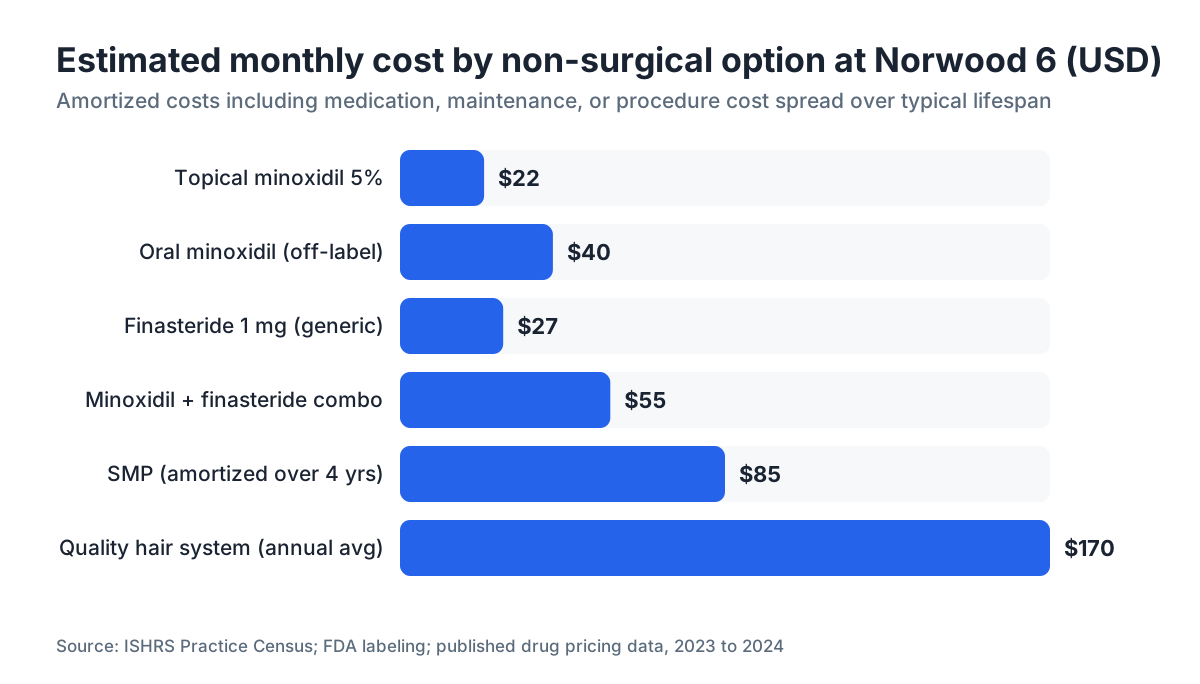
This is the question people actually want answered, and most articles dodge it. Here's an honest table.
| Option | Hair regrowth | Loss prevention | Appearance change | Monthly cost (approx) |
|---|---|---|---|---|
| Topical minoxidil 5% | Minimal at NW6 | Moderate (fringe) | Small | $15 to 30 [2] |
| Oral minoxidil (off-label) | Minimal at NW6 | Moderate-good | Small | $20 to 60 [7] |
| Finasteride 1 mg | None at NW6 top | Good (fringe) | None visible short-term | $15 to 40 [4] |
| Minoxidil + finasteride | Minimal at NW6 | Better than either alone | Small | $30 to 90 [6] |
| Scalp micropigmentation | None | None | Dramatic (shaved look) | $30 to 140 amortized [7] |
| Hair system (quality) | None | None | Dramatic (full hair look) | $85 to 250 [7] |
Notice the split. The cheapest options (medications) change what's happening underneath but barely change what you see in the mirror at Norwood 6. The cosmetic options change what you see immediately but don't touch the biology. Plenty of men choose one from each column: drugs to defend the fringe, SMP or a system for the look they want.
Are there any other treatments people try at this stage, and do they work?
Platelet-rich plasma (PRP) injections involve drawing your blood, concentrating the growth factors, and injecting them into the scalp. Some small studies show modest benefit in androgenetic alopecia, but the evidence isn't strong enough for the AAD to list it as a first-line treatment, and the FDA has not approved it for hair loss [5]. At Norwood 6, with extensive follicle loss, the mechanism offers little where follicles are gone. It might help at the fringe margins. It costs $1,500 to $3,500 per series and results are inconsistent.
Low-level laser therapy (LLLT) devices (combs, caps, helmets) carry FDA clearance for marketing as class II devices, not FDA approval as treatments. The distinction matters: clearance means the device was shown to be substantially equivalent to a predicate device, not that it was proven effective in rigorous trials [8]. A 2014 randomized controlled trial in the American Journal of Clinical Dermatology found that a 9-beam LLLT comb produced a 39% increase in hair density compared to a sham device in men with androgenetic alopecia, but most participants had mild to moderate loss [9]. At Norwood 6, expect minimal results over the bald areas and possibly some benefit at the margins.
Ketoconazole 2% shampoo is sometimes recommended alongside other treatments. It has some evidence for reducing scalp DHT locally and mild anti-inflammatory effects, though it won't regrow hair at Norwood 6 [5]. It costs almost nothing and carries low risk, so it's reasonable to add, just don't expect much.
Spironolactone and dutasteride are two other anti-androgen options. Spironolactone is used off-label in women with androgenetic alopecia and isn't appropriate for men because of its feminizing effects. Dutasteride blocks both type I and type II 5-alpha reductase, cutting DHT more than finasteride, and is used off-label in some men; it's FDA-approved in the US for BPH but not for hair loss [8]. Some dermatologists prescribe it for men who don't respond to finasteride.
What about stopping further loss, how fast does Norwood 6 progress to 7?
Nobody has good longitudinal data on exactly how fast the average Norwood 6 progresses to 7. The rate varies enormously by genetics, age, and whether treatments are used. What we do know: the factors that drove loss to Norwood 6 (primarily DHT sensitivity, encoded in your androgen receptor genes on the X chromosome) are still active in the remaining fringe follicles [10].
Without any intervention, progression continues in most men. The horseshoe fringe can thin significantly over years, reducing the density that makes it look healthy and that matters if you ever want a transplant. Finasteride and minoxidil both have evidence for slowing this, which is an underrated reason to use them even if you're focused on cosmetic solutions.
If you've noticed your receding hairline started early or progressed fast, the pattern often correlates with more aggressive ongoing loss. The receding hairline article covers how to read your own trajectory.
If you're Norwood 6, should you even look into surgery before ruling it out?
This article is about non-surgical options, but surgery deserves an honest mention because many Norwood 6 men dismiss it too early.
Hair transplants at Norwood 6 are challenging but not impossible. The problem is donor supply: you have a limited horseshoe fringe, and that's where grafts come from. An experienced surgeon can estimate your donor density and calculate how many grafts are available. The typical scalp holds 6,000 to 8,000 total grafts; a Norwood 6 restoration needs 3,000 to 5,000-plus grafts, often across more than one session [11]. Whether that math works for you depends on your fringe density.
Body hair transplant (using beard or chest hair) can supplement scalp donor supply in advanced cases. The results differ in texture but can add real coverage.
The point for this article: if you're on medications and your fringe is holding, you may be a better surgical candidate in 2 years than you are today. Protecting donor density now pays off later. Read hair transplant if you want the full breakdown of what that process involves.
If you want a quick read on where you stand before spending time on consultations, MyHairline's free AI scan at myhairline.ai/scan can classify your Norwood stage and flag your estimated donor area from a few photos. It's a useful starting point, not a substitute for seeing a surgeon.
What's the most practical approach for most Norwood 6 men who want to skip surgery?
If I were advising a friend, here's what I'd actually say.
Start with finasteride 1 mg daily (or dutasteride if finasteride doesn't work for you after 12 months). This is your insurance policy on what's left. Add minoxidil, oral if you won't apply topical reliably, topical if you prefer to avoid systemic effects. Expect 6 to 12 months before you know if it's working, and check the fringe density, not the bald top.
For the look: be honest about your lifestyle before choosing SMP versus a hair system. SMP is lower daily maintenance and suits men who are comfortable with the shaved-head aesthetic. A hair system gives you the appearance of a full head of hair but demands real commitment to maintenance and carries more lifestyle constraints.
Skip the expensive add-ons (PRP, LLLT devices) until you've run the basic treatments for a year. The evidence for PRP at Norwood 6 is too weak to justify the cost upfront, and LLLT devices range from $200 to $800-plus with modest evidence mostly drawn from less advanced cases [9].
Some men combine SMP with finasteride and minoxidil. The medications protect the fringe, SMP makes the shaved-head look cohesive across the top. That combination costs relatively little monthly and has almost no downside if you tolerate the medications well.
At MyHairline, the free AI hair analysis (myhairline.ai/scan) can give you a baseline staging and help you track whether your fringe is changing over time. Use it to document, not to diagnose.
Sources
- American Academy of Dermatology (AAD), Hair Loss Types: Alopecia
- FDA, Minoxidil Drug Label (DailyMed, NLM)
- Journal of the American Academy of Dermatology, Olsen EA et al., 'A randomized clinical trial of 5% topical minoxidil versus 2% topical minoxidil and placebo in the treatment of androgenetic alopecia in men', 2002
- Journal of the American Academy of Dermatology, Kaufman KD et al., 'Finasteride in the treatment of men with androgenetic alopecia', 1998
- American Academy of Dermatology, Hair Loss: Diagnosis and Treatment
- JAMA Dermatology, published randomized comparative trial of oral minoxidil and low-dose finasteride in male androgenetic alopecia
- International Society of Hair Restoration Surgery (ISHRS)
- FDA, Medical Devices (510(k) clearance vs. approval distinction)
- American Journal of Clinical Dermatology, Lanzafame RJ et al., 'The growth of human scalp hair mediated by visible red light laser and LED sources in males', 2013
- National Library of Medicine, PMC review on the genetics of androgenetic alopecia
- ISHRS, Hair Restoration Surgery patient education