TL;DR: No over-the-counter product blocks DHT as reliably as prescription finasteride. Saw palmetto and pumpkin seed oil have modest trial support. Ketoconazole shampoo has the best topical evidence. Everything else is largely unproven. OTC options are a reasonable starting point for mild hair loss, but expect modest results at best.
What is a DHT blocker and why does DHT cause hair loss?
DHT, short for dihydrotestosterone, is the androgen that drives pattern hair loss in genetically susceptible people. It's made when an enzyme called 5-alpha-reductase converts testosterone into DHT inside the hair follicle. Once DHT binds to androgen receptors in the follicle, it starts a miniaturization process: the growth cycle shortens, each new hair comes in finer and shorter than the last, and eventually the follicle stops making visible hair at all [1].
A DHT blocker is anything that slows this chain. It can happen at several points: blocking the 5-alpha-reductase enzyme (finasteride and dutasteride do this systemically), cutting DHT at the scalp surface, or competing with DHT at the receptor. Prescription drugs hit the enzyme hard enough to reduce serum DHT by 60-70% (finasteride) or up to 90% (dutasteride) [2]. OTC options work far more weakly, mostly at the scalp level and through less direct mechanisms.
The mechanism matters because it tells you why no supplement can fully replicate a prescription drug. The enzyme sits deep inside follicle cells. Getting enough of any plant compound in there to meaningfully inhibit it is genuinely hard. Partial inhibition may still slow progression, which is worth something if you catch loss early.
For a broader look at why hair falls out, including causes beyond DHT, see our guide on what causes hair loss.
Which OTC DHT blockers have real clinical evidence?
The honest answer: not many, and the studies that exist are mostly small, short, or funded by the supplement maker. Here's how the main candidates stack up.
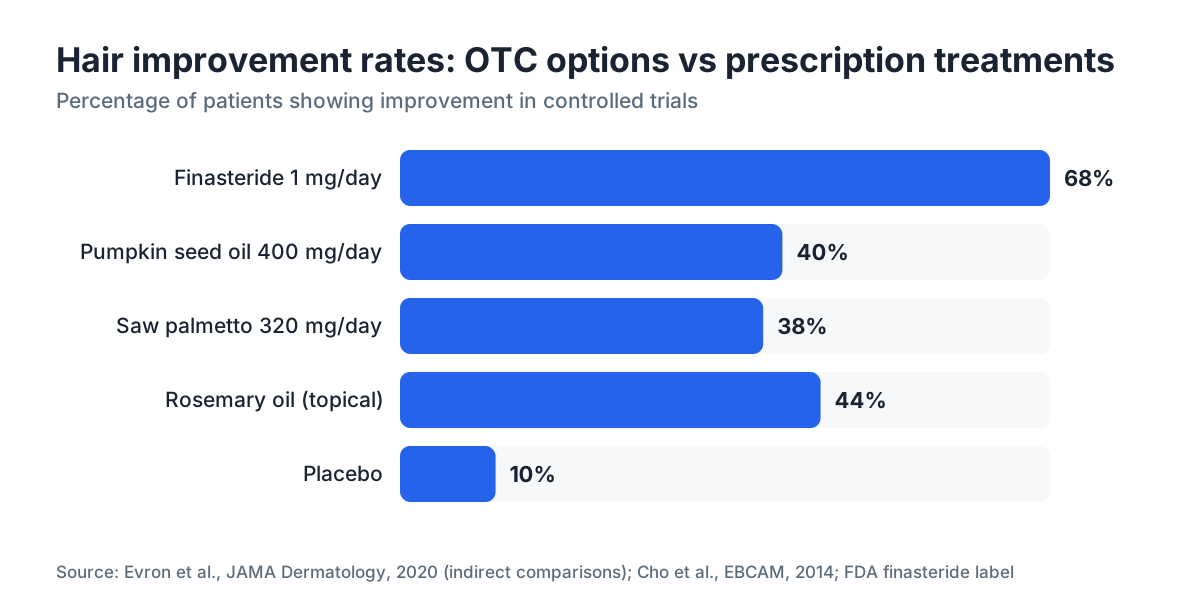
Saw palmetto (Serenoa repens) This is the most-studied OTC option. Its active compounds, mainly fatty acids and plant sterols, inhibit 5-alpha-reductase in lab and animal models. A 2002 small trial (n=26) found topical saw palmetto improved hair density in 60% of men with androgenetic alopecia versus 11% on placebo [3]. A 2020 review in JAMA Dermatology put oral saw palmetto's global assessment improvement rate at about 38% versus finasteride's 68% in indirect comparisons [4]. It's not nothing. It's also not finasteride.
Saw palmetto is probably the single best-evidenced OTC DHT blocker for oral use. Trial doses typically run 320 mg/day of a standardized extract.
Pumpkin seed oil A 2014 randomized, placebo-controlled trial in Evidence-Based Complementary and Alternative Medicine followed 76 men with androgenetic alopecia over 24 weeks. The pumpkin seed oil group saw a 40% jump in hair count versus 10% for placebo [5]. This is one of the better-designed supplement studies in the space. Replication is scarce, which is always a concern with a single trial.
Ketoconazole shampoo (1% OTC, 2% prescription) Ketoconazole is an antifungal, but it also has a weak androgen-receptor blocking effect at the scalp. A 1998 clinical study found 2% ketoconazole shampoo produced gains in hair density and follicle size on par with 2% minoxidil in men with androgenetic alopecia [6]. The 1% OTC version (Nizoral 1%) is weaker but easy to buy. Most hair loss dermatologists treat it as a reasonable adjunct, not a primary treatment.
Rosemary oil A 2015 randomized controlled trial compared rosemary oil to 2% minoxidil over six months in men and women with androgenetic alopecia. Both groups showed roughly equal hair count increases at six months, though scalp itching was more common with minoxidil [7]. The sample was small (n=100) and the comparison arm was 2% minoxidil, not 5%. Still, it's a legitimate controlled trial and rosemary oil is safe with almost no side-effect risk.
Pygeum africanum and beta-sitosterol Both turn up in hair loss supplements. Beta-sitosterol, a plant sterol, showed modest 5-alpha-reductase inhibition in one small 1995 trial [3]. Pygeum has more evidence in prostate literature than in hair loss. Neither has enough dedicated hair loss trial data to recommend with confidence.
Everything else on a supplement label, from stinging nettle to green tea extract, has only lab data, no data, or anecdote. That doesn't mean they cause harm. It means you're paying for a hypothesis.
How do OTC DHT blockers compare to finasteride and minoxidil?
Finasteride 1 mg daily reduces scalp DHT by roughly 64% and serum DHT by about 68% [2]. In the phase III trial that got it approved, 83% of men on finasteride had no further hair loss at two years, and 66% showed visible regrowth [2]. Those numbers are hard to match with anything you can buy at a pharmacy without a prescription.
Minoxidil doesn't block DHT at all. It extends the anagen (growth) phase of the hair cycle and promotes blood flow to follicles. Pairing it with a DHT blocker is the standard of care for a reason: you address both the cause (DHT miniaturization) and the symptom (shortened growth cycles). For more on this combination, see finasteride and minoxidil.
Here's a side-by-side on the options most people compare:
| Treatment | Mechanism | DHT reduction | Evidence level | Requires Rx? |
|---|---|---|---|---|
| Finasteride 1 mg | 5-AR enzyme inhibitor | ~64-68% systemic | Phase III RCTs | Yes |
| Dutasteride 0.5 mg | Dual 5-AR inhibitor | ~85-90% systemic | Multiple RCTs | Yes |
| Minoxidil 5% | Vasodilator, anagen extender | None | Phase III RCTs | No (topical) |
| Ketoconazole 2% shampoo | Androgen receptor antagonist (scalp) | Local, modest | Small RCTs | No (1%) / Yes (2%) |
| Saw palmetto 320 mg | 5-AR inhibitor (weak) | Unknown in humans | Small RCTs | No |
| Pumpkin seed oil 400 mg | Unclear, possibly 5-AR | Unknown | 1 RCT | No |
| Rosemary oil (topical) | Unclear | None confirmed | 1 RCT vs 2% minox | No |
If your hair loss is moving and you're relying only on OTC options, you're probably underarming yourself. That's not a sales pitch. It's the data.
For a detailed look at the prescription standard, read our article on finasteride.
Are OTC DHT blockers safe? What are the side effects?
Most OTC DHT blockers have favorable safety profiles, which is one of their real advantages over prescription 5-alpha-reductase inhibitors.
Saw palmetto's most common side effects are GI-related: nausea, diarrhea, and stomach upset, especially on an empty stomach. There are rare case reports of bleeding complications, so people on anticoagulants should check with a doctor first. Hormonal side effects (the concern with finasteride) haven't shown up in saw palmetto trials at standard doses, though the mechanistic possibility can't be ruled out entirely.
Pumpkin seed oil is well tolerated. No meaningful adverse events appeared in the 2014 RCT [5].
Ketoconazole shampoo at 1% is generally safe. Scalp dryness and irritation are the main complaints. The 2% prescription version carries a small FDA warning tied to systemic use (oral ketoconazole), but topical shampoo formulations have a far better safety record.
Rosemary oil can irritate sensitive skin. Always dilute it in a carrier oil.
One thing to be clear about: "natural" doesn't mean free of hormonal effects. Saw palmetto does inhibit 5-alpha-reductase. Whether it does so strongly enough to affect PSA levels or cause sexual side effects in any meaningful share of users is unclear from existing data. If you're getting a PSA test (a prostate cancer screening marker), tell your doctor you're taking saw palmetto, because both saw palmetto and finasteride can suppress PSA and potentially mask prostate cancer [2].
For context on what the side effect profile looks like with the pharmaceutical version, see minoxidil side effects as a reference point for weighing risk against benefit.
What OTC DHT blocker shampoos actually do
The shampoo aisle is full of products labeled "DHT blocking shampoo" with ingredient lists running through saw palmetto, biotin, caffeine, and ketoconazole. The honest picture is messier than the labels.
Shampoo sits on the scalp for maybe 1-3 minutes before you rinse it. For a compound to inhibit follicular 5-alpha-reductase, it has to penetrate into the follicle at meaningful concentrations. Most water-soluble compounds barely manage that in two minutes. Ketoconazole is the exception, partly because it's been formulated specifically for scalp penetration and has trial data showing follicular effects [6].
Saw palmetto in a shampoo is mostly marketing unless that shampoo has been tested for follicle penetration and retention, which almost none of them have.
If you want a shampoo in your hair loss routine, the evidence points to ketoconazole shampoo (1% Nizoral or a generic equivalent, used 2-3 times per week) as having the best shot at doing something real. Use it as an adjunct, not a replacement for proven treatments.
Caffeine shampoos, popularized partly by TrichoLab and Alpecin research, have some in-vitro (lab) data on extending hair follicle growth cycles [8]. There are no large human RCTs confirming meaningful regrowth, though the mechanism is plausible.
Can women use OTC DHT blockers for hair loss?
Female pattern hair loss (androgenetic alopecia in women) does involve DHT, though the hormonal picture is more tangled than in men. Women's hair loss often mixes DHT sensitivity, estrogen shifts, thyroid issues, and nutritional gaps. Blaming DHT alone is usually an oversimplification for women.
Finasteride is generally not prescribed for premenopausal women because of teratogenicity risk (it causes birth defects if taken during pregnancy) [2]. That makes OTC options more relevant for women who want something androgen-targeting without a prescription.
Saw palmetto is sometimes tried by women with androgenetic alopecia. There is no large RCT in women. Since it's a weak androgen modifier, the theoretical worry about hormonal disruption in premenopausal women is worth raising with a doctor before starting.
Spironolactone (prescription) is the most commonly prescribed anti-androgen for women with hair loss in the US and does not carry finasteride's pregnancy risk in the same way. It's not OTC, but it's worth knowing that the gap between OTC and prescription matters differently for women.
Pumpkin seed oil and ketoconazole shampoo have no meaningful sex-specific contraindications in their OTC forms and are reasonable options for women to try alongside established treatments.
If you're not sure whether your hair loss is DHT-related or something else, like telogen effluvium (shedding triggered by stress, illness, or nutritional deficiency), attacking DHT won't help much. Getting the diagnosis right matters more than picking the best supplement.
How long does it take for OTC DHT blockers to work?
Patience is not optional with any hair loss treatment. The hair growth cycle runs in phases (anagen, catagen, telogen) that span several months. Even prescription finasteride takes 3-6 months to show visible improvement and about 12 months for full effect.
OTC options tend to move more slowly, if at all. The pumpkin seed oil trial ran 24 weeks before detecting significant differences [5]. The saw palmetto studies generally ran 3-6 months. Rosemary oil matched 2% minoxidil only at the six-month mark [7].
Expecting results in 4-6 weeks from any hair loss product is unrealistic. If you haven't seen any stabilization or early regrowth signals at six months, the product probably isn't working for you.
One complication: a shed (a temporary spike in hair fall) can hit in the first few weeks of some treatments as the follicle cycle resets. This is well documented with minoxidil and reported anecdotally with some supplements. Don't read an early shed as failure.
What's the best OTC DHT blocker routine you can build?
If you want the best possible OTC-only approach, built on the evidence rather than the marketing, here's what a reasonable routine looks like.
For oral supplementation, saw palmetto at 320 mg/day of a standardized liposterolic extract is the top choice. Some people add pumpkin seed oil (one RCT supports 400 mg/day). Taking both is unproven but unlikely to harm you. Skip the long ingredient lists in multi-ingredient "hair vitamins" unless you have a documented deficiency. Biotin, for one, only helps if you're biotin deficient, which is rare [9].
For topical treatment, ketoconazole 1% shampoo 2-3 times per week is the best-supported OTC topical. Rosemary oil (a few drops in carrier oil, massaged into the scalp for 5-10 minutes before washing) can be added as a low-risk adjunct.
If you're on the fence about prescription treatment, this OTC stack costs maybe $30-60 per month and carries minimal side-effect risk. It makes sense to try for six months if you're not ready to use prescription medication. But if you're losing ground fast, especially if your hairline is actively receding (see our receding hairline guide for staging), OTC options alone are likely to fall short.
Want an objective read on your hair before committing to anything? The free AI scan at MyHairline (/scan) can help you see what's actually happening at the scalp. Use it as a baseline, not a diagnosis.
For fuller coverage of supplements that overlap with this topic, hair loss supplements goes deeper on ingredients and evidence.
Do OTC DHT blockers interact with other medications?
Most OTC hair loss supplements have a limited drug interaction profile, but a few points matter.
Saw palmetto may raise bleeding risk when combined with anticoagulants (warfarin, aspirin, clopidogrel) and antiplatelet drugs [3]. The mechanism is unclear but the case reports exist. Tell your prescribing doctor if you're on blood thinners.
Saw palmetto may lower PSA (prostate-specific antigen) levels, just as finasteride does [2]. If your doctor is monitoring your PSA for prostate health, disclose your saw palmetto use or you could get false reassurance.
Ketoconazole shampoo at OTC concentrations is unlikely to cause systemic interactions. Oral ketoconazole is a different story (significant CYP3A4 interactions), but that's not an OTC product.
Pumpkin seed oil and rosemary oil have no well-documented drug interactions at the doses used for hair loss.
If you're already on finasteride or another 5-alpha-reductase inhibitor and add saw palmetto, you'd be stacking two 5-AR inhibitors of very different strength. There's no trial data on this combination and no strong reason to do it.
Always mention supplements to any prescriber, especially if you're about to start finasteride, because both act on the androgen axis.
Is there any OTC DHT blocker strong enough to replace finasteride?
No. That's the direct answer, and the evidence backs it cleanly.
Finasteride was approved by the FDA in 1997 for male pattern hair loss [2]. The clinical trial data behind it spans thousands of patients over multiple years. No OTC compound has that evidence base. The 2020 JAMA Dermatology review put saw palmetto's improvement rate at roughly 38%, finasteride's at 68% in indirect comparisons [4]. Even if saw palmetto is doing something real, it's doing about half the job at best.
The right question is not "which OTC option equals finasteride?" It's "what can I do without a prescription that gives me a reasonable shot at slowing progression?" The answer is ketoconazole shampoo plus saw palmetto plus possibly pumpkin seed oil, used consistently over 6-12 months with realistic expectations.
If that's not enough and you're worried about finasteride's side effects (which are real and worth knowing about), that's a conversation with a doctor, not a reason to stay on supplements indefinitely while your hair keeps thinning.
For men who want to understand the prescription landscape first, minoxidil for men explains the non-DHT-blocking prescription-grade option that's now also sold OTC in 5% form, and our dht blocker article covers the full spectrum including prescription agents.
Red flags: OTC DHT blocker products you should skip
The supplement market targets people who are stressed about hair loss and willing to spend money. Some products are actively misleading.
Avoid any supplement that claims to "eliminate DHT" or promises regrowth in 30 days. No OTC compound eliminates DHT systemically. That's pharmacologically implausible.
Be skeptical of products with 15-20 ingredient blends where each ingredient sits at a dose far below the amount used in any study. It's called "fairy dusting" and it's everywhere in hair loss supplements.
Before-and-after photos in supplement ads are almost never from controlled conditions. Lighting, styling, and camera angle can manufacture dramatic apparent changes. They're not evidence.
A few specific things that lack meaningful hair loss evidence at OTC doses despite heavy marketing: collagen supplements (no RCT data for hair density), silica, horsetail extract, bamboo extract, and most proprietary "hair growth complex" blends.
The Federal Trade Commission has taken action against companies making unsubstantiated hair regrowth claims [10]. If a product's claims sound too definitive, they probably are.
There's also the creatine angle. Some people worry about supplements that might raise DHT as a side effect and cost them hair. For context on that concern, does creatine cause hair loss walks through the one study (a 2009 rugby trial) that started the whole conversation.
Sources
- American Academy of Dermatology, Hair Loss Overview
- Prager N et al., Journal of Alternative and Complementary Medicine, 2002
- Evron E et al., JAMA Dermatology, 2020, Natural Hair Supplement: Friend or Foe?
- Cho YH et al., Evidence-Based Complementary and Alternative Medicine, 2014
- Piérard-Franchimont C et al., Dermatology, 1998
- Panahi Y et al., Skinmed, 2015, Rosemary oil vs minoxidil 2% for hair growth
- Fischer TW et al., International Journal of Dermatology, 2007
- NIH Office of Dietary Supplements, Biotin Fact Sheet
- U.S. FDA, Propecia (finasteride) prescribing information
- U.S. Federal Trade Commission, consumer protection actions