

TL;DR: Telogen effluvium is temporary diffuse shedding triggered by physical or emotional stress. Most people see shedding stop within 3 to 6 months of removing the trigger, with full regrowth taking 6 to 12 months. There is no drug that speeds the hair cycle. Fixing the root cause, correcting nutritional deficiencies, and being patient are the actual treatment.
What is telogen effluvium and why does it cause so much shedding?
Hair grows in cycles. At any given moment, roughly 85 to 90% of your scalp hairs are in the anagen (growth) phase, and about 10 to 15% are in the telogen (resting) phase before they shed [1]. Telogen effluvium happens when a significant stressor shocks a large percentage of growing hairs into the resting phase all at once. Instead of a normal trickle of daily shed (50 to 100 hairs is average), you lose hundreds of hairs per day for weeks or months.
The stressor can be almost anything: a high fever, major surgery, childbirth, rapid weight loss, a severe crash diet, emotional trauma, thyroid dysfunction, or starting or stopping certain medications [2]. The hair doesn't fall out the moment the stress hits. There's a delay, usually 2 to 3 months, because telogen lasts roughly 3 months before hairs are pushed out by new growth. That delay is why so many people can't connect the shed to what caused it.
Here's the part that should make you exhale. Telogen effluvium is self-limiting. The follicles themselves are not destroyed, which means regrowth happens once the trigger is resolved. Understanding what causes hair loss in general helps clarify why TE behaves so differently from genetic hair loss, where follicles miniaturize permanently.
How long does telogen effluvium take to recover from?
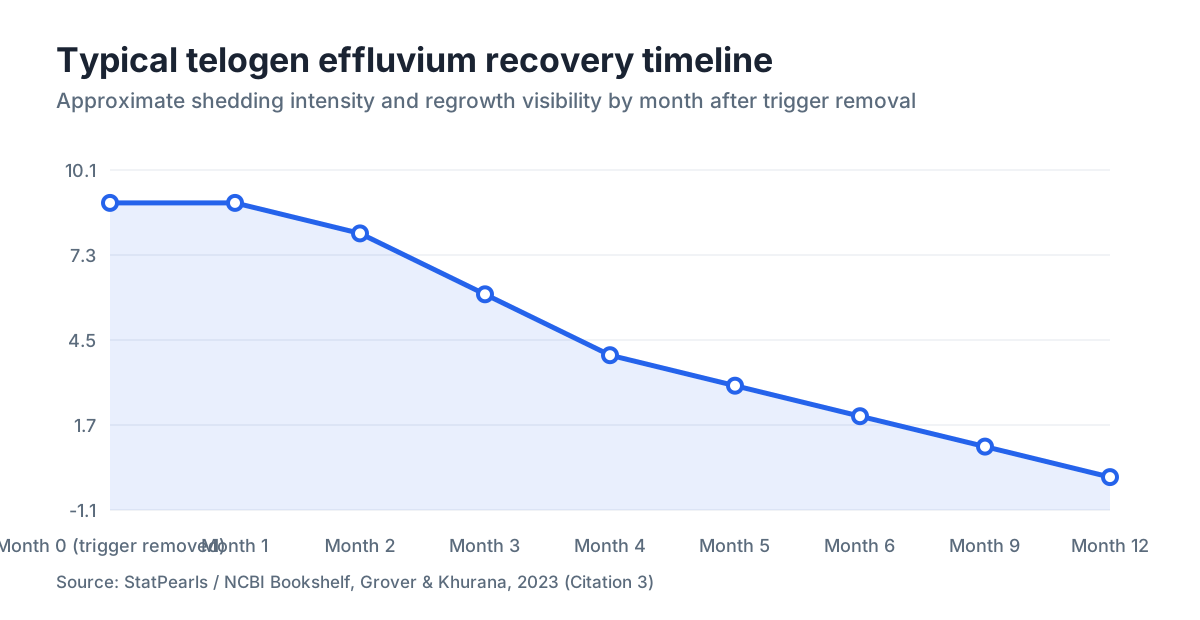
Most acute cases resolve in 3 to 6 months after the trigger is removed, and full regrowth is typically visible by 9 to 12 months [3]. That timeline assumes you've dealt with the underlying cause. If the trigger is still active, whether that's an untreated thyroid condition, continued severe caloric restriction, or ongoing high stress, the shedding can persist and turn chronic.
Chronic telogen effluvium, defined loosely as shedding lasting more than 6 months, does happen. A study by Whiting published in the Journal of the American Academy of Dermatology in 1996 described it as a distinct entity that can fluctuate for years, predominantly in women, without progressing to complete baldness [4]. The prognosis is still good. The timeline just stretches.
Here's what the recovery arc usually looks like:
| Phase | Timing | What you notice |
|---|---|---|
| Active shedding | Months 1 to 3 after trigger | Handfuls in the shower, part widening |
| Shedding slows | Months 3 to 5 | Fewer hairs in drain, pull test negative |
| Regrowth begins | Months 4 to 6 | Short, fine hairs along hairline and part |
| Density returns | Months 9 to 12 | Hair feels and looks close to baseline |
| Full recovery | 12 to 18 months for severe cases | Most people indistinguishable from before |
One thing trips people up. Seeing new short hairs can temporarily make things look worse before they look better. Those short regrowth hairs are the follicles cycling back into anagen. It's exactly the thing you want to see.
What actually triggers telogen effluvium recovery?
Recovery starts when the stressor stops and your body restores its balance. There's no shortcut pill for this. The hair cycle runs on its own internal clock, and you cannot pharmacologically force anagen to start faster in any meaningful way across the whole scalp.
That said, some things either remove barriers to recovery or actively slow it down.
The single biggest barrier most clinicians find is unresolved nutritional deficiency. Iron deficiency, even without frank anemia, is strongly associated with diffuse hair shedding. A serum ferritin below 30 ng/mL is often cited as the threshold where hair loss accelerates, though some dermatologists prefer to see ferritin above 70 ng/mL before calling levels adequate for hair [5]. Vitamin D deficiency, zinc deficiency, and low protein intake also show up in the research as contributors. None of these will cause TE in isolation for most people, but they stretch recovery time if left uncorrected.
Thyroid function deserves its own line. Both hypothyroidism and hyperthyroidism cause diffuse hair shedding, and thyroid-related TE won't resolve until thyroid hormone levels normalize. A basic TSH test tells you whether this is a factor. If you haven't had bloodwork done, that's the first concrete step.
Stress management matters in a practical, not motivational-poster, way. Elevated cortisol from chronic psychological stress keeps the body in a state where hair cycling gets deprioritized. There's decent evidence that perceived stress correlates with the severity and duration of TE, though isolating stress as a variable in human studies is genuinely hard.
Which treatments speed up telogen effluvium recovery?
This is where most articles oversell. The reality: no treatment has been shown in a randomized controlled trial to meaningfully shorten the duration of acute telogen effluvium. What treatments can do is address deficiencies that are prolonging the shed, or manage concurrent androgenetic alopecia that may be unmasking itself during the TE episode.
Minoxidil is the most discussed option. It does prolong the anagen phase and is FDA-approved for androgenetic alopecia, but it has not been approved specifically for telogen effluvium [6]. Some dermatologists prescribe it off-label for TE on the reasoning that pushing follicles into anagen faster helps. The catch is that minoxidil itself can trigger a temporary shed when first started, which is confusing and discouraging during an episode you're already anxious about. You can read more about minoxidil for men and minoxidil side effects before making that call.
Finasteride is not relevant to pure telogen effluvium. It works by blocking DHT, which drives follicle miniaturization in genetic hair loss. TE follicles are not miniaturizing. They're just temporarily resting. Unless there's co-occurring androgenetic alopecia, finasteride adds nothing to TE recovery. You can read about finasteride for its appropriate uses.
Nutritional supplementation makes sense only when a deficiency is confirmed. Taking biotin or a hair supplement when your levels are normal does nothing provable [7]. Correcting a confirmed iron or vitamin D deficiency, on the other hand, absolutely helps, and the difference in recovery time can be real. See the broader discussion of hair loss supplements for what the evidence actually shows.
Platelet-rich plasma (PRP) gets offered at clinics for TE more and more. The evidence base is thin and inconsistent. I'd hold off on spending that money unless you have concurrent androgenetic alopecia and a provider you trust is recommending it in that context.
The honest hierarchy: fix the trigger first, correct deficiencies second, consider minoxidil third if a dermatologist thinks concurrent AGA is a factor.
What bloodwork should you get to understand your recovery?
A targeted panel gives you information you can act on and rules out causes that won't resolve on their own. What a dermatologist will typically order:
- Complete blood count (CBC): checks for anemia
- Serum ferritin: the stored iron measure most relevant to hair, more than hemoglobin
- TSH (thyroid-stimulating hormone): screens for thyroid dysfunction
- Free T3 and free T4: if TSH is abnormal
- 25-hydroxyvitamin D: vitamin D status
- Zinc: less commonly deficient but worth checking in vegans or those with gut absorption issues
- Full metabolic panel: liver and kidney function, which affect how your body processes nutrients
- ANA (antinuclear antibody): if autoimmune causes like lupus are suspected
For women specifically: androgens (DHEA-S, free testosterone), prolactin, and estrogen levels may be relevant if hormonal fluctuation around menopause, pregnancy, or stopping birth control is suspected as the trigger.
The ferritin result is the one general practitioners miss most. They check a CBC, see normal hemoglobin, and declare iron normal. Ask specifically for a serum ferritin number. A level of 15 ng/mL is technically within most lab reference ranges but is commonly associated with hair shedding [5].
How do you know if your hair is actually regrowing?
Two signs are definitive. First, the pull test: gently grip 40 to 60 hairs between your thumb and forefinger and pull with light tension. Losing more than 6 hairs is a positive (abnormal) result and points to active shedding still going on [8]. When you can do the pull test and come away with 0 to 3 hairs, the acute phase is winding down.
Second, look at your hairline and part in good light. New anagen hairs are short, fine, and often a shade lighter at the tip. They stick up because they haven't grown long enough to lie flat. If you see these, the follicles are cycling back. This matters more than how the overall density feels.
Photographs in consistent lighting every 4 weeks give you an objective record. Our own read on hair density is unreliable under stress. We almost always perceive it as worse than it is. If you want a structured baseline, a free AI hair analysis at MyHairline can document your hairline and density so you have a starting point to compare against.
What doesn't reliably signal recovery is how much hair you're losing in the shower on any given day. Shedding varies naturally, and one bad day after weeks of improvement doesn't mean a setback. The trend over 4-week blocks is what counts.
Is telogen effluvium the same as permanent hair loss?
No. This is the most important distinction in the entire topic.
In telogen effluvium, the follicle itself is intact. The hair has shed early, but the follicle will produce a new hair when it cycles back into anagen. In androgenetic alopecia (the genetic kind), DHT progressively miniaturizes follicles over years until they produce hairs too fine to see, and eventually stop producing hairs at all. That process does not happen in telogen effluvium.
Here's where confusion is legitimate: a TE episode can reveal or accelerate underlying androgenetic alopecia. Someone with a genetic predisposition who was sitting at the edge of noticeable loss may see a receding hairline or crown thinning more clearly once TE-related density loss compounds it. In that case, the TE sheds will recover but the underlying AGA pattern may not without treatment. A dermatologist can usually tell the two apart with a scalp examination and dermatoscopy. Understanding your telogen effluvium presentation and your family history both matter here.
If you have a first-degree relative who is significantly bald and your shedding follows a pattern (receding temples, crown thinning) rather than diffuse loss, it's worth investigating whether AGA is co-occurring. That's a different problem that needs its own treatment path.
Does diet affect how fast you recover from telogen effluvium?
Yes, and more directly than most people realize.
Protein is the structural building block of hair (keratin is a protein). The minimum protein intake recommended for adults is 0.8 grams per kilogram of body weight per day, but people recovering from illness, surgery, or significant physical stress often need more, in the range of 1.2 to 1.6 g/kg [9]. If you've been under-eating protein, which is extremely common in people who dieted hard, that's a direct contributor to prolonged shedding.
Iron, as covered above, is the nutrient most consistently linked to diffuse hair shedding in the research. Red meat, lentils, tofu, dark leafy greens, and fortified cereals are good sources. Vitamin C eaten alongside plant-based iron improves absorption meaningfully.
Zinc deficiency produces hair loss that can look a lot like TE. Oysters, beef, pumpkin seeds, and legumes are reasonable food sources. Supplementing zinc above about 40 mg per day can impair copper absorption and create new problems, so more is not better here.
Crash dieting is one of the more reliable triggers for TE. Rapid weight loss of more than 1 to 1.5 lbs per week is associated with TE in the clinical literature. If you're wondering whether restrictive eating is part of your situation, it's worth reading about in the context of does creatine cause hair loss and other dietary factors.
Avoid: extreme caloric restriction, very low protein diets (some vegans and crash dieters fall into this), and aggressive supplementing without testing first.
Can stress cause telogen effluvium to come back after recovery?
Yes. Telogen effluvium can recur with each new significant stressor. There's no immunity once you've had one episode. The follicles are normal and respond to the same physiologic signals they always did.
People who have had one TE episode often become hyperaware of their shedding afterward, which can create a feedback loop where anxiety about hair loss itself becomes a stressor. This is documented in the dermatology literature as a genuine clinical challenge. It doesn't mean the anxiety is causing more TE directly in most cases, but it makes the experience of recovery harder than it needs to be.
The practical approach: track your shedding with photographs, not daily drain counts. Get your bloodwork done so you have objective data. And recognize that normal daily shedding (50 to 100 hairs) can feel dramatic if you're watching for it. If recurrence worries you, addressing sleep quality, caloric adequacy, and protein intake builds a more stable baseline.
When should you see a dermatologist about telogen effluvium?
Sooner than most people do. Full stop.
Most people wait 6 to 12 months before seeking medical attention, partly from embarrassment and partly from hoping it resolves on its own. A dermatologist can do three things quickly that you cannot do at home: examine the scalp with a dermatoscope to rule out other conditions (scarring alopecia, alopecia areata, tinea capitis), order targeted bloodwork, and tell TE apart from co-occurring AGA.
See a dermatologist promptly if the shedding is severe and sudden, you have patches of complete hair loss (which points to alopecia areata, not TE), the scalp itself is itchy, scaly, or inflamed, or shedding has persisted more than 6 months without an obvious trigger. A board-certified dermatologist, or one with a hair loss subspecialty, beats a general practitioner for this evaluation. The American Academy of Dermatology has a physician finder at aad.org [10].
A hair transplant is not appropriate for telogen effluvium. Transplants address permanent follicle loss in androgenetic alopecia. Transplanting during or after TE, before the situation stabilizes, can give misleading results. If you're curious about transplants for genetic loss that's co-occurring, you can read about hair transplant as a separate consideration.
What does recovery actually feel like month by month?
People who've been through it describe recovery in fairly consistent terms, and the emotional arc is worth naming.
Month 1 to 2 after the trigger is removed: shedding often feels as bad or worse than it did at the start. This is because the hairs that entered telogen around the time of the trigger are now reaching the end of their resting phase. Nothing is visibly improving yet.
Month 2 to 4: most people notice the shower drain is a little less alarming. The pull test starts coming back negative. There may be a lingering sense that the hair looks thinner than before, because regrowth hairs haven't reached styling length yet.
Month 4 to 6: short new hairs are visible, especially around the temples and the part line. Many people describe this as the first moment they genuinely believe recovery is happening.
Month 6 to 9: density noticeably improving. Hair feels and behaves more like it used to.
Month 9 to 12: most people with acute TE reach something close to baseline. Some report their hair feels slightly different in texture during this stretch, often slightly finer, though this usually normalizes.
Beyond 12 months: some very severe cases, particularly postpartum TE, can take up to 18 months for full density to come back. This is the outer edge of the normal range, not evidence of permanent loss.
To track where you are in that arc, MyHairline's free AI scan can give you a documented baseline and help you watch changes over time without guessing.
Sources
- Springer / Journal of Clinical and Investigative Dermatology, Buffoli et al., 'The human hair: from anatomy to physiology'
- American Academy of Dermatology, Hair loss types: Telogen effluvium overview
- StatPearls (NCBI Bookshelf), Telogen Effluvium, Grover and Khurana
- Journal of the American Academy of Dermatology, Whiting DA, 'Chronic telogen effluvium', 1996
- Journal of the American Academy of Dermatology, Trost LB et al., 'The diagnosis and treatment of iron deficiency and its potential relationship to hair loss'
- FDA, Minoxidil labeling and drug approval history
- JAMA Dermatology, Patel et al., 'Longitudinal follow-up of patients with telogen effluvium and biotin supplementation', 2017
- StatPearls (NCBI Bookshelf), Telogen Effluvium, Grover and Khurana
- National Institutes of Health Office of Dietary Supplements, Protein: Fact Sheet for Health Professionals
- American Academy of Dermatology, Find a Dermatologist physician finder
- Journal of Cosmetic Dermatology, Mysore and Parthasaradhi, 'Hair shaft disorders'