TL;DR: Telogen effluvium is a temporary shed. A trigger pushes large numbers of hairs into the resting phase at once, and they fall out 2 to 4 months later. Female pattern androgenetic alopecia is a chronic, hormonally driven shrinking of follicles that gets worse without treatment. One fixes itself. The other doesn't. Getting the diagnosis right decides which treatments are worth your money.
What is telogen effluvium and what causes it?
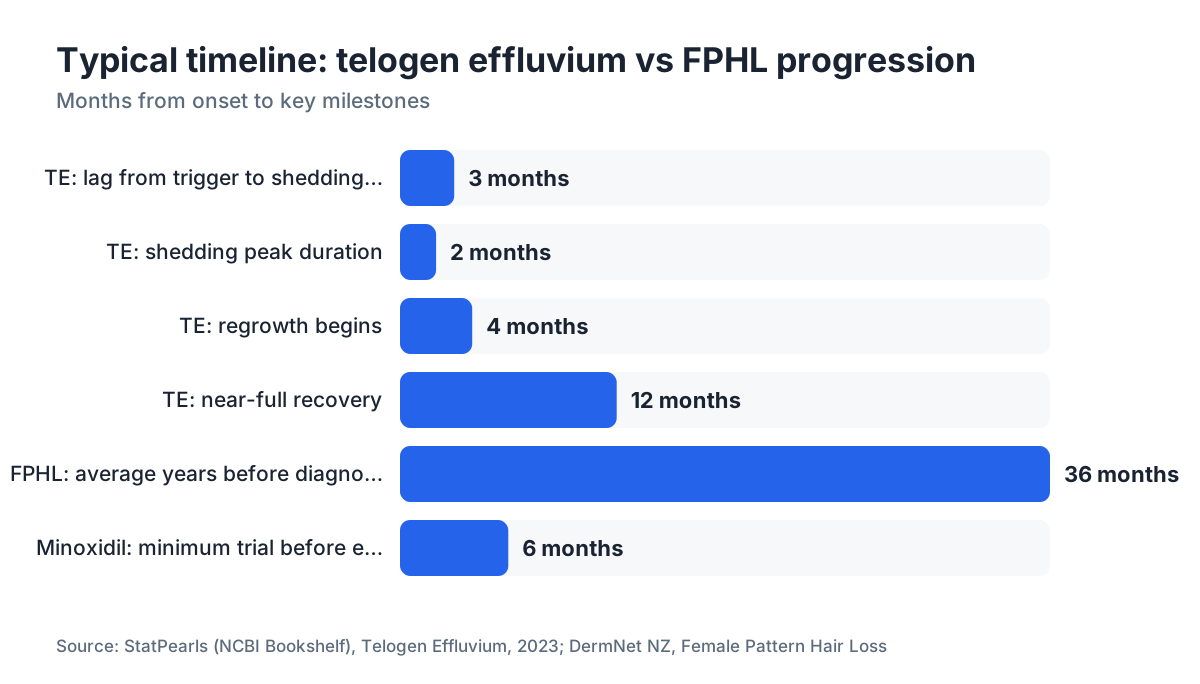
Your scalp cycles through growth, regression, and rest, constantly and quietly. In a healthy scalp, about 85 to 90% of hairs sit in the anagen (growth) phase at any moment, and only 10 to 15% are in the telogen (resting) phase before they shed [1]. Telogen effluvium happens when a physical or emotional shock knocks a big share of follicles out of anagen and into telogen all at once. Two to four months later, those resting hairs let go together. That's why the shed seems to arrive out of nowhere.
The usual triggers are major surgery, severe illness (COVID-19 is a documented cause), childbirth, crash dieting or fast weight loss, high fever, thyroid trouble, iron deficiency, and extreme stress [1]. The hair loss is not the disease. It's the delayed echo of something that hit your body months earlier.
Telogen effluvium comes in two forms. Acute lasts under 6 months. Chronic drags on longer, usually because an underlying cause was never found or corrected. The chronic form is where women get misdiagnosed most often, because a slow, drawn-out shed looks a lot like the diffuse thinning of androgenetic alopecia.
For a wider look at what sets off shedding, the what causes hair loss guide covers both the common triggers and the ones people miss.
What is female pattern androgenetic alopecia?
Female pattern hair loss (FPHL) is the most common form of hair loss in women. Estimates vary, but the American Academy of Dermatology says it affects up to 40% of women by age 50 [2]. The mechanism is not vague "genetics." Dihydrotestosterone (DHT) and possibly other androgens bind to receptors in genetically sensitive follicles and shorten each growth cycle a little more each time. Year after year, hairs come back shorter, finer, and lighter. That process has a name: follicular miniaturization.
Male pattern loss usually starts at the temples and crown and tracks the Norwood scale. Female pattern loss looks different. It shows up as diffuse thinning across the central scalp, with the part widening over time. The frontal hairline usually holds, at least early on. The Ludwig scale describes it: Ludwig I is mild crown thinning, Ludwig II is a wider part, and Ludwig III is scalp clearly visible through the top [3].
FPHL is progressive. Left alone, it doesn't stop or reverse.
Androgens aren't the whole story for women, either. Some women with FPHL have completely normal androgen levels, which points to local follicle sensitivity rather than too much circulating hormone [4]. That makes "androgenetic" a slightly misleading label for a subset of women, though it's still the standard clinical term.
If you want the DHT mechanism spelled out, the dht blocker article covers how it drives miniaturization.
How do the patterns of shedding differ between the two conditions?
Here's where the difference gets useful.
Telogen effluvium sheds everywhere at once. You see hair on the pillow, in the shower drain, in your hand when you run your fingers through it. A bad week can top 300 to 400 hairs a day, against a normal baseline of roughly 50 to 100 [1]. The hairs that fall in TE usually have a white bulb at the root end. That's the club hair, and it means the follicle finished a proper telogen rest. The follicle itself is fine.
Female pattern alopecia moves slowly. The day-to-day shed is often unremarkable. What women notice is the part getting wider, more scalp showing at the crown, or a ponytail that's thinner than it was a year ago. The daily count might be only slightly high, or normal. This isn't mass shedding. It's miniaturization, each new hair growing back a little thinner and shorter than the one before.
The two overlap all the time. A woman with quiet, underlying FPHL hits a stressor, develops TE, and after the acute shed clears, her hair doesn't fully come back. The TE episode exposed miniaturization that was happening underneath the whole time. That overlap is a big reason these two get confused.
| Feature | Telogen Effluvium | Female Pattern Alopecia |
|---|---|---|
| Onset | Sudden, 2-4 months post-trigger | Gradual over years |
| Shedding pattern | Diffuse, global, heavy daily count | Diffuse crown/part, modest daily count |
| Hairline | Usually preserved | Frontal hairline often preserved |
| Hair density | Uniformly reduced | Central scalp primarily affected |
| Scalp biopsy | Increased telogen follicles, normal size | Miniaturized follicles, telogen/anagen ratio shifted |
| Reversibility | Yes, when trigger resolves | Partial at best, progressive without treatment |
| Duration | Weeks to months (acute) | Chronic, lifelong |
How do dermatologists actually diagnose these conditions?
A good dermatologist doesn't guess from across the room. The workup for diffuse hair loss in women runs through several steps, and skipping them leads to the wrong treatment.
History comes first. When did the shedding start? Was there a major illness, surgery, crash diet, or hard life event 2 to 4 months before it began? Did you recently have a baby? Those questions point toward TE. Slow, progressive thinning with no obvious trigger points toward FPHL.
The pull test is a quick in-office check. The clinician grabs about 40 to 60 hairs near the scalp and pulls firmly. More than 6 hairs coming out counts as positive, which suggests active shedding consistent with TE [1]. It's crude and not definitive on its own.
Dermoscopy is next. It's a handheld magnifier with cross-polarized light that lets the clinician see individual follicles at the scalp surface. In FPHL, dermoscopy shows miniaturization: thin, vellus-like hairs mixed with normal terminal hairs, and follicular units holding only one hair instead of the usual two or three [5]. In TE, follicle caliber stays fairly uniform and there's no miniaturization.
Blood work matters too, mostly to catch reversible causes of TE. A standard panel includes a complete blood count, ferritin (specifically ferritin, more than total iron), thyroid-stimulating hormone, and sometimes total and free testosterone plus DHEA-S if androgenic causes are on the table [6]. The American Academy of Dermatology lists ferritin as a first-tier test because iron deficiency is an underdiagnosed cause of chronic TE [2].
In ambiguous cases, a scalp punch biopsy is the gold standard. A pathologist counts the ratio of terminal to vellus follicles and the anagen-to-telogen ratio. FPHL produces a terminal-to-vellus ratio below 4:1, against a normal ratio of about 7:1 [5]. That's a number that's hard to argue with.
Self-diagnosis is a real trap here. If you want a starting point before your dermatology appointment, the free AI scan at MyHairline can photograph your scalp pattern and give you a preliminary read, which makes the clinical visit more productive.
Does telogen effluvium go away on its own?
Acute telogen effluvium almost always clears without treatment once the trigger passes or gets corrected [1]. Regrowth usually starts within 3 to 6 months of the shed peaking, and most people return close to baseline density within 6 to 12 months. "Close to" is doing real work in that sentence. Full recovery depends on whether an underlying vulnerability (early FPHL, iron deficiency) also got addressed.
Chronic telogen effluvium, meaning it lasts more than 6 months, usually needs a correctable cause found. The culprits people overlook most are iron deficiency anemia, hypothyroidism, and eating too little. Some dermatologists point to low ferritin as a trigger even when hemoglobin looks normal. A commonly cited threshold is serum ferritin below 30 ng/mL [6], though some practitioners use higher cutoffs (up to 70 ng/mL) when hair loss is the main complaint. Honest caveat: the exact ferritin threshold for hair loss is argued over in the literature, and there's no agreed number.
The hard part is the waiting. Watching your hair fall out for months, knowing it should stop, is genuinely distressing. No medication speeds up TE recovery in a proven, FDA-approved way. Minoxidil gets used off-label during TE to support regrowth, but the evidence is thin and it doesn't change how fast follicles flip from telogen back to anagen. Fixing the trigger is the treatment.
What treatments actually work for female pattern androgenetic alopecia?
FPHL is the one that needs active treatment. Left alone, it progresses. The good news: two treatments have real evidence behind them, and a third is getting easier to access.
Minoxidil is the first-line, FDA-approved treatment for women with FPHL. The 2% topical solution was approved for women in 1991, and the 5% foam was cleared later [7]. It works by extending the anagen phase and enlarging follicles. In trials, 2% minoxidil twice daily produced a statistically significant increase in non-vellus hair count versus placebo at 32 weeks [7]. Shedding often jumps in the first 2 to 4 weeks, which spooks people. That early shed is normal. It's old telogen hairs getting pushed out by new anagen growth. Stick with it for at least 4 to 6 months before you judge results. The minoxidil side effects breakdown covers what to expect.
Finasteride is FDA-approved for FPHL in postmenopausal women in some countries. In the United States it's prescribed off-label for premenopausal women with caution, because of teratogenicity risk in pregnancy [8]. It blocks 5-alpha reductase, the enzyme that turns testosterone into DHT. Trials in postmenopausal women show modest but real gains in hair count and density. The finasteride article walks through dosing, risks, and who it fits.
Low-dose oral minoxidil (0.25 mg to 2.5 mg a day) has drawn attention as an alternative for women who can't handle the topical. A 2021 study in the Journal of the American Academy of Dermatology found low-dose oral minoxidil was well tolerated and effective for female pattern hair loss, with facial hypertrichosis (unwanted facial hair) as the most common side effect [9]. It's prescribed off-label in the US. The oral minoxidil guide covers what the evidence actually shows.
Hair transplants are an option for FPHL, with real caveats. Because FPHL thinning is diffuse and the donor area at the back of the scalp may also be affected, not every woman is a candidate. A careful evaluation by a surgeon who does female cases is a must before you go this route. The hair transplant overview sets realistic expectations.
The American Academy of Dermatology's guidance backs this up, calling minoxidil "the treatment of choice for female pattern hair loss" as first-line therapy [2].
Can you have both telogen effluvium and female pattern hair loss at the same time?
Yes. It's common, and it's one of the most frustrating puzzles in dermatology.
Here's how it usually goes. A woman in her 30s or 40s has slowly been developing FPHL without noticing, because the change is so gradual. Then something hits: surgery, a difficult pregnancy, a bout of COVID-19. The TE episode causes a large, obvious shed. When the TE clears, the hair grows back, but not all the way. She's left below her pre-event density, because the TE shed exposed the miniaturization that had been building underneath.
Treating only the TE (waiting it out) leaves the FPHL untouched. Treating only the FPHL (starting minoxidil) might partly help the TE regrowth but ignores any nutritional or health trigger. The right move is to run both tracks: find and fix the TE trigger while starting FPHL treatment if the diagnosis confirms underlying androgenetic alopecia.
Dermoscopy and biopsy earn their keep in this overlap, because they can spot miniaturization even while active shedding is going on.
What blood tests should women with hair loss get?
This is a question a lot of women fight to get a full answer to, because primary care doctors often run partial panels and miss key markers.
The core panel most dermatology literature supports for diffuse female hair loss includes a complete blood count (to catch anemia), serum ferritin (more useful than total iron or iron saturation), thyroid-stimulating hormone, and, if there's any sign of hormonal excess (irregular periods, acne, hirsutism), total testosterone, free testosterone, and DHEA-sulfate [6].
Ferritin deserves a flag. Iron deficiency without full-blown anemia is a documented trigger for chronic TE, and many standard iron panels miss it. Ask your doctor specifically for serum ferritin. A result under 30 ng/mL is widely considered suboptimal for hair growth, though as noted, the ideal number isn't settled.
Vitamin D and zinc deficiencies show some link to hair loss in the literature, but the evidence is much weaker. If you're already low in either, correcting it makes sense. Taking zinc or vitamin D when your levels are normal is unlikely to change your hair loss. The hair loss supplements article separates what data supports from what marketing sells.
For women with irregular cycles or signs of androgen excess, a fuller hormonal workup including prolactin, and possibly an ultrasound to check for polycystic ovary syndrome (PCOS), is worth raising with your gynecologist or endocrinologist.
How long does it take for hair to grow back after telogen effluvium?
The timeline is one of the most asked questions and one of the hardest to answer precisely, because people vary so much.
In acute TE from a single event, shedding usually peaks around 3 to 4 months after the trigger, then slows down. Regrowth starts as follicles re-enter anagen, but since hair grows roughly 0.5 to 1 cm a month, it takes 6 to 12 months before regrowth is cosmetically obvious [1]. Full recovery, meaning near-baseline density, usually takes 12 to 18 months from when the shed began.
When the cause of chronic TE wasn't found and fixed quickly, the timeline stretches. Some women report slow, partial recovery over 2 to 3 years.
A few things genuinely help during this stretch: correct any nutritional deficiencies, go easy on fragile regrowth (gentle brushing, no tight hairstyles), and don't pile on new stressors like severe calorie cutting. None of these are miracles. They just keep you from making a recovering situation worse.
Is telogen effluvium more common after COVID-19?
COVID-19 hair loss got a lot of attention starting in 2020 and 2021. It follows the classic TE pattern: the physical stress of the illness shoves follicles into telogen, and 2 to 4 months after the acute infection, heavy shedding starts. None of this is unique to COVID-19. The same thing has been documented after influenza and other severe infections for decades.
Case series and surveys from 2021 and 2022 suggested post-COVID TE was common among people with moderate to severe illness, with some studies reporting hair loss in 20 to 30% of hospitalized COVID-19 patients in the months after discharge. Even mild cases were linked to TE in some reports, though the data from non-hospitalized patients is shakier.
The outlook for post-COVID TE is the same as for other acute TE: most people see near-complete recovery within 12 months of the shed starting, assuming there's no underlying hair loss condition. The telogen effluvium article goes deeper, including what regrowth tends to look like.
What should you do next if you're not sure which condition you have?
Start with a dermatologist, ideally one who sees a lot of hair loss. Dermatologists vary widely in how much of this they do, and a physician who sees 10 hair loss patients a week will give you a sharper workup than one who sees 2.
Before the appointment, run a quick self-audit. Can you name a stressful event, illness, surgery, or big diet change 2 to 4 months before the shedding started? If so, TE is worth considering. Is the thinning gradual over years with no clear trigger? That leans FPHL. Do women in your family have hair loss? That adds weight to the FPHL side.
Bring photos if you have them. Comparing current scalp photos to shots from 1 to 2 years ago is one of the most useful things a clinician can review. Smartphone photos in consistent lighting, taken from directly above looking down, give the best comparison.
If you want a preliminary read before your appointment, MyHairline's free AI hair scan can analyze your scalp pattern and give you an objective reference to bring in.
Don't self-treat hard before you have a diagnosis. Starting minoxidil before you know whether you have TE, FPHL, or both won't hurt you, but it muddies the picture of what's improving and why. A few weeks to get bloodwork and see a dermatologist is time well spent. Women with a receding hairline alongside diffuse thinning may have a more tangled picture that needs careful evaluation.
Sources
- StatPearls (NCBI Bookshelf), Telogen Effluvium
- American Academy of Dermatology, Hair Loss in Women
- DermNet NZ, Female Pattern Hair Loss (Ludwig Scale)
- Journal of the American Academy of Dermatology, Atanaskova Mesinkovska & Bergfeld, Female Pattern Hair Loss and Androgens (2013)
- Journal of the American Academy of Dermatology, Rudnicka et al., Dermoscopy of Hair Disorders (2012)
- Journal of the American Academy of Dermatology, Trost et al., Hair Loss in Women (2005)
- FDA Drug Label, Rogaine (minoxidil) 2% topical solution for women
- FDA Drug Label, Finasteride (Propecia)
- Journal of the American Academy of Dermatology, Vañó-Galván et al., Low-dose oral minoxidil for female pattern hair loss (2021)