
TL;DR: Scalp micropigmentation deposits pigment into the scalp to mimic hair follicles or hide bald patches. It doesn't regrow hair. It creates a convincing illusion of density or a close-shaved head. Full treatment costs $400 to over $4,000 depending on coverage. Results last 3 to 6 years before a touch-up. It works for almost every type of alopecia.
What is SMP and how does it work on alopecia?
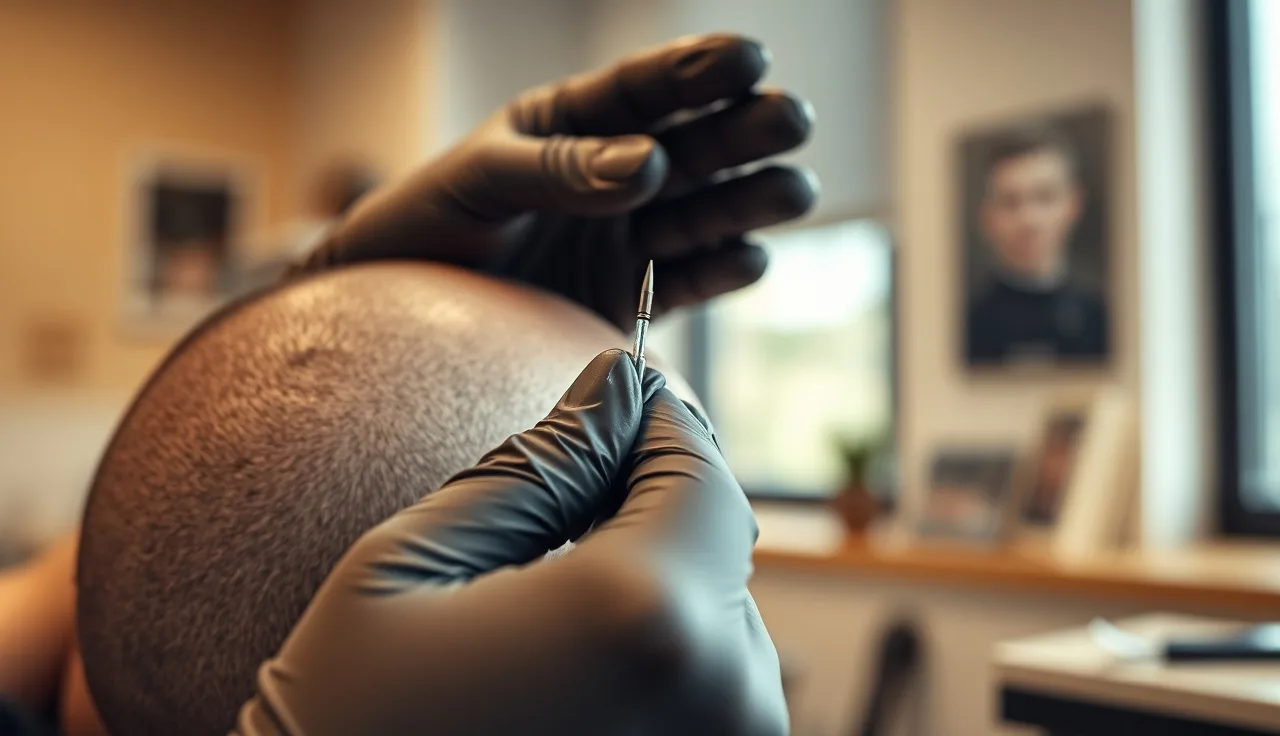
Scalp micropigmentation is cosmetic tattooing. A trained technician uses a fine needle to deposit pigment dots into the upper dermis of your scalp. Each dot is sized and colored to look like a follicle seen from above, roughly 0.1 to 0.5 mm across. From any normal viewing distance the scalp reads as hair, not exposed skin.
The logic for alopecia is simple. Androgenetic alopecia (pattern baldness), alopecia areata, scarring alopecia: the shared problem is missing or damaged follicles. SMP doesn't fix follicles. It makes them look like they're there. Narrow, but genuinely useful for a lot of people.
SMP pigment sits shallower than traditional tattoo ink, which is why the dots stay tight and don't spread into the blurry lines you see on old tattoos. The pigment is formulated differently too, though practitioners vary widely in what they use, and there's no FDA-approved SMP-specific pigment product right now. The FDA regulates tattoo inks as cosmetics, not drugs [1]. Know that going in.
A full treatment usually takes two to four sessions spaced about a week apart. Each session runs two to four hours depending on the area. The technician builds density gradually instead of going full opacity in one sitting, which reads more natural and lets you adjust the shade between appointments.
What types of alopecia can SMP treat?
SMP has been used on nearly every alopecia subtype, and the results differ by condition.
Androgenetic alopecia is the most common use. Men with Norwood stage 3 through 7 baldness use SMP to fake a very close-cropped or shaved head. Women with Ludwig-scale thinning use it differently: the pigment adds density between existing hairs rather than covering fully bald skin, which demands a much more careful color match [2].
Alopecia areata shows up as patchy bald spots on an otherwise hair-bearing scalp. SMP can hide those patches so they blend with the surrounding hair. The catch is that alopecia areata is unpredictable. New patches appear. Old patches sometimes regrow on their own, which leaves the pigmented area mismatched against the new hair [10].
Scarring alopecias (lichen planopilaris, frontal fibrosing alopecia, central centrifugal cicatricial alopecia) destroy follicles for good. Since hair won't come back there, SMP is a strong option: no follicle activity to compete with the pigment. Scar tissue takes pigment differently than normal scalp, so an experienced technician matters even more here [9].
Traction alopecia from years of tight hairstyles often leaves a receded hairline that responds well to SMP hairline work, particularly in women. You can read more about receding hairlines and what drives them.
Chemotherapy-related hair loss is usually temporary, so permanent SMP is rarely the right call during active treatment. Some patients do it after confirming hair hasn't returned. Timing is everything here.
How long does SMP last and does it fade?
SMP fades. That's not a defect. It's how the thing works. The pigment sits shallower than a standard tattoo, so your immune system clears it more aggressively over time. Most practitioners quote a window of three to six years before you need a touch-up to restore the depth of color [3].
How fast it fades depends on a few things. Sun exposure breaks down pigment faster than almost anything else. Oilier skin tends to fade quicker. Aftercare compliance matters. So does the specific pigment. Spend a lot of time outdoors with an unprotected scalp and you're looking at a touch-up closer to the three-year mark.
Color shift is real too. Some pigments drift toward blue or green as they fade, especially cheaper inks. That's one of the clearest reasons to pick an experienced practitioner using reputable pigment. Ask to see healed results from clients two or three years out. That's fair due diligence, not rudeness.
The fading is also part of why some people pick SMP over a hair transplant for certain situations. If your alopecia is still active and your loss pattern is still moving, a semi-permanent result you can adjust beats a permanent surgical one.
How much does SMP cost for alopecia?
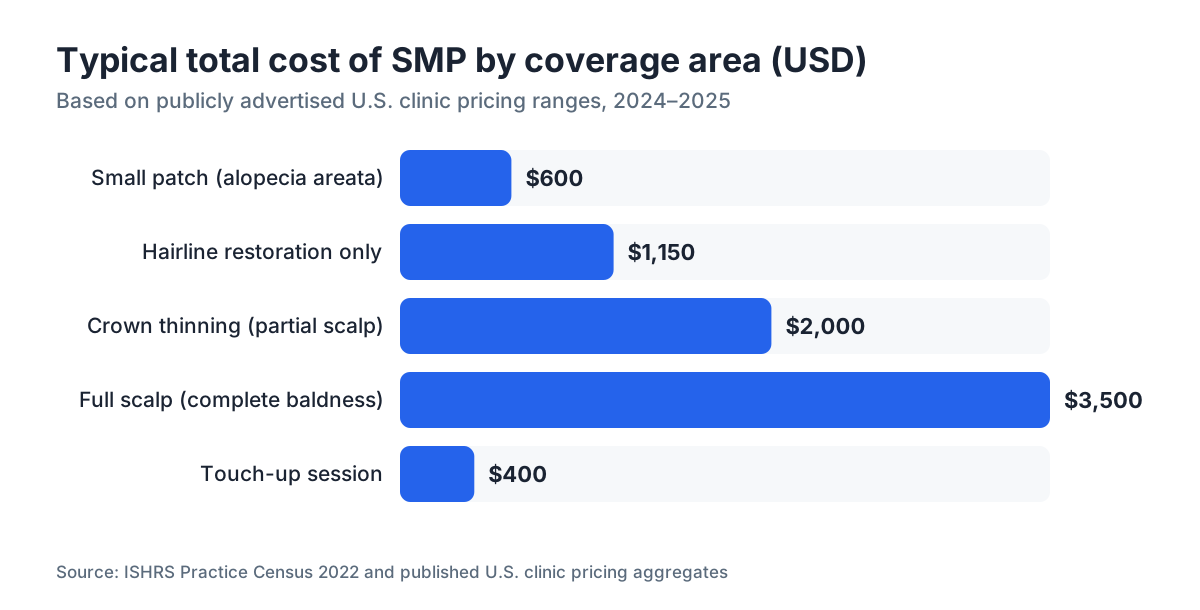
Cost tracks the size of the treated area and the provider's pricing model. Most practitioners charge per session or as a total package for the full job.
| Coverage area | Typical total cost (USD) |
|---|---|
| Small patch (alopecia areata spot) | $400 to $800 |
| Hairline restoration only | $800 to $1,500 |
| Crown thinning (partial scalp) | $1,500 to $2,500 |
| Full scalp (complete baldness) | $2,500 to $4,500+ |
| Touch-up session | $200 to $600 |
These ranges come from publicly advertised U.S. SMP clinic pricing and aggregate cost reviews. Individual quotes swing hard by city and practitioner experience. New York, Los Angeles, and London clinics sit at the top of these ranges consistently.
Health insurance in the United States does not cover SMP in most cases. A few insurers have covered it for specific conditions, like alopecia areata after chemotherapy or scarring from burns, but that's the exception and it needs documentation from a dermatologist [4]. Call your insurer directly before you assume anything.
Set it against the alternatives. Finasteride runs roughly $30 to $70 a month, ongoing, so over five years you'd spend $1,800 to $4,200 with no guarantee. Minoxidil for men costs less but is just as indefinite. A hair transplant runs $4,000 to $15,000+ as a one-time surgery [5]. SMP sits in the middle: higher upfront than medication, lower than surgery, and the illusion is immediate rather than gradual.
What are the risks and side effects of SMP?
SMP carries real risks. Anyone who tells you otherwise is selling.
The most common side effect is redness and scalp sensitivity for a few days after each session. It clears up on its own for most people. Some get minor swelling.
Infection is a genuine risk with any procedure that breaks skin. The FDA has noted that tattoo-related infections can come from contaminated inks or non-sterile equipment [1]. Bacteria including nontuberculous mycobacteria have been tied to tattoo procedures. Asking to see autoclave sterilization records and confirming single-use needles isn't paranoid. It's the right question.
Allergic reactions to pigment are uncommon but documented. Because the FDA regulates tattoo inks as cosmetics rather than drugs, pre-market safety testing isn't required [1]. A patch test before a full session is smart, especially if your skin reacts to things.
Scarring is rare when SMP is done right, but possible, particularly on scar tissue from prior surgery or scarring alopecias. Keloid-prone people should be careful.
The biggest non-medical risk is bad aesthetics. A poorly done hairline looks fake and is hard to undo. Removal means laser tattoo removal: multiple sessions, painful, expensive (roughly $200 to $500 per session), and it may not clear the pigment fully. Picking a technician on before-and-after photos of healed results, not fresh ones, is the single most protective move you can make.
Is SMP better than a hair transplant for alopecia?
They solve different problems, so a head-to-head is only half-useful. People ask constantly, so here's the honest take.
A hair transplant moves living follicles from a donor area to a bald one. When it goes well you get real hair that grows, feels normal, and lasts. The trade-off is heavy: surgery, anesthesia, weeks of recovery, visible donor-area scarring (less with FUE than FUT), and cost in the $4,000 to $15,000+ range [5]. Transplants also need enough donor hair, which people with diffuse or scarring alopecias may not have.
SMP needs no surgery, no recovery beyond a few days of sensitivity, costs less in most cases, and works even with no usable donor hair. The trade-off is that it's an illusion, not real hair. You're committed to either keeping your head shaved close (so existing hair matches the pigment) or styling around the contrast.
For a lot of people with heavy hair loss, the honest answer is that SMP works better as a standalone, or as a complement to a transplant filling in density between grafts, than as a straight replacement. For alopecia areata patients whose patches might regrow, SMP alone is often the cleaner call.
If you're early in your hair loss and still have good options, finasteride and minoxidil together are the most evidence-supported way to slow androgenetic alopecia before you consider SMP or surgery [6].
Does SMP work for women with alopecia?
Yes, but the technique differs a lot from what's done for men.
Men with pattern baldness use SMP to fake a shaved head: a uniform field of tiny dots across the scalp. Women with hair loss usually still have real length and want to keep it. Apply SMP the same way and you'd create visible contrast between the dots and the longer hair around them.
For women, SMP works best as a density technique. The technician places pigment between existing hairs along a widening part or a thinning crown, making the scalp show through less. That needs precise matching to the person's hair color and a lighter touch than full-coverage work. Done well, it makes a visible part look noticeably fuller.
Women with complete or near-complete loss, whether from alopecia totalis, chemotherapy aftermath, or advanced androgenetic alopecia, can use the same full-coverage approach as men.
The American Academy of Dermatology notes that women are often undertreated for hair loss compared with men, partly because fewer clinical trials focus on female participants [2]. SMP is one area where the evidence for women specifically is thin. Most published data lumps all patients together or focuses on male pattern baldness. If you want to understand what causes hair loss in the first place, that's useful context before deciding on any procedure.
How do you find a qualified SMP practitioner?
This is where most people underinvest their time, and it's the variable that moves the outcome most.
SMP isn't regulated uniformly across the United States. Some states require a tattoo artist license. Others have no SMP-specific licensing at all. That means someone can legally offer SMP with minimal training in a lot of places. Your state's cosmetology or tattoo regulation board is the starting point.
What to look for:
- A portfolio of healed results, at least 12 months post-treatment, over fresh session photos. Fresh SMP always looks sharper than it will long-term.
- Experience with your alopecia type specifically. Covering an alopecia areata patch is a different job from covering a Norwood 6 scalp.
- Transparency about pigment brands and needle gauges. Good practitioners will tell you what they use.
- A real consultation that covers your medical history, medications, and skin type before you book.
- Reviews that mention second and third session experiences, since that's when the work gets tested.
Skipping the cheapest option is genuinely good advice here. Correcting or removing bad SMP often costs more than the original job did.
If you want a starting point to understand your own hair loss pattern before booking, the free AI scan at MyHairline gives you a baseline read on your hairline and thinning areas. Useful context to bring to any practitioner.
What does SMP aftercare involve?
Aftercare is simple but strict for the first two weeks.
First four days after each session: no heavy sweating (so no hard exercise), no swimming, no direct sun on the scalp, no washing the scalp. The pigment is setting and the skin is healing. Disturbing this phase is the most common cause of uneven fading.
Days four through ten: gentle washing with lukewarm water and a mild, fragrance-free cleanser. Pat dry, don't rub. Skip harsh shampoos and exfoliants.
After two weeks: daily SPF on the scalp for anyone spending time outdoors. This is the most important long-term step and the one people skip most. UV is the main driver of early fading.
Moisturizing the scalp regularly keeps the pigment looking sharp. Dry, flaky skin makes SMP look less defined.
Some practitioners suggest holding off on scalp minoxidil around sessions, though the evidence on that specific interaction is thin. If you use minoxidil for men or oral minoxidil alongside SMP, work out the timing with your practitioner and your dermatologist. The broader minoxidil side effect picture is covered at minoxidil side effects.
Can SMP be reversed or removed?
It can be removed, but not easily and not cheaply.
Laser tattoo removal is the main method. The laser targets pigment particles and breaks them down so the body can clear them. SMP pigment, sitting shallower than traditional ink, theoretically responds faster, but the real session count runs from three to eight or more depending on pigment color, density, and skin tone [7].
Darker pigments (black, dark gray) respond better to the most common laser wavelengths. Lighter, skin-tone-matching pigments used in some SMP work are harder to remove without risking hypopigmentation, meaning spots that end up lighter than the skin around them.
Cost per removal session runs roughly $200 to $500, putting full removal of dense SMP at $600 to $4,000+ on top of what you already paid.
That's the clearest reason to treat your practitioner choice as high stakes, not an experiment. Reversal is real, but it's slow and expensive.
How does SMP compare to other non-surgical hair loss options?
There's a spectrum of options that skip surgery, and they aim at different goals.
Medications: Finasteride and minoxidil are the two FDA-approved medications for androgenetic alopecia [6]. They slow or partly reverse hair loss but need ongoing use, don't work for everyone, and carry documented side effects. DHT blockers like finasteride hit the hormonal root of pattern loss. SMP does nothing about the biology, but it has no systemic side effects either.
Hair fibers and concealers: Products like Toppik drop colored keratin fibers on the scalp that cling to existing hairs. Cheap ($25 to $50 a bottle), good in photos, but they wash out with every shower and don't work on fully bald scalp. SMP is permanent (or semi-permanent) and waterproof by comparison.
Hairpieces and wigs: High-quality hairpieces can look excellent and are fully reversible. They also need daily maintenance, adhesives or clips that stress existing hair, and replacement every one to two years at $300 to $3,000+ depending on quality. Some people with alopecia love the flexibility. Others find SMP lower-maintenance.
Hair loss supplements: Biotin, saw palmetto, and various blends get marketed hard but have minimal peer-reviewed evidence for most types of alopecia [8]. Low-risk, low-cost, and not to be confused with treatments that have real trial data.
SMP holds a spot the others don't: no systemic effects, immediate visual result, no daily maintenance after healing, and it works no matter how much hair is left.
What does the research actually say about SMP outcomes?
The evidence base for SMP is thinner than practitioners often imply. It's not zero. It's mostly observational studies and case series, not randomized controlled trials.
A 2020 review in the Journal of Cosmetic Dermatology looked at SMP outcomes across several published case series and found high patient satisfaction, typically above 80%, particularly for post-chemotherapy alopecia and androgenetic alopecia [3]. The same review flagged wide variability in technique, pigment, and practitioner training across studies, which makes generalizing hard.
A case series in the International Journal of Trichology documented SMP in patients with scarring alopecias and found it effective for camouflage, with color mismatch requiring touch-ups as the main complication [9].
No large randomized trial comparing SMP against a control or against other cosmetic options has been published as of mid-2026, as far as the public literature shows. The American Academy of Dermatology has not issued specific clinical guidelines on SMP for alopecia, though it appears in some patient education materials [2].
Honest summary: SMP has real-world evidence of cosmetic effectiveness and good patient satisfaction, but the trial-level evidence that would let you make apples-to-apples comparisons doesn't exist yet. That's no reason to avoid it. It is a reason to set expectations off the practitioner's own client portfolio, not off clinical trial data.
Sources
- U.S. Food and Drug Administration, Tattoos & Permanent Makeup
- American Academy of Dermatology, Hair Loss in Women
- Journal of Cosmetic Dermatology, Scalp Micropigmentation Review 2020
- U.S. Centers for Medicare & Medicaid Services, Coverage Determinations
- International Society of Hair Restoration Surgery, Practice Census 2022
- U.S. Food and Drug Administration, Propecia (finasteride) Label and Rogaine (minoxidil) Label
- American Society for Dermatologic Surgery, Laser Tattoo Removal
- Journal of the American Academy of Dermatology, Evidence-Based Treatments for Alopecia
- International Journal of Trichology, SMP in Scarring Alopecias Case Series
- National Alopecia Areata Foundation, Treatment Overview