TL;DR: Topical DHT blockers cut scalp dihydrotestosterone with less systemic hormone disruption than oral finasteride, in theory. Ketoconazole shampoo has the most clinical support among over-the-counter options. RU58841 shows promising animal data but has no FDA approval and no long-term human safety studies. None of these cure hair loss. Check the evidence before you spend a dollar.
What is a topical DHT blocker and how does it work?
Dihydrotestosterone (DHT) is the hormone behind androgenetic alopecia, the most common form of hair loss in both men and women. [1] It binds to androgen receptors in genetically sensitive follicles and shrinks them over time, producing thinner, shorter hairs until the follicle stops making visible hair at all.
A topical DHT blocker is any compound you apply to the scalp that either blocks 5-alpha-reductase (the enzyme that converts testosterone into DHT), blocks the androgen receptor so DHT can't bind, or does both. The appeal is simple. Hit the scalp, spare the rest of the body.
Oral 5-alpha-reductase inhibitors like finasteride suppress DHT everywhere, which works but also lowers DHT in tissues where it does useful things. A topical route, in theory, concentrates the effect at the follicle and limits the signal reaching the pituitary, testes, and liver. Whether that theory survives contact with reality depends entirely on the compound and how well it stays local after it soaks in.
Here's the part the marketing hides. "Topical DHT blocker" is a sales category as much as a pharmacology one. A few products under this label have real mechanistic data. Others contain ingredients with no plausible way to touch DHT at the follicle. The rest of this article sticks to compounds with at least some peer-reviewed evidence.
Which topical DHT blockers have real clinical evidence?
Fewer than the supplement industry wants you to believe. Here's what the literature actually shows for the main candidates.
Ketoconazole (shampoo and topical solution)
Ketoconazole is an antifungal with weak anti-androgen properties. A 1998 randomized trial in the Journal of Dermatology found that ketoconazole 2% shampoo used every 2 to 4 days produced hair density gains comparable to 2% minoxidil over 6 months. [2] A later review supported its effect while calling for larger trials. It's the most evidence-backed topical anti-androgen you can get without a prescription, and it's cheap.
The 2% formulation (Nizoral) is FDA-approved as an antifungal, not for hair loss, so using it for hair is off-label. The 1% version sells over the counter.
RU58841
RU58841 is a non-steroidal anti-androgen developed in the 1980s and 1990s. Animal studies, including a 1994 rodent study and a 1996 macaque study, showed it blocked DHT at the scalp with little systemic androgen suppression. [3] No pharmaceutical company ever ran it through human clinical trials. So there's no approved product and zero long-term human safety data.
RU58841 sells as a research chemical from various online vendors. Quality varies. Nobody does third-party batch testing at scale. People use it and post results on forums. That's anecdote, not evidence.
Topical finasteride (0.25% and 1%)
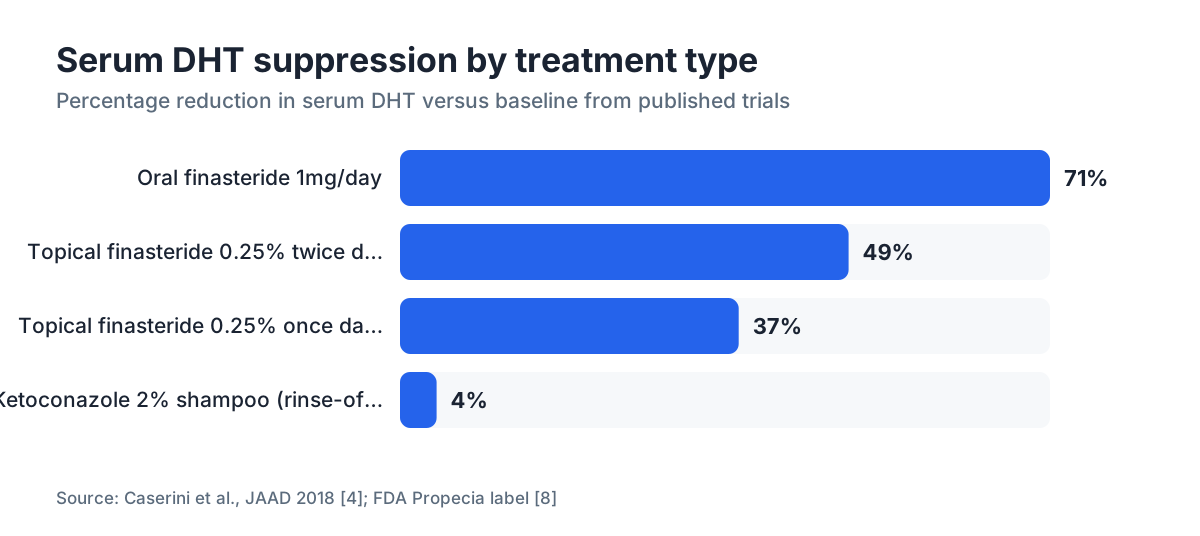
Topical finasteride exists as a real pharmaceutical product. A 2018 trial in the Journal of the American Academy of Dermatology found topical finasteride 0.25% once daily cut scalp DHT by roughly 60% while serum DHT dropped about 37%, versus roughly 71% serum suppression from oral 1mg finasteride. [4] That's a real gap in systemic exposure. Topical finasteride is not FDA-approved in the US (as of mid-2025) but is available by prescription in some countries and through US compounding pharmacies.
Saw palmetto (topical)
Saw palmetto extracts inhibit 5-alpha-reductase in a test tube. Oral saw palmetto has some weak clinical data for hair loss. Topical is a different story: almost no controlled data on how much penetrates or reaches the follicle. One small 2020 study found modest density gains, but the sample was tiny and the methods were shaky. [5] Low risk if you want to try it. Also low evidence.
Caffeine (topical)
Caffeine has in vitro data showing it can counter DHT's braking effect on hair shaft growth in follicle cultures. [6] It's not a DHT blocker in the real sense. It doesn't inhibit 5AR or block androgen receptors. Whether that translates to regrowth in living humans is unproven. Caffeine products won't hurt you, but calling them DHT blockers stretches the word.
For how DHT-blocking mechanisms line up across oral and topical routes, see our guide to DHT blockers.
How does topical finasteride compare to oral finasteride?
This is the comparison most people came here for. Oral finasteride works well for androgenetic alopecia, but its side effect profile (sexual dysfunction, mood changes, the post-finasteride syndrome debate) makes a lot of men hesitate.
The 2018 JAAD trial is the reference to know. [4] It compared topical 0.25% finasteride once daily, topical 0.25% twice daily, and oral 1mg daily. Hair count gains ran roughly similar across all three groups at 24 weeks. Systemic DHT suppression was meaningfully lower in the topical groups.
A 2020 study in Skin Appendage Disorders found topical finasteride could cut scalp DHT meaningfully even at low concentrations, with less systemic hormonal impact than the pill. [7] Smaller trials have generally shown comparable hair metrics with a softer hormonal footprint.
Here's the caveat that matters. "Lower systemic impact" is not "no systemic impact." Topical finasteride still absorbs through skin and still drops serum DHT, just less. Anyone worried about hormonal side effects should talk it through with a physician instead of assuming topical is automatically safe.
For the full side-effect breakdown on the oral route, the finasteride article covers the clinical data. The finasteride and minoxidil guide covers combination strategies.
What about RU58841: is it safe to use?
RU58841 gets the most attention in hair loss forums, and the interest isn't crazy. The animal data is genuinely promising. A 1996 macaque study showed significant hair regrowth with topical RU58841 and very low systemic androgen suppression compared to oral finasteride. [3] If that translated straight to humans, you'd have a near-ideal topical anti-androgen.
Here's the problem. Pharmaceutical developers dropped it. The most commonly cited reason is that long-term animal toxicology studies flagged some cardiac effects, though the public literature is thin on specifics. There are no published human clinical trials. No FDA approval. No safety classification. It sells as a research chemical with no oversight on purity, concentration accuracy, or manufacturing conditions.
People use it anyway. Some report results. Some report nothing. A handful report side effects like fluctuating libido and what they describe as mild systemic effects, which tracks with the fact that any topical anti-androgen that penetrates skin well will send some signal into the bloodstream.
My honest take: if you're risk-tolerant and you've exhausted approved options, I understand the pull. If you're early in your hair loss or have any cardiovascular history, it's not a responsible first move. The risk profile is a genuine blank.
Knowing what's actually driving your hair loss is useful before you pick any treatment. The what causes hair loss article covers the mechanisms.
Can topical DHT blockers cause sexual side effects?
This is the question driving most of the interest in topical routes to begin with. Short answer: topical approaches generally cause fewer sexual side effects than oral finasteride, but "fewer" is not "none."
Oral finasteride 1mg daily suppresses serum DHT by roughly 70% in most men. [8] At that level of systemic suppression, a meaningful minority report sexual dysfunction, including lower libido, erectile dysfunction, and ejaculatory changes. The FDA label lists these effects. [8]
Topical finasteride, in the 2018 trial, cut serum DHT by around 37% at the 0.25% dose. [4] Whether that lower suppression translates into a real drop in sexual side effect rates hasn't been tested in a large, properly powered trial with sexual function as the primary endpoint. That's a real hole in the evidence.
Ketoconazole shampoo, used 2 to 4 times a week and rinsed off, is unlikely to move systemic androgens at all at the doses and contact times used in practice. It's probably the lowest hormonal risk on the list.
RU58841 is harder to judge. Its mechanism (androgen receptor blockade, not 5AR inhibition) is different, and receptor blockers can trigger different hormonal feedback in other tissues. Nobody knows the true sexual side effect rate in humans, because no controlled trial has ever measured it.
If you notice changes in libido, sexual function, or mood after starting any topical anti-androgen, stop and talk to a physician.
How do you use a topical DHT blocker correctly?
Application matters more than most people think, because bad technique either wastes the product or drives up systemic absorption.
Ketoconazole shampoo: Wet your hair, work the shampoo onto the scalp (more than the hair), lather, and leave it on 3 to 5 minutes before rinsing. Trials showing benefit used it 2 to 4 times per week. Daily use isn't better and can dry out the scalp. [2]
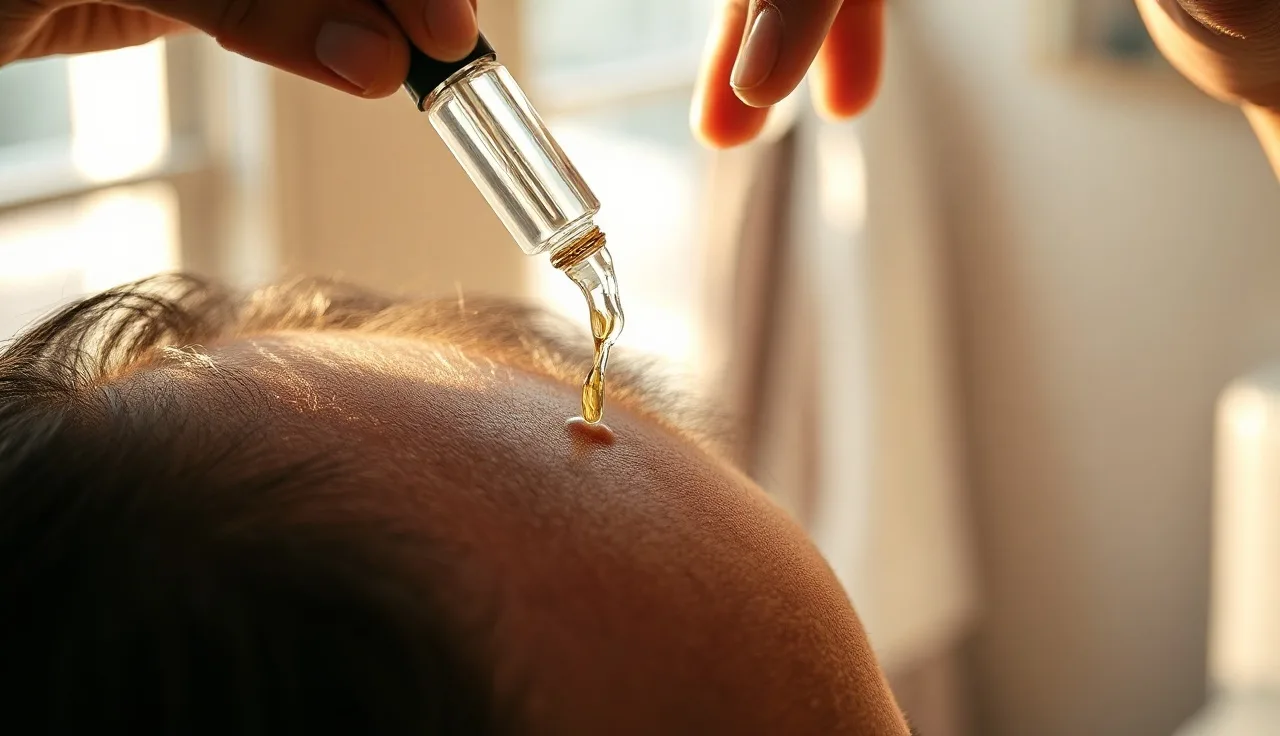
Topical finasteride solution or gel: Apply to a dry or towel-dried scalp. Use fingertips or a dropper to place it on the thinning areas. Don't shampoo for at least 4 hours so it can absorb. Compounded topical finasteride usually comes with instructions specifying 1ml once daily. Follow them. Wash your hands after, and women who could become pregnant should not handle the product (same teratogenicity concern as the oral form).
RU58841: Vendors typically suggest 50mg/ml applied once daily to affected areas. With no oversight, those instructions aren't standardized and the real concentration may not match the label.
Topical saw palmetto or caffeine products: Follow the label. No good evidence says leaving them on longer or applying more often helps.
Rules for any topical: apply to the scalp, not the hair shafts. Part the hair, hit the skin. Don't expect anything in under 3 months. Baseline photos are the only reliable way to track change, because the mirror lies to you day to day.
Want an objective starting point before you begin? MyHairline's free AI scan assesses your current hairline pattern and tracks change over time.
How long does it take to see results from a topical DHT blocker?
Slower than you hope, faster than you fear, and the plateau is real. Plan on 6 months before you judge anything.
Follicles cycle through phases: anagen (growth), catagen (transition), and telogen (rest and shedding). When a DHT blocker stops miniaturization, you don't sprout new hair overnight. You stop further damage and, over time, let shrunken follicles recover and push out thicker shafts again.
In the 6-month ketoconazole trial, density improvements showed up by the end of the study. [2] The topical finasteride trial showed hair count changes at 24 weeks. [4] Most dermatologists want at least 6 months of consistent use before judging a topical, and 12 months for the full picture.
Shedding in the first 1 to 3 months is common and doesn't mean the product is failing. It's a telogen effluvium-like shed: hairs that were on their way out get pushed through the resting phase faster. For why this happens, see the telogen effluvium guide.
After 12 to 18 months, most effective treatments hit a plateau. The goal shifts from regrowth to keeping what you have.
How do topical DHT blockers compare to minoxidil?
Two completely different mechanisms, and they're often stacked together.
Minoxidil is a vasodilator. It improves blood flow to the follicle and stretches the anagen phase. It does not block DHT. It doesn't slow DHT-driven miniaturization. What it does is make the follicles you still have work better for longer. [9]
A topical DHT blocker, if it works, goes at the root cause of androgenetic alopecia directly. In theory that makes it the more durable move. In practice, minoxidil has far stronger clinical trial data for hair count outcomes than most topical DHT blockers do.
The combination makes sense. Minoxidil handles blood flow and follicle activation. A DHT blocker handles the hormonal driver. Trials combining oral finasteride and minoxidil show additive benefit, and there's no pharmacological reason a topical DHT blocker plus minoxidil wouldn't do the same.
For men, the minoxidil for men article covers dosing and application. The minoxidil side effects guide covers what to watch for. Oral minoxidil is another route, covered in the oral minoxidil piece.
Neither approach handles advanced loss alone. Someone at Norwood 5 or beyond who wants real restoration will likely need to consider a hair transplant as part of the plan.
Are over-the-counter topical DHT-blocking products worth buying?
Most of them? No. Here's the reasoning.
The supplement and cosmetic market is stuffed with shampoos, serums, and sprays labeled "DHT blocking" or "DHT fighting." They usually mix saw palmetto extract, pumpkin seed oil, caffeine, biotin, niacin, rosemary oil, and assorted plant extracts. These aren't regulated as drugs by the FDA, so makers don't have to prove they work before selling them. [10]
Rosemary oil gets the most press. A 2015 randomized trial in Skinmed compared rosemary oil to 2% minoxidil and found similar hair count gains at 6 months, though both were modest. [11] That's one small trial, unreplicated at scale. Not nothing, but not strong either.
Pumpkin seed oil taken orally has one small randomized trial (2014, 76 men) showing better hair count than placebo. [12] Topical pumpkin seed oil data for hair loss barely exists.
The honest verdict on OTC "DHT-blocking" products: the handful of ingredients with any human evidence (ketoconazole, and to a lesser degree rosemary oil) are cheap and low-risk. The marketing claims on most premium products run way past the science. Spend $60 a month on a "DHT-blocking shampoo" that's mostly saw palmetto and fragrance and you probably won't be harmed. You also probably won't see much.
For a full supplement breakdown, the hair loss supplements article sorts evidence from wishful thinking.
One more thing. Confirm your hair loss is actually androgenetic before spending on any DHT-targeting treatment. Diffuse thinning from telogen effluvium or a hairline receding from non-androgenetic causes won't respond to DHT blockers. A free hair analysis at MyHairline's AI scan can help you spot which pattern you have.
What does a dermatologist actually recommend for topical DHT blockade?
The dermatologists most cited in the hair loss literature tend to work in tiers.
First line for androgenetic alopecia: FDA-approved minoxidil (topical or oral) plus oral finasteride for men who are good candidates. This is what American Academy of Dermatology guidance supports. [13]
For a patient who wants to minimize systemic finasteride exposure: compounded topical finasteride (typically 0.25 to 1% in a penetration-enhancing vehicle) is an increasingly common recommendation, especially from hair loss specialists. It's off-label in the US but available by prescription through compounding pharmacies.
For a patient who wants to avoid anti-androgens entirely over side effect worries: ketoconazole shampoo as a low-risk add-on, usually paired with minoxidil, is the most defensible OTC regimen.
RU58841 is almost never formally recommended by physicians, for liability and regulatory reasons, even when they know the animal literature. If a doctor is pushing it, treat that as a reason to ask more questions.
Anyone with a receding hairline who's just starting to notice thinning is in the best spot to respond, because they still have living follicles to work with. Wait until loss is advanced and you dramatically shrink what's reversible without surgery.
Topical DHT blocker comparison: what the evidence actually shows
Here's a summary of the main options by evidence quality, mechanism, and practical access.
| Compound | Mechanism | Human trial data | FDA status | Systemic DHT effect | Relative cost |
|---|---|---|---|---|---|
| Ketoconazole 2% shampoo | Weak AR / antifungal | Yes (small RCTs) [2] | Approved as antifungal, off-label for hair | Minimal (rinse-off) | Low (~$15-25/bottle) |
| Topical finasteride 0.25-1% | 5AR inhibition | Yes (RCTs) [4] | Not FDA-approved; compounded | Moderate (serum DHT -37%) | Medium ($50-120/month compounded) |
| RU58841 | AR blockade | Animal only [3] | No approval | Unknown in humans | Medium-high ($40-80/month from vendors) |
| Saw palmetto topical | Weak 5AR inhibition | Very limited [5] | Dietary supplement | Likely minimal | Low-medium |
| Rosemary oil topical | Proposed circulatory / weak anti-androgen | 1 small RCT [11] | Dietary supplement | Minimal | Low |
| Caffeine topical | In vitro anti-DHT effect on follicles | No convincing RCT | Cosmetic ingredient | None | Low |
The pattern is blunt: stronger evidence tracks with stronger pharmaceutical regulation and more systemic effect. The cleanest OTC pick is ketoconazole. The best evidence-to-benefit ratio for someone who wants a serious intervention is compounded topical finasteride, with a physician in the loop.
Sources
- American Academy of Dermatology, Hair Loss Overview
- Piérard-Franchimont C et al., Journal of Dermatology 1998 -- Ketoconazole 2% shampoo vs minoxidil 2% for AGA
- Battmann T et al., Journal of Steroid Biochemistry and Molecular Biology 1994 / Rushton DH et al. macaque study 1996 -- RU58841 topical anti-androgen data
- Caserini M et al., Journal of the American Academy of Dermatology 2018 -- topical finasteride 0.25% vs oral finasteride 1mg
- Wessagowit V et al., Journal of the Medical Association of Thailand 2020 -- topical saw palmetto pilot study
- Fischer TW et al., International Journal of Dermatology 2007 -- caffeine and DHT on hair follicles in vitro
- Mazzarella GF et al., Skin Appendage Disorders 2020 -- topical finasteride scalp DHT reduction
- FDA, Propecia (finasteride 1mg) prescribing information
- MedlinePlus (US National Library of Medicine), Minoxidil Topical
- FDA, Dietary Supplements
- Panahi Y et al., Skinmed 2015 -- rosemary oil vs minoxidil 2% RCT for androgenetic alopecia
- Cho YH et al., Evidence-Based Complementary and Alternative Medicine 2014 -- pumpkin seed oil oral RCT for hair loss
- American Academy of Dermatology, Hair Loss Treatment