
TL;DR: GLP-1 receptor agonists (semaglutide, tirzepatide, liraglutide) cause telogen effluvium in roughly 25 to 33% of people who use them for weight loss. The rapid calorie restriction and steep body-weight loss drive it, not the drug itself. Shedding usually starts 2 to 4 months after weight loss begins and clears on its own within 6 to 12 months, no need to stop the medication.
What is telogen effluvium and why do GLP-1 drugs cause it?
Telogen effluvium is diffuse, temporary shedding that happens when a large share of your follicles all shift from the growth phase (anagen) into the resting phase (telogen) at once, then let go. Normally, only 5 to 15% of scalp follicles sit in telogen at any given moment. A big physical or metabolic shock can drive that toward 30 to 50%, and roughly 2 to 4 months later those resting hairs reach the end of their cycle and fall out all together [1].
GLP-1 receptor agonists, the class that includes semaglutide (Ozempic, Wegovy), tirzepatide (Mounjaro, Zepbound), and liraglutide (Victoza, Saxenda), are very good at dropping body weight. That is exactly the problem for a follicle. The hair follicle is one of the most metabolically demanding structures you have. When calorie intake falls off a cliff and body weight drops fast, the body treats hair growth as optional and reroutes energy toward organs it needs to keep you alive [2].
The drug is not directly toxic to follicles. The real culprits are the downstream effects of GLP-1 therapy: fast caloric restriction, protein and micronutrient gaps, and the stress of shedding a big chunk of body weight in a short window. Bariatric surgery patients follow a similar weight-loss curve, and they report hair shedding rates of 57 to 75% after surgery. That tells you how hard fast weight loss hits follicle cycling [3].
For the fuller picture on telogen effluvium outside the GLP-1 context, including how it differs from androgenetic alopecia, that article covers diagnosis in depth.
How common is hair loss with Ozempic, Wegovy, and other GLP-1 medications?
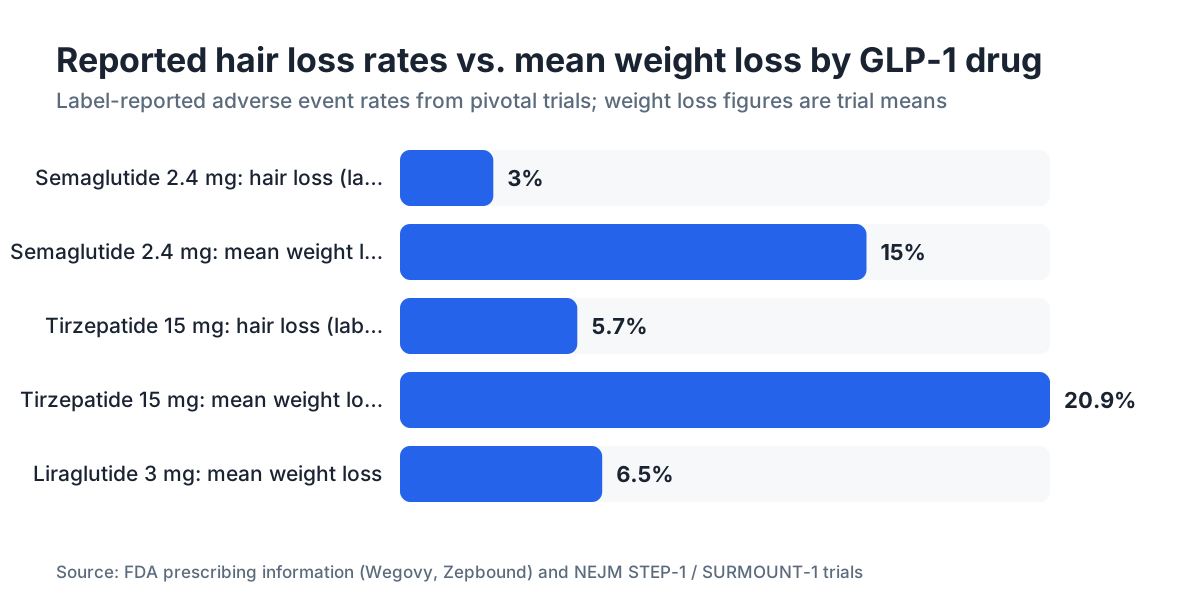
Short answer: the label numbers say about 3 to 6%, but real-world rates run far higher, likely 25 to 33% in people losing more than 10% of their body weight. The FDA prescribing information for semaglutide 2.4 mg (Wegovy) lists alopecia in roughly 3% of participants across the STEP trials [4]. Real-world reporting suggests the true figure is much higher once you account for under-reporting and for patients losing weight harder than trial participants did.
A 2023 analysis of the FDA Adverse Event Reporting System (FAERS) found hair loss reports for semaglutide were disproportionately high compared with other diabetes medications. The authors calculated a reporting odds ratio that pointed to a real signal, while noting that FAERS catches only a fraction of actual cases [5].
The SURMOUNT trials for tirzepatide (Zepbound, Mounjaro) reported hair loss in about 5.7% of participants at the highest dose (15 mg), again from the label [11]. Survey data from patient communities and clinic experience put the number much higher, somewhere in that 25 to 33% band for people losing more than 10% of body weight. Nobody has clean data here. The label rates are a floor, not a ceiling.
| Drug | Weight loss in trials | Hair loss (label rate) | Estimated real-world range |
|---|---|---|---|
| Semaglutide 2.4 mg (Wegovy) | ~15% body weight | ~3% | 25 to 33% |
| Tirzepatide 15 mg (Zepbound) | ~20 to 22% body weight | ~5.7% | Likely similar or higher |
| Liraglutide 3 mg (Saxenda) | ~5 to 8% body weight | Not listed | Lower, tracks smaller weight loss |
| Bariatric surgery (comparison) | 25 to 35% body weight | 57 to 75% | Well documented in literature |
The pattern holds across the board: more weight loss, more shedding.
What causes the hair loss, the drug itself or the weight loss?
The weight loss, almost entirely. This matters because the answer changes what you do about it.
The evidence points to the metabolic fallout of rapid weight loss rather than any direct drug effect on follicles. Three lines support that.
First, bariatric surgery patients who never touch a GLP-1 drug shed at much higher rates than GLP-1 trial participants, and the severity tracks how fast and how much weight comes off, not any medication [3].
Second, people on GLP-1 drugs for type 2 diabetes, where doses are lower and weight loss is modest, report much less shedding than people on higher weight-loss doses.
Third, the timeline fits telogen effluvium exactly. Shedding usually starts 2 to 4 months after the trigger (the stretch of rapid weight loss and calorie restriction), which is the lag you would predict if follicles got pushed into telogen at the onset of energy restriction and then dropped when telogen ended [1].
Here is what happens at the follicle. Severe caloric restriction drops circulating insulin-like growth factor 1 (IGF-1), iron, and zinc, all of which the follicle needs to hold anagen. Low protein intake makes it worse, because hair is roughly 95% keratin and the follicle cannot keep building the shaft without dietary protein feeding it. One study of post-bariatric patients found that serum ferritin below 30 ng/mL was independently tied to worse shedding [6].
GLP-1 drugs also suppress appetite hard, which can starve people of protein even when they are trying to eat enough. That is a genuinely underappreciated contributor. Someone eating 800 to 1,000 calories a day because the drug wiped out their hunger may be getting only 40 to 50 grams of protein, well under the 1.2 to 1.6 g/kg of body weight recommended for weight loss patients trying to hold onto muscle and hair.
When does GLP-1 hair loss start, and how long does it last?
Shedding starts roughly 2 to 4 months after rapid weight loss begins, peaks around months 3 to 6, and clears within 6 to 12 months for most people, no change to the medication required. The lag exists because it takes that long for follicles pushed into telogen to finish resting and release the shaft. Most people notice it in the shower, on the pillow, or in the brush, and they are alarmed because the timing does not obviously connect to what set it off months earlier.
Shedding usually peaks around months 3 to 6, then tapers as follicles cycle back into anagen. For most people on GLP-1 therapy, it resolves within 6 to 12 months without touching the medication, as long as the trigger (acute severe energy restriction) has settled down [1].
Recovery hinges on whether the nutritional gaps that started the whole thing get fixed. If you settle at a lower calorie intake that still covers protein, iron, and zinc, follicles cycle back into anagen and density recovers over the next 6 to 12 months. If the gaps stick around because appetite suppression stays extreme and diet quality is poor, the shedding can turn chronic.
One caveat matters. If you also have underlying androgenetic alopecia (male or female pattern hair loss), telogen effluvium can expose or speed up that process. The follicles that bounce back are the ones not programmed for miniaturization. The miniaturized ones may not fully return. That is why some people feel their hair never quite came back after a GLP-1 shedding episode, when what actually happened is that pre-existing pattern loss got revealed.
How do you know if it's telogen effluvium from GLP-1 or something else?
Get the diagnosis right before you spend a dollar on treatment. Telogen effluvium from a GLP-1 drug looks different from several other kinds of hair loss that happen to show up around the time people start these medications.
Classic telogen effluvium looks like this: diffuse shedding across the whole scalp, not a receding hairline or a widening part. Pull a bundle of 40 to 60 hairs gently and you dislodge 6 or more in telogen phase (spot them by the small white bulb at the root, versus the pigmented bulb of an anagen hair). No scalp inflammation, scaling, or scarring.
Androgenetic alopecia looks different: patterned thinning at the temples or crown (men) or along the part line (women), miniaturized hairs, and no acute shedding episode in the history. What causes hair loss covers that distinction in detail.
Thyroid trouble can also cause diffuse shedding and is worth checking, especially since GLP-1 drugs often get prescribed alongside metabolic syndrome, which can travel with hypothyroidism.
A basic workup when someone on a GLP-1 drug presents with shedding should include a complete blood count, serum ferritin (more useful than hemoglobin, since ferritin drops before anemia shows), thyroid-stimulating hormone, total protein and albumin, zinc, and vitamin D. Low ferritin is the single most common fixable finding. If ferritin is below 30 ng/mL, repleting iron is one of the highest-yield moves you can make, though the evidence for exact ferritin thresholds in hair loss is imperfect [6].
If the pattern looks like both telogen effluvium and androgenetic alopecia, or you just cannot tell, a dermatologist or trichologist can run a dermoscopy or scalp biopsy to sort them out. A free preliminary look at your hairline pattern from MyHairline's AI scan can also help you see whether your shedding is diffuse (telogen effluvium) or patterned (androgenetic alopecia) before a clinic visit.
Should you stop taking the GLP-1 drug if your hair is falling out?
For most people, no.
Stopping the drug will not reverse shedding that is already in motion, because those follicles are already in telogen and will shed no matter what. What stopping does is halt further weight loss, which can ease ongoing follicle disruption if you are still in the acute weight-loss phase. But the call to stop a GLP-1 medication should rest on the full balance of medical benefit against side effects, not hair alone.
The FDA approved semaglutide 2.4 mg and tirzepatide for chronic weight management partly because obesity carries real cardiovascular and metabolic risk. Quitting solely over hair loss, which is usually temporary and self-resolving, may not serve you well. That is a conversation for your prescriber.
There is a saner middle path if you are shedding heavily and still in rapid weight loss: ask your doctor whether a slower titration, a dose reduction, or a short plateau (holding weight steady instead of continuing to lose) might let the follicles restabilize. Slowing the pace of weight loss lowers telogen effluvium severity in bariatric patients, and the same logic carries over here [3].
The other sane path is to go hard on nutrition: get protein to at least 1.2 g/kg of goal body weight per day, correct any documented deficiencies, and ask whether the drug's appetite suppression is quietly leaving you undernourished.
What actually helps with hair loss from GLP-1 drugs?
Here is an honest ranking, most evidence-backed to least.
Correct the nutritional gaps first. Highest yield, lowest cost. Protein (minimum 1.2 g/kg body weight), iron (supplement only if ferritin is confirmed low, since excess iron carries its own risks), zinc, and vitamin D are the four to check and fix. A registered dietitian who works with weight loss patients earns their fee here.
Minoxidil. Topical minoxidil is FDA-approved for androgenetic alopecia, and it has a well-documented off-label effect in telogen effluvium: it shortens telogen and stretches anagen, which can cut the duration of shedding. The 2% and 5% solutions and foams are over the counter. Low-dose oral minoxidil (0.625 to 2.5 mg/day in women, 2.5 to 5 mg/day in men) is used more and more. Minoxidil for men and oral minoxidil cover the evidence and side effects. Read up on minoxidil side effects before you start, since some people shed more in the first few weeks.
Finasteride or other DHT blockers. Only relevant if underlying androgenetic alopecia is getting unmasked alongside the telogen effluvium. Finasteride does nothing for telogen effluvium directly. If you have a combined picture, finasteride or a DHT blocker is worth raising with a dermatologist for the pattern-loss part. Finasteride and minoxidil together are the most evidence-backed combination for androgenetic alopecia.
Hair loss supplements. Biotin gets marketed the hardest, but the evidence backs supplementation only in people with documented biotin deficiency, which is rare [7]. Excess biotin can also throw off thyroid lab tests, which matters a lot in a population that may already have thyroid questions. Hair loss supplements breaks down what has evidence and what does not.
Platelet-rich plasma (PRP) and microneedling. Some dermatologists use these for telogen effluvium. The evidence is thinner than for androgenetic alopecia, and neither is cheap. Not my first pick while nutritional gaps are still open.
Hair transplant. Wrong tool for active telogen effluvium. A hair transplant belongs on the table only after shedding has fully stabilized and only if there is permanent miniaturization, not temporary shedding. A surgeon who pushes a transplant while telogen effluvium is active is giving bad advice.
Does GLP-1 hair loss grow back?
Yes, for most people, as long as the underlying cause gets handled.
Telogen effluvium is by definition a temporary disruption of follicle cycling, not permanent structural loss. Once the trigger (acute rapid weight loss plus nutritional depletion) settles, follicles that got pushed into telogen re-enter anagen. Regrowth usually becomes noticeable 3 to 6 months after shedding starts to slow, and most people see real density recovery within 12 months [1].
The catch: full recovery assumes the follicles were healthy to begin with (no pre-existing miniaturization), the nutritional gaps are corrected, and the trigger does not run on indefinitely. For people already in early androgenetic alopecia, the follicles caught up in pattern loss may not fully bounce back, and the GLP-1 episode can effectively fast-forward the visible timeline of that condition.
One more realistic point. If you plan to keep losing weight on a GLP-1 drug past the first episode (say you want to drop a total of 30% of body weight over two years), you may cycle through multiple or prolonged bouts of telogen effluvium until weight loss plateaus and diet quality improves. Recovery is real, but the follicle environment has to actually stabilize first.
Are some GLP-1 drugs worse for hair loss than others?
The evidence says the amount of shedding tracks the magnitude and speed of weight loss far more than which drug you take.
Tirzepatide (Zepbound, Mounjaro) produces greater mean weight loss than semaglutide in head-to-head data, roughly 20 to 22% of body weight versus about 15% with semaglutide 2.4 mg in their respective trials [8][12]. If that holds in practice, tirzepatide might on average cause more telogen effluvium, simply because more weight comes off faster. But individual variation is huge. Someone who loses slowly on tirzepatide through gradual titration may shed less than someone dropping weight fast on a lower semaglutide dose.
Liraglutide (Saxenda) at 3 mg produces more modest weight loss, roughly 5 to 8% of body weight in trials, and clinically it seems to carry a lower rate of serious shedding, which fits the weight-loss-magnitude theory.
Oral semaglutide (Rybelsus) is not approved for weight loss at current doses and has not been well studied for this side effect in a weight-loss population.
Bottom line: the drug on the label matters less than your personal weight loss curve. If you are dropping more than 1 to 1.5 kg a week consistently, your follicles are under more stress, whichever GLP-1 you take.
What do dermatologists actually recommend for GLP-1 hair loss?
The American Academy of Dermatology has not issued a specific guideline on GLP-1-related telogen effluvium yet, though the topic has come up in continuing medical education and society publications through 2024 [9]. The working consensus among dermatologists who see this lines up with what the broader telogen effluvium literature would predict.
Priority one: rule out other causes. A thyroid panel and ferritin come first. Low ferritin is fixable and may shorten the shedding.
Priority two: get protein up. Many GLP-1 prescribers now counsel patients to track protein and hit at least 100 grams a day during active weight loss, partly for muscle and partly for hair.
Priority three: do not panic-prescribe. Hair loss dermatologists generally hold off on aggressive interventions in the first 3 to 4 months, since the natural course is self-limited for most people and the risk-to-benefit of stacking treatments before you know the diagnosis is bad.
Priority four: if minoxidil goes on, start it sooner rather than later. The earlier you shorten telogen and restart anagen, the less total density you lose during the episode. The evidence for minoxidil in telogen effluvium specifically is modest but consistent [10].
Priority five: refer to a hair loss specialist if shedding runs past 6 to 9 months or if a patterned component is suspected. Chronic telogen effluvium lasting more than 6 months needs a deeper workup.
Can you prevent telogen effluvium when starting a GLP-1 drug?
You cannot guarantee prevention, but you can cut the risk and severity in a real way.
The single biggest preventive move is not losing weight faster than your body can absorb. A rate of 0.5 to 1 kg per week is widely cited as better for keeping lean mass and easing metabolic stress on follicles. GLP-1 drugs can push weight off faster than that, especially in the early months. Slowing titration on purpose, even if a faster ramp is tolerable in terms of GI side effects, may protect follicles.
Protein is the second lever. Starting a high-protein eating pattern before and during GLP-1 therapy is one of the most practical steps you can take. Aim for 1.2 to 1.6 g/kg of goal body weight per day, spread across meals, to protect both muscle and the follicle's anagen phase. That is harder than it sounds when the drug is killing your appetite, which is where protein shakes and protein-dense foods (Greek yogurt, eggs, cottage cheese, lean meats) earn their place.
Baseline labs before starting are worth pushing for: ferritin, thyroid, vitamin D, zinc. Fixing pre-existing deficiencies before weight loss begins lowers the total hit to your follicles.
If you have a personal or family history of significant androgenetic alopecia and you are starting a GLP-1 drug, a proactive dermatologist visit before shedding starts is reasonable. A baseline read on your current hair pattern, maybe including a receding hairline check, gives you objective data to compare against if things shift.
Sources
- StatPearls (NCBI Bookshelf), Telogen Effluvium
- Journal of Investigative Dermatology, Paus et al., hair follicle energy metabolism review
- Obesity Surgery journal, systematic review of hair loss after bariatric surgery
- FDA, Wegovy (semaglutide 2.4 mg) prescribing information
- Journal of the American Academy of Dermatology, FAERS disproportionality analysis semaglutide alopecia 2023
- Dermatology and Therapy, serum ferritin and hair loss in post-bariatric patients
- NIH Office of Dietary Supplements, Biotin Fact Sheet for Health Professionals
- NEJM, SURMOUNT-1 trial, tirzepatide for obesity, 2022
- American Academy of Dermatology, hair loss patient resource
- Journal of the American Academy of Dermatology, minoxidil for non-scarring alopecia including telogen effluvium
- FDA, Zepbound (tirzepatide) prescribing information
- NEJM, STEP-1 trial, semaglutide 2.4 mg for obesity, 2021