

TL;DR: Telogen effluvium (TE) can push eyebrow follicles into a resting phase, causing noticeable thinning or patchy loss. Most cases clear within 3 to 6 months once the trigger is gone. Thyroid disease, crash dieting, and postpartum hormone shifts are the usual culprits. See a dermatologist to rule out alopecia areata and hypothyroidism before you treat anything.
What is telogen effluvium, and can it actually affect eyebrows?
Telogen effluvium is the condition most people know for dropping handfuls of scalp hair two to three months after a major physical or emotional shock. Here's the part that surprises them: the same mechanism hits eyebrow follicles too.
Start with the biology. Every follicle, on your scalp, brow ridge, or eyelash line, moves through three phases: anagen (active growth), catagen (transition), and telogen (rest and shedding). Eyebrow follicles spend a much shorter stretch in anagen, roughly 4 to 6 months, while scalp follicles can stay in anagen for 2 to 7 years [1]. That short growth window is why your brows never reach your shoulders. It also means the brow follicle pool feels systemic stress harder, because fewer follicles are actively growing to absorb the hit.
A big stressor, nutritional, hormonal, or psychological, sends a signal that fast-forwards follicles from anagen into telogen. On the scalp, that produces the classic TE shed of 200 to 300 hairs a day instead of the normal 50 to 100 [2]. In the brows, the absolute number is tiny by comparison. But each brow holds only a few hundred follicles, so losing 20 to 30 extra hairs over a few weeks visibly thins the arch or outer tail.
So yes. Telogen effluvium genuinely thins eyebrows, and it's not a fringe case.
How common is eyebrow thinning from telogen effluvium?
Honest answer: nobody has reliable population-level data on TE-related eyebrow loss. Most TE research tracks scalp hair, because that's what sends people to the clinic. Brow thinning gets noted in the chart as a side complaint and rarely counted.
What we do know is that TE-pattern brow thinning shows up often in certain high-risk groups. People with untreated hypothyroidism classically lose the outer third of the eyebrow, a sign recognized enough to live in medical school mnemonics [3]. Postpartum women, who see estrogen drop sharply after delivery, commonly report brow thinning alongside scalp shedding, usually peaking 3 to 4 months after birth [4]. People recovering from COVID-19 reported hair and brow loss at rates high enough to prompt published case series, though the numbers swing widely by study population.
Among patients who come in specifically for eyebrow loss, alopecia areata is diagnosed more often than TE [5]. That matters because the two need different workups and different treatments. If your brows are thinning, you can't assume TE without ruling out the alternatives.
What causes telogen effluvium in eyebrows?
The triggers mostly match the ones behind scalp TE. A few deserve extra attention because they hit brows harder or faster.
Thyroid dysfunction. This is the big one for eyebrows. Both hypothyroidism and, less often, hyperthyroidism disrupt the hair cycle. Outer-third brow loss (the Hertoghe sign) is a classic hypothyroid marker [3]. If you're losing brow hair, a TSH test belongs near the top of your list.
Nutritional deficiencies. Iron-deficiency anemia is probably the most studied nutritional driver of TE overall [2]. Low ferritin specifically is tied to increased shedding even when hemoglobin still reads normal. Zinc and essential fatty acid deficiencies have also been linked to brow thinning. Biotin gets blamed too, but the evidence there is weaker than the supplement industry claims. Crash dieting is a reliable trigger because it cuts calories, protein, and micronutrients all at once.
Postpartum hormone shifts. After delivery, estrogen falls fast and more follicles enter telogen together. On the scalp this reads as postpartum hair loss. Brows go along for the ride, usually with a 2 to 4 month lag [4].
Stress, physical and emotional. Surgery, a severe illness (high fever counts), and major emotional trauma can all start a telogen shift. The shed usually appears 6 to 16 weeks after the event, which is why people blame something happening now instead of something two months back.
Medications. Anticoagulants, retinoids, certain antidepressants, and hormonal drugs (including stopping oral contraceptives) are known TE triggers [6]. Some effects are dose-dependent. Started a new medication 2 to 4 months before your brows thinned? Flag it to whoever prescribed it.
Skin problems at the brow itself. Seborrheic dermatitis, contact dermatitis from brow products, and repeated threading or waxing trauma can each create a local version of follicle stress. It isn't systemic TE, but it looks similar and overlaps in mechanism.
Getting a handle on what causes hair loss more broadly helps you sort which bucket you're in before you see a doctor.
How do you tell telogen effluvium apart from other causes of eyebrow loss?
This is where a real diagnosis earns its keep. Eyebrow thinning has a long differential list, and the treatments diverge fast.
| Condition | Pattern | Scalp involvement | Key diagnostic clue |
|---|---|---|---|
| Telogen effluvium | Diffuse thinning, often worse at outer tail | Usually yes, diffuse scalp shed | Recent major stressor, nutritional deficit, or medication change |
| Alopecia areata | Patchy, can be complete brow loss | May have circular patches on scalp | Exclamation-mark hairs at patch edges on dermoscopy |
| Hypothyroidism | Outer third loss (Hertoghe sign) | Diffuse scalp thinning | Elevated TSH, other hypothyroid symptoms |
| Frontal fibrosing alopecia | Progressive recession of brow hairline | Frontal scalp recession | Perifollicular erythema, mainly postmenopausal women |
| Contact dermatitis | Diffuse or patchy, with redness or scaling | Usually none | History of new brow product, skin reactivity |
| Trichotillomania | Irregular, broken hairs, asymmetric | Variable | Behavioral history, broken hairs of mixed lengths |
TE tends to thin diffusely, not carve out a clean bald patch. A well-defined bald spot inside the brow makes alopecia areata the stronger suspect [5]. If recession starts at the brow's own hairline and creeps inward over years, frontal fibrosing alopecia, which scars and doesn't reverse, needs a dermatologist to rule it out [11].
A dermatologist can run dermoscopy, a handheld magnification of the follicle openings, and order bloodwork (TSH, ferritin, CBC, zinc, sometimes ANA) to separate these. You can't reliably self-diagnose brow loss.
What does the timeline for eyebrow TE recovery look like?
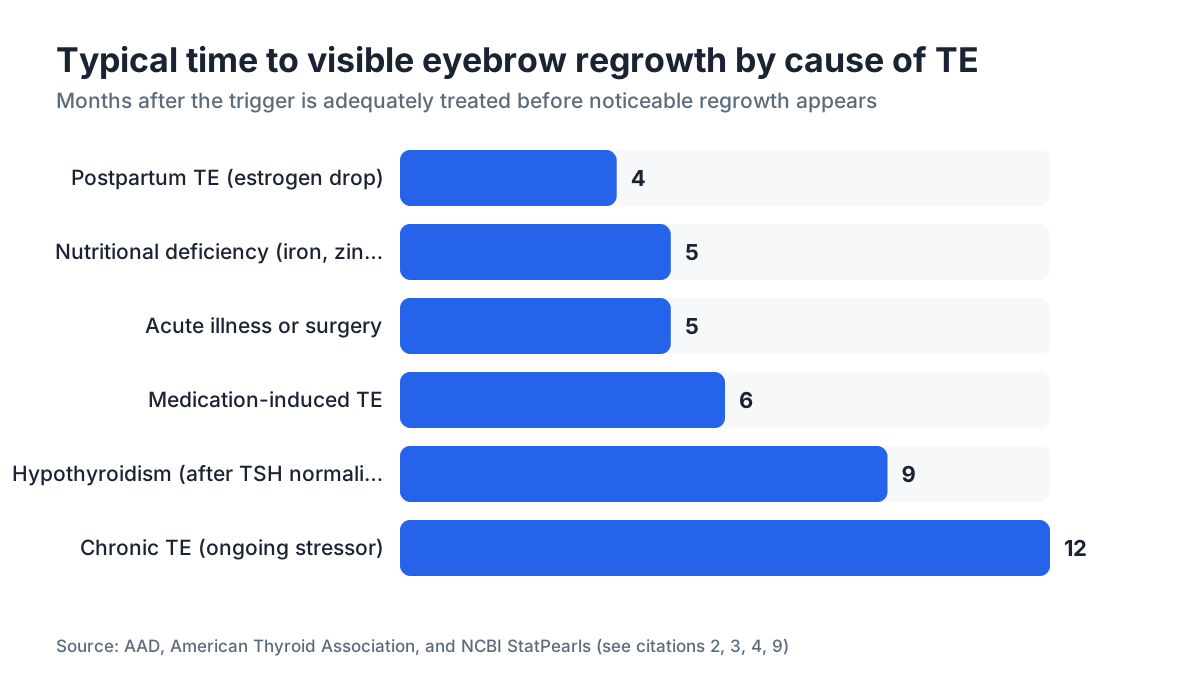
This is the question people actually want answered the day they notice their brows thinning. For acute TE from a single, clear stressor, the shed usually peaks around 3 months after the trigger and slows from there [2]. Regrowth starts as new anagen hairs push up. But the eyebrow anagen phase runs only 4 to 6 months, so you're working with a slow-growing structure. Visible improvement usually takes 3 to 6 months after the trigger is resolved. Full recovery can take up to a year.
Chronic TE, roughly defined as shedding past 6 months with no clear resolved trigger, takes longer and may not fully reverse until the underlying cause is treated. Hypothyroid brow loss, for example, usually starts improving within a few months of adequate thyroid hormone, but full restoration can take 6 to 12 months after TSH normalizes [3].
The outer tail of the brow, the part nearest the temple, seems to regrow slower or less completely in some people, especially after a long TE or when a hormonal component is in play. No one has published a solid controlled study on this. So the honest answer is that individual results vary more than any timeline can capture.
What blood tests should you actually get?
Walk into a dermatologist with brow thinning and a reasonable first workup looks like this.
TSH to screen for thyroid disease. Given how tightly thyroid trouble tracks with brow loss, this is the single most useful test.
Ferritin (which tells you more than hemoglobin). Many labs call ferritin "normal" at 12 ng/mL, but hair-focused dermatologists generally want levels above 40 ng/mL, and some prefer above 70 ng/mL, before they rule out iron deficiency as a contributor [12]. The cutoff is genuinely debated; the American Academy of Dermatology doesn't name a universal threshold.
Complete blood count (CBC) to screen for anemia and other blood issues.
Metabolic panel if a systemic illness is on the table.
Zinc level if your diet is plant-heavy or you've had significant GI problems, since zinc absorbs poorly without adequate animal protein.
ANA (antinuclear antibody) if there's any hint of lupus, which can cause both scalp and brow loss.
You don't need all of these at the first visit. A good dermatologist triages by history. But if the doctor waves off the workup entirely, push back or get a second opinion. Brow loss without any labs is an incomplete evaluation.
What treatments actually work for telogen effluvium eyebrow loss?
The most effective treatment is almost always fixing the underlying cause. That's less satisfying than a cream recommendation, but it's what the evidence supports.
Fix the trigger first. Low ferritin? Iron supplementation brings levels up and the shed usually slows over 3 to 6 months. High TSH? Thyroid hormone replacement is the treatment. Crash dieting? Restoring adequate protein (at least 0.8 grams per kilogram of body weight a day, more if you're actively trying to grow hair) is non-negotiable.
Topical minoxidil. This is the main drug option for brow regrowth, used off-label here. Minoxidil is FDA-approved for scalp use, not for eyebrows [7]. Small case series and observational data suggest it can help, especially for TE and alopecia areata brow loss. Reported concentrations range from 2% to 5% solution or foam, applied carefully to keep it out of the eye. Minoxidil side effects to watch in this spot include local irritation, unwanted facial hair if the product migrates, and, if it reaches the eyes, temporary blurred vision or eye irritation. Use less than you would on the scalp.
Bimatoprost. Originally a glaucoma drug, bimatoprost 0.03% ophthalmic solution is used off-label to grow eyelashes (it's FDA-approved for eyelash hypotrichosis as Latisse) [8]. Some dermatologists apply it to brows for the same reason. The evidence sits in small studies, but results for hypotrichosis of various causes are generally positive. It works by extending the anagen phase. Cost is the real barrier, since most insurance won't cover it for brows.
Platelet-rich plasma (PRP). PRP injected into the brow area has been studied in small trials for alopecia areata brow loss and general hypotrichosis. Results are mixed, and no large randomized trial exists for TE at the brow. If someone quotes you a big sum for a PRP brow protocol backed by thin evidence, go in with measured expectations.
Cosmetic stopgaps. While biology catches up, tinted brow gels, powder fillers, and pencils fill the gap and don't interfere with follicle recovery. Microblading is semipermanent tattooing that fills sparse brows for 1 to 3 years. One caution: if your loss is still progressing, microblading can look mismatched as remaining hairs keep falling. Most practitioners want shedding stable for at least 3 to 6 months first.
If you're dealing with scalp loss alongside the brows, talk through minoxidil for men or oral minoxidil with a dermatologist, keeping in mind systemic dosing carries its own risks.
Myhairline.ai offers a free AI hair and brow analysis at /scan if you want an initial read on your pattern before you book.
Does postpartum hair loss include eyebrow thinning?
Yes, and it happens more often than most postpartum resources admit.
During pregnancy, higher estrogen extends the anagen phase across the body, brows included. Plenty of women notice fuller, thicker brows while pregnant. After delivery, estrogen drops sharply and follicles that were held in anagen exit at once. That synchronized shed is the classic postpartum loss at 3 to 4 months out [4].
Brows get caught in it, and the outer tail takes the hardest hit. Most postpartum brow thinning resolves on its own by 6 to 12 months, tracking with scalp recovery. Breastfeeding may slightly delay the return of normal hormone cycling, which can stretch the shed in some women, though that evidence is mostly observational.
If you're postpartum and your brows haven't started coming back by 9 to 12 months, get thyroid function checked. Postpartum thyroiditis, an autoimmune thyroid condition, affects roughly 5 to 9% of women in the first year after delivery [9] and is a separate, treatable cause of hair and brow loss layered on top of simple postpartum TE.
Nutrition matters postpartum too. Iron often drops during delivery, and breastfeeding raises demand. Ask for a ferritin check at your 6-week visit, since it tells you more than hemoglobin alone.
Can stress alone thin your eyebrows?
Yes, though it usually takes serious physiological stress, not the ordinary grind of a hard week.
The stress most reliably tied to TE is acute, severe, and physical: major surgery, a high-fever illness, significant blood loss, an extreme caloric deficit. Psychological stress can contribute, but the link is less linear and harder to study. Chronic low-grade stress may feed chronic TE through cortisol effects on the hair cycle, though the data there is thinner.
Here's the part that trips people up. The shed from stress-related TE doesn't happen during the stressful stretch. It shows up 6 to 16 weeks later, when the follicles pushed into telogen all finish resting and drop at the same time. You lose your brows during what feels like a calm week, then pin it on something happening now, when the real trigger was months back.
So if you're watching your brows thin and can't name a current cause, look back two to four months. Surgery. A bad infection. A divorce finalized. A stretch of barely eating. That's usually where the answer sits.
When should you see a doctor about eyebrow thinning?
See a dermatologist, more than a primary care doctor, if any of these fit.
You have a well-defined bald patch instead of diffuse thinning. That pattern points more toward alopecia areata, which needs different treatment [5].
Your brow hairline is receding inward from the forehead side, especially if you're a woman in your 40s or 50s. Frontal fibrosing alopecia scars, and early treatment matters [11].
The thinning has run past 6 months with no clear resolved trigger. Chronic TE deserves a proper workup.
You have other symptoms with the brow loss: fatigue, weight changes, cold intolerance, joint pain, or a rash anywhere. Those point toward systemic disease.
You're pregnant or postpartum with more than mild thinning, especially if it isn't slowing by 6 months postpartum.
You started a new medication in the 2 to 4 months before the thinning began. Don't stop it on your own, but do flag it.
Primary care can order the basic thyroid and iron labs, which is a fine starting point. A dermatologist, ideally one focused on hair loss, can run dermoscopy and read the full picture. Don't wait to escalate. Follicles under prolonged stress or scarring inflammation can take lasting damage, so earlier is better.
What's unlikely to help with eyebrow TE, and what's a waste of money?
Let's be direct about the products marketed for brow loss that have weak or no evidence.
Biotin supplements. Biotin deficiency is rare in anyone eating a normal diet. Supplementing when you're not deficient hasn't been shown to speed hair or brow recovery in controlled studies. The AAD's position is that biotin shouldn't be routine for hair loss without confirmed deficiency [10]. High doses also interfere with certain lab assays, including thyroid tests and troponin. Normal labs? Skip the biotin.
Castor oil on the brows. Wildly popular, no controlled trial showing it works. It won't hurt you, and if the ritual makes the wait feel productive, fine. Just don't expect clinical-level results.
Supplements with long ingredient lists. Many pack biotin, saw palmetto, and assorted botanicals at doses that may not mean much clinically. The hair loss supplements market runs largely on small, manufacturer-funded studies. Spend the money on real lab work first.
DHT blockers for TE. DHT blockers like finasteride target androgenetic alopecia, the hormonal loss behind a receding hairline and crown thinning in men. TE is a different mechanism. Unless you have both androgenetic alopecia and TE (which does happen), finasteride is the wrong tool for TE brow loss.
One good dermatology visit and a basic blood panel will do more for you than a cabinet full of supplements.
Can telogen effluvium permanently damage eyebrow follicles?
In most cases, no. Classic TE is non-scarring. The follicle structure stays intact, the hair just exits early, and the follicle rests. Once the trigger clears and anagen restarts, the follicle grows a new hair.
Permanent damage tends to involve a different mechanism riding on top of the TE, or a misdiagnosis from the start. Frontal fibrosing alopecia can look like TE early but is actually a scarring lymphocytic inflammation that destroys follicles over time [11]. Prolonged alopecia areata can, rarely, scar when the inflammation is severe and untreated. Chronic mechanical trauma, years of aggressive brow waxing or threading, can physically damage follicles in a way that's partly irreversible.
If you've had significant brow thinning for over a year with no regrowth despite fixing every identified trigger, a biopsy of the brow skin tells a dermatologist whether the follicles are still there and in what shape. That's real diagnostic information, and it's a minor procedure under local anesthesia.
Most people who get a proper diagnosis and fix the underlying cause see meaningful brow recovery. The timeline is frustratingly slow, but when the cause is true TE, the outcome is usually good.
Sources
- Physiology of Hair Follicle, StatPearls, NCBI Bookshelf
- Telogen Effluvium, StatPearls, NCBI Bookshelf
- Thyroid Disease and Hair Loss, American Thyroid Association
- Hair Loss in New Moms, American Academy of Dermatology
- Alopecia Areata, National Alopecia Areata Foundation
- Drug-Induced Alopecia, StatPearls, NCBI Bookshelf
- FDA, Hair loss treatment drug information
- FDA, Drug approvals and databases (Latisse / bimatoprost)
- Postpartum Thyroiditis, American Thyroid Association
- American Academy of Dermatology, Hair loss information
- Frontal Fibrosing Alopecia, DermNet NZ (peer-reviewed dermatology resource)
- Iron and Hair Loss, Journal of the American Academy of Dermatology (Trost et al., 2006)