

TL;DR: Telogen effluvium (TE) is temporary, stress-triggered shedding that usually resolves within 3 to 6 months once the cause is gone. Forums hold real shared experience alongside durable myths about timelines, supplements, and whether shedding means permanent loss. TE does not kill follicles. This guide covers what the clinical evidence actually supports and where forum wisdom fails.
What is telogen effluvium and why do forums explode with it?
Telogen effluvium is the most common cause of diffuse hair shedding in adults. The follicle cycle runs in three main phases: anagen (active growth), catagen (transition), and telogen (resting, then shedding). Normally 5 to 15 percent of scalp follicles sit in telogen at any moment [1]. A physical or emotional stressor can push a much larger share into telogen at once, and two to four months later those hairs shed together. It looks alarming. Clumps in the shower drain, handfuls on the pillow, a part line that suddenly reads thin.
The alarm is why forums fill up. Hair loss frightens people, the lag between trigger and shedding confuses them, and most appointments end with a short reassurance and no explanation. So people do the human thing. They find others going through it.
That shared experience has real value. Community members often spot triggers a rushed GP missed: a crash diet four months back, a COVID-19 infection, a new prescription. But forums also breed myths that send people down months of expensive, useless treatment. Learn the clinical baseline first and every thread gets easier to read.
For how TE differs from other shedding conditions, the telogen effluvium deep-dive is a good starting point.
What are the most common triggers people report in TE forums?
The known trigger list is long, and forum communities identified most of it from lived experience before a dermatologist ever raised it. The American Academy of Dermatology recognizes these main categories [2]:
- Major surgery or serious illness
- Significant emotional stress
- High fever (including from COVID-19 or influenza)
- Crash dieting or heavy caloric restriction
- Childbirth (postpartum TE is extremely common in the months after delivery)
- Thyroid dysfunction (both hyper- and hypothyroidism)
- Iron deficiency, one of the most frequently missed causes in premenopausal women [3]
- Certain medications, including beta-blockers, retinoids, anticoagulants, and some antidepressants
What forums add is texture. Posts about COVID-19-related TE appeared in large numbers by mid-2020, and by 2021 researchers confirmed that post-COVID hair loss was mostly telogen effluvium driven by the physiological stress of infection [4]. Long before that reached the journals, forum threads had already mapped the two-to-four-month lag and shown how widely it varied.
The trigger forums underreport most is iron deficiency. Plenty of people, especially women, arrive in a thread certain their TE is stress when they have never had a ferritin level drawn. Low ferritin can both start TE and slow recovery after other factors are fixed. Some clinicians flag levels below 30 to 40 ng/mL as suboptimal for hair cycling, though the exact cutoff is still argued [3].
For the wider picture on diffuse shedding, see what causes hair loss.
How long does telogen effluvium actually last? What does the research say?
This question drives more forum anxiety than any other, and the honest answer depends on one thing: whether the trigger is gone.
Acute TE, set off by a single discrete event like surgery or childbirth, usually runs its course in three to six months once the stressor passes [1]. The follicles that shifted to telogen early finish resting and re-enter anagen. Shedding slows, then stops, then regrowth shows up as short, fine hairs along the hairline and part.
Chronic TE is diffuse shedding that lasts beyond six months [2]. This is where forum timelines get tangled, and where the myth that "TE can last years" takes hold. Chronic TE is real and can run one to two years, but it almost always signals a trigger that was never fully fixed. The usual suspects: ongoing iron deficiency, uncontrolled thyroid disease, continued caloric restriction, or a medication still in the mix. It is not a life sentence.
A study in the Journal of the American Academy of Dermatology found that patients with chronic TE had a good long-term prognosis and the condition did not progress to permanent alopecia in the cases studied [5]. That is worth repeating: telogen effluvium does not destroy follicles. The follicle is dormant, not dead.
Forum posts about someone "still shedding after three years" almost always involve an unresolved trigger, a concurrent androgenetic alopecia mistaken for TE, or both. Those are different problems with different treatments.
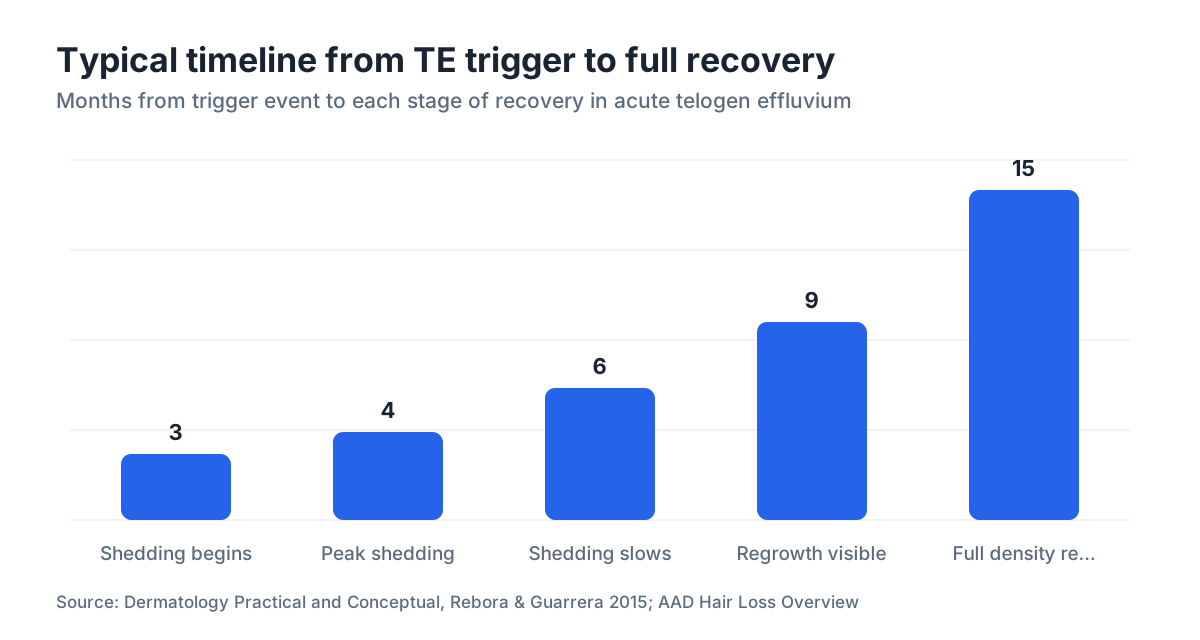
TE timeline: how shedding and regrowth typically progress
| Phase | Typical timing | What you notice |
|---|---|---|
| Trigger event | Day 0 | Illness, crash diet, surgery, major stress, etc. |
| Follicles shift to telogen | Weeks 1-4 after trigger | No visible change yet |
| Shedding begins | 2-4 months after trigger | Diffuse loss, excess hairs on brush/pillow/drain |
| Peak shedding | Months 2-5 | Often the most distressing phase |
| Shedding slows | Months 4-6 (if trigger resolved) | Noticeable drop in daily loss |
| Regrowth visible | Months 6-12 | Short, slightly wavy new hairs along hairline |
| Full density recovery | 12-18 months | Varies by individual and concurrent conditions |
These are averages, not promises. Individual variation is real, and nobody should treat a number from a forum post or this article as a precise personal prediction.
What do forums get wrong about treating telogen effluvium?
Quite a lot. The most persistent myths fall into a few buckets.
Myth 1: You need to aggressively treat TE with supplements. Two things genuinely help TE: identifying and removing the trigger, and correcting deficiencies confirmed by blood work, mainly iron, ferritin, and thyroid markers. Biotin is the most heavily marketed hair supplement and the most discussed in forums. There is no quality clinical evidence that biotin improves TE in people who are not deficient, and true biotin deficiency is rare in adults eating a varied diet [6]. The FDA has also warned that biotin can skew certain lab tests, including thyroid panels and cardiac troponin, which matters if you are taking high doses before getting labs [6].
Myth 2: Minoxidil is the right first treatment. Minoxidil does not treat TE. It extends the anagen phase and works for androgenetic alopecia (pattern hair loss), but it does not touch the TE trigger and does not speed follicles back into anagen in any convincing way. People who start it during a TE episode often credit it for their recovery, which was almost certainly happening anyway. Worse, minoxidil has a well-documented initial shedding phase that can look exactly like TE getting worse. See minoxidil for men and minoxidil side effects.
Myth 3: Shedding means permanent loss. This one causes enormous fear. In pure TE the follicle is resting, not gone. The shaft falls out because the follicle sheds the old hair before growing a new one. No follicle is destroyed. The caveat: TE can ride alongside androgenetic alopecia, which does miniaturize follicles over time. Telling the two apart changes everything about treatment.
Myth 4: The amount you shed tells you how bad your TE is. Daily shed counts are a forum obsession. Normal shedding is roughly 50 to 100 hairs a day [2]. During TE it can hit 200 to 400 or higher. But the absolute number matters less than the trend over weeks. Single-day counts swing wildly with wash frequency, whether you combed, and how you count.
How do you tell telogen effluvium apart from androgenetic alopecia?
This is genuinely hard, and it drives more forum misdiagnosis than anything else. Both cause shedding. Both thin the part line. They can happen at the same time in the same head.
The clinical differences that matter:
- TE is diffuse, hitting the whole scalp roughly evenly. Androgenetic alopecia in men follows the Norwood pattern (hairline recession, crown thinning); in women it thins the crown and part while the frontal hairline holds [2].
- TE sheds hairs with a small white bulb (telogen hairs) at the root. Androgenetic alopecia produces miniaturized hairs, shorter and finer than the ones around them.
- TE usually has a trigger you can name from the past two to four months. Androgenetic alopecia has a family history and creeps in over years.
- A pull test done by a dermatologist suggests active TE when more than 10 percent of hairs pulled from several scalp regions are telogen-phase [11].
Dermatoscopy (a handheld magnifier dermatologists use) shows the follicle miniaturization of androgenetic alopecia even when it is mild, which is how an experienced clinician splits the two apart. Forum self-diagnosis from photos is not reliable for this call.
If you have both, which is common, a DHT-blocking treatment like finasteride handles the androgenetic part and does nothing for the TE trigger. See finasteride and DHT blockers for what the evidence actually shows.
When is forum advice actually useful for telogen effluvium?
Not every post leads someone astray. Some things the TE community does genuinely well.
People share trigger timelines with a specificity clinical case reports rarely match. Read fifty accounts of COVID-related TE starting two to three months post-infection and resolving within six to nine months, and you get a useful distribution of outcomes even without a formal study. It is not peer-reviewed data, but it is not nothing.
Forums also normalize the experience. Feeling like your hair is falling out with no control is terrifying. Knowing that thousands of people have been through it, most of whom recovered, is comforting and accurate. The emotional support these communities give is real.
Long medication threads ("did anyone get TE after starting X?") often surface patterns before they land in pharmacovigilance databases. One post is an anecdote. A hundred consistent ones across a thread is worth flagging to your doctor.
The limit is obvious. Forums cannot examine your scalp, run your labs, or read your medication list. They cannot tell you whether you have TE, androgenetic alopecia, alopecia areata, or a mix. Use the community to build questions for a clinician, not to replace one.
Want an objective first look before a dermatology appointment? MyHairline's free AI scan (/scan) analyzes photos and flags patterns worth discussing. It is not a diagnosis, but it helps you walk in with sharper questions.
What blood tests should you get if you think you have TE?
This is one of the most useful practical questions, and forum threads regularly surface labs that GPs skip. A reasonable baseline panel for unexplained diffuse shedding:
- Complete blood count (to screen for anemia)
- Serum ferritin (this beats hemoglobin; ferritin can be low while hemoglobin reads normal, and it is the more sensitive marker for hair-relevant iron stores) [3]
- TSH with reflex T4 (thyroid function)
- Free T3 and T4 if TSH is borderline or symptoms point to thyroid trouble
- 25-hydroxyvitamin D (deficiency is linked to hair cycling abnormalities, though causation is not settled)
- Zinc
- ANA (antinuclear antibody) if lupus or autoimmune disease is on the table
Your dermatologist or GP may add more based on history. The point stands: running a basic CBC and calling the results "normal" misses iron deficiency in a lot of TE cases. Ask for ferritin by name.
One study of women with diffuse hair loss found iron deficiency significantly associated with TE, even without frank anemia [3]. Get that number.
What treatments have actual evidence behind them for TE?
The honest answer sits between the forums and the shrug: fewer treatments than forums push, more than "just wait" implies.
The best evidence points to fixing the trigger. That means:
- Correcting iron deficiency with supplementation guided by repeat ferritin testing
- Treating thyroid dysfunction with medication managed by an endocrinologist or GP
- Slowly raising caloric intake if restriction was the cause
- Working with a prescriber to adjust or switch any drug that is driving it
Past trigger removal, the evidence thins out fast.
Minoxidil is FDA-approved for androgenetic alopecia, not TE, though some dermatologists use it off-label when TE and androgenetic alopecia coexist [7]. If you use it, commit to at least four to six months before judging results, and expect that the shedding it can cause early on will look indistinguishable from ongoing TE. Oral minoxidil has growing evidence for androgenetic alopecia, and some clinicians reach for it in combined cases.
Finasteride and other DHT blockers work on androgenetic alopecia only. They have no mechanism for TE. If you have concurrent pattern loss they are worth discussing, but they are not a TE treatment. Finasteride and minoxidil together is a reasonable approach for the androgenetic side.
Platelet-rich plasma (PRP) comes up constantly in TE forums. The evidence is improving for androgenetic alopecia but stays thin and inconsistent for pure TE. It runs $500 to $2,000 per session, needs multiple sessions, and insurance does not cover it. If TE is your primary diagnosis, I would wait for better data before spending the money.
Hair loss supplements draw huge forum attention. The evidence for most in TE specifically is weak. The one real exception is replacing a documented deficiency, whether iron, zinc, vitamin D, or B12.
Does telogen effluvium cause permanent hair loss?
No. This is the single most important thing to understand, and the most important myth to unlearn from forum reading.
Telogen effluvium disrupts the hair cycle. It does not destroy follicles. The follicles stay intact and can grow new hairs once they re-enter anagen. A 2015 review in Dermatology Practical and Conceptual concluded that the prognosis for acute TE is excellent and full recovery is expected once the trigger is eliminated [1]. That is about as clear as dermatology writing gets.
The confusion comes from TE unmasking androgenetic alopecia that was already creeping along quietly. The dramatic shedding reveals a hairline or part thinner than the person realized, and they pin all of it on TE. The TE part recovers. The androgenetic part will not reverse on its own and needs its own plan.
That is why a dermatologist beats forum consensus here. The two conditions look similar in photos and self-exams, but their treatment paths diverge completely. If you have shed for more than six months and your ferritin, thyroid, and other labs are normal, get a proper scalp exam before concluding you have chronic TE.
What does recovery from TE actually look like?
Recovery is quieter than the shedding and harder to photograph, which is partly why recovery posts are rarer than active-shedding posts. People who recover tend to leave the community.
The first sign is a shower drain that looks less catastrophic. This shows up gradually over two to four weeks and is easy to miss because daily shedding varies so much. Then the count settles closer to the normal 50 to 100 range.
Regrowth arrives as very short, slightly wavy or frizzy new hairs, most visible at the temples and front hairline. Forum posts call them "baby hairs." They usually appear three to six months after shedding peaks, so it can be nine to twelve months from the original trigger before regrowth is clearly visible.
Full density recovery, meaning the scalp looks the way it did before, can take twelve to eighteen months from the trigger. This is where impatience makes people conclude they have "permanent damage" when regrowth is simply still underway.
Monthly photos in consistent lighting, same angle, beat daily hair counts every time for tracking recovery. Forum members who shoot them have a much more accurate read on their progress than the ones counting individual strands.
If you are also watching your hairline for signs of pattern loss, the receding hairline patterns are useful context for telling TE recovery from a separate, concurrent process.
Should you see a dermatologist or use forums for guidance on TE?
Both, honestly, but in the right order.
A dermatologist (ideally one with a hair specialty, or one who does dermatoscopy) can do what no forum can: examine your scalp, run a pull test, order targeted labs, and separate TE from androgenetic alopecia or alopecia areata by looking at your follicles directly. If your shedding has run more than three months or is causing real distress, the appointment is worth the time and cost.
Forums are useful for building your question list, learning what people with similar triggers experienced on timeline, finding support during a stressful stretch, and comparing which labs different clinicians ordered.
What forums are bad for: dosing supplements, diagnosing your hair loss type, or deciding to start minoxidil or finasteride based on strangers' reports.
If cost or access is the barrier, the American Academy of Dermatology's Find a Dermatologist tool at aad.org lists board-certified dermatologists by location, some offering sliding-scale fees [2]. Many telehealth platforms now run dermatology consults for hair loss below the price of an in-person visit, though they cannot perform a physical pull test or dermatoscopy.
MyHairline's free AI scan (/scan) gives you a baseline photo analysis to bring in, which helps frame what you are seeing and what to ask.
Sources
- Dermatology Practical and Conceptual, Rebora A, Guarrera M (2015). Telogen effluvium review.
- American Academy of Dermatology, Hair loss: overview and causes.
- Journal of the American Academy of Dermatology, Kantor J et al. (2003). Decreased serum ferritin is associated with alopecia in women.
- The Lancet, Recalcati S (2020). Cutaneous manifestations of COVID-19.
- Journal of the American Academy of Dermatology, Sinclair R (1999). Chronic telogen effluvium: a study of 5 patients over 7 years.
- U.S. Food and Drug Administration, Biotin (Vitamin B7) safety communication on lab test interference.
- U.S. Food and Drug Administration, drug information.
- MedlinePlus (National Library of Medicine), Hair loss overview.
- Journal of Investigative Dermatology Symposium Proceedings, Headington JT (1993). Telogen effluvium: new concepts and review.
- Skin Appendage Disorders, Grover C, Khurana A (2013). Telogen effluvium.