

TL;DR: Stress pushes hair follicles into a resting phase called telogen, and the shedding shows up 2 to 3 months after the triggering event. Most people recover fully within 6 to 9 months once the stressor resolves. Chronic stress can stretch that into years. No treatment reverses it fast. Fixing the underlying cause is the most reliable thing you can do.
What is telogen effluvium and what does stress have to do with it?
Hair grows in cycles. Each follicle spends most of its life in anagen, the active growth phase that lasts two to six years, then passes briefly through catagen, and finally rests in telogen for about two to four months before the old strand sheds and a new one starts. On a healthy scalp, roughly 5 to 15 percent of follicles sit in telogen at any given moment. That is why losing 50 to 100 hairs a day is normal [1].
Telogen effluvium is what happens when a big group of follicles bails out of anagen and drops into telogen all at once. Two to three months later, those resting hairs shed together, and the person sees dramatic thinning seemingly overnight. The American Academy of Dermatology calls telogen effluvium "one of the most common causes of hair loss" and notes it is usually temporary [2].
Stress is one of the most consistent triggers. The mechanism runs through corticotropin-releasing hormone (CRH) and its interaction with substance P, both of which scramble the signals that keep follicles growing. A 2021 study in Nature found that chronic stress raises corticosterone in mice, which drains the hair follicle stem cell reservoir by shutting down an activation signal called GAS6, effectively freezing follicles in a long resting state [3]. That is mouse data. But it lines up with what dermatologists see in the clinic.
The stress does not have to be emotional. Surgery, a severe illness, a high fever, rapid weight loss, and childbirth all count as physiological stress and set off the same shedding cascade. For the full spectrum of triggers, see our overview of telogen effluvium.
How long after stress does hair start falling out?
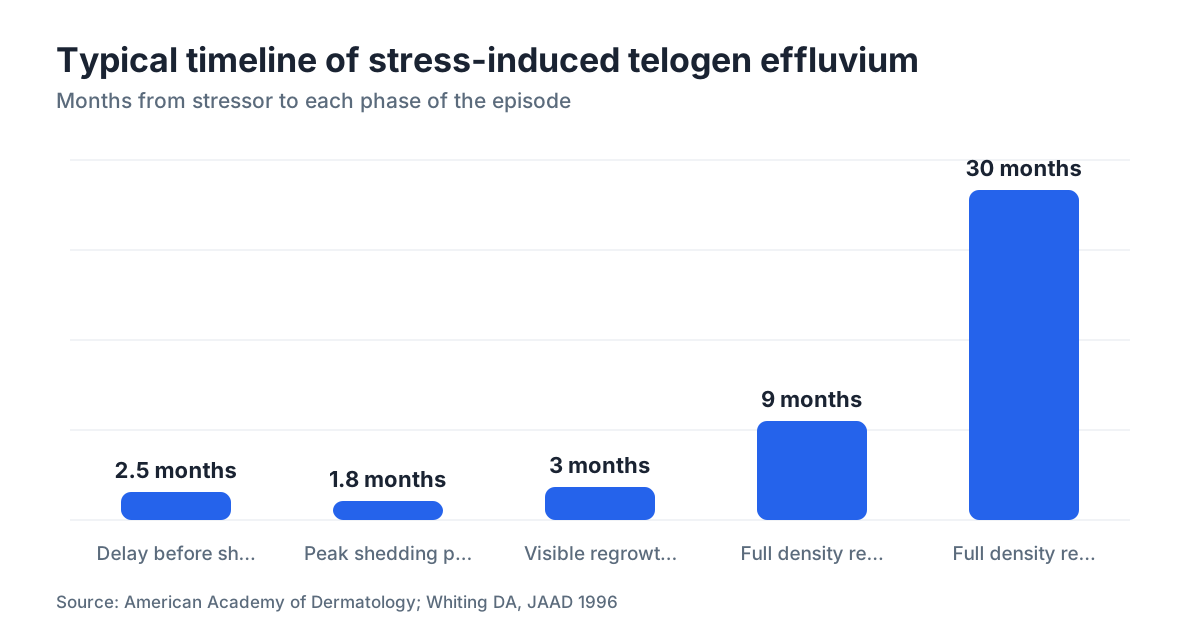
The delay is what trips everyone up. Hair does not fall the moment something stressful happens. It sheds two to four months later, when the follicles that got knocked into telogen during the stressful event finally reach the end of their resting phase and let go of the old strands [1].
That lag is long enough that most people never connect the shedding to its cause. Someone who lost a job in January may not see heavy shedding until March or April, then assume it is a brand new problem out of nowhere.
The shedding itself usually runs six to eight weeks at peak intensity. After that, new anagen hairs are already pushing up, though they need several more months to reach any visible length. The full arc from trigger to recovery is usually six to nine months in acute cases, as long as the stressor does not stick around [2].
Chronic stress changes that math. Ongoing financial pressure, a hard relationship, or relentless work can stretch the timeline out because new waves of follicles keep dropping into telogen before the last batch finishes recovering. That version, called chronic telogen effluvium, can last years and is much harder to reverse than a single acute episode.
What does stress-related hair shedding actually look like?
The classic picture is diffuse thinning across the whole scalp, not a receding hairline or a bare patch. You see it in the shower drain, on the pillow, and on your hand after you run your fingers through. Handfuls, not single strands.
The part line may widen. Women often notice the ponytail feels thinner in circumference. Men notice a general drop in density rather than a specific hairline shift. Because it is diffuse, it mimics other conditions, which is exactly why the diagnosis matters.
A dermatologist often does a "pull test," gently tugging 40 to 60 hairs from a few scalp zones. Pulling out more than 10 percent of the grasped hairs counts as positive for active effluvium [4]. Trichoscopy (dermoscopy of the scalp) can reveal short regrowing vellus hairs, which confirms the follicles are alive and already coming back.
There is no scarring. Follicles in telogen effluvium are resting, not destroyed. That is the whole difference from scarring alopecias, where regrowth is off the table. If you cannot tell whether your pattern is diffuse shedding or something like a receding hairline, that distinction drives your treatment decisions.
Can emotional stress alone cause significant hair loss?
Yes, and the evidence is cleaner than most people expect. A 2020 case-control study in JAMA Dermatology found that people reporting high perceived psychological stress had significantly higher rates of telogen effluvium diagnosis than controls, and the association held after adjusting for nutritional deficiencies and hormonal factors [5].
The pathway runs through the hypothalamic-pituitary-adrenal axis. Psychological stress fires up that axis and raises cortisol. High cortisol cuts the growth factors (like IGF-1) that keep follicles in anagen. Substance P, a neuropeptide released during stress, triggers mast cell degranulation near follicles, causing local inflammation that disrupts the cycle [3].
Emotional trauma can hit as hard as surgery or a fever. Grief, a breakup, a scary diagnosis, a layoff. At the cellular level, the body does not cleanly sort psychological stress from physical stress.
Nobody has clean dose-response data here, so we cannot say "X amount of stress causes Y percent follicle loss." What is consistent across studies is the direction: more perceived stress means more telogen effluvium and slower recovery.
How do you tell telogen effluvium apart from androgenetic alopecia?
This is the diagnostic question that matters most, because the two conditions have opposite prognoses and different treatments.
Androgenetic alopecia (AGA), the common genetic type, is patterned. In men it follows the Norwood scale: temples recede, crown thins, hairline takes a specific shape. In women it usually widens the central part while sparing the frontal hairline. It creeps along over years and comes from DHT sensitivity in genetically primed follicles. If that is your worry, here is how DHT blockers work.
Telogen effluvium is diffuse, sudden, and usually reversible. No pattern. It hits the whole scalp roughly evenly, and it kicked off after an identifiable stressor.
Here is the catch. AGA and telogen effluvium often run together. A person with mild AGA can go through a stress event that unmasks a shedding episode far worse than their baseline would ever produce. Sorting out which one is driving the show takes a scalp exam and often a dermatologist.
Blood tests rule out the other usual suspects: thyroid dysfunction (TSH), iron deficiency (serum ferritin, ideally above 40 ng/mL for good hair cycling), vitamin D, and in women, androgens and prolactin [4]. Ferritin below 30 ng/mL is a documented independent trigger for telogen effluvium even without any AGA [6]. If your dermatologist skips ferritin, ask for it.
| Feature | Telogen effluvium | Androgenetic alopecia |
|---|---|---|
| Pattern | Diffuse, whole scalp | Patterned (Norwood/Ludwig) |
| Onset | Sudden, after trigger | Gradual over years |
| Pull test | Often positive (active phase) | Usually negative |
| Prognosis | Usually reversible | Progressive without treatment |
| Primary cause | Stress, illness, nutrition | Genetics, DHT |
| Regrowing hairs visible | Yes (short vellus hairs) | Less common |
How long does stress-related hair loss last before it recovers?
For a single acute stressor, the timeline is fairly predictable. Shedding peaks around two to four months after the trigger, runs heavy for six to eight weeks, then eases. New growth starts almost right away but only grows about half an inch a month, so it takes another three to six months before density looks genuinely restored. Trigger to full-looking recovery: six to twelve months in most cases [2].
The AAD says most people with telogen effluvium regrow their hair fully within six to nine months [2]. That figure is for acute cases where the cause has been removed.
Chronic telogen effluvium is a different animal. A 1996 paper by Whiting in the Journal of the American Academy of Dermatology defined chronic telogen effluvium as shedding lasting more than six months, mostly in women aged 30 to 60, with fluctuating severity and a favorable but slow prognosis [7]. Recovery in chronic cases can take two to three years.
Two things reliably drag recovery out. One, leaving the trigger unaddressed. If you are still buried in stress, still low on iron, or still crash-dieting, follicles keep cycling into telogen faster than they recover. Two, assuming nothing can be done and never checking for treatable coexisting conditions. A dermatologist can tell you whether your ferritin, thyroid, or vitamin D is part of the problem.
Does stress-induced shedding grow back on its own, or does it need treatment?
In most acute cases it grows back on its own once the stressor resolves. There is no FDA-approved treatment specifically for telogen effluvium. The condition is not on the FDA's list of approved indications for minoxidil, though dermatologists sometimes use it off-label when shedding drags on or the patient also has AGA [8].
Here is what actually helps.
Resolving the trigger does more than anything else. If stress is the cause, that means managing it, more than knowing it exists. Cognitive behavioral therapy has decent evidence for lowering cortisol. Fixing your sleep helps. Backing off overtraining, if you are an athlete, matters.
Correcting nutritional deficiencies changes outcomes you can measure. Iron, vitamin D, zinc, and protein have the clearest evidence for hair cycling. A 2019 review in Dermatology and Therapy found iron deficiency is the most common nutritional cause of diffuse hair loss in premenopausal women, and that correcting it speeds recovery [6].
Minoxidil, topical or oral, can shorten the shedding phase and nudge follicles back into early anagen in some people. It does not cure the root problem, but it can take the edge off how bad the shedding feels. If you are weighing it, read about minoxidil for men and the side effects of minoxidil first. Oral minoxidil is increasingly used in low doses (0.25 to 1.25 mg daily) for diffuse shedding, with promising but still-early evidence.
For men who find they also have underlying AGA, finasteride is the only oral DHT blocker with FDA approval for hair loss, but it targets AGA, not telogen effluvium. When both conditions overlap, a combination approach can make sense. Some dermatologists pair finasteride and minoxidil for exactly that reason.
What nutrients and supplements actually help with stress-related hair loss?
The hair loss supplement market is loud and mostly hollow. A handful of specific deficiencies have real clinical data. Most products do not.
Iron (measured by ferritin) is the best-supported. Ferritin below 30 ng/mL is tied to prolonged telogen effluvium in premenopausal women, and several small trials show that pushing ferritin above 70 ng/mL speeds recovery [6]. Do not supplement iron without a blood test confirming you are low. Iron overload is genuinely harmful.
Vitamin D. Hair follicle keratinocytes carry vitamin D receptors, and observational studies link low vitamin D to alopecia areata and telogen effluvium. Correcting a real deficiency (below 20 ng/mL) is reasonable. Whether topping up from normal levels does anything is unclear.
Zinc deficiency causes hair loss, and stress raises zinc excretion. A serum zinc below the reference range is worth correcting. Overdoing zinc suppresses copper absorption, so skip high-dose zinc unless a test says you need it.
Biotin (vitamin B7) is in nearly every hair supplement. The FDA has warned that high-dose biotin can interfere with thyroid and troponin lab tests and produce falsely abnormal results [9]. The evidence that biotin helps hair loss in people who are not deficient is thin.
Protein matters more than any pill. Hair is keratin, which is protein. Crash dieting and low-protein diets (below roughly 0.8 g/kg/day) are documented triggers [11]. Eating enough protein is boring advice. It is also evidence-based.
We have a full breakdown of the evidence for hair loss supplements if you want to separate the useful few from the overhyped many.
How do you stop stress-related hair loss from getting worse?
You cannot stop the hairs already pushed into telogen from shedding. That process is running on its own biological clock. What you can control is whether new cohorts of follicles keep dropping into the resting phase.
The steps that actually move the needle:
Get a blood panel. TSH, ferritin, vitamin D, CBC, and in women a free androgen index. Then fix what is fixable. A dermatologist or your primary care physician can order all of it.
Eat enough protein and enough calories. Crash dieting, even briefly, is a documented trigger. Under extreme restriction, your body treats hair as a low priority and deprioritizes follicle cycling.
Fix your sleep. Chronic sleep deprivation keeps cortisol elevated. No supplement beats consistently bad sleep for cortisol control.
Cut the compounding stressors. Overtraining, heavy alcohol, and poor sleep all stack physiological stress on top of whatever emotional stress you already carry. Lowering the total load helps.
Be gentle with your scalp. Tight hairstyles, aggressive wet brushing, and chemical processing do not cause telogen effluvium, but they add breakage and make the shedding look worse. Go easy during recovery.
Give it time. This is the hardest part by far. You will likely keep shedding for weeks after you have done everything right. The lag is biology, not a sign your interventions are failing.
When should you see a doctor about stress hair loss?
See a dermatologist if shedding is still heavy after six months, if the thinning looks patterned (which suggests AGA on top of the effluvium), if you have scalp itching, scaling, or burning that points to an inflammatory condition, or if a pull test done by your physician is still positive after two to three months of managing stress and nutrition [4].
Go sooner if hair loss comes with other symptoms. Fatigue and cold intolerance can point to thyroid disease. Heavy periods and pallor can signal iron deficiency anemia. Sudden diffuse loss with no clear stressor can warrant a lupus screen.
The American Academy of Dermatology recommends seeing a board-certified dermatologist for hair loss that worries you rather than self-diagnosing, since multiple causes so often overlap [2].
If you want a starting point before the appointment, a tool like MyHairline's free AI hair analysis (/scan) can help you gauge whether your shedding looks diffuse or more patterned, which makes the dermatologist conversation sharper.
For most people, one dermatology visit with a standard blood panel will either confirm this is straightforward stress effluvium already headed toward recovery, or catch a treatable secondary cause. Both answers are worth having. A broader read on what causes hair loss can help you frame that visit.
Can stress-related hair loss become permanent?
In classic telogen effluvium, no. The follicles are resting, not dead. No scarring, no miniaturization, no permanent damage to the follicle structure. Even after chronic telogen effluvium that has dragged on two to three years, full recovery is common [7].
Permanence becomes a concern in two specific scenarios. First, when telogen effluvium is sitting on top of undiagnosed AGA. Prolonged shedding can speed up the expression of genetic AGA in susceptible people, and AGA's miniaturized follicles can eventually scar over and stop making terminal hairs. Second, when a different condition like alopecia areata or a scarring alopecia gets mislabeled as stress effluvium. That is why the diagnosis matters so much.
The takeaway. Do not assume permanence just because shedding has lasted months. But do not shrug off long-running shedding on the hope it sorts itself out either, because missing treatable AGA costs you time and density you will never fully recover. The treatment window for AGA is always better earlier. Here is what finasteride and minoxidil can realistically do if genetic loss is in the picture.
What is the difference between telogen effluvium and alopecia areata?
Both can flare after stress, and patients often confuse them. They are different diseases with different mechanisms, different looks, and different treatments.
Alopecia areata is autoimmune. The immune system attacks follicles directly, producing round or oval patches of complete hair loss on the scalp or elsewhere on the body. Stress can trigger or worsen alopecia areata, but the driver is immune-mediated, not a shift in follicle cycling [10]. Recovery is less predictable, and in extensive cases (alopecia totalis or universalis) it may not happen at all.
Telogen effluvium has no immune component. The loss is diffuse, not patchy. Follicles stay intact. The regrowth outlook is much better.
If you have distinct smooth bald patches instead of overall thinning, alopecia areata is the more likely diagnosis and needs a different workup. A dermatologist can tell the two apart with dermoscopy in most cases.
Sources
- American Academy of Dermatology Association, Hair loss types: Telogen effluvium
- American Academy of Dermatology Association, Hair loss: Overview and telogen effluvium recovery
- Choi S et al., Nature 2021, "Corticosterone inhibits GAS6 to govern hair follicle stem-cell quiescence"
- American Academy of Dermatology Association, Diagnosis and treatment of alopecia
- JAMA Dermatology, case-control study on psychological stress and telogen effluvium
- Almohanna HM et al., Dermatology and Therapy 2019, "The role of vitamins and minerals in hair loss"
- Whiting DA, Journal of the American Academy of Dermatology 1996, "Chronic telogen effluvium"
- U.S. FDA, Drugs (minoxidil approved indications)
- U.S. FDA, Safety communication on biotin interference with lab tests
- National Institute of Arthritis and Musculoskeletal and Skin Diseases (NIAMS), Alopecia areata
- Guo EL & Katta R, Dermatology Practical & Conceptual 2017, "Diet and hair loss: effects of nutrient deficiency"