

TL;DR: Telogen effluvium (TE) is temporary shedding set off by a trigger, and it resolves once that trigger is gone. Supportive therapy means finding and fixing the trigger, correcting nutritional gaps, managing stress, and sometimes adding topical minoxidil to shorten the regrowth wait. Most people regrow full density within 3 to 6 months after the trigger clears.
What is telogen effluvium and why does it need supportive therapy?
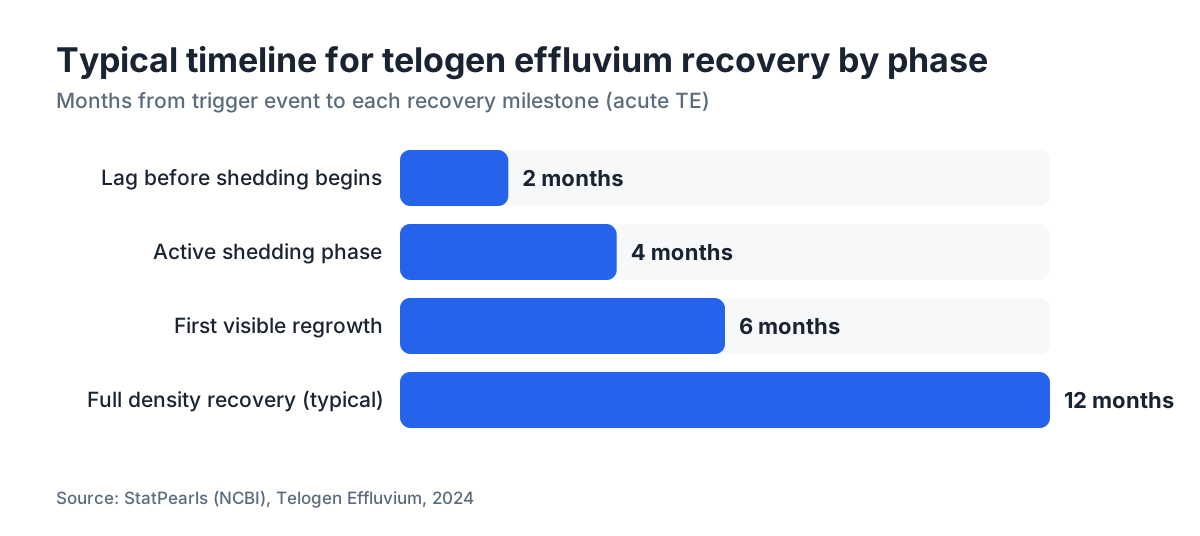
Telogen effluvium is diffuse, non-scarring hair loss set off by a sudden shift in the growth cycle. Normally 85 to 90 percent of scalp follicles are in the anagen (growth) phase, with only 10 to 15 percent resting in telogen. A big physiological or psychological stressor shoves an abnormal cohort of follicles into telogen all at once. Six to twelve weeks later, those follicles drop their hairs in a wave.
It looks alarming. Handfuls in the shower drain, on the pillow, in the brush. Dermatologists treat shedding above 100 to 150 hairs per day as a clinical threshold worth investigating, though that count is genuinely hard to measure at home [1].
Here is the part people miss. TE resolves on its own once the trigger is gone, but "on its own" can mean 6 to 18 months of visible thinning before density returns. Supportive therapy isn't a cure. It clears the obstacles to recovery, corrects deficiencies that could stall regrowth, and in some cases speeds the anagen re-entry of follicles that are ready to grow but haven't gotten the signal.
Understand the full picture of telogen effluvium before you spend money. The wrong therapy for the wrong trigger is just wasted time and cash.
What triggers telogen effluvium in the first place?
You can't build a treatment plan without naming the trigger. This is step one, and skipping it is the most common mistake people make.
The best-documented triggers include [2]:
- Major surgery or physical trauma
- Severe febrile illness (COVID-19 is especially well documented here)
- Rapid weight loss, crash dieting, or caloric restriction below roughly 1,000 to 1,200 kcal per day
- Childbirth (postpartum TE is extremely common, affecting an estimated 40 to 50 percent of women in the months after delivery)
- Thyroid dysfunction, both hypothyroid and hyperthyroid states
- Iron deficiency, with or without frank anemia
- Protein deficiency
- Zinc deficiency
- Certain medications including beta-blockers, retinoids, anticoagulants, and some antidepressants
- Chronic psychological stress
Chronic TE (lasting more than 6 months) usually points to an ongoing trigger that never got removed, a concurrent androgenetic alopecia component, or an unresolved deficiency. Learn what else causes hair loss so you can rule out other diagnoses before committing to a TE plan.
A dermatologist confirms TE with a pull test, trichoscopy, or in some cases a punch biopsy. Blood work for ferritin, thyroid-stimulating hormone (TSH), complete blood count, and serum zinc is standard and genuinely useful.
How long does telogen effluvium last without treatment?
Acute TE, where one identifiable stressor has already passed, runs about 3 to 6 months of active shedding followed by 3 to 6 months of visible regrowth. The full round trip to baseline density is usually 6 to 12 months from the moment the trigger hit [2].
Chronic TE is a different animal. It's defined by shedding that lasts more than 6 months. It can fluctuate for years, though it rarely progresses to complete baldness. A review in the Journal of the American Academy of Dermatology on chronic telogen effluvium reports that most patients eventually stabilize, even though the timeline is highly individual [3].
The honest answer: nobody has clean controlled data on exactly how much supportive therapy shortens TE, because randomized trials on TE specifically are sparse. Most of what we know is extrapolated from studies on nutritional repletion and from minoxidil's known effect on forcing follicles out of telogen.
What nutritional deficiencies should you correct first?
Correcting a real deficiency is the single most evidence-backed move in TE. The trouble is that people correct deficiencies they don't have, or use doses that never move the needle.
Iron and ferritin. Ferritin (stored iron) is the most studied nutritional variable in TE, and iron deficiency is one of the most common deficiencies worldwide [10]. A frequently cited threshold from dermatology literature is a serum ferritin below 30 ng/mL, though some dermatologists aim for 40 to 70 ng/mL for hair-specific recovery [4]. If your ferritin is low, fixing it isn't optional. It can take 3 to 6 months of supplementation to meaningfully raise ferritin, and several more months for follicles to answer.
Zinc. Zinc deficiency is linked to TE, and supplementing helps people who are actually deficient. The recommended dietary allowance is 11 mg per day for adult men and 8 mg per day for adult women [5]. If you're not deficient, high-dose zinc suppresses copper absorption and creates a new problem. Test serum zinc before you supplement.
Protein. Hair is roughly 95 percent keratin, which is protein. Intake below 0.8 g per kg of body weight can compromise follicle function. This matters most in people who've crash-dieted or had bariatric surgery.
Biotin. True biotin deficiency does cause hair loss. It's also rare in adults eating a normal diet. The FDA has warned that biotin supplements can skew lab results, including thyroid function tests and troponin assays [6]. If your biotin is normal, supplements do almost nothing for your hair and can muddy the exact blood work your doctor needs to find the real cause.
Vitamin D. Low vitamin D is associated with alopecia areata and other hair conditions, though the direct causal link with TE is weaker. Normal usually runs 30 to 80 ng/mL. Deficiency below 20 ng/mL is worth correcting for general health regardless.
The hair loss supplements aisle bundles all of these into one pill. Fine if you're deficient across the board. For most people, targeted repletion based on actual blood tests is smarter and cheaper.
Does topical minoxidil help with telogen effluvium?
Topical minoxidil is FDA-approved for androgenetic alopecia (pattern hair loss), not for TE. But there's a real reason dermatologists reach for it off-label in TE, and it comes down to mechanism [7].
Minoxidil prolongs the anagen phase and shortens telogen. Follicles stuck in extended telogen after a TE event can sometimes be nudged back into active growth faster. Think of it as cutting the wait before regrowth starts, not as treating the root cause.
Here's the practical read. Topical minoxidil (2% or 5%) once or twice daily is a reasonable add-on for someone who has already found and addressed the trigger but wants less time staring at thin hair. It shouldn't be the first or only move, and it won't do much while the trigger is still active.
Side effects are worth knowing before you start. Minoxidil side effects include an initial shedding phase in the first 4 to 6 weeks, scalp irritation, and rarely unwanted facial hair in women. For men, minoxidil for men covers dosing, formulations, and what to actually expect.
Oral minoxidil at low doses (0.25 to 1.25 mg daily for women, 2.5 to 5 mg for men) is increasingly prescribed for hair loss and may act a bit more systemically on follicle cycling. Oral minoxidil carries its own side effect profile to review first.
Should you use finasteride or DHT blockers for telogen effluvium?
Short answer: probably not, unless androgenetic alopecia is also in the picture.
Finasteride blocks the conversion of testosterone to dihydrotestosterone (DHT), the androgen that miniaturizes follicles in pattern hair loss. TE isn't driven by DHT. The two can coexist, which is common, but if TE is the sole diagnosis, finasteride is the wrong tool.
The wrinkle is overlap. Plenty of people, especially men in their 30s and 40s, carry TE on top of early androgenetic alopecia. In those cases a dermatologist might reasonably treat the androgenetic component with finasteride or another DHT blocker while managing TE separately. That's a different rationale, and it's important to keep them straight.
Using finasteride speculatively as a TE treatment isn't supported by the drug's mechanism, and most evidence-based dermatologists won't recommend it for pure TE.
What does stress management actually do for hair recovery?
Psychological stress is both a trigger for TE and a factor that can keep it going. The mechanism runs through cortisol and substance P signaling in the scalp, which disrupts the follicle cycling environment and delays anagen re-entry [8].
Here's the honest tension. Telling an anxious person to "reduce stress" is circular and barely actionable. But the evidence for stress as a real physiological driver of TE is solid enough that it belongs in any honest conversation about recovery. This is biology, not a wellness slogan.
Interventions with at least some supporting evidence: regular aerobic exercise (it lowers cortisol and inflammatory markers), enough sleep (the CDC recommends 7 to 9 hours a night for adults) [11], and structured stress management like cognitive behavioral therapy or mindfulness-based stress reduction. None of these are hair treatments. They treat chronic stress, and hair benefits downstream.
No pill or serum fixes a cortisol problem. The people who recover fastest from stress-triggered TE are the ones who address the source of the stress, not the ones who buy another scalp product.
Are PRP, laser therapy, or scalp treatments useful for telogen effluvium?
PRP, laser caps, and scalp scrubs are mostly later-line options or filler for TE. None treat the root cause, and the specific TE evidence for all of them is thin.
Platelet-rich plasma (PRP) means drawing your own blood, concentrating the platelet fraction, and injecting it into the scalp. PRP holds growth factors like platelet-derived growth factor (PDGF) and vascular endothelial growth factor (VEGF) that can stimulate follicles. The evidence in androgenetic alopecia is decent if not definitive [12]. For TE, it's much thinner.
PRP might be worth a look in chronic TE that hasn't responded to nutrition and minoxidil, but it runs $1,500 to $3,500 per course, often over several sessions, and insurance won't touch it. Treat it as a later step, not a first one.
Low-level laser therapy (LLLT), including FDA-cleared caps and combs, has some evidence in androgenetic alopecia. The mechanism (photobiomodulation) is plausible and the safety profile is good. TE-specific evidence is sparse, but the low risk and modest cost make it a defensible add-on if you're already handling your trigger and nutrition.
Dermabrasion, scalp scrubs, and "scalp health" products sold for TE have almost no controlled evidence. They won't hurt. They also won't do much. Don't spend serious money here.
What does a realistic supportive therapy plan actually look like month by month?
Month 1: Get blood work. At minimum ferritin, serum iron, TSH, free T4, zinc, vitamin D, and a complete blood count. See a board-certified dermatologist if you can for a trichoscopic exam to confirm the diagnosis and rule out androgenetic alopecia or alopecia areata. Find the trigger and remove it if you can. If you're crash dieting, stop. If a medication is the culprit, talk to your prescriber about alternatives.
Month 2: Start targeted supplementation based on your actual labs, not a hunch. If ferritin is below 30 ng/mL, start iron (65 mg of elemental iron every other day improves absorption with fewer GI side effects than daily dosing) [4]. If your dermatologist backs topical minoxidil as an adjunct, begin now. Expect the minoxidil shedding phase during weeks 4 to 6.
Month 3 to 4: The hardest psychological stretch. Shedding may still show, and regrowth may not be obvious yet. Hold the line. Short baby hairs at the hairline or the part are the first sign follicles are cycling back into anagen.
Month 5 to 6: Visible regrowth should be showing in most acute cases if the trigger is gone and deficiencies are being corrected. Retest ferritin and other low markers to confirm they're climbing.
Month 6 to 12: Regrowing hairs thicken and mature. Full density often takes the whole 12 months. If shedding is still heavy at 6 months despite fixing the trigger, revisit the diagnosis.
Want an objective baseline before you start? MyHairline's free AI hair analysis documents your current density from photos, which makes it far easier to see whether things are moving over a 3- to 6-month window.
Which supplements are overhyped for telogen effluvium?
The supplement industry targets hair loss hard, and TE patients are easy marks because the condition is temporary and people are desperate to speed it up. Most of these products do nothing.
Biotin is the biggest overstatement in hair supplement marketing. Unless you're genuinely biotin-deficient (rare), extra biotin does not grow hair beyond baseline. The FDA warns that "biotin in the blood can cause clinically significant incorrect lab test results" [6]. Before a thyroid or cardiac test, high-dose biotin needs to be disclosed and paused.
Collagen powders get sold on the logic that they supply amino acids like glycine and proline for keratin. It's a roundabout argument. The evidence that collagen specifically helps hair in people already eating enough protein is weak.
Hair gummies with "proprietary blends" are almost always dosed below any therapeutic threshold. The marketing is the product.
Nutritional yeast, saw palmetto (which does have some DHT-blocking evidence, more relevant to androgenetic alopecia), and silica all have minimal controlled evidence in TE.
Honest answer: the only supplements consistently supported in TE are the ones correcting a documented deficiency. Iron, zinc, vitamin D, and protein if you're low. Everything else is a maybe at best.
When should you see a dermatologist rather than waiting it out?
See a dermatologist if:
- Shedding is severe and hasn't slowed after 3 to 4 months
- You've had visible shedding for more than 6 months with no clear trigger
- There's family history of pattern hair loss and you can't tell which condition you have
- You notice patchiness or asymmetric loss (that points to alopecia areata, not TE)
- Blood work from your GP shows thyroid abnormalities, severe anemia, or very low ferritin
- You're a woman with TE symptoms alongside signs of hormonal disruption like irregular periods, acne, or hirsutism
A dermatologist who specializes in hair can run a trichoscopic exam (a magnified view of the scalp and follicle openings) that separates TE from androgenetic alopecia in most cases. That distinction changes the whole treatment plan. If there's a receding hairline component, that's a different situation from pure TE, and receding hairline has its own logic.
The American Academy of Dermatology recommends seeing a dermatologist for hair loss that is sudden, significant, or paired with other symptoms rather than self-treating first [9].
Can telogen effluvium become permanent hair loss?
Pure TE doesn't cause permanent follicle damage. The follicles are alive and able to regrow once the trigger clears and the cycle resets. That's the core difference from scarring alopecia.
Two real risks are worth knowing.
First, chronic TE that drags on for years can unmask underlying androgenetic alopecia that had been subclinical. The long shedding and regrowth cycling makes miniaturization of androgen-sensitive follicles more obvious. What looked like pure TE can reveal a pattern loss component over time.
Second, severe and prolonged nutritional deficiency (think extended starvation, not a rough couple of weeks) can impair follicle function enough to slow recovery. True permanent damage from nutritional TE alone is still rare.
The reassuring reality: most people with acute TE regrow to their original density once the trigger resolves. The fear of permanent loss is usually worse than the prognosis deserves.
Sources
- American Academy of Dermatology, Hair Loss: Diagnosis and Treatment
- StatPearls (NCBI), Telogen Effluvium
- Journal of the American Academy of Dermatology, Chronic Telogen Effluvium review
- Journal of the American Academy of Dermatology, Serum Ferritin and Hair Loss
- NIH Office of Dietary Supplements, Zinc Fact Sheet for Health Professionals
- FDA, Biotin Safety Communication on Lab Test Interference
- FDA, Minoxidil Drug Label (Rogaine)
- PLOS Biology, Stress and Hair Follicle Cycling via Corticotropin-Releasing Hormone
- American Academy of Dermatology, When to See a Dermatologist for Hair Loss
- NIH Office of Dietary Supplements, Iron Fact Sheet for Health Professionals
- CDC, Sleep and Sleep Disorders
- Dermatology and Therapy, PRP for Hair Loss: A Systematic Review