

TL;DR: Telogen effluvium (TE) usually starts shedding 2 to 3 months after a trigger (illness, crash diet, surgery, stress), peaks around months 3 to 4, then slows as new hair regrows. Most acute cases fully recover within 6 to 9 months. Chronic TE, lasting more than 6 months, takes longer and needs a root-cause workup. Removing the trigger is the single most important step.
What is telogen effluvium, and why does timing matter so much?
Telogen effluvium is diffuse hair shedding where large numbers of follicles shift out of the active growing phase (anagen) into the resting phase (telogen) at the same time, then fall out together weeks to months later. A healthy scalp keeps roughly 85 to 90% of follicles in anagen and 10 to 15% in telogen at any one time [1]. A big physical or emotional shock can push 30% or more of those anagen follicles into telogen all at once [2].
Timing matters because TE is one of the few forms of hair loss that resolves on its own once the trigger is gone. People who don't understand the timeline panic when shedding peaks, stop eating properly, or start expensive treatments they never needed. Others do the opposite. They wait too long, miss an underlying cause like iron deficiency or thyroid trouble, and turn an acute case into a chronic one.
Knowing when each phase happens tells you whether you're on a normal recovery arc or whether something else is going on. For a broader look at telogen effluvium and its causes, that article is a good starting point before this one.
What triggers telogen effluvium and when do they hit the hair follicle?
The follicle doesn't react instantly to stress. There's a built-in delay. Hair already in anagen doesn't fall out the moment it stops growing; it has to finish the telogen resting phase first, which takes roughly 2 to 3 months [2].
Common triggers and their typical onset-to-shed delay:
| Trigger | Typical lag to peak shedding |
|---|---|
| High fever or acute illness (e.g., COVID-19) | 6 to 12 weeks |
| Major surgery or general anesthesia | 8 to 12 weeks |
| Childbirth (postpartum TE) | 1 to 5 months |
| Crash dieting, very low-calorie intake | 6 to 16 weeks |
| Severe psychological stress | 6 to 16 weeks |
| Starting or stopping hormonal contraceptives | 6 to 16 weeks |
| Iron deficiency (serum ferritin below ~30 ng/mL) | Variable, often chronic |
| Thyroid dysfunction (hyper or hypo) | Variable, often chronic |
| Certain medications | 6 to 16 weeks after starting |
The lag is consistent across almost all acute triggers: roughly 6 to 16 weeks. That's why patients rarely make the connection themselves. A woman who gives birth in January and starts shedding in April doesn't automatically link the two, even though postpartum TE is the textbook example of the condition [3].
For a wider overview of what causes hair loss, including androgenetic alopecia, which can look similar but runs a completely different timeline, that guide covers the full picture.
Week-by-week telogen effluvium timeline: what to expect from trigger to full recovery
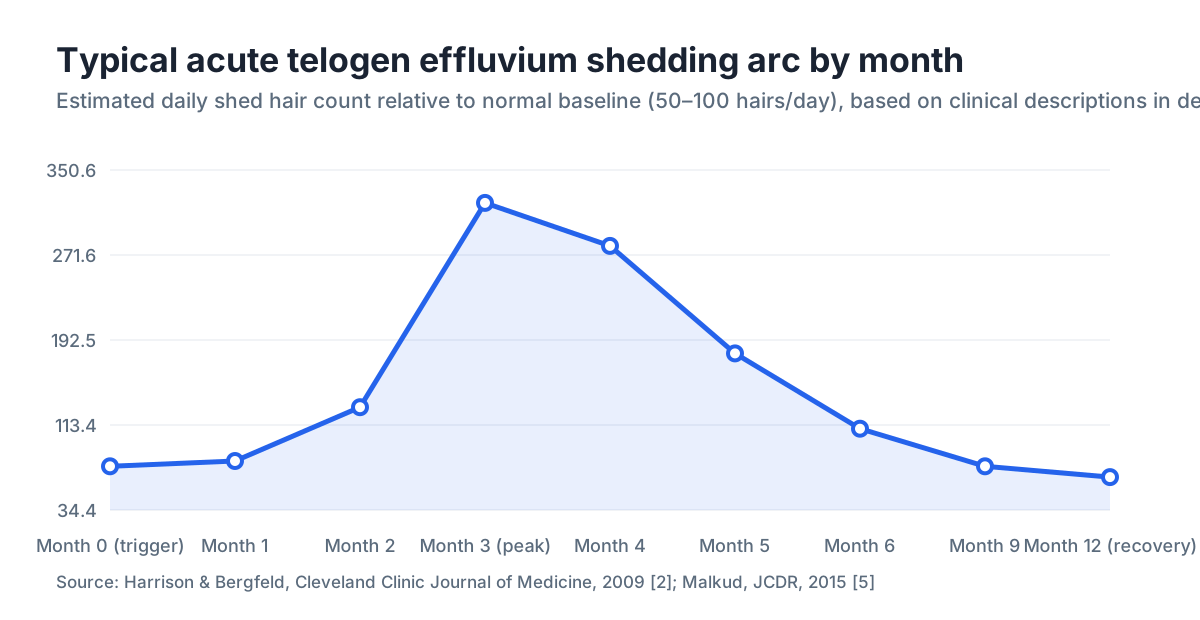
Here is what the typical acute TE arc looks like. This is the most common pattern described in dermatology literature, though individual variation is real and no two cases are identical.
Weeks 1 to 6 after trigger: nothing visible yet. Affected follicles have shifted into telogen but the hairs haven't shed. You may notice nothing, or feel a slight diffuse scalp tenderness in some cases. This is the silent phase.
Weeks 6 to 12: shedding begins. You start seeing more hair in the shower drain, on your pillow, in your brush. Counts averaging 100 hairs per day are the usual upper boundary of "normal"; in TE this can jump to 200 to 400 or more per day [2]. It's alarming, and it's supposed to look alarming. The shed hairs usually have a small white bulb at the root (the telogen club hair), which sets them apart from breakage.
Weeks 12 to 20: the peak. For most acute TE this is the worst stretch. Shedding is at its heaviest, and overall density drops visibly. Compare to photos from before the trigger and the difference is real. Parting looks wider. Ponytails feel thinner. This is when most people show up in a dermatologist's office.
Months 4 to 6: shedding slows. Once the pool of disturbed follicles has finished shedding, fewer are left to shed. You'll notice less hair in the drain. New short hairs (regrowth fuzz) start appearing at the hairline and temples.
Months 6 to 12: visible regrowth. For acute TE with the trigger removed, most patients see clearly improved density by month 9. The American Academy of Dermatology notes that full recovery from acute TE typically takes 3 to 6 months after the trigger resolves, with some cases stretching to 12 months for full cosmetic restoration [4].
Month 12 and beyond: full recovery or re-evaluation. If shedding is still elevated after 12 months, this is no longer behaving like simple acute TE. At this point a full workup for chronic TE, underlying androgenetic alopecia, or other dermatological causes is warranted.
One quotable fact here: a study in the Journal of Clinical and Diagnostic Research found that roughly 95% of acute telogen effluvium cases resolved on their own within 6 months of trigger removal [5].
How long does chronic telogen effluvium last?
Chronic TE is diffuse shedding that lasts more than 6 months [2]. It's less well understood than acute TE and has a more variable timeline.
Some chronic cases fluctuate, with periods of heavier and lighter shedding, rather than following a clean onset-peak-recovery arc. Dermatologist Vera Price formally described and characterized the condition; her 1996 paper in the Archives of Dermatology is still cited often. Price described chronic TE as mostly affecting women aged 30 to 60 and noted that many patients had no single identifiable trigger [6].
Common reasons acute TE becomes chronic:
- An unresolved or ongoing trigger (persistent caloric restriction, undiagnosed thyroid disease, ongoing iron deficiency)
- Underlying androgenetic alopecia that the TE episode unmasked
- Multiple overlapping triggers firing one after another
Ferritin deserves its own callout. Multiple dermatology researchers have suggested that serum ferritin below 30 ng/mL, and possibly below 70 ng/mL in women with active shedding, tracks with persistent TE [7]. This is a correctable cause, but it takes time. Iron stores rebuild slowly, and hair response to iron repletion can lag by 3 to 6 months after levels normalize.
Chronic TE does resolve for most patients, but the timeline is genuinely unpredictable. Most dermatologists give a realistic range of 1 to 3 years for chronic cases, versus 3 to 9 months for acute.
How do you tell telogen effluvium apart from permanent hair loss?
This is the question that drives most of the anxiety around TE, and it's fair to say it's not always easy to answer at home. There are real distinguishing features though.
Pattern matters. TE causes diffuse shedding across the whole scalp. Androgenetic alopecia (male or female pattern hair loss) follows specific patterns: the Norwood scale for men concentrates loss at the hairline and crown; female pattern loss concentrates at the part width and crown while the frontal hairline is often preserved [4]. A widening part in the center of the scalp with preserved temples looks more like AGA in women. Diffuse thinning everywhere, including the sides and back, looks more like TE.
Shedding rate matters. AGA is a slow, low-level process. You lose ground over years, not weeks. A sudden jump from 50 to 100 hairs per day to 200 to 400 per day, especially with a clear trigger a few months back, points hard at TE.
Pull test. A dermatologist can do a gentle pull test: grasping 50 to 60 hairs and pulling firmly. More than 10% extracted counts as positive for active shedding and supports TE [2].
The overlap problem. TE and AGA often coexist, and that makes things genuinely harder to sort out. TE can unmask AGA that was subclinical: follicles that would have miniaturized over 5 more years do it faster when hit by a systemic stressor. Here, shedding slows once the TE resolves, but overall density never fully returns to baseline because the AGA was already progressing quietly underneath. For men, learning about finasteride and minoxidil for men is relevant if pattern loss is the main concern once TE settles.
Want an objective starting point? MyHairline's free AI hair scan can analyze photos and separate diffuse shedding from vertex or frontal patterning, which helps clarify whether TE or AGA is the bigger driver.
What actually speeds up telogen effluvium recovery?
Let's be honest about what the evidence supports and what it doesn't.
Remove the trigger. This is the step with the clearest evidence. Nothing else competes with it. Correcting iron deficiency, treating thyroid dysfunction, normalizing caloric intake, stopping an offending medication, or letting postpartum hormones stabilize accounts for most of the spontaneous TE recovery seen in clinical practice.
Nutritional adequacy. Beyond iron, protein intake matters. Hair is almost entirely keratin, and extremely low protein diets (common in crash dieting) starve follicles of building material. There's no magic supplement, but a reasonable diet with adequate protein (at minimum 0.8 g/kg body weight, per standard nutritional guidelines) is the baseline [8]. If you're researching hair loss supplements, the evidence for most of them in TE specifically is thin. Iron and ferritin correction is the one exception with consistent support.
Minoxidil. Dermatologists do use this off-label as a bridge during TE recovery. It won't stop the underlying telogen shift, but it can shorten the anagen latency period (the gap before shed follicles re-enter active growth), possibly trimming a few months off the shedding phase. The FDA has approved minoxidil for androgenetic alopecia, not TE [9], so its use in TE is off-label. The minoxidil side effects article covers what to watch for if you go this route, and oral minoxidil is an increasingly discussed alternative to topical.
Stress reduction. Harder to quantify but real. Ongoing high cortisol can keep the telogen shift going. Sleep, moderate exercise, and dialing down life stressors aren't generic filler here; they directly affect the hormonal environment follicles respond to.
What doesn't help: Shampoos marketed for "thinning hair" have minimal effect on the telogen cycle. Aggressive scalp massage has weak, mixed evidence. DHT blockers like finasteride are for androgenetic alopecia, not for pure TE where DHT isn't the primary mechanism.
What blood tests should you get to find the root cause?
If you've been shedding heavily for more than 8 weeks and have a plausible trigger, a focused blood panel is worth getting. You're hunting for correctable causes, more than confirmation.
The dermatology consensus on a basic TE workup usually includes:
- Complete blood count (CBC): screening for anemia
- Serum ferritin: the most sensitive iron store marker; target above 30 ng/mL at minimum, some experts argue above 70 ng/mL for hair-specific endpoints [7]
- Thyroid-stimulating hormone (TSH): both hypothyroidism and hyperthyroidism can drive TE
- Free T4: if TSH is abnormal
- Serum zinc: deficiency is uncommon on Western diets but shows up with restrictive eating
- Vitamin D (25-OH): low vitamin D has been linked to various alopecias, though causality in TE specifically isn't firmly established
- Metabolic panel: liver and kidney function that can affect the hair cycle
- ANA (antinuclear antibody): if lupus-related hair loss is suspected based on other symptoms
A dermatologist may also do a trichoscopy (dermoscopy of the scalp) or, in complex cases, a scalp biopsy. A 4mm punch biopsy read by a dermatopathologist is the most definitive way to confirm TE and rule out scarring alopecias [2].
Get these tests through your primary care physician or a board-certified dermatologist. The AAD has a dermatologist finder on its site if you need to locate one [4].
Does telogen effluvium cause permanent hair loss?
In pure, acute TE with the trigger fully removed: no, it does not cause permanent hair loss. The follicles are alive and functional. They've just been pushed into the resting phase for a while. Once they re-enter anagen they produce normal hair shafts [2].
The caveats to that clean answer matter though.
First, if TE is severe and prolonged, some researchers have raised questions about whether extreme or repeated episodes might cause some degree of follicle exhaustion. This is not well documented in controlled human studies.
Second, and more practically, TE often coexists with or unmasks underlying AGA. If those miniaturizing follicles were already headed toward permanent loss, the TE episode doesn't cause the permanence, but it does speed up visible thinning. The patient correctly senses that they didn't fully recover to their pre-TE density, but the cause is AGA progression, not TE damage.
Third, if chronic TE is left with an untreated cause (years of iron deficiency, years of severe dietary restriction), the cumulative effect on follicle health is less clear. Most clinicians play it safe and recommend correcting iron deficiency even at borderline levels for this reason.
If you're genuinely worried about permanent loss, a consultation to separate TE from AGA is the right move. For men with classic pattern recession alongside the diffuse shedding, reading about receding hairlines and what sets them apart from diffuse loss can help frame what you're seeing.
How is postpartum telogen effluvium different from other types?
Postpartum TE is the most common version of the condition, and it has a cleaner, more predictable timeline than most other types. During pregnancy, estrogen runs very high. Estrogen prolongs the anagen phase, so many follicles that would normally cycle into telogen don't. The result is the famous lush pregnancy hair.
After delivery, estrogen drops sharply. All those follicles held in extended anagen now shift to telogen at once. The shed, averaging 1 to 5 months after delivery, can be dramatic [3].
What makes postpartum TE distinct:
- The trigger (estrogen withdrawal) is predictable and self-resolving
- The timing is consistent: most women shed heaviest between 3 to 5 months postpartum
- The recovery is generally reliable: most cases fully resolve by 12 months postpartum
- It has nothing to do with breastfeeding, despite the stubborn myth that breastfeeding causes or worsens the shedding
Postpartum TE doesn't need treatment in most cases. Reassurance, nutritional adequacy (especially iron, which depletes with childbirth blood loss), and patience are the standard recommendation. If shedding runs past 12 months postpartum, an evaluation for AGA or thyroid dysfunction is appropriate [3].
When should you see a dermatologist instead of waiting it out?
Waiting is fine for acute TE with a clear trigger you've already addressed. Waiting is not fine in several scenarios.
See a dermatologist if:
- Shedding has lasted more than 6 months with no sign of slowing
- You can't identify a trigger and shedding started with no explanation
- You have scalp symptoms: redness, scaling, burning, or itching (these point toward conditions other than TE)
- You're also losing eyebrow or eyelash hair (suggests alopecia areata or systemic disease)
- You're a man and the pattern looks more like frontal or vertex recession than diffuse loss
- Basic blood work comes back normal and shedding is still heavy
- You notice patches of complete hair absence, more than thinning
The AAD recommends seeing a board-certified dermatologist for any hair loss that is distressing, progressive, or paired with other symptoms [4]. A scalp biopsy, while invasive, can definitively rule out scarring alopecias, a category of permanent hair loss that can sometimes mimic TE in its early stages.
For tracking your shedding and comparing photos over time before a dermatology appointment, a tool like MyHairline's free AI scan gives you a visual baseline. It won't replace a clinical diagnosis, but side-by-side photos with consistent lighting over several months give a dermatologist far better information than verbal descriptions.
Can you have telogen effluvium more than once?
Yes, and it's more common than most people expect. TE is not an immune event, so having it once doesn't protect you. Anyone with a big enough physiological trigger can get another episode.
Some people are more prone to TE than others. This likely reflects individual variation in follicle sensitivity to systemic stress signals, though the genetics aren't well mapped. Women get diagnosed with TE more often than men, partly because diffuse shedding is easier to notice against a longer hair baseline, and partly because women face more of the common triggers (postpartum hormone shifts, iron deficiency from menstruation, hormonal contraceptive changes) [2].
If you've had TE before, you're not more likely to have it again just because of history. But the triggers that caused it the first time are probably still in your life. Recurrent crash dieting, recurrent high-stress periods, or ongoing suboptimal iron can produce repeated episodes. Addressing the underlying pattern of the trigger, more than each individual episode, is the more useful goal.
Repeated TE episodes on a background of AGA are worth taking seriously. Each episode can speed up visible AGA progression, even if the TE itself would resolve. Here, treating the AGA component with finasteride or minoxidil makes more sense than waiting out each TE cycle. The combination approach in finasteride and minoxidil together is worth reading if you're in this position.
Sources
- Blume-Peytavi U et al., Journal of the American Academy of Dermatology, 2016, Hair growth and disorders, normal follicle cycling percentages
- Harrison S, Bergfeld W, Cleveland Clinic Journal of Medicine, 2009, Diffuse hair loss: its triggers and management
- Grover C, Khurana A, Indian Dermatology Online Journal, 2013, Telogen effluvium: a review
- American Academy of Dermatology, Hair loss: diagnosis and treatment
- Malkud S, Journal of Clinical and Diagnostic Research, 2015, Telogen effluvium: a review
- Price VH, Archives of Dermatology, 1996, Telogen effluvium, including chronic telogen effluvium
- Rushton DH, Clinical and Experimental Dermatology, 2002, Nutritional factors and hair loss
- National Institutes of Health Office of Dietary Supplements, Dietary Reference Intakes: protein
- FDA, Minoxidil topical solution prescribing information / OTC labeling
- Mieczkowska A et al., Journal of the European Academy of Dermatology and Venereology, 2021, Telogen effluvium after SARS-CoV-2 infection
- Trüeb RM, International Journal of Trichology, 2009, Oxidative stress in ageing of hair