

TL;DR: Telogen effluvium (TE) is diffuse, all-over shedding triggered by a physical or emotional shock 2 to 3 months before the hair actually falls. The main signs: clumps on your pillow and in the shower drain, a positive pull test, and a visibly thinner ponytail. Most cases resolve on their own within 6 to 12 months once the trigger is gone.
What does telogen effluvium actually feel like day to day?
The first sign isn't the mirror. It's the shower drain. You're standing there one morning staring at a clump of hair, trying to remember how full your ponytail used to be. That's telogen effluvium as most people first meet it.
Normally you shed between 50 and 100 hairs a day. A scalp with active TE can drop 300 or more [1]. The jump is big enough to see on your pillow, on your brush, on the bathroom floor, and on the collar of dark shirts.
The scalp itself usually doesn't hurt. Some people report itching or a tender feeling at the roots, thought to come from inflammation around follicles cycling early, but pain isn't a defining feature. A scalp that's genuinely painful or scaly points to something else entirely.
TE sheds from everywhere at once, so there's no pattern to it. No receding temple. No bald crown. The hair just thins all over, the ponytail shrinks, and the part line looks wider. That diffuse quality is the single best clue that separates TE from androgenetic alopecia (pattern baldness).
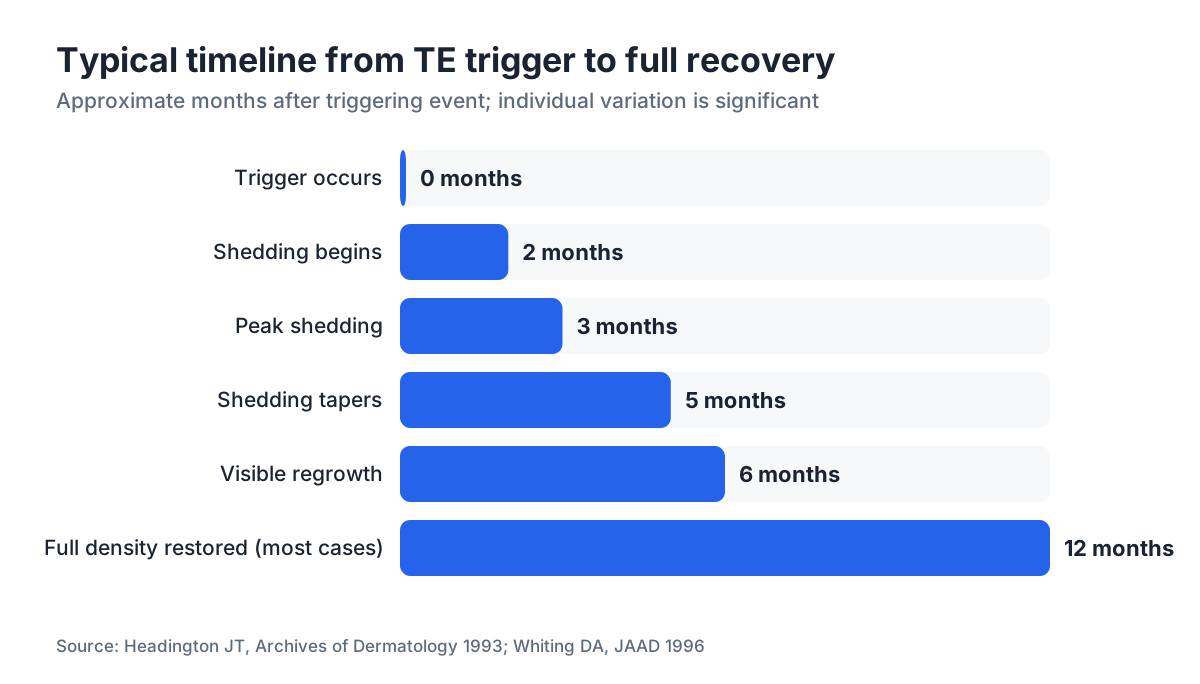
Shedding usually peaks around 3 to 4 months after the trigger, then tapers. Here's the disorienting part: by the time you're standing in the shower horrified, the thing that caused it is already months in the rearview. That 2 to 3 month lag trips almost everyone up.
What are the specific symptoms of telogen effluvium to watch for?
Here's what TE produces, symptom by symptom.
Diffuse shedding across the whole scalp. Not patchy. Not temple-first. All over. This is the hallmark. Run your fingers through the crown, the sides, and the nape. Shedding should feel about equal everywhere [2].
A positive pull test. A dermatologist grasps 40 to 60 hairs near the scalp between thumb and forefinger and slides firmly outward. In active TE, more than 10% of those hairs release. That's more than 4 to 6 hairs per grab. You can run a crude version at home: pull a small bundle gently. Losing more than 5 or 6 hairs from one tug is suspicious [2].
Telogen club roots on shed hairs. Look at the hairs you're losing. At the root end you should see a small white or pale bulb, shaped like a golf club or a match head. That's the telogen (resting phase) root. Hairs that snap mid-shaft are a different problem. A consistent white club root confirms telogen phase loss [3].
A wider part. For women with longer hair especially, the center or side part looks noticeably wider because volume dropped uniformly across the scalp.
A thinner ponytail. This one is measurable. Some clinicians track ponytail circumference with a flexible tape as a simple gauge of progress. People often describe the circumference dropping by 30 to 50%.
Possible scalp sensitivity. A crawling feeling or tenderness at the scalp shows up for some people. It isn't universal, but it's documented. Grover and Khurana's 2013 review in the Indian Journal of Dermatology lists scalp dysesthesia among the associated symptoms in some TE patients [10].
What TE does not produce: complete bald patches, a defined hairline recession, or scarring. See any of those and the diagnosis changes.
How is telogen effluvium different from other types of hair loss?
Getting this distinction right matters, because the treatment path splits completely depending on the answer.
| Feature | Telogen effluvium | Androgenetic alopecia | Alopecia areata |
|---|---|---|---|
| Pattern | Diffuse, all-over | Patterned (temples, crown) | Round bald patches |
| Onset | Sudden, 2-3 months post-trigger | Gradual, years | Can be sudden |
| Pull test | Positive (active phase) | Usually negative | Usually positive at patch edges |
| Hair root on shed | White telogen bulb | Telogen bulb (variable) | Exclamation-mark hairs |
| Reversal | Usually self-limiting | Ongoing without treatment | Unpredictable |
| Typical age | Any age, any sex | Increases with age | Any age |
Androgenetic alopecia (pattern hair loss) is the most common cause of thinning, affecting roughly 50% of men by age 50 and up to 40% of women by age 70 [1]. It follows the Norwood scale in men and the Ludwig scale in women. TE ignores both patterns.
Alopecia areata is autoimmune. It makes discrete, smooth, coin-sized bald patches, and the hairs at the patch edge often taper to a point (exclamation-mark hairs). That's not TE.
TE and androgenetic alopecia can run at the same time, which muddies the picture. A woman in her early 40s might have mild pattern thinning at the crown plus an acute TE episode set off by surgery. A dermatologist sorts this out, sometimes with a scalp biopsy or trichoscopy when the clinical picture is unclear. Our guide on what causes hair loss walks through the full list of causes.
What triggers telogen effluvium symptoms in the first place?
The biology is simple enough. Hair follicles cycle through growth (anagen), regression (catagen), and rest (telogen). Something shocks the system, a large batch of anagen follicles all shift into telogen at once, and about 2 to 3 months later new growth pushes those resting hairs out. That mass exit is the shedding you see [3].
Common triggers:
Physical stressors: Major surgery, high fever (COVID-19 included), rapid weight loss (more than about 20 lbs in a few months), childbirth (postpartum TE is one of the most common variants), severe illness, and crash diets.
Nutritional deficiencies: Iron is the most studied. A ferritin below about 30 ng/mL is the threshold cited most often in the dermatology literature as the point where hair growth suffers, though the exact cutoff is still debated [4]. Zinc, biotin, and protein shortfalls can add to it.
Medications: A long list of drugs carries alopecia as a documented side effect, including some antidepressants, beta-blockers, retinoids, anticoagulants, and hormonal contraceptives. The FDA prescribing information for many of these lists alopecia as an adverse event.
Thyroid dysfunction: Both underactive and overactive thyroid can cause diffuse shedding. That's why most dermatologists order thyroid labs early in a TE workup.
Psychological stress: Real, but harder to pin down. Severe acute emotional stress can set off TE, though the effect is smaller and messier to isolate than surgery or childbirth.
Chronic telogen effluvium is a separate, persistent form. It lasts more than 6 months, often has no single clear trigger, and tends to hit middle-aged women. It fluctuates, and it's frustrating to diagnose [5].
For a deeper breakdown of trigger categories, see our main telogen effluvium article.
How long do telogen effluvium symptoms last?
This is the question everyone asks first. The honest answer: most cases fully resolve within 6 to 12 months of removing the trigger [5]. That range comes from clinical observation rather than one big randomized trial, so individual variation is real.
The timeline usually runs like this. A stressor hits. Three months later, shedding peaks. Over the next 2 to 4 months it declines as the synchronized follicles return to anagen. Full density comes back within 6 to 12 months of when shedding started, assuming the trigger is gone.
The catch is the trigger. If the cause sticks around (ongoing nutritional deficiency, untreated thyroid disease, a medication you're still taking), the shedding continues. Some people cycle in and out of TE for years without ever finding the root problem.
Chronic TE, defined as lasting more than six months, sits in its own category with a less predictable timeline. It waxes and wanes instead of resolving cleanly. Whiting's 1996 study in the Journal of the American Academy of Dermatology described chronic TE as a distinct entity mostly affecting women aged 30 to 60, with spontaneous improvement possible but not guaranteed [5].
TE rarely causes permanent loss. The follicles are still there, just temporarily offline. That's the difference between TE and scarring alopecias, where follicle destruction is permanent.
What does a doctor look for to diagnose telogen effluvium?
A dermatologist diagnosing TE runs through several steps in one visit.
First, a detailed history. They'll ask about events 2 to 4 months before the shedding started: surgeries, illnesses, big stress, diet changes, new medications, pregnancy, rapid weight swings. The timeline is often the most diagnostic piece of the whole visit.
Second, the pull test (described above). A positive pull test alongside diffuse shedding and a matching history is often enough for a clinical diagnosis.
Third, blood work. A standard TE panel covers complete blood count (for anemia), ferritin, thyroid-stimulating hormone (TSH), total testosterone and DHEA-S in women (to rule out androgen excess), vitamin D, zinc, and sometimes inflammatory markers. The American Academy of Dermatology recommends lab evaluation as part of the initial workup for diffuse hair loss [6].
Fourth, trichoscopy. A dermatoscope lets the clinician examine the scalp at 10 to 70x magnification without cutting anything. In TE you'd expect mostly telogen and short regrowing hairs, and an absence of the miniaturized follicles that mark androgenetic alopecia.
Fifth, scalp biopsy. Not always needed, but when the diagnosis is genuinely unclear, a 4mm punch biopsy read for the telogen-to-anagen ratio can confirm TE. In active TE, the telogen count in a horizontal section typically tops 25% of follicles, against a normal 10 to 15% [3].
If you want a rough read on your shedding before booking an appointment, the free AI hair scan at MyHairline can help you document visible changes over time. It's a tracking tool, not a clinical diagnosis.
Can telogen effluvium cause permanent hair loss?
Rarely, and only in specific circumstances.
In most acute TE cases the follicles stay intact and regrowth is complete. The American Academy of Dermatology describes telogen effluvium as generally reversible [6]. That's the consensus.
There are exceptions. First, if TE repeats over many years in someone who also has underlying androgenetic alopecia, each shed cycle can reveal more miniaturized hairs. The TE isn't causing permanent loss; it's exposing progression that was happening anyway. Second, in severe nutritional deficiency left untreated for a long stretch, some follicle atrophy is possible, though it's uncommon. Third, chronic TE running for years in perimenopausal women is linked to some persistent thinning, though even then the follicles usually survive.
The practical takeaway is short. Address the trigger promptly and completely, and permanent loss is unlikely. The urgency is in finding and fixing the cause, not in chasing any particular hair product.
What treatments actually help telogen effluvium symptoms?
The main treatment is fixing the trigger. That isn't a platitude. It's the single most effective thing you can do, and no cream or pill beats it.
If labs show ferritin below 30 to 40 ng/mL, iron supplementation (typically 150 to 200 mg of elemental iron daily, taken with vitamin C for absorption) makes sense. Optimizing ferritin in iron-deficient women with TE improves shedding, though results take 3 to 6 months [4]. If thyroid disease turns up, treating it often clears the TE on its own.
Minoxidil. This is the only FDA-approved topical for hair loss, used off-label in TE to speed regrowth. It doesn't stop the shedding phase itself, but it may shorten the time to visible regrowth by extending the anagen phase of new hairs. The 2% and 5% topicals are over the counter [9]. Heads up: minoxidil causes its own shedding burst in the first 2 to 6 weeks, which can rattle you when you're already shedding hard. There's a full breakdown at minoxidil side effects, and general use for men at minoxidil for men. Oral minoxidil at low doses (0.25 to 1.25 mg daily) is showing up more often off-label for diffuse hair loss.
Finasteride and DHT blockers. Finasteride is FDA-approved for male pattern hair loss. It doesn't treat TE (it doesn't address the trigger), but it can help men whose TE has exposed underlying androgenetic thinning. See DHT blocker for context. In women, finasteride use is largely off-label and needs careful thought.
Nutritional support. Beyond iron, low protein intake stalls hair growth because hair is almost pure keratin. Adequate protein (at least 50 to 60g daily for most adults, often more) matters. Zinc and vitamin D deficiency are also tied to hair loss, but supplementing when your levels are already normal adds nothing [7]. Our hair loss supplements guide has a grounded rundown.
What doesn't help: biotin in people who aren't deficient (deficiency is rare), pricey scalp serums with no clinical evidence, and stress-management claims with no hair-specific outcome data behind them. Spend that money on the lab tests instead.
How is telogen effluvium in women different from men?
TE hits both sexes, but women get diagnosed far more often. Part of it is longer hair, which makes diffuse thinning easier to see. Part of it is that women face more of the common triggers: postpartum recovery, hormonal contraceptive changes, iron loss from menstruation, and thyroid disease, which affects women at roughly 5 to 8 times the rate of men [8].
Postpartum TE earns its own mention. During pregnancy, high estrogen keeps more follicles in anagen. After delivery, estrogen drops sharply and those follicles synchronize into telogen. Shedding usually starts around 3 to 4 months postpartum and can feel dramatic, but it almost always resolves by 12 months postpartum without any treatment [6]. It's one of the most common forms of TE worldwide.
In men, TE often slips by at the same severity because shorter hair hides diffuse thinning. Men are also more likely to carry coexisting androgenetic alopecia, which complicates the read. A man who already has a receding hairline may not realize the extra shedding is a separate, potentially reversible process stacked on top of ongoing pattern loss.
Stressed women in their 30s and 40s with no obvious single trigger make up the bulk of chronic TE cases. Bloodwork matters most in this group, because subclinical iron deficiency and thyroid problems show up often and treat easily.
What should you track at home to monitor your symptoms?
Dermatologists often can't gauge severity from a single visit. Data you collect yourself helps enormously.
The daily hair count is the most practical tool. After shampooing, count the hairs that collect in the drain or on a white towel. Do it every wash day for 2 to 4 weeks. Counts consistently above 150 to 200 per wash (if you wash daily, adjust if you wash less often) are clinically significant [2]. This gives you objective proof of whether shedding is climbing, plateauing, or easing.
Photographs under consistent lighting, same spot, same parting, every 4 to 6 weeks. The width of your part and the density at the temples track most easily. Standardizing the conditions matters more than the camera.
Ponytail circumference, if your hair is long enough. Use a flexible tape at the same point each time. A drop of more than 20% over a few months means something.
A symptom diary noting shedding volume, possible new triggers (illness, stress events, diet changes), and any new medications. The 2 to 3 month lag between trigger and shedding means you'll be looking backward when you try to name the cause.
If you want a structured way to record what your scalp looks like over time, the free AI scan at MyHairline can photograph and track visible changes you can then hand to a dermatologist.
When should you see a dermatologist about shedding?
See a dermatologist if any of these apply.
You're losing more than 150 hairs per wash day, consistently, for more than 4 weeks. The shedding has run past 4 to 6 months with no improvement. You also notice bald patches, a clearly receding hairline, or localized thinning. Your scalp shows visible inflammation, scaling, or scarring. You're a woman and your periods have gone irregular alongside the shedding (that can point to PCOS or thyroid disease). Or you recently started a new medication and the timing lines up.
Plenty of people wait too long, hoping it clears on its own. Sometimes it does. But if there's an underlying nutritional deficiency or thyroid problem, every extra month without treatment means more shed cycles before recovery. Early labs cost far less than cleaning up after a prolonged deficiency.
No dermatologist handy? A general practitioner can order the basic bloodwork (CBC, ferritin, TSH) that catches the most common reversible causes. That's a reasonable first move while you wait on a specialist referral.
Sources
- American Academy of Dermatology, Hair Loss Overview
- Mubki T et al., 'Evaluation and diagnosis of the hair loss patient: Part I.' Journal of the American Academy of Dermatology, 2014
- Headington JT, 'Telogen effluvium: new concepts and review.' Archives of Dermatology, 1993
- Trost LB et al., 'The diagnosis and treatment of iron deficiency and its potential relationship to hair loss.' Journal of the American Academy of Dermatology, 2006
- Whiting DA, 'Chronic telogen effluvium: increased scalp hair shedding in middle-aged women.' Journal of the American Academy of Dermatology, 1996
- American Academy of Dermatology, Hair Loss: Diagnosis and Treatment
- Almohanna HM et al., 'The role of vitamins and minerals in hair loss: a review.' Dermatology and Therapy, 2019
- National Institute of Diabetes and Digestive and Kidney Diseases, Thyroid Disease
- U.S. Food and Drug Administration, Drugs
- Grover C and Khurana A, 'Telogen effluvium.' Indian Journal of Dermatology, Venereology and Leprology, 2013