

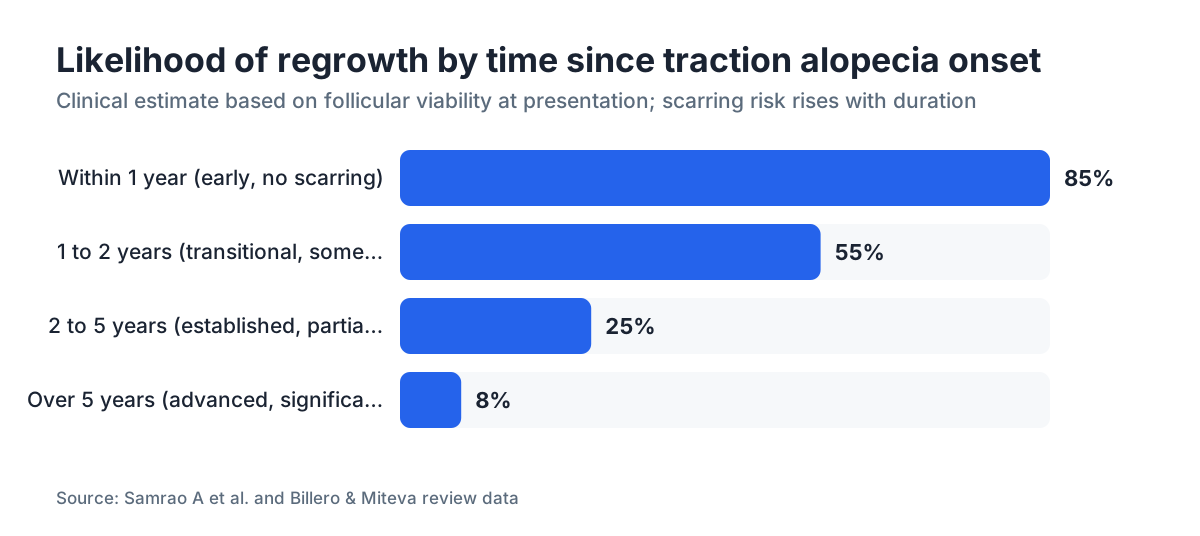
TL;DR: Traction alopecia can fully reverse if you stop the tension early, before scarring sets in. Once follicles are permanently destroyed, regrowth is not possible without a transplant. Most dermatologists say you have the best odds within the first two to three years of hair loss. The earlier you act, the more follicles you can save.
What is traction alopecia and what actually causes it?
Traction alopecia is hair loss caused by repeated or prolonged mechanical tension on the hair shaft and follicle. It's not a disease you catch. It's a physical injury that builds up over time.
The follicle sits anchored in the dermis. When you apply constant pulling force, through tight braids, weaves, high ponytails, locs, extensions, or chemical relaxers combined with tension, the follicle gets dragged upward toward the scalp surface. That repeated trauma causes inflammation, then progressive miniaturization of the hair shaft, and eventually, in severe cases, fibrous scarring that fills the follicular canal entirely [1].
It's one of the most common forms of hair loss in Black women, with prevalence estimates ranging from 17% to nearly 32% in some study populations [2]. But it affects anyone who wears their hair in sustained traction: athletes who wear tight ponytails daily, Sikh men whose hair is bound under a turban, or toddlers whose caregivers braid tightly.
The front hairline and temples go first. That's where the hair is finest and the follicles are shallowest. You'll notice small broken hairs, then a fringe of fine, sparse hairs at the margin, then outright bald patches. The pattern is almost always symmetric and maps directly to wherever the tension is greatest.
Can pulled hair follicles actually grow back?
Yes, sometimes. The honest answer depends entirely on whether the follicle is still alive.
A follicle that has been traumatized but not permanently scarred is in a resting or miniaturized state. Remove the source of tension and many of those follicles will wake up and resume cycling within weeks to months [3]. The hair that grows back may be finer at first, but it grows.
A follicle that has been replaced by fibrous scar tissue is gone. Scar tissue doesn't regenerate into functional follicles. No topical, no supplement, no laser changes that. This is the core biological fact that makes early action so consequential.
The difference between reversible and irreversible traction alopecia isn't always obvious from a mirror. A dermatologist examining a scalp biopsy can tell: active inflammation with intact follicles looks very different from fibrosis with absent follicular units. If you're uncertain whether your hair loss is still in the reversible window, that's exactly when to get a clinical opinion rather than waiting another year.
One nuance matters here. Some follicles that look scarred on the surface may still have a viable bulge region deeper in the dermis. Research into this is ongoing, but clinically, the working assumption remains that once a biopsy shows significant fibrotic replacement, regrowth without intervention is not expected [1].
What does recovery actually look like, and how long does it take?
Recovery is slow. Most people want a number, so here it is: expect six to twelve months to see meaningful regrowth after removing the source of tension, and up to two years before you can make a fair judgment about how complete the recovery will be [3].
The first thing that changes is the inflammation. Within a few weeks of stopping tension, scalp tenderness, pustules, or follicular papules usually settle. That's a good sign. It means the acute injury phase is over.
Then the hair cycle has to restart. Damaged follicles may have been pushed into a prolonged telogen (resting) phase. When they re-enter anagen (growth), you'll see fine vellus-type hairs at first, which gradually thicken. This process is genuinely slow, and many people give up before it's had a real chance to work.
Here's a realistic timeline based on clinical reports:
| Stage | Typical timeframe | What you see |
|---|---|---|
| Tension removed, inflammation settles | 2-6 weeks | Reduced scalp tenderness, fewer papules |
| Early regrowth signals | 3-6 months | Fine, short hairs at hairline |
| Substantial regrowth (if reversible) | 6-18 months | Visible density returning |
| Plateau / final assessment | 18-24 months | Stable result; further recovery unlikely |
| Scarring confirmed, no regrowth | After 24 months | Candidate for transplant evaluation |
Patience is not optional here. It's the treatment.
How do you tell if your traction alopecia is still reversible?
A few clinical signs suggest your follicles still have a chance.
The "fringe sign" is one. If you still have a sparse but visible row of short, fine hairs at the hairline margin, those follicles are likely still alive and miniaturized rather than scarred. The complete absence of any hair, with a smooth, shiny scalp surface at the temples, is a worse sign.
Scalp tenderness, small follicular papules, or pustules along the hairline all point to active inflammation, which means follicles are being damaged right now but haven't necessarily died yet. That's a window.
A trichoscopy exam (dermoscopy of the scalp) can show perifollicular inflammation, follicular casts, or reduced follicular density before scarring is complete. A dermatologist doing trichoscopy can give you a more informed prognosis than any home mirror check [2].
A punch biopsy is the definitive answer. It shows whether follicular units are present but miniaturized or replaced by fibrosis. Many people avoid biopsies, which is understandable, but if you've stopped tension for six months and see zero regrowth, a biopsy tells you whether you're waiting for something that isn't coming.
If you want a starting point before booking a derm appointment, tools like the free AI hair analysis at MyHairline can help you document your hairline over time and flag changes worth discussing with a clinician. It's not a diagnosis, but consistent photo tracking matters.
Early presentation to a dermatologist is what gives you the most information and the most options. Every month you wait, the biology moves against you.
What treatments actually help traction alopecia recovery?
The non-negotiable first step is eliminating the tension entirely. Everything else is secondary to that. You cannot treat traction alopecia while still applying traction. This sounds obvious, but many people try to "reduce" tension or switch hairstyles while still wearing extensions or tight styles daily. That does not work.
Once tension is gone, here's what has real evidence behind it:
Minoxidil. Topical minoxidil (2% or 5%) is the most commonly used drug for traction alopecia, and it has a reasonable evidence base for pushing miniaturized follicles back into active growth [4]. The FDA approved minoxidil for androgenetic alopecia [4], and dermatologists use it off-label for traction alopecia given the shared mechanism of follicular miniaturization. It works by prolonging the anagen phase and increasing follicular blood flow. It doesn't reverse scarring. You can read more about how it works and what to expect in our minoxidil for men guide, and if you're considering oral minoxidil, check our oral minoxidil overview first.
Corticosteroids. Intralesional corticosteroid injections (triamcinolone acetonide) reduce acute perifollicular inflammation. They can halt progression and may improve the environment for regrowth in the early scarring phase [3]. Topical high-potency steroids are used similarly, though the evidence there is more anecdotal.
Antibiotics. When follicular papules or pustules are present, a short course of oral antibiotics (typically tetracyclines) reduces the inflammatory bacterial component and is a common part of early treatment protocols [3].
Platelet-rich plasma (PRP). Some case reports and small trials show benefit for PRP injections in traction alopecia, but the evidence base is thin. The cost is high (typically $500 to $1,500 per session, multiple sessions needed) and I'd treat it as experimental rather than a first-line option.
Low-level laser therapy (LLLT). Modest evidence for miniaturized follicles generally, very limited data specific to traction alopecia. Worth mentioning as a low-risk add-on, but not something I'd spend heavily on as your main strategy.
For a broader picture of what causes follicle loss in the first place, what causes hair loss is worth reading alongside this.
Does traction alopecia cause permanent hair loss?
It can. That's the uncomfortable truth most people don't hear clearly enough.
Traction alopecia sits on a spectrum. At the mild end, it's fully reversible: stop the pulling, regrowth happens, done. At the severe end, it becomes a cicatricial (scarring) alopecia, and scarring alopecias are permanent by definition [1]. The transition from reversible to irreversible is gradual and, critically, is happening the entire time you're still wearing the damaging style.
The American Academy of Dermatology says traction alopecia is preventable and that hairstyles causing tension should be avoided or alternated to reduce cumulative follicular damage [5]. That's more than cosmetic advice. It's about protecting follicles before they cross the scar threshold.
Some people wear the same tight hairstyle for a decade, notice the hairline receding, and assume it's genetic. The pattern of loss (symmetric, affecting the frontal hairline, temporal margins, and sometimes nape) and the history of tension hairstyles are the diagnostic clues. If you've been wondering whether a receding hairline is genetic or tension-related, our receding hairline article walks through how to tell the difference.
One more thing worth knowing: traction alopecia and androgenetic alopecia can coexist. You can have both. In that scenario, treating only one while ignoring the other produces incomplete results.
When is a hair transplant the right answer for traction alopecia?
A transplant becomes the conversation when scarring is confirmed and regrowth has plateaued despite appropriate conservative treatment, typically after 12 to 24 months of no tension plus medical management [6].
The key requirement before a transplant is stability. If the scalp is still under tension, or if active inflammation is ongoing, grafts placed into that environment have poor survival rates. The damaging hairstyle has to be permanently stopped, more than paused for the surgery.
Front hairline restoration for traction alopecia is actually one of the more favorable transplant scenarios when the donor area is intact. The temples and anterior hairline are anatomically well-defined targets, and skilled surgeons can achieve natural-looking results. Costs in the US typically range from $4,000 to $15,000 depending on the number of grafts needed, the technique (FUE or FUT), and the practice [6].
One realistic caution: if traction alopecia has been long-standing and the donor zone (usually the occipital scalp) has also been affected by tension hairstyles or by androgenetic loss, donor availability may be limited. Your surgeon needs to assess this specifically.
For context on how hair transplants work and what recovery involves, see our hair transplant guide.
Finasteride or minoxidil after a transplant is sometimes recommended to preserve existing non-transplanted hair, especially if any androgenetic component is present. You can read the comparison at finasteride and minoxidil.
How do you stop traction alopecia from getting worse?
The direct answer: stop the tension permanently, not temporarily.
That means dropping tight braids, weaves, cornrows, high ponytails, buns, and extensions worn under consistent tension. It also means avoiding chemical relaxers combined with tight styling, because relaxers weaken the hair shaft and make tension damage worse [2].
Style alternatives that cut traction include loose braids (where you can slide a finger underneath comfortably), twists worn loose, free-form locs that are never pulled into a style, and wash-and-go natural styles. The test is simple: if your scalp feels tight or tender after styling, the tension is too high.
Sleeping in protective styles isn't necessarily safe. Lying on tight braids for eight hours applies sustained low-grade tension. A silk or satin bonnet and loose nighttime styles help.
For children, the case for intervention is especially strong. Hair follicles in children are still maturing, and repeated early-life traction can set a pattern of miniaturization that becomes apparent only years later [5].
One thing that often gets missed: the weight of extensions and added hair. Heavy extensions attached to fine natural hair apply real gravitational traction even without tight attachment points. Lightweight extensions or keeping added hair volume low reduces this [9].
Is traction alopecia different from other types of hair loss?
Yes, and the differences matter for treatment.
Androgenetic alopecia (pattern baldness) is driven by DHT sensitivity in genetically predisposed follicles. Treatments like finasteride and minoxidil for men work by addressing hormonal signaling or follicular blood flow. Traction alopecia has nothing to do with DHT, so finasteride does not address its cause, though it might still be relevant if androgenetic loss is happening at the same time.
Telogen effluvium is diffuse shedding triggered by systemic stressors (illness, surgery, rapid weight loss) and is generally self-resolving. Traction alopecia is localized, patterned, and mechanical in origin.
Central centrifugal cicatricial alopecia (CCCA) also disproportionately affects Black women and can look similar, but CCCA originates at the crown and spreads outward, whereas traction alopecia starts at the hairline margins [7]. Both can coexist, which makes accurate diagnosis important.
Alopecia areata is autoimmune and creates smooth, well-defined patches anywhere on the scalp. Under dermoscopy the two conditions look very different.
The reason these distinctions matter: wrong diagnosis leads to wrong treatment. Treating presumed traction alopecia with minoxidil alone while missing an underlying CCCA or androgenetic component leaves the real driver unaddressed. A board-certified dermatologist who does trichoscopy is the right person to sort this out.
What does the research actually say about traction alopecia treatment outcomes?
Honest answer: the evidence base is thinner than most people realize, and much of what dermatologists do rests on clinical consensus and case series rather than large randomized controlled trials.
A 2018 review in Clinical, Cosmetic and Investigational Dermatology examining traction alopecia in African American women found that early recognition and cessation of the offending hairstyle are the most effective interventions, with medical therapies (minoxidil, steroids, antibiotics) used as add-ons in the inflammatory phase [2]. The review put prevalence of traction alopecia at 17.1% in this population.
A 2016 report in the Journal of the American Academy of Dermatology noted that regrowth is most likely when patients present early (within one to two years of onset) and when trichoscopy confirms living follicles rather than fibrosis [3].
Minoxidil's mechanism (stimulating follicular blood flow and prolonging anagen) is well-characterized from androgenetic alopecia research [4], and the FDA label for minoxidil states the drug stimulates regrowth in miniaturized follicles. The FDA-approved indication is androgenetic alopecia [4], and dermatologists extend that to traction alopecia based on shared pathophysiology, not a separate traction alopecia trial.
For PRP and LLLT in traction alopecia specifically, the evidence as of 2024 is limited to case reports and very small open-label series. I wouldn't call either evidence-based for this indication yet.
The honest clinical reality is that the intervention with the most evidence behind it is free: stop the traction early.
Could something else be causing your hair loss too?
Traction alopecia is rarely the only thing going on, and that's worth considering before you assume all your hair loss has one explanation.
Androgenetic alopecia starts in a different pattern (diffuse crown thinning or the classic M-shape recession) and is driven by hormonal and genetic factors. You can have both, and the combination accelerates overall loss more than either alone. If your father or maternal grandfather had significant hair loss, a dermatology consult for androgenetic alopecia alongside traction makes sense.
Nutritional deficiencies, especially iron, vitamin D, and zinc, are common contributors to diffuse shedding that can compound traction-related thinning. These are easy to screen for with basic blood work.
Stress-related telogen effluvium causes a different pattern (diffuse, often temporal) but can look confusingly similar to traction alopecia at the hairline. A detailed history and trichoscopy usually separate them.
Some people searching for causes of their hair loss run into claims about supplements and lifestyle factors. Our hair loss supplements article is a good reality check on what's supported by evidence, and what causes hair loss covers the full landscape if you want the broader picture.
If you're unsure what's driving your specific pattern, MyHairline's free AI hair analysis can document your hairline systematically and give you clearer information to bring to a dermatologist.
Sources
- Khumalo NP et al., "Traction alopecia," Dermatologic Clinics, 2014
- Billero V & Miteva M, "Traction alopecia: the root of the problem," Clinical, Cosmetic and Investigational Dermatology, 2018
- Samrao A et al., "The fringe sign - a useful clinical finding in traction alopecia," Journal of the American Academy of Dermatology / Dermatology Online Journal, 2011
- American Academy of Dermatology, "Hairstyles that pull can lead to hair loss," AAD.org
- International Society of Hair Restoration Surgery, patient information, ISHRS.org
- Gathers RC & Jankowski M, "Central centrifugal cicatricial alopecia: past, present, future," Journal of the National Medical Association, 2009
- NIH National Institute of Arthritis and Musculoskeletal and Skin Diseases, NIAMS.gov
- Haskin A & Aguh C, "All hairstyles are not created equal: what the dermatologist needs to know," Journal of the American Academy of Dermatology, 2016
- U.S. Food and Drug Administration, FDA.gov
- Tosti A & Piraccini BM, "Diagnosis and treatment of hair disorders," Dermatologic Clinics, 2006