

TL;DR: Asymmetric hairline recession is normal and very common. Most hairlines recede unevenly because follicles on each side respond differently to DHT, blood supply varies slightly, and habits like sleep position or styling push one side ahead. One-sided thinning that appears suddenly, with scalp symptoms, needs a dermatologist to rule out scarring alopecia or another localized cause.
Is it normal for a hairline to recede more on one side?
Yes. Uneven recession is the rule, not the exception. Most men losing hair notice one temple pulling back faster than the other, sometimes by months, sometimes by years. Dermatologists see this every week.
Your body isn't symmetrical. Your face isn't, your ears aren't, and your follicles aren't either. Each follicle has its own sensitivity to dihydrotestosterone (DHT), its own local blood supply, and its own timing on the growth-to-rest cycle. When androgenetic alopecia starts, it doesn't roll across your scalp like a tide. It picks off individual follicles in a pattern that looks random at first.
What you see in the mirror is usually the opening move of a receding hairline that eventually settles into a recognizable Norwood pattern. Early on, though, the lopsidedness is striking enough that it feels like something separate from ordinary hair loss. It usually isn't. The real question is whether the asymmetry has a structural cause, a behavioral cause, or is just genetics running on a slightly uneven clock.
What causes a hairline to recede faster on one side than the other?
Several things drive this, and more than one can be true at once.
Androgenetic alopecia (male or female pattern hair loss) is the most common cause. DHT shrinks follicles over time, but sensitivity isn't identical across your scalp. The temporal regions tend to thin first, and one side often leads the other by months or years before they land at a similar stage [1]. This is still genetic hair loss. It will eventually form a pattern you can read on the Norwood scale, just not on a matching timeline.
Sleep position gets overlooked. Sleep on the same side every night and that half of your scalp gets more pillow friction, more localized pressure on blood flow, and more mechanical stress on fragile shafts. Over years, that can speed up shedding and visible recession on one side. Silk or satin pillowcases cut the friction. Switching sides deliberately helps too.
Dominant-hand grooming matters more than people expect. Right-handed men tend to brush, pull, and style from the left. Left-handed men do the opposite. Repeated tension in the same direction adds traction stress that wears follicles down.
Traction alopecia from styles that pull harder on one side (side parts held with clips, cornrows starting at one temple, headbands worn off-center) can create genuinely lopsided recession. The American Academy of Dermatology says traction alopecia is reversible in its early stages if you remove the tension, but prolonged pulling causes permanent scarring [2].
Scalp circulation differences are subtle but real. Vascular anatomy varies person to person. One side of the scalp may get slightly less blood flow, which slows delivery of oxygen and nutrients to follicles. Hard to measure in one person, but it's a recognized contributor to uneven loss.
Trauma or scarring can drive one-sided recession after a scalp injury, surgery, radiation, or a skin infection like folliculitis on one side. Scar tissue blocks regrowth permanently wherever it forms.
Understanding what causes hair loss in general helps you figure out which of these fits your situation.
Could a medical condition explain why only one side is thinning?
Possibly. Take it seriously if the asymmetry is pronounced or showed up fast.
Frontal fibrosing alopecia (FFA) is a scarring alopecia that often moves unevenly along the frontal and temporal hairline. It can pass for one-sided recession for months before the fuller pattern shows. FFA destroys follicles in a band of skin permanently, and early treatment with anti-inflammatory or hormonal drugs can slow it [3].
Lichen planopilaris hits the scalp in patches, not always symmetric. You might see mild redness, scaling, or a burning feeling near the thinning area, though some people notice nothing.
Morphea (localized scleroderma) is a rare autoimmune condition that causes fibrosis in one localized area, sometimes on the scalp. It usually shows up as a patch of skin with a different texture or color.
Alopecia areata normally causes patchy oval loss rather than recession, but a temporal patch near the hairline can mimic one-sided recession.
If your recession appeared over weeks instead of months, if the skin there looks different (shiny, red, or scarred), or if you feel any itch or pain, see a dermatologist. A biopsy is often the only way to confirm a scarring alopecia, and these conditions need catching before too many follicles are gone.
How can I tell if my asymmetric recession is pattern baldness or something else?
Timeline is your best first clue. Androgenetic alopecia moves slowly, usually over years. If old photos from two years back show the temples gradually catching up to each other, that's pattern hair loss running its normal uneven course.
Sudden asymmetric loss, loss paired with scalp symptoms, or recession that fits nowhere on the Norwood scale for your age is the flag to dig deeper.
A few things to check yourself:
- Is the hairline edge clean or does it look ragged and irregular? Scarring alopecias tend to wreck the neat line.
- Any redness, scaling, or visible follicle openings (or an obvious absence of them) in the receding skin?
- Is the loss only at the hairline, or are there patches further back too?
- Do any first-degree relatives show the same one-sided early recession? If yes, genetics is almost certainly your answer.
A trichoscopy exam (a dermatoscope reading follicle structure) or a scalp biopsy settles it when the picture is unclear. Both are standard at any dermatology practice that handles hair loss.
Want a quick first look before you book? A free AI hair scan at MyHairline can map the recession and show whether the pattern matches known loss stages.
Does DHT affect both sides of the hairline equally?
No. That imbalance is the core reason asymmetric recession happens at all.
DHT gets made from testosterone by the enzyme 5-alpha reductase, which lives in scalp skin. Follicles in the frontal and temporal zones carry more androgen receptors than the ones on the sides and back. But receptor density isn't identical across every follicle, even on one person's scalp. Some are more sensitive, and those miniaturize faster [4].
On top of that, 5-alpha reductase activity varies locally with blood flow, scalp pH, and microbiome differences. Those can themselves be lopsided if, say, you always part your hair on one side and the skin environment differs there.
Finasteride blocks 5-alpha reductase throughout the body, cutting DHT across the whole scalp. That's why finasteride tends to slow recession more evenly than you'd expect given how uneven the loss started. It pulls the hormone signal out of the equation, so follicle-level sensitivity differences matter less.
Minoxidil works another way, improving follicle blood supply and stretching the growth phase. Because blood supply can be asymmetric, some people see a better early response on one side. It usually evens out.
Can sleep position or hairstyling actually cause one-sided hairline recession?
Yes, though for most people it's an accelerant, not the root cause.
A 2016 study in the Journal of Investigative Dermatology found that mechanical stress on hair follicles causes stem cell fatigue and speeds miniaturization in follicles that are already genetically vulnerable [5]. Follicles that aren't prone to androgenetic alopecia resist that kind of physical stress much better. So if you're predisposed to a receding hairline, years of sleeping on one side can push that side ahead.
Here's the practical read: you probably can't prevent genetic hair loss by switching pillow sides, but you might slow the gap between sides. Silk pillowcases cut friction in a real way. They cost $20 to $40, with a plausible if not strongly proven benefit.
Styling is a bigger factor if your look involves tension. Tight man-buns, high ponytails, cornrows, or regularly pinning one section harder than the other all create traction. Traction alopecia can turn permanent after enough years of steady pull. The AAD names tight hairstyles as a modifiable cause of hairline recession [2].
If you've worn a strong hair part in the same spot for a decade, look hard at that temple. Follicles at a part take repeated tension from brushing, and a side part that always starts from the same place can thin that corner over time.
What treatment options work for asymmetric hairline recession?
The treatment matches any hairline recession. Asymmetry doesn't change the pharmacology. What changes the plan is the cause.
If it's androgenetic alopecia: The two FDA-approved treatments are minoxidil and finasteride. Topical minoxidil applied twice daily is approved for men and women. Oral minoxidil is used off-label but prescribed more often now because dosing is more consistent [6]. Minoxidil for men is the first rung most dermatologists reach for, since it carries no systemic hormonal effect.
Finasteride (1 mg oral daily) is approved for men and lowers scalp DHT by roughly 60 to 70% based on the original trial data [7]. It beats minoxidil alone at the hairline. Most hair loss specialists now recommend running both together. See finasteride and minoxidil for what the combination data actually shows.
If it's traction alopecia: Cut the source of tension. Early traction alopecia can fully reverse. If it's been years, minoxidil may coax some follicles back, but scarred ones won't regenerate.
If it's a scarring alopecia: A dermatology referral isn't optional. Anti-inflammatory drugs, antimalarials like hydroxychloroquine, or hormonal agents get used depending on the type. Minoxidil and finasteride alone will not stop a scarring condition.
If the recession is advanced: A hair transplant moves DHT-resistant follicles from the back of the scalp to the temples. A skilled surgeon can plan around an uneven pattern and design the recipient area for a symmetric final result.
For DHT blockers beyond finasteride, dutasteride (off-label) blocks both type 1 and type 2 of the enzyme and shows stronger DHT suppression in some studies, though it isn't FDA-approved for hair loss in the US [4].
One place to stop spending money: most hair loss supplements have weak or no evidence for hairline recession specifically. Biotin deficiency can cause diffuse shedding, but a biotin pill won't stop androgenetic alopecia at the temples.
Will my hairline eventually even out on its own?
Often, yes. But "even out" usually means the slower side catching up to the more receded one, not the fast side stopping.
Androgenetic alopecia eventually forms a roughly bilateral pattern, because the hormonal mechanism works on both sides. The right and left temporal peaks generally reach the same stage in the end, just not at the same moment. For some people that takes a year or two. For others the gap holds for a decade before it closes.
The catch: evening out isn't recovery. It means the slower side has now lost as much ground as the faster one. Watching and waiting is no strategy if the goal is to keep hair.
If you're weighing treatment, earlier wins. Minoxidil and finasteride preserve living follicles far better than they revive lost ones. Follicles miniaturized for years are hard to bring back. The receding hairline page walks through the Norwood staging system, which helps you gauge how far along you really are.
Should I see a doctor about one-sided hairline recession?
For gradual asymmetric recession that matches what you see in relatives' family photos, a dermatologist visit is useful but not urgent. Start with good information, track your loss with photos over time, and decide on treatment from there.
See a dermatologist soon if:
- The recession showed up within a few months instead of gradually.
- The skin in the thinning area looks or feels different from the rest of your scalp (shiny, tight, red, itchy, or painful).
- The loss doesn't follow the temple-first pattern of androgenetic alopecia.
- You've had a scalp infection, injury, or radiation in that area.
- You're a woman with one-sided temple recession. Female pattern hair loss usually hits the crown, so temple recession in women more often has a secondary cause.
A board-certified dermatologist who focuses on hair loss can run a trichoscopy in-office and tell you in one appointment whether you're dealing with pattern loss, traction, or a scarring condition. That clarity is worth the co-pay.
MyHairline's free AI scan gives you a first read on your hairline pattern before or between appointments, but it doesn't replace a biopsy for anything that looks off.
Does asymmetric recession mean I'll go bald faster?
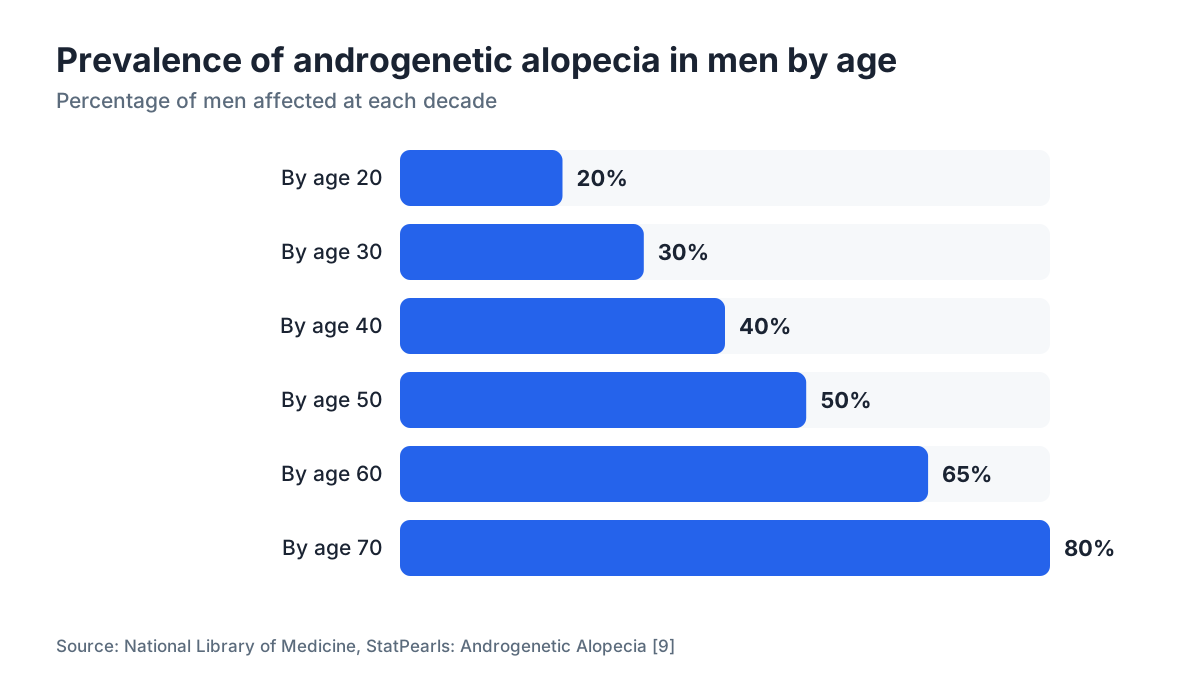
Not necessarily. Early asymmetric recession tells you where you're starting, not how fast or how far the loss will go. Rate and extent are mostly genetic, and one-sided recession is just the early expression of that genetic program.
That said, noticing recession at all at a young age does correlate with more eventual loss, on average. A Danish cohort study published in JAMA Dermatology found that men with early-onset androgenetic alopecia (starting in their 20s) had significantly higher rates of advanced recession by their 40s than men whose loss began after 30 [8]. Early onset is the prognostic flag here, not the asymmetry.
The practical answer: treat the asymmetry as a prompt to assess your situation now, not a verdict on your hairline. Men who start finasteride early, before major follicle loss, get consistently better long-term results in clinical data than men who wait until recession is far along.
What about telogen effluvium causing one-sided shedding?
Telogen effluvium is a diffuse, stress-triggered shed, where a big share of follicles shift at once from the growth phase (anagen) into rest (telogen). It thins the whole scalp, not one side of the hairline.
But it can reveal or worsen underlying androgenetic alopecia. If you already had a slight lean to one side and then hit a major physical or emotional stressor, a serious illness, rapid weight loss, or a nutritional deficiency, the shed can make the more vulnerable side look dramatically worse while the other side bounces back.
Telogen effluvium on its own reverses. Most people see regrowth within 3 to 6 months of the trigger clearing. If the recovered hair doesn't reach its old density, that's a sign androgenetic alopecia was already there and the shed just fast-forwarded the visible timeline.
Nobody has good data on whether telogen effluvium triggers hit one side of a scalp more than the other. Clinically it's handled as diffuse, and any asymmetry gets chalked up to the co-existing pattern loss.
Sources
- American Academy of Dermatology, Hair Loss: Who Gets It and Causes
- American Academy of Dermatology, Hairstyles That Pull Can Cause Hair Loss
- JAMA Dermatology (journal home), review of frontal fibrosing alopecia
- National Library of Medicine, StatPearls: Androgenetic Alopecia
- Journal of Investigative Dermatology (journal home)
- National Library of Medicine, StatPearls: Minoxidil
- National Library of Medicine, MedlinePlus: Finasteride
- JAMA Dermatology (journal home), early-onset androgenetic alopecia and long-term prognosis
- National Library of Medicine, StatPearls: Androgenetic Alopecia
- American Academy of Dermatology, Frontal Fibrosing Alopecia Overview
- National Institutes of Health, MedlinePlus: Hair Loss