

TL;DR: There is no cure for a receding hairline caused by androgenetic alopecia. The word 'cure' is genuinely wrong here. What exists are treatments that slow or stop progression (finasteride, minoxidil), one that restores lost hair semi-permanently (hair transplant surgery), and a handful of adjuncts with modest evidence. The sooner you start, the more you keep.
Is there an actual cure for a receding hairline?
No. Not yet. That's the honest answer, and any product that tells you otherwise is lying to you.
Androgenetic alopecia causes roughly 95% of receding hairlines in men. It's a genetic and hormonal condition driven by dihydrotestosterone (DHT) gradually miniaturizing hair follicles over years [1]. Those follicles don't die immediately. They shrink. That's actually good news, because it means there's a window to act. But no pill, serum, shampoo, or procedure reverses the underlying genetics. The closest thing to a "cure" in the medical literature is a hair transplant combined with a DHT-blocking drug, which restores the look of a full hairline and stops further loss. You're still managing a chronic condition, not curing it.
The American Academy of Dermatology (AAD) lists finasteride and minoxidil as the only FDA-approved treatments for male pattern hair loss, and neither is described as a cure in its labeling [2]. That matters because the FDA label language is precise: finasteride is indicated for "treatment" of male pattern hair loss, not reversal or cure.
So what can you actually do? Quite a bit. The treatments below have real evidence, real numbers, and real limits. Let's go through them honestly.
What causes a receding hairline in the first place?
Understanding the cause is how you pick the right treatment, so this section is worth your time.
In men with a genetic sensitivity to DHT, the hormone binds to androgen receptors in scalp follicles and triggers a miniaturization cycle [1]. Each growth cycle, the hair grows thinner and shorter until the follicle produces only vellus (peach-fuzz) hair, then nothing visible. This is androgenetic alopecia, and it progresses along the Norwood scale from slight temple recession (Norwood 2) to complete crown and frontal loss (Norwood 7).
Not every receding hairline is androgenetic. Telogen effluvium, traction alopecia from tight hairstyles, nutritional deficiencies, thyroid disease, and certain medications can all cause hairline recession that looks similar but responds to completely different treatments. If your hairline started receding suddenly (over weeks rather than years), or you're under 25 and it's moving fast, see a dermatologist before spending money on products aimed at androgenetic alopecia.
DHT is made from testosterone by an enzyme called 5-alpha reductase. That enzyme is the target of finasteride, which is why blocking it works so well. See our breakdown of DHT blockers if you want the mechanism in detail.
Which treatments have real clinical evidence?
Here's where the evidence sits, from strongest to weakest.
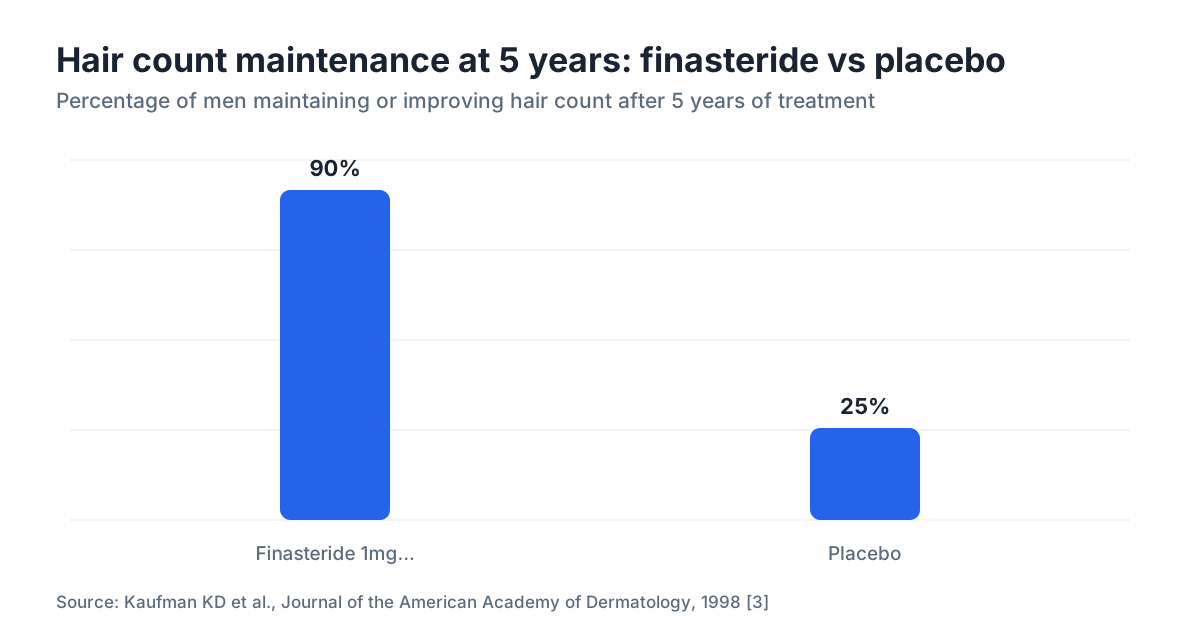
Finasteride (oral) Finasteride 1 mg daily is the most effective medical treatment for male androgenetic alopecia. A two-year placebo-controlled trial in the Journal of the American Academy of Dermatology found that 83% of finasteride-treated men maintained or increased hair count versus baseline, while 72% of placebo-treated men lost hair [3]. A five-year follow-up showed 90% of men on finasteride maintained hair count, and 65% showed visible improvement. The drug inhibits Type II 5-alpha reductase, cutting scalp DHT by roughly 60-70% [4].
Finasteride is prescription-only. It doesn't work as fast as people want: expect 6-12 months before you see visible change, and 12-24 months for full effect. If you stop taking it, the hair you preserved starts falling out within 6-12 months. That's not a side effect. That's the drug stopping its job. Read the full breakdown at finasteride.
Minoxidil (topical and oral) Minoxidil was FDA-approved for hair loss in 1988. It's a vasodilator that shortens the resting (telogen) phase of hair growth and prolongs the active (anagen) phase [2]. A 48-week study of 5% topical minoxidil versus 2% found 45% more regrowth with the higher concentration [5]. Results are visible at 4-6 months for most users. Like finasteride, you stop using it, you lose the benefit.
Topical minoxidil (2% and 5%) is OTC. Oral minoxidil at low doses (0.625-2.5 mg daily for men) is increasingly used off-label and appears to match or exceed topical results in some studies, though it's not FDA-approved for hair loss and carries a slightly different side effect profile.
Combining both drugs beats either alone. See finasteride and minoxidil for how to stack them.
Hair transplant surgery A hair transplant is the only treatment that physically restores hair to a receding hairline. Modern follicular unit excision (FUE) moves individual follicles from the permanent zone at the back and sides of the scalp to the hairline. Results are permanent in the transplanted grafts because those follicles are genetically DHT-resistant. The catch: the native hair around the transplant can still thin, so most surgeons require ongoing finasteride to protect what's not transplanted.
Cost in the US runs roughly $4,000-$15,000 depending on graft count, clinic, and geography [6]. It's not covered by insurance. And it's surgery, with a real recovery period of 7-14 days of visible scabbing and 3-4 months before growth begins.
Low-level laser therapy (LLLT) FDA-cleared (not FDA-approved, a meaningful distinction) laser caps and combs have modest evidence behind them. A randomized controlled trial of the laser cap in men found a 39% increase in hair density over 26 weeks versus sham [7]. The effect is real but smaller than finasteride. These devices typically cost $200-$900 and require 20-30 minutes of use several times a week. They're a reasonable adjunct, not a standalone answer.
PRP (platelet-rich plasma) PRP injections into the scalp use your own blood plasma, concentrated for growth factors, to stimulate follicles. The evidence base is still thin and mixed, but a 2019 meta-analysis found statistically significant increases in hair density and thickness across studies, with an average increase of 45.9 hairs per cm² [8]. Cost runs $500-$2,500 per session and most protocols require 3-4 sessions. The results are not permanent; maintenance sessions every 6-12 months are typical. No standardized protocol exists yet.
How well does finasteride actually stop a receding hairline?
Finasteride is the closest thing we have to a "best cure" for a receding hairline, if we use "best" to mean strongest evidence for stopping and reversing progression.
The five-year study [3] found that among men who took finasteride 1 mg daily continuously:
- 48% showed visible improvement in hair growth at year 5
- 42% had no further loss (stable)
- 10% continued to lose hair despite treatment
That's a 90% success rate by the "didn't get worse" metric. Placebo patients lost an average of 100 hairs per 1-inch diameter circle over the same period.
For the hairline specifically (frontal scalp), finasteride is somewhat less effective than it is at the crown. The crown responds better. That's a real limitation worth knowing. Some men on finasteride see their crown stabilize while their hairline keeps receding slowly. This is why a lot of surgeons combine hairline transplants with finasteride: surgery fixes the front, the drug protects the top.
The sexual side effects of finasteride (decreased libido, erectile dysfunction, ejaculatory issues) affect roughly 1.8-3.8% of users in the original trials [3][4], meaning 96-98% don't experience them. Post-finasteride syndrome, a persistent condition after stopping the drug, is reported in the literature but rare and still poorly characterized. Discuss it with your prescribing doctor.
Does minoxidil regrow a receded hairline or just stop loss?
Both, to varying degrees, and the distinction matters.
Minoxidil does promote regrowth, not only maintenance. The mechanism involves prolonging the anagen (growth) phase and increasing follicle size. In FDA trial data for 5% topical minoxidil, 16% of users reported moderate to dense regrowth, 48% reported minimal regrowth, and 21% reported no change versus baseline after 48 weeks [5]. That's a real spectrum. Some men get meaningful regrowth at the temples; others just slow the loss.
The limiting factor is follicle viability. Miniaturized follicles that are still alive can potentially respond to minoxidil. Follicles that have completely shut down after years of miniaturization don't. This is why starting early matters more than which concentration you pick. For a full rundown on minoxidil for men, including how to apply it properly, see that guide.
One thing worth knowing: minoxidil often causes increased shedding in the first 4-8 weeks. People call it the "dread shed," and it's the drug cycling old telogen hairs out to make room for new anagen hairs. It's temporary. Most people who quit during this phase quit too early and never see the benefit. If you want the full picture on what can go wrong, minoxidil side effects covers it.
What does a hair transplant fix and what does it not?
A transplant restores the visual appearance of a hairline. That's a real outcome and not something to dismiss. For a man at Norwood 3-4 who has lost meaningful hairline territory, a well-executed FUE transplant with a skilled surgeon can produce results that are essentially undetectable.
What it doesn't do: stop the progression of hair loss in non-transplanted areas. This is the part people don't think about. If you transplant 2,000 grafts to rebuild your hairline at age 32 and don't take finasteride, the native hair behind that restored hairline keeps thinning. By 40 you may have a hairline that looks transplanted sitting in front of a thinning crown. Good surgeons factor this into hairline design (building a conservative, mature hairline rather than an aggressive teenage one) and strongly recommend medical therapy alongside the procedure.
You need enough donor hair to make surgery viable. Men with very advanced loss (Norwood 6-7) may not have sufficient permanent-zone donor supply to fill both hairline and crown adequately.
Realistic cost: 1,500-3,000 grafts for a hairline restoration typically runs $6,000-$12,000 in a reputable US clinic. Lower prices exist overseas (Turkey, for example, averages $1,500-$3,000 for similar procedures), but quality control varies enormously and the lack of local follow-up care is a real consideration.
Is there any natural or home remedy that genuinely works?
I'll be blunt: most of them don't work in a way that's been proven in controlled trials.
Saw palmetto, taken as a supplement or applied topically, inhibits 5-alpha reductase weakly. A small 2002 study found 60% of men on saw palmetto reported subjective improvement versus 11% on placebo, but the methodology was poor and hair counts weren't done [9]. A few more recent trials show modest statistical effects, but nothing close to finasteride's magnitude. If you're refusing finasteride over side effect concerns, saw palmetto is a reasonable low-risk supplement to try, understanding the effect may be partial at best. Check the broader evidence at hair loss supplements.
Rosemary oil applied topically got a lot of attention after a 2015 trial in Skinmed found it matched 2% minoxidil for hair count at 6 months, with less scalp itching [10]. It's a genuinely interesting result, but it was a single small trial (100 patients) comparing against 2% rather than 5% minoxidil. I wouldn't call it proven, but I also wouldn't tell someone not to try it given the low risk.
Scalp massage has weak supportive evidence. A 2016 study found 11-20 minutes of daily standardized scalp massage increased hair thickness over 24 weeks in a small group of men [11]. The plausible mechanism is increased blood flow and mechanical stretching of dermal papilla cells. The evidence doesn't support it as a standalone treatment, but combined with minoxidil application it's essentially free and low-risk.
Biotin, caffeine shampoos, and most OTC "hair growth" products have little to no rigorous evidence for androgenetic alopecia. Save your money unless you have a documented biotin deficiency, which is rare.
How do the main treatments compare in effectiveness and cost?
Here's an honest side-by-side so you can decide without hunting through five different sources:
| Treatment | FDA Status | Stops Loss? | Regrows Hair? | Monthly Cost (US) | Permanence |
|---|---|---|---|---|---|
| Finasteride 1mg (oral) | FDA-approved | ~90% of men | Partial (crown > hairline) | $15-$60 | Ongoing (stops if you quit) |
| Minoxidil 5% (topical) | FDA-approved | ~60-70% | Partial | $10-$30 | Ongoing |
| Oral minoxidil 2.5mg | Off-label | Comparable to topical | Similar or better | $10-$40 | Ongoing |
| Finasteride + Minoxidil | Both approved | Additive effect | Better than either alone | $25-$90 | Ongoing |
| FUE Hair Transplant | FDA-cleared devices, surgery unregulated | Yes (transplanted area) | Yes (transplanted area) | $0 (one-time: $4K-$15K) | Permanent in grafts |
| LLLT (laser cap) | FDA-cleared | Modest evidence | Small improvement | $15-$50 amortized | Ongoing use |
| PRP injections | Not FDA-approved | Some evidence | Modest | $150-$800/session | Requires repeat |
| Rosemary oil | Not regulated | Unknown | Possibly (1 trial) | $5-$15 | Ongoing |
The most cost-effective starting point for most men is generic finasteride plus topical 5% minoxidil. That combination costs under $50/month, has the best combined evidence base, and gives you 12-18 months to judge results before considering surgery.
Does starting treatment early really make a difference?
Yes. This is probably the most important practical point in this article.
Finasteride and minoxidil work by preserving viable follicles and extending their growth cycles. They can partially revive miniaturized follicles that are still alive and functional. They cannot revive follicles that have been dormant for years. So the window for non-surgical treatment is finite, and it closes a bit more every year you wait.
A man who starts finasteride at Norwood 2 (early temple recession) has a realistic chance of keeping that hairline for decades with continuous treatment. A man who starts at Norwood 5 may stop further progression but won't regrow the territory already lost without surgery.
Here's the calculus: if your hairline is starting to move and you're under 40, the expected benefit of starting finasteride now far outweighs the roughly 2-3% risk of sexual side effects that resolve in most cases when the drug is stopped. That's my opinion, and it lines up with current AAD treatment guidelines [2].
If you want to understand where you are on the Norwood scale before deciding anything, a baseline assessment helps. The free AI hair analysis at MyHairline can map your current hairline pattern from photos and estimate your Norwood stage, which gives you a starting point for that conversation with a dermatologist.
What should you actually do if your hairline is receding right now?
Concrete steps, in order of priority.
First: figure out what's actually causing it. If you're a man over 25 with gradual temple recession and a family history of male pattern baldness, androgenetic alopecia is almost certainly the cause. If the timeline is rapid, you're younger, or there are other symptoms (fatigue, weight changes, diffuse shedding everywhere, more than the hairline), get bloodwork done first. Thyroid panel, ferritin, CBC, and if you're a woman, androgens. Treating androgenetic alopecia with minoxidil when the real cause is iron deficiency wastes months.
Second: if it is androgenetic alopecia, talk to a dermatologist or a telemedicine hair loss service about finasteride. Get a prescription. Generic finasteride 1 mg is around $15-$30/month from most pharmacies. Add 5% minoxidil foam (OTC, about $20-$30/month). Give the combination 12-18 months.
Third: if you're losing hair faster than medication is holding it, or you want to restore territory already lost, consult a board-certified hair transplant surgeon. Get at least two opinions. Ask specifically what happens to the native hair behind the transplant if you stop finasteride.
Fourth: don't spend money on biotin megadoses, caffeine shampoos, derma-rolling protocols bought from influencers, or anything with "clinically proven" on a supplement label and no citation to an actual peer-reviewed trial. The money is genuinely better spent on generic finasteride.
You can also get a second read on your hairline pattern using the MyHairline AI scan, which uses photo analysis to estimate your Norwood stage and flag whether your pattern looks like AGA or something else worth investigating.
What about women with a receding hairline?
Everything above is mostly about men. Women recede differently.
Female androgenetic alopecia (FAGA) typically shows up as diffuse thinning over the crown and a widening part, rather than the temple recession men experience. True frontal hairline recession in women is less common and more often linked to traction alopecia (tight braids, ponytails, extensions worn long-term) or frontal fibrosing alopecia (FFA), an autoimmune scarring condition that needs a different treatment approach entirely.
For FAGA in women, the only FDA-approved treatment is minoxidil (2% or 5% topical) [2]. Finasteride is generally not used in premenopausal women due to the risk of birth defects if pregnancy occurs, though some dermatologists prescribe it off-label in postmenopausal women. Spironolactone, a different androgen blocker, is commonly used off-label for FAGA in women and has a reasonable evidence base, though it's not FDA-approved for this indication.
If you're a woman and your hairline is receding, the type of recession matters enormously for treatment. A dermatologist who specializes in hair is worth seeing before starting anything.
Are there any treatments on the horizon that might actually cure this?
A few things are genuinely interesting in the research pipeline, though none are close to approval.
Wnt signaling pathway activation is probably the most promising area. Regenerating a follicle from scratch requires signaling the dermal papilla cells to reactivate the growth program. Several biotech companies are working on JAK inhibitors (one, ritlecitinib, is FDA-approved for alopecia areata as of 2023 [12], not for androgenetic alopecia) and Wnt activators. Early phase trials exist but human data is limited.
There's also research into hair follicle cloning, essentially creating new follicles from a patient's own cells to solve the donor supply limit in transplants. This has sat in "almost there" territory for 15+ years without reaching clinical use. Real progress is being made, but commercialization is still years away by most researchers' estimates.
Stem cell therapy applied to the scalp shows promise in early trials but is not proven or approved for AGA.
For now, the treatments described above are what's real. Plan around those.
Sources
- NIH National Library of Medicine, StatPearls: Androgenetic Alopecia
- American Academy of Dermatology, Hair Loss resource center
- Kaufman KD et al. (1998). Finasteride in the treatment of men with androgenetic alopecia. Journal of the American Academy of Dermatology, 39(4), 578-589.
- FDA DailyMed drug label database: Propecia (finasteride) 1 mg tablets
- FDA DailyMed drug label database: minoxidil topical solution 5%
- International Society of Hair Restoration Surgery (ISHRS)
- Lanzafame RJ et al. (2013). The growth of human scalp hair mediated by visible red light laser and LED sources in males. Lasers in Surgery and Medicine, 45(8), 487-495.
- Giordano S et al. (2018). Meta-analysis on evidence of platelet-rich plasma for androgenetic alopecia. International Journal of Trichology.
- Prager N et al. (2002). A randomized, double-blind, placebo-controlled trial to determine the effectiveness of botanically derived inhibitors of 5-alpha reductase in the treatment of androgenetic alopecia. Journal of Alternative and Complementary Medicine, 8(2), 143-152.
- Panahi Y et al. (2015). Rosemary oil vs minoxidil 2% for the treatment of androgenetic alopecia: a randomized comparative trial. Skinmed, 13(1), 15-21.
- Koyama T et al. (2016). Standardized Scalp Massage Results in Increased Hair Thickness by Inducing Stretching Forces to Dermal Papilla Cells. ePlasty, 16, e8.
- U.S. Food and Drug Administration press announcements