

TL;DR: Minoxidil (2% or 5%) is the only over-the-counter treatment FDA-approved for hair loss. It works best for androgenetic alopecia and slows shedding in roughly 60% of users. Everything else sold OTC, including biotin supplements and DHT-blocking shampoos, lacks strong clinical evidence. Prescription options like finasteride often outperform anything on a drugstore shelf.
What OTC treatments are actually approved for alopecia?
One. Minoxidil is the only active ingredient the FDA has approved as an over-the-counter treatment for hair loss, and that approval is specifically for androgenetic alopecia (pattern baldness) in adults [1]. Full stop.
The FDA approved topical minoxidil 2% for women in 1991 and 5% for men in 1997 [1]. Since then, every foam, serum, spray, and shampoo claiming to "restore hair" or "block DHT" on a drugstore shelf is either relying on minoxidil as its active ingredient or making claims that outrun the evidence.
Understanding what "approved" means matters here. FDA approval for an OTC drug means the agency reviewed clinical trial data for safety and efficacy at that specific dose and formulation. A supplement labeled "supports healthy hair" has cleared no such bar. Those products are regulated under a looser framework that does not require proof they do anything before they hit shelves [2].
If you're trying to figure out what causes hair loss before picking a treatment, do that first, because minoxidil only really moves the needle on one type of alopecia.
How does minoxidil work and how well does it actually work?
Minoxidil was originally a blood pressure drug. Doctors noticed patients on oral minoxidil grew unexpected body hair, which led to the topical formulation now sold as Rogaine and dozens of generics.
The exact mechanism is still not completely nailed down. The leading theory is that minoxidil, or rather its active metabolite minoxidil sulfate, opens potassium channels in hair follicle cells. That appears to prolong the anagen (growth) phase and increase follicle size [3]. What it does not do is block dihydrotestosterone (DHT), the hormone that drives most male and female pattern baldness at the follicle level.
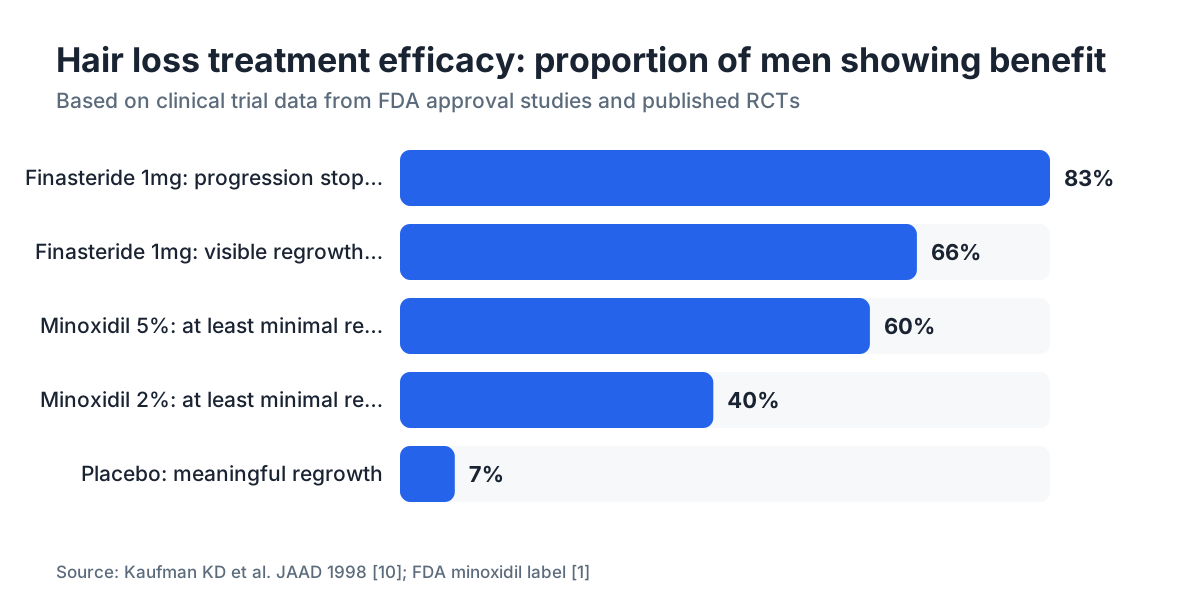
So how well does it work? Clinical trial data from the original FDA approval studies found that 5% topical minoxidil produced "a significantly greater increase in nonvascular hair count" compared to placebo, with about 60% of men in the main efficacy trial experiencing at least minimal regrowth [1]. A 2002 randomized controlled trial published in the Journal of the American Academy of Dermatology found that the 5% foam formulation outperformed 2% solution in men at 48 weeks [4].
In women, a 12-week trial found that 2% minoxidil solution significantly increased total hair count versus placebo, though regrowth was modest for many participants [1].
The honest picture: minoxidil slows loss and produces some regrowth for a meaningful share of users, but it rarely restores a fully thick head of hair, especially if loss is advanced. It also only works while you keep using it. Stop, and the hair you retained typically sheds within three to six months [3].
For a complete look at how it works specifically for men, see minoxidil for men.
What types of alopecia respond to OTC minoxidil?
Androgenetic alopecia (AGA) is what minoxidil is approved and best studied for. AGA is the slow, patterned thinning driven by genetic sensitivity to DHT, and it affects roughly 50 million men and 30 million women in the United States [5].
Alopecia areata is different. It's an autoimmune condition where the immune system attacks hair follicles, causing patchy loss. The American Academy of Dermatology (AAD) notes that minoxidil is sometimes used as an adjunct therapy for alopecia areata, but it is not a primary treatment and is not FDA-approved for this indication [6]. The FDA approved baricitinib (Olumiant) and ritlecitinib (Litfulo) for alopecia areata in 2022 and 2023 respectively, and both are prescription-only.
Telogen effluvium (diffuse shedding triggered by stress, illness, or dietary deficiency) also does not have a strong evidence base for minoxidil. The underlying cause drives recovery. Treating the trigger, whether that's iron deficiency, thyroid dysfunction, or post-illness stress, usually resolves the shedding over time. If you're losing hair in sheets after a major stressor, read about telogen effluvium before loading up on Rogaine.
Traction alopecia, scarring alopecias, and fungal infections causing hair loss need entirely different interventions. Using an OTC minoxidil product on a scalp that needs antifungal treatment, for instance, is a waste of time and money.
What is the right minoxidil dose, form, and application method?
The two approved doses are 2% (solution and foam, approved for women) and 5% (solution and foam, approved for men). Some dermatologists recommend 5% for women who don't respond to 2%, though that is off-label. A 2011 randomized trial found 5% minoxidil foam was more effective than 2% solution in women as well [4].
Solution vs. foam. The original formulations were liquid solutions applied with a dropper. Foam versions came later and are popular because they dry faster and cause less scalp irritation. The propylene glycol in some solutions causes contact dermatitis in a subset of users. If your scalp itches heavily with the solution, switching to foam often helps. See the full breakdown of minoxidil side effects to know what's normal and what isn't.
Frequency. The FDA-approved dosing is twice daily for the solution and once daily for the 5% foam. Many people use the foam once daily for convenience, and observational data suggests once-daily use is nearly as effective as twice daily, though this isn't formally compared in large RCTs.
Application. Apply to a dry scalp, not wet hair. Part your hair to expose the scalp, apply 1 mL of solution (or half a capful of foam), and spread with your fingertips. Wash hands immediately. Minoxidil absorbs through any skin it contacts, so accidental facial hair growth is a real side effect some users report.
Timeline. Expect shedding to increase in weeks 2 through 8. That is normal and reflects follicles cycling into a new growth phase. Real regrowth takes four to six months to see. Judging minoxidil at 90 days is a mistake most people make.
How do OTC topical minoxidil options compare to each other?
There are dozens of minoxidil products now. Here's how the main categories compare.
| Product type | Active ingredient | Concentration | Approved population | Approx. monthly cost |
|---|---|---|---|---|
| Generic 5% solution (e.g., Kirkland) | Minoxidil | 5% | Men (off-label women) | $5-$10 |
| Rogaine 5% foam (branded) | Minoxidil | 5% | Men | $25-$35 |
| Rogaine 2% solution (branded) | Minoxidil | 2% | Women | $20-$30 |
| Generic 2% solution | Minoxidil | 2% | Women | $8-$15 |
| "Hair growth" serums (no minoxidil) | Varies (peptides, caffeine) | Varies | Not FDA-approved | $20-$80 |
| DHT-blocking shampoos | Ketoconazole, saw palmetto | Varies | Not FDA-approved for AGA | $15-$40 |
Generic minoxidil is chemically identical to branded Rogaine. The FDA requires generics to demonstrate bioequivalence [2]. Paying a premium for the Rogaine name is optional.
The "hair growth serums" row deserves a hard look. Products built around peptides (like copper peptides or Redensyl), caffeine, and saw palmetto are marketed aggressively but have no FDA approval and sparse clinical data. Some small studies exist for caffeine-containing shampoos and ketoconazole, but the effect sizes are modest and most trials are short and industry-funded.
Do DHT-blocking shampoos and supplements actually work?
This is where a lot of money gets wasted.
DHT-blocking shampoos often contain ketoconazole (an antifungal), saw palmetto, or both. Ketoconazole 2% shampoo (Nizoral) has some evidence for hair loss. A small 1998 study in the Journal of Dermatology found that 1% ketoconazole shampoo produced hair density improvements comparable to 2% minoxidil in men with androgenetic alopecia [7]. That's a single small trial, not proof of anything settled, and ketoconazole shampoo's FDA-approved use is for dandruff, not hair loss. Still, ketoconazole is probably the most evidence-backed non-minoxidil OTC option on a relative basis.
Saw palmetto in shampoos and supplements is popular. The evidence is thin. A 2020 review in Dermatology and Therapy found that saw palmetto may mildly inhibit 5-alpha reductase (the enzyme that converts testosterone to DHT), but the clinical trial data for actual hair regrowth is weak and inconsistent [8].
Biotin is probably the most over-sold supplement in hair care. The AAD states clearly that biotin supplementation has not been proven to cause hair growth in people who are not biotin-deficient, and true biotin deficiency is rare [6]. A 2017 systematic review in Skin Appendage Disorders found all reported cases of biotin improving hair or nail conditions involved confirmed deficiency [9]. Taking biotin when you're not deficient almost certainly does nothing except give you expensive urine.
For a broader look at what supplements might be worth your money, the hair loss supplements guide covers the evidence more fully.
When should you consider prescription treatments instead?
If you've used 5% minoxidil consistently for six months and seen minimal response, or if your hair loss is progressing steadily despite treatment, OTC options are probably not enough on their own.
Finasteride is a 1mg oral prescription pill that inhibits type II 5-alpha reductase, blocking the conversion of testosterone to DHT by roughly 70% [10]. Clinical trials found that finasteride 1mg stopped hair loss progression in 83% of men and produced visible regrowth in 66% over two years, significantly outperforming minoxidil alone [10]. That's a meaningful gap. Read the full finasteride overview for the evidence and the side effect profile, which is real and worth understanding before you start.
For women, finasteride is not FDA-approved for AGA, and it carries a pregnancy risk (category X). Spironolactone is often used off-label.
Oral minoxidil at low doses (0.25 mg to 2.5 mg daily) has gained traction among dermatologists as a more effective alternative to topical application for some patients. It is prescription-only in the U.S. and off-label for AGA, but a growing body of evidence suggests it can be more effective than topical, especially for people who struggle with daily application. See the oral minoxidil explainer for more.
Combining finasteride and minoxidil is a common clinical approach. The data suggests the combination outperforms either treatment alone. The finasteride and minoxidil comparison covers how they interact.
If loss has been ongoing for years and you're at a point where follicles are likely miniaturized and scarred, no topical product will regrow hair from truly dead follicles. That's where a hair transplant consultation becomes relevant.
What are the side effects and risks of OTC minoxidil?
Minoxidil's safety profile is well-established across decades of use. The most common side effects are scalp-related: irritation, dryness, flaking, and itching. These often resolve or improve after switching from solution to foam (eliminating propylene glycol) [3].
Unwanted facial hair (hypertrichosis) is the most frequently reported systemic side effect in women using topical minoxidil. It happens because minoxidil absorbed through the scalp can stimulate follicles elsewhere. It's dose-dependent and usually reversible when you stop.
Cardiovascular effects are more relevant to oral minoxidil than topical at approved doses, but the FDA labeling for topical minoxidil does include a warning to discontinue use if you experience sudden unexplained weight gain, swelling in hands or feet, or rapid heartbeat, and to talk to a doctor [1].
The initial shedding phase (weeks 2 to 8) is not a side effect so much as a sign the drug is working, but it alarms many users into stopping too soon. Waiting it out is the right call in most cases.
People with known hypersensitivity to minoxidil or any component of the formulation should avoid it. Minoxidil is not recommended for use in people under 18 [1].
How can you tell if your hair loss type is even treatable OTC?
This is probably the most important question to answer before you spend anything.
Androgenetic alopecia has a characteristic pattern. In men, it follows the Norwood scale: receding temples, thinning crown, and gradual progression toward the vertex. In women, it typically presents as diffuse central thinning with a preserved hairline (the Ludwig pattern). If your loss fits one of those patterns, OTC minoxidil is a reasonable starting point.
Patchy loss (one or several distinct bald spots on an otherwise normal scalp) is more consistent with alopecia areata, which needs a dermatologist, not a drugstore. Sudden diffuse shedding after illness, surgery, or extreme stress points toward telogen effluvium. Scalp scaling, redness, or pustules alongside hair loss suggests a dermatologic condition that needs diagnosis.
A dermatologist can often diagnose AGA by clinical examination alone. A trichoscopy (dermoscopy of the scalp) can confirm follicle miniaturization without a biopsy. Some also use blood panels to rule out thyroid dysfunction, iron deficiency, and other systemic causes.
Myhairline.ai offers a free AI-powered hair scan at /scan if you want a fast first read on your pattern before booking a clinic appointment. It doesn't replace a dermatologist, but it can help you frame what you're seeing.
Knowing whether you have a receding hairline versus crown thinning versus diffuse loss actually changes which treatment is most likely to help you.
What does OTC treatment cost versus prescription options?
Cost is often the real decision point. Here's an honest accounting.
Generic 5% minoxidil solution (the Kirkland brand six-month supply from Costco, for example) runs roughly $25 to $30 for a six-month supply for men. That's about $4 to $5 a month, which makes it the cheapest clinically supported intervention in all of hair loss medicine.
Branded Rogaine foam costs more, roughly $25 to $35 a month. Same active ingredient, better tolerability for some users.
Generic finasteride (1mg oral) costs roughly $15 to $40 a month through traditional pharmacy, and as low as $12 to $20 a month through telehealth platforms. It requires a prescription and has a real side effect profile to consider.
Hair transplants are in a completely different cost category: $4,000 to $15,000 depending on the extent of loss and the method (FUT vs FUE). That's a one-time cost for permanent results in suitable candidates, but it's not a substitute for stopping ongoing loss. Most surgeons recommend patients be on medical therapy before transplant to stabilize what remains.
The expensive stuff in the middle (serums at $60/month, laser combs at $200 to $800, platelet-rich plasma therapy at $500 to $2,500 per session) all sit in a gray zone with limited evidence. Low-level laser therapy (LLLT) has FDA clearance as a device, which is different from drug approval, and the evidence is modest at best [11].
What does the research say about newer OTC ingredients?
A few ingredients beyond minoxidil show enough signal to be worth knowing about, even if none has cleared the FDA approval bar.
Ketoconazole, covered above, has the most consistent supportive data of any non-minoxidil OTC option. It's available OTC at 1% (Nizoral shampoo) and by prescription at 2%.
Caffeine applied topically has been studied in vitro and in small human trials. A 2014 study in the International Journal of Dermatology found that a caffeine-based shampoo used daily for six months produced hair density increases comparable to minoxidil 5% in a small male cohort [12]. The trial was small (n=30), manufacturer-funded, and not replicated at scale, so treat it with appropriate skepticism. Still, it's one of the better-designed small trials for a non-minoxidil ingredient.
Copper peptides, Redensyl, Capixyl, and Procapil appear in premium OTC serums at prices that suggest significant efficacy. The clinical data is sparse, mostly conducted by the ingredient manufacturers, and involves small samples over short periods. I wouldn't build a hair loss strategy around them.
Platelet-rich plasma (PRP) is worth mentioning even though it's not OTC. It involves injecting the patient's own concentrated growth factors into the scalp. A 2019 meta-analysis in Aesthetic Plastic Surgery found PRP significantly increased hair density in AGA patients across multiple trials [13]. It's promising but expensive, not standardized, and not accessible as a DIY option.
For men specifically concerned about DHT as the driver, understanding how DHT blockers work is useful context before choosing between OTC saw palmetto products and prescription finasteride.
What is actually worth buying and what should you skip?
Straight opinion, based on the evidence:
Buy: Generic 5% minoxidil foam or solution. It's the only OTC product with solid FDA-approved evidence. The generic is as good as the brand. Use it for at least six months before judging.
Consider: 1% ketoconazole shampoo (Nizoral) two to three times a week alongside minoxidil. The evidence isn't strong enough to use it alone, but the downside risk is low and the additive effect plausible.
Skip (or hold off): Biotin supplements if you eat a normal varied diet. DHT-blocking shampoos built around saw palmetto. Hair growth serums priced above $40 with no peer-reviewed trial behind them. Laser combs and helmets unless you've exhausted cheaper options and have money to experiment.
Get a prescription consult if: you're male, under 50, and losing hair in a Norwood pattern. Finasteride has a dramatically stronger evidence base than any OTC option for men with AGA. The cost-to-benefit comparison isn't close.
If you've been using topical minoxidil for six months with no results, don't just buy a more expensive serum. See a dermatologist. The failure might be diagnosis (wrong type of alopecia), adherence, or a systemic issue driving the loss. Myhairline.ai's AI scan at /scan can help you document your pattern over time, which is useful data to bring to that appointment.
Sources
- FDA, Rogaine 5% topical minoxidil label and approval history
- StatPearls (NCBI Bookshelf), Minoxidil
- Olsen EA et al., Journal of the American Academy of Dermatology, 2002 and 2011 trials comparing 5% vs 2% minoxidil
- AAD (American Academy of Dermatology), Hair Loss Overview
- AAD (American Academy of Dermatology), Hair Loss Treatment and FAQ
- Piérard-Franchimont C et al., Journal of Dermatology, 1998
- Wessagowit V et al., Dermatology and Therapy, 2020 review of saw palmetto for hair loss
- Patel DP et al., Skin Appendage Disorders, 2017 systematic review of biotin
- Kaufman KD et al., Journal of the American Academy of Dermatology, 1998 finasteride trial
- Avci P et al., Lasers in Surgery and Medicine, 2014 LLLT systematic review
- Fischer TW et al., International Journal of Dermatology, 2014
- Gupta AK et al., Aesthetic Plastic Surgery, 2019 PRP meta-analysis