
TL;DR: Alopecia covers several distinct conditions. Alopecia areata is autoimmune and treated with corticosteroids, JAK inhibitors (baricitinib, ritlecitinib), or topical minoxidil. Androgenetic alopecia responds to minoxidil and finasteride. No single treatment works for everyone. The right approach depends on which type you have, how much hair you've lost, and how your body responds over 3 to 12 months of consistent use.
What is alopecia and which type do you have?
Alopecia just means hair loss. The word by itself tells you almost nothing about cause or treatment, which is why it matters so much to pin down the specific type before spending money on anything.
The most common types dermatologists see are androgenetic alopecia (pattern baldness driven by DHT sensitivity), alopecia areata (an autoimmune attack on hair follicles), telogen effluvium (a shedding phase triggered by stress, illness, or nutritional deficiency), and scarring alopecias like lichen planopilaris. Each one has a different biological mechanism and a different treatment ladder. [1]
Androgenetic alopecia is the most common overall. It affects roughly 50% of men by age 50 and up to 40% of women over a lifetime, according to the American Academy of Dermatology [1]. Alopecia areata is less common but still affects about 2% of the global population at some point in their lives [2]. Telogen effluvium is usually temporary. Scarring alopecias are rarer and much harder to treat because scar tissue can destroy follicles for good.
Here's the practical upshot. Go looking for "alopecia treatment" without knowing your type, and you'll find treatments for the wrong condition. A dermatologist can usually tell these apart with a scalp exam and, if needed, a punch biopsy. That diagnosis is the starting point for everything else in this article. You can also get a fast first look with the free AI hair loss scan at MyHairline, which maps your pattern before your appointment.
For a broader overview of why hair falls out in the first place, see what causes hair loss.
What treatments work for alopecia areata?
Alopecia areata is an autoimmune disease. Your immune system mistakes hair follicles for foreign tissue and attacks them. The follicle itself stays alive, which is why regrowth is possible even after heavy loss, but the immune attack has to stop or slow before hair comes back. [2]
Here's the honest treatment ladder, from most to least evidence:
Corticosteroids (first-line) Intralesional corticosteroid injections, usually triamcinolone acetonide at 5 to 10 mg/mL injected directly into bald patches, are the standard first-line treatment for adults with patchy alopecia areata covering less than 50% of the scalp [3]. Dermatologists typically give injections every 4 to 6 weeks. Response rates in published series run 60 to 70% for patchy disease, but results drop sharply for extensive or total scalp loss. Oral corticosteroids can restart hair growth faster but carry well-known risks (weight gain, bone density loss, glucose changes) and hair often falls out again when you stop. Most dermatologists use oral steroids only as a short bridge, not a long-term plan.
Topical high-potency corticosteroids (clobetasol propionate 0.05% under occlusion) are an option for patients who can't tolerate injections, though they're considered less effective than intralesional injections for most adults.
JAK inhibitors (FDA-approved, strong evidence) The biggest shift in alopecia areata treatment in decades came in 2022 and 2023 with two FDA approvals specifically for the disease. Baricitinib (Olumiant) received FDA approval in June 2022 for adults with severe alopecia areata, defined as 50% or more scalp hair loss [4]. Ritlecitinib (Litfulo) was approved in June 2023 for patients 12 and older with severe alopecia areata [5]. These are oral JAK inhibitors that dampen the immune pathway driving follicle attacks.
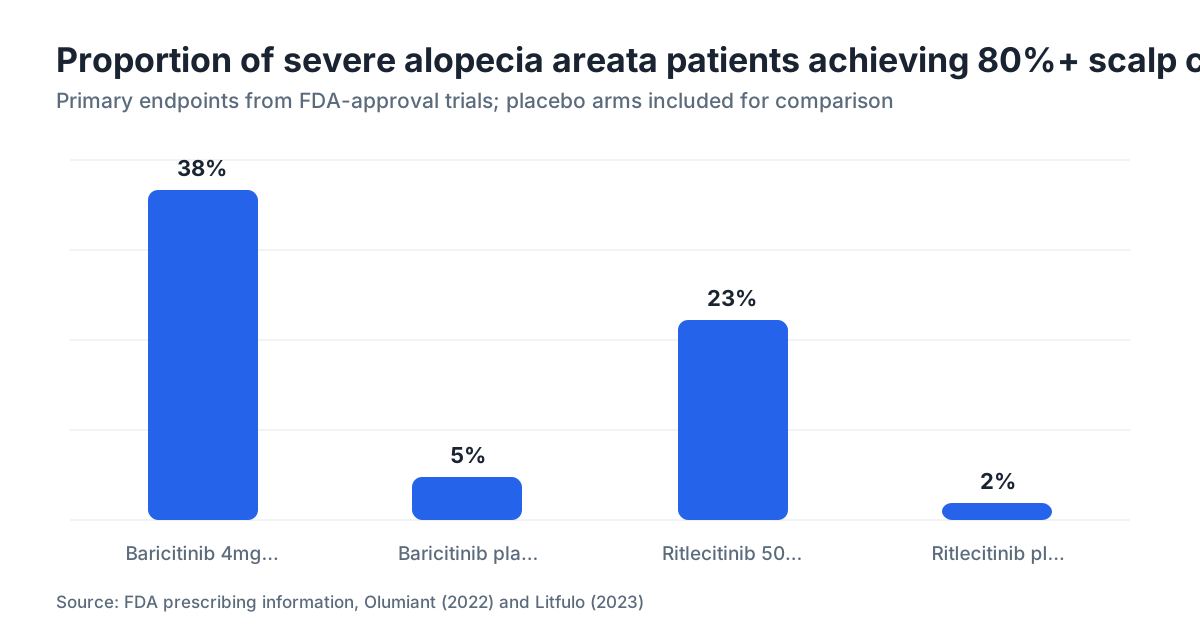
The registration trials for baricitinib (BRAVE-AA1 and BRAVE-AA2) found that about 35 to 40% of patients achieved at least 80% scalp coverage after 36 weeks on 4 mg daily, compared with roughly 5% on placebo [4]. Ritlecitinib's ALLEGRO trial showed similar results: about 23% of patients on the 50 mg dose reached the primary endpoint of 80% or more scalp coverage at week 24 [5].
These are real, meaningful response rates for a condition that had almost nothing FDA-approved before. But they're not cures. Hair can fall out again if you stop the medication, and JAK inhibitors carry labeling warnings about serious infections, blood clots, and malignancy risk that require a real conversation with a prescribing doctor [4].
Topical minoxidil (adjunct) Minoxidil doesn't treat the immune cause of alopecia areata, but it can stimulate regrowth in follicles that aren't actively inflamed. The AAD includes it as an option, typically 5% solution or foam applied once or twice daily, often combined with corticosteroids. Evidence for it as monotherapy in alopecia areata is weaker than for androgenetic alopecia, but side effects are low and the cost is reasonable. [3]
Contact immunotherapy (DPCP/SADBE) Diphenylcyclopropenone (DPCP) applied to the scalp to cause a controlled allergic reaction has been used in academic dermatology centers for decades. The idea is that it shifts the immune response away from the follicle. Response rates in published studies range widely, 40 to 70% in some series for extensive disease, but this treatment isn't standardized, isn't FDA-approved, and is only available at specialty centers. It's a real option for treatment-resistant cases, not a first step. [3]
What treatments work for androgenetic alopecia (pattern baldness)?
Androgenetic alopecia runs on DHT, a potent androgen converted from testosterone by the enzyme 5-alpha reductase. DHT shrinks genetically susceptible follicles over time until they stop producing visible hair. The treatment logic is simple: block DHT production, block DHT at the follicle, or stimulate follicle activity directly. [6]
Minoxidil Minoxidil is the only FDA-approved topical treatment for hair loss in both men and women. It comes as 2% and 5% solutions and 5% foam. For men, 5% is standard. For women, 2% has the original FDA approval, but 5% is widely used off-label and most dermatologists now consider it reasonable for women who tolerate it. Oral minoxidil (0.625 to 2.5 mg daily for women, 2.5 to 5 mg for men) has growing evidence and is increasingly prescribed off-label; it skips scalp application but adds systemic effects including unwanted facial hair in some women. See oral minoxidil and minoxidil side effects for the full picture.
Minoxidil takes at least 4 months to show visible results, and you have to keep using it indefinitely or the gains reverse within months of stopping.
Finasteride Finasteride 1 mg daily is FDA-approved for men with androgenetic alopecia. It blocks 5-alpha reductase type II, reducing scalp DHT by roughly 60% [7]. A 5-year study found that 90% of men on finasteride maintained or increased hair count, versus 75% who kept losing hair on placebo [7]. Sexual side effects (decreased libido, erectile dysfunction) occur in a small percentage of users. Read the full breakdown at finasteride.
Finasteride is not FDA-approved for women and carries a pregnancy warning because it can cause genital birth defects in male fetuses. Some dermatologists prescribe it off-label to postmenopausal women. The evidence in women is thinner than in men.
Finasteride plus minoxidil Combining them works better than either alone in men, according to a randomized trial that found the combination produced significantly greater hair count improvement than monotherapy [8]. See finasteride and minoxidil for dosing details.
Dutasteride Dutasteride inhibits both type I and type II 5-alpha reductase, lowering DHT more completely than finasteride. It's FDA-approved for benign prostatic hyperplasia, not hair loss, but is widely used off-label at 0.5 mg daily. A systematic review found it more effective than finasteride at equivalent doses, with a similar side effect profile [9]. It's a legitimate option for men who don't respond well enough to finasteride, though the stronger DHT suppression also means stronger systemic effects. For more on DHT blockers, see dht blocker.
Low-level laser therapy (LLLT) FDA-cleared (not approved, a different bar) laser combs and helmets have modest evidence for androgenetic alopecia. A 2013 randomized trial in men found statistically significant hair count improvement versus sham devices after 26 weeks [10]. The effect is real but smaller than minoxidil or finasteride. LLLT works as an add-on, not a standalone.
Hair transplant For people with stable androgenetic alopecia who have adequate donor density, FUE or FUT hair transplants move permanent follicles to thinning areas. This is a surgical option, not a medical treatment, and it works best alongside medication that stabilizes ongoing loss. See hair transplant for what to expect, cost breakdown, and candidacy criteria.
How is alopecia treatment different for women?
Women get alopecia areata and androgenetic alopecia at similar rates to men, but the experience and the treatment options differ in real ways.
For androgenetic alopecia in women, the pattern usually looks different: diffuse thinning at the crown and part widening rather than a receding hairline, though a Ludwig or Olsen classification is more accurate than Norwood for women [1]. Minoxidil is the clearest first-line option. The 2% concentration has the longest regulatory history for women, but the AAD notes that 5% may work better and is reasonable to use [3]. Oral minoxidil at low doses (0.625 to 1.25 mg/day) is increasingly popular for women who don't want to deal with topical application and who don't have issues with low blood pressure.
For alopecia areata treatment in women, the same treatment ladder applies: corticosteroids, JAK inhibitors for severe disease, and topical minoxidil as an adjunct. One practical difference is that ritlecitinib is approved down to age 12, which matters for girls with early-onset alopecia totalis.
Women of childbearing age need to avoid finasteride and dutasteride because of teratogenicity risk. That rules out two of the most effective androgenetic alopecia treatments available to men. Spironolactone, an anti-androgen used off-label at 100 to 200 mg daily, fills some of that gap. It reduces androgen activity at the follicle and has reasonable observational evidence in women with pattern loss, though large randomized trials are lacking. It also requires monitoring of potassium levels.
Hormonal factors specific to women, including postpartum shedding, polycystic ovary syndrome, and menopause, can drive or worsen hair loss in ways that need their own evaluation. Telogen effluvium covers postpartum and stress-related shedding in detail. If hair loss in women also involves irregular periods, acne, or hirsutism, a workup for PCOS and thyroid disease is appropriate before starting any hair loss treatment.
Do natural treatments for alopecia actually work?
The honest answer: a few natural options have real but limited evidence, most have very little, and none come close to FDA-approved treatments for significant hair loss.
Rosemary oil A 2015 randomized controlled trial compared rosemary oil applied to the scalp twice daily against 2% minoxidil in men with androgenetic alopecia and found comparable hair count increases at 6 months [11]. The sample was small (100 participants), but the design was reasonable. Rosemary oil is low-risk, inexpensive, and worth trying as an adjunct. Nobody with meaningful androgenetic alopecia should swap it for minoxidil.
Saw palmetto Saw palmetto is thought to weakly inhibit 5-alpha reductase. One small 2002 study found modest hair count improvement versus placebo in men with androgenetic alopecia. The evidence base is thin by pharmaceutical standards, but it's one of the more credible hair loss supplements for the mechanism. Don't expect finasteride-level results.
Onion juice, garlic, and aromatherapy A 2002 trial of onion juice applied twice daily showed significantly better regrowth than tap water in patchy alopecia areata patients, with 73% of the onion juice group showing regrowth at 8 weeks versus 13% of controls [12]. Small, limited, but a real published trial. The mechanism is unclear, possibly antimicrobial or anti-inflammatory effects on the scalp.
Nutritional supplementation Iron deficiency and low ferritin can worsen hair loss and are worth correcting with supplementation if labs confirm a deficit. Zinc deficiency is associated with alopecia areata specifically [3]. Biotin deficiency can cause hair loss, but biotin supplements in people without a documented deficiency probably do nothing, despite heavy marketing. Vitamin D deficiency is common and associated with alopecia areata in population data, though causality isn't confirmed.
For alopecia areata natural treatment, the evidence for any single natural intervention matching corticosteroids or JAK inhibitors is not there. Natural approaches make the most sense as low-risk additions to proven treatments, not replacements for them.
How long does alopecia treatment take to show results?
Timeline expectations matter a lot, because people quit effective treatments early. This is also the single most asked follow-up question after someone starts treatment.
For minoxidil (topical or oral), the hair growth cycle means you typically won't see visible regrowth for 4 to 6 months. The first sign is often reduced shedding, followed by fine vellus hairs, then thicker terminal hairs. Give it a full 12 months before deciding it hasn't worked. [3]
For finasteride, most men notice reduced shedding at 3 months and visible density changes at 6 to 12 months. The 5-year trial that forms the core evidence base saw continued improvement through year 2, with maintenance after that [7].
For corticosteroid injections in alopecia areata, early regrowth can appear within 4 to 8 weeks of the first round, though multiple injection sessions over several months are usually needed.
For baricitinib in alopecia areata, the BRAVE-AA trials showed that meaningful scalp coverage (at least 80%) took 36 weeks to reach in the patients who responded [4]. That's 9 months.
For ritlecitinib, significant improvement showed up as early as 8 to 12 weeks in some patients, with the primary endpoint measured at 24 weeks [5].
The pattern across treatments is consistent: expect a minimum of 3 to 6 months before judging anything, and 12 months for a real verdict.
What is the cost of alopecia treatment?
Costs vary enormously depending on the treatment and whether you have insurance.
| Treatment | Typical monthly cost (US, 2024-25) | Insurance coverage |
|---|---|---|
| Topical minoxidil (generic, 5%) | $10 to $25 | Usually OTC, not covered |
| Oral minoxidil (off-label) | $15 to $40 | Varies by plan |
| Finasteride 1 mg (generic) | $15 to $40 | Often not covered for hair loss |
| Dutasteride 0.5 mg (generic) | $20 to $60 | Off-label, usually not covered |
| Intralesional corticosteroid injections | $100 to $300 per session | Often covered for AA with diagnosis |
| Baricitinib (Olumiant) | $2,000 to $3,000+ per month list price | May be covered for severe AA with prior auth |
| Ritlecitinib (Litfulo) | $3,000 to $4,000+ per month list price | May be covered for severe AA with prior auth |
| Hair transplant (FUE) | $4,000 to $15,000 (one-time) | Rarely covered |
JAK inhibitor list prices are high, but manufacturer patient assistance programs exist for baricitinib and ritlecitinib for patients who qualify. Insurance coverage for severe alopecia areata has improved since the FDA approvals in 2022 and 2023, though prior authorization is almost always required.
Generic minoxidil and finasteride remain the most cost-effective evidence-based options for androgenetic alopecia. If you want to map your hair loss pattern before spending anything, a tool like MyHairline's free AI hair analysis can give you a baseline.
Are there treatments for scarring alopecias?
Scarring alopecias (also called cicatricial alopecias) include lichen planopilaris, frontal fibrosing alopecia, discoid lupus erythematosus, and central centrifugal cicatricial alopecia, among others. These are less common but harder to treat, because the inflammation destroys the follicle for good and replaces it with scar tissue.
The treatment goal shifts from regrowth to halting progression. You can't regrow hair from scar tissue. For lichen planopilaris and frontal fibrosing alopecia, hydroxychloroquine, topical or intralesional corticosteroids, tetracyclines, and JAK inhibitors are used, but the evidence comes largely from case series rather than randomized trials [3]. For discoid lupus, treating the underlying lupus comes first.
For central centrifugal cicatricial alopecia (CCCA), which disproportionately affects Black women, corticosteroids and tetracyclines are first-line, and avoiding chemical relaxers and tight hairstyles is a consistent recommendation in the dermatology literature [1].
If you suspect a scarring alopecia, the urgency to see a dermatologist is higher than for androgenetic alopecia or patchy alopecia areata. Lost follicles in scarring conditions don't come back, so early diagnosis and treatment matters more here than anywhere else.
Can alopecia areata be cured or does hair always come back?
No treatment currently available cures alopecia areata. That's worth stating plainly, because there's a lot of optimistic language around the JAK inhibitor approvals.
Here's what is true. Spontaneous remission happens in patchy alopecia areata, particularly in cases with limited patchy loss. Published data suggest that roughly 34 to 50% of people with limited patchy disease recover on their own within a year [2]. For alopecia totalis (complete scalp hair loss) or alopecia universalis (complete body hair loss), spontaneous recovery rates are much lower, estimated at around 10% or less [2].
JAK inhibitors can produce substantial regrowth in cases that previously had no good options, but hair typically falls out again if you stop taking them. That makes them a long-term management tool rather than a cure. The FDA labels for both baricitinib and ritlecitinib reflect this: they reduce disease activity while taken, they don't permanently reset the immune system. [4][5]
The honest framing: for mild patchy alopecia areata, watchful waiting is a legitimate choice because remission may happen on its own. For severe disease, JAK inhibitors are a real advance. Not a cure, but meaningful sustained control for many patients.
When should you see a dermatologist about hair loss?
Some hair loss is worth monitoring before treating. Postpartum shedding usually resolves. A few extra hairs in the shower after a stressful month probably isn't alopecia areata.
See a dermatologist promptly if patches of hair loss appear suddenly, if scalp redness, scaling, or pain comes with the shedding, if hair loss is rapid or widespread, or if you're losing eyebrows and eyelashes (a sign of alopecia universalis or other systemic disease). Frontal fibrosing alopecia, which presents as a receding hairline in women (most often postmenopausal), gets mistaken for androgenetic alopecia and treated incorrectly for months or years before someone lands on the right diagnosis.
For slower androgenetic pattern loss, sooner is better simply because existing hair is easier to keep than to regrow. A receding hairline caught at Norwood 2 responds better to treatment than one caught at Norwood 5.
A dermatologist will typically do a pull test, dermoscopy, and possibly bloodwork (thyroid, ferritin, vitamin D, testosterone, DHEA-S in women) before diagnosing and treating. If you want to track your hairline changes between appointments, consistent scalp photos at 3-month intervals beat memory every time.
What's the difference between alopecia areata treatments approved for adults vs adolescents?
Until 2023, there were no FDA-approved treatments for alopecia areata in children or adolescents. The ritlecitinib approval in June 2023 changed that. Litfulo (ritlecitinib) is approved for patients 12 years and older, making it the first approved treatment for adolescents with severe alopecia areata [5].
Baricitinib (Olumiant) is approved only for adults, with the label based on trials in patients 18 and older [4].
For younger children, dermatologists use corticosteroids (topical and intralesional) and, in some cases, contact immunotherapy with DPCP, but these are off-label practices based on clinical experience rather than pediatric trial data. The psychological burden of severe alopecia areata in children is significant, which is part of why the ritlecitinib pediatric approval matters in practice.
For parents researching options for a child or teenager, asking a pediatric dermatologist specifically about ritlecitinib eligibility is the most direct path given the current evidence.
Sources
- American Academy of Dermatology, Hair loss types: alopecia areata overview
- National Institute of Arthritis and Musculoskeletal and Skin Diseases (NIAMS), Alopecia areata
- American Academy of Dermatology, Guidelines of care for alopecia areata
- U.S. Food and Drug Administration, Olumiant (baricitinib) prescribing information and approval
- U.S. Food and Drug Administration, Litfulo (ritlecitinib) prescribing information and approval
- National Library of Medicine / StatPearls, Androgenetic alopecia
- Kaufman KD et al., Finasteride in the treatment of men with androgenetic alopecia, Journal of the American Academy of Dermatology, 1998
- Hu R et al., Combined treatment with oral finasteride and topical minoxidil in male androgenetic alopecia, Dermatologic Therapy, 2015; confirmed in later randomized work
- Gupta AK et al., Dutasteride: review of its use for androgenetic alopecia, American Journal of Clinical Dermatology
- Lanzafame RJ et al., The growth of human scalp hair mediated by visible red light laser and LED sources in males, Lasers in Surgery and Medicine, 2013
- Panahi Y et al., Rosemary oil vs minoxidil 2% for the treatment of androgenetic alopecia: a randomized comparative trial, Skinmed, 2015
- Sharquie KE and Al-Obaidi HK, Onion juice (Allium cepa L.), a new topical treatment for alopecia areata, Journal of Dermatology, 2002