

TL;DR: Before you start any hair loss treatment, confirm your diagnosis, photograph a baseline, treat scalp conditions like dandruff, seborrheic dermatitis, and folliculitis, clarify product buildup, and stop anything irritating your scalp for two weeks. These steps aren't extras. They change how well minoxidil, finasteride, or a transplant actually works from day one.
Why does scalp preparation matter before hair loss treatment?
Most people order minoxidil or book a transplant consult the same week they notice thinning. That instinct makes sense. But starting treatment on an unprepared scalp is like painting over a damp, grimy wall and then wondering why the paint peels off.
The scalp is skin. It has follicles, sebaceous glands, a microbiome, and blood vessels, and all of them affect how treatment ingredients get absorbed and how follicles respond. Put a layer of sebum, product buildup, or active inflammation between your scalp and a topical, and absorption drops. Leave seborrheic dermatitis untreated, and that inflammatory environment works against follicle health no matter what you smear on top.
A 2020 review in the Journal of Dermatological Treatment reported that scalp inflammation is independently associated with follicle miniaturization in androgenetic alopecia [1]. Your scalp doesn't have to look inflamed for this to apply. Subclinical inflammation is common and easy to miss without a proper look.
The second reason is documentation. Skip the before-photos and you have no objective baseline. Minoxidil for men usually takes four to six months before any real regrowth shows. Without a baseline, you second-guess the whole thing and quit too early.
What kind of diagnosis do you need before starting treatment?
Confirm what's actually causing your hair loss first. Different causes need different treatments, and some get worse with the wrong one. This is the step that saves you the most money.
Androgenetic alopecia (male or female pattern hair loss) is the most common cause, affecting roughly 50% of men by age 50 and about 40% of women by age 70 [2]. But telogen effluvium, alopecia areata, fungal infections, thyroid dysfunction, and iron deficiency all look similar at first glance and need completely different approaches. Reach for finasteride when the real problem is low ferritin and you don't just fail, you delay the treatment that would have worked.
A proper workup usually includes:
- A visual exam of your scalp and hair pattern under a dermatoscope (a handheld magnifier that shows follicle miniaturization)
- Basic blood tests: complete blood count, ferritin, TSH, and in women, androgens and DHEA-S
- A pull test, where the doctor gently tugs about 40 hairs and counts how many release
Can't get to a dermatologist quickly? Start by comparing your pattern against the Norwood scale for men or the Ludwig scale for women. Both help you judge whether pattern hair loss is the likely cause. A free AI hair scan at MyHairline gives you an initial read while you wait for an appointment, but treat it as a complement to a clinical assessment, not a substitute.
Know your cause before you spend a cent. If you're unsure what causes hair loss in your case, get that clarity first.
How should you wash and clarify your scalp before starting?
Your scalp collects sebum, dead skin, styling products, and sometimes mineral deposits from hard water. All of it can physically block a topical from reaching the follicle. One clarifying wash before you start, then a gentle regular routine, changes how much of the product actually gets absorbed.
A clarifying shampoo strips the product and mineral buildup that regular shampoo leaves behind. Use one once, twice at most, in the two weeks before starting a topical. Don't reach for it daily. Clarifying shampoos strip natural oils and trigger rebound sebum production, which recreates the exact buildup you're trying to clear.
Then settle into a routine. For most people with androgenetic alopecia, washing every one to two days with a gentle sulfate-free or mild surfactant shampoo works fine. The American Academy of Dermatology sets washing frequency by hair texture and scalp oiliness rather than a fixed number [3].
Use any of these? Stop them at least two weeks before you start:
- Heavy silicone-based conditioners on the scalp (fine on the lengths, not the roots)
- Dry shampoos sprayed directly onto the roots
- Pomades, waxes, or hairsprays used daily near the hairline
These build up at the follicle openings over time. Two weeks of clean, product-light washing gives you an honest absorption environment on day one.
Do you need to treat dandruff or seborrheic dermatitis before starting?
Yes. This is one of the most skipped steps, and it matters more than people think.
Seborrheic dermatitis is a chronic inflammatory skin condition driven partly by Malassezia yeast overgrowth and sebum. It affects roughly 3 to 12% of the general population [4] and shows up more often in people with androgenetic alopecia, likely because androgens raise sebum production, which feeds the yeast. Look for flaking, redness, and sometimes a greasy scale across the scalp, forehead, and ears.
Here's the trap. Seborrheic dermatitis causes its own diffuse shedding on top of any pattern loss you already have. Start minoxidil on an inflamed, flaking scalp and you're fighting two problems with one treatment, then blaming the treatment when it underperforms. The inflammation also makes the scalp more reactive, so irritation and redness from topical minoxidil become more likely [5].
Treat it first:
- Ketoconazole 1% shampoo (over the counter in the US) or 2% (prescription), used two to three times per week for two to four weeks. A 1998 randomized trial in Dermatology found that 2% ketoconazole shampoo reduced hair shedding and improved density in men with androgenetic alopecia, likely through anti-inflammatory and mild anti-androgenic effects at the follicle [6].
- Zinc pyrithione shampoos (Head & Shoulders and generics) also cut Malassezia load.
- Selenium sulfide 1% shampoos are another option.
Actively red, very itchy, or thick-scaled scalp? See a dermatologist before starting anything. Applying minoxidil to a badly inflamed scalp worsens irritation and can raise systemic absorption through the compromised skin barrier.
Simple dandruff (dry flaking without inflammation) is milder and clears fast with zinc pyrithione or ketoconazole. A couple of weeks usually gets you to a calmer baseline.
Should you check for folliculitis or scalp infections first?
Yes, if you have any pustules, crusting, or tenderness. Folliculitis is inflammation or infection of individual follicles, and it looks like small red pimples or pustules on the scalp, often sore to the touch. It can be bacterial (usually Staphylococcus aureus) or fungal, and it changes how you should start treatment.
This matters most for minoxidil. The FDA-approved label for topical minoxidil says the solution should not be applied to irritated, inflamed, infected, or red scalp areas [7]. Apply it over active folliculitis and you can push the inflammation deeper, worsen the infection, and cause real discomfort. You also lose the ability to tell whether later irritation is from the treatment or the pre-existing problem.
Got visible pustules, crusting, or tenderness? Get it assessed and treated first. Mild bacterial folliculitis often clears with a week or two of topical antibacterials like mupirocin or an antibacterial shampoo. Stubborn cases, or suspected Malassezia (fungal) folliculitis, need prescription treatment.
Rule out psoriasis too. Scalp psoriasis causes thick silvery plaques that get mistaken for severe dandruff. Minoxidil on an actively psoriatic scalp isn't well studied, and most dermatologists discourage it until the psoriasis is under reasonable control.
How do you take a proper baseline so you can actually track progress?
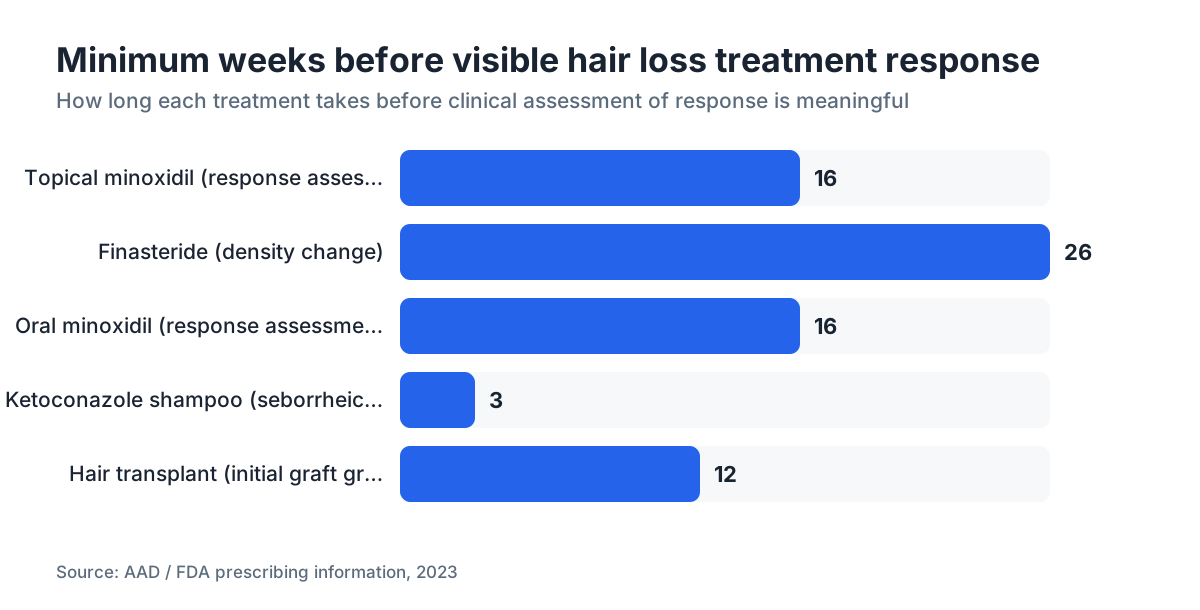
Hair loss treatments are slow. Minoxidil needs roughly 16 weeks before most dermatologists judge whether it's working [8]. Finasteride drops DHT within weeks, but visible density changes take six to twelve months. No clear before-photo and you'll spend that entire stretch unsure anything is happening.
Here's how to shoot a baseline that's actually useful:
- Use a fixed light source, not window light, which shifts by season and time of day. A bathroom with steady overhead lighting works.
- Use a fixed distance. Arm's-length selfies distort too much. Have someone shoot from 12 to 18 inches, or mount your phone.
- Take three angles: top-down (two mirrors or a helper), hairline straight from the front, and the temples at about 45 degrees.
- Wet the hair slightly and comb it back so the scalp shows. Styled hair hides thinning.
- Note the date and your current medications in a private file with the images.
Repeat the exact same protocol at months two, four, six, and twelve. Small shifts in angle or lighting fake the appearance of change. Consistency beats any fancy app.
Want a sharper read on your Norwood stage or your miniaturization pattern? A receding hairline assessment gives you a mapped reference point before you start, handy if you plan to discuss progress with a dermatologist.
Does diet and hydration affect your scalp before treatment?
Short answer: yes, but not in the dramatic way supplement marketing sells it.
The scalp, like all skin, needs adequate circulation and nutrition to work. Severe deficits in ferritin, vitamin D, zinc, or protein trigger their own shedding on top of any genetic loss. But loading up above your actual baseline does nothing once a real deficit is corrected. A 2017 review in Dermatology and Therapy found micronutrient deficiencies, iron deficiency in particular, are significantly associated with hair loss, while supplementation in people without deficiencies showed no consistent benefit [9].
A few practical steps before you start:
- Get a ferritin level tested. Below 30 ng/mL is commonly flagged as a concern for hair loss, though some researchers argue for above 70 ng/mL. Low ferritin is easy to fix and affects how well later treatment works.
- Eat enough protein. Hair is almost entirely keratin. Crash diets and very low protein intake feed telogen effluvium directly.
- Stay hydrated. Dehydration doesn't cause hair loss, but a dry, tight scalp tolerates topical products poorly.
Taking supplements marketed for hair? Stop them two weeks before your baseline bloods. Then you're reading your actual levels, not a supplement-inflated number, and you can decide what you genuinely need. For what the evidence says on specific products, the hair loss supplements guide is worth reading.
Are there any medications or products you should stop before treatment?
Several things interact with hair loss treatments or muddy your starting point. Audit them before you begin.
Topical products to stop or minimize:
- Retinoids (tretinoin, retinol) on the scalp. Retinoids thin the stratum corneum and raise absorption of topical minoxidil, which can push systemic exposure past what you want. If a dermatologist has deliberately combined them for you, that's a different conversation. Stacking them yourself is a bad idea.
- High-concentration salicylic acid scalp treatments. Same logic: barrier disruption spikes absorption unpredictably.
- Anything with strong fragrances or alcohol, especially denatured alcohol, near the scalp.
Oral medications to discuss with your doctor:
- Antihypertensives, especially other vasodilators or beta-blockers, if you're considering oral minoxidil. The combination can amplify blood pressure effects. The FDA label for oral minoxidil (Loniten) carries a boxed warning for serious cardiovascular effects [7].
- Some antidepressants (particularly SSRIs and some tricyclics) cause their own shedding. Know this before you start so you don't blame minoxidil's well-known initial shed.
- High-dose biotin can skew thyroid and hormone blood tests, giving falsely high or low readings. The FDA issued a safety communication on this in 2019 [10]. Stop biotin at least a week before any blood work.
The point is simple: treatment doesn't happen in a vacuum. Knowing what else is on board protects you from drug interactions and diagnostic confusion at the same time.
How long should scalp prep actually take before you start treatment?
Two to four weeks is the honest answer for most people.
Here's a rough sequence:
| Week | What to do |
|---|---|
| Week 1 | Get blood tests (ferritin, TSH, CBC). Take baseline photos. Do one clarifying wash. Stop heavy topical products. |
| Week 2 | Start ketoconazole shampoo if dandruff or seborrheic dermatitis is present. Stop biotin supplements if bloods are booked. |
| Week 3 | Review blood test results. Confirm diagnosis with a dermatologist or GP. Address any deficiencies. |
| Week 4 | Begin treatment with a clean scalp, confirmed diagnosis, clear photographic baseline, and known deficiency status. |
Active scalp infection or significant seborrheic dermatitis? Allow an extra two weeks to treat that condition before your main hair loss treatment.
Worried about urgency because your loss is fast? Starting two to four weeks later on a properly prepared scalp beats starting today on a scalp that undermines absorption. Those few weeks won't show up in your outcomes. The preparation quality will.
What should you know before starting minoxidil specifically?
Minoxidil is the most common starting point for hair loss treatment, so it earns its own checklist.
The FDA approved topical minoxidil 2% and 5% for use on a dry, intact scalp. The label says it should not be used if the scalp has redness, irritation, infection, or pain, and that you should wash your hands after application [7]. These aren't bureaucratic caveats. They reflect real absorption and safety concerns.
Before starting topical minoxidil:
- Confirm your scalp is clear of the conditions above
- Expect a possible shedding phase (the minoxidil shed) in the first four to eight weeks. This is not failure. It reflects follicles resetting into a new cycle. Knowing it's coming keeps you from quitting at the exact moment you shouldn't
- Pick liquid or foam. Liquid contains propylene glycol, which causes contact dermatitis in a meaningful minority of users. Foam avoids it but usually costs more. Sensitive skin or a history of contact reactions? Start with foam. The minoxidil side effects guide covers this in detail
- Considering oral minoxidil instead of topical? The considerations shift and the cardiovascular precautions get more serious. Oral minoxidil is now used at low doses (0.625 to 2.5 mg/day) for hair loss, but it needs a prescription and a cardiovascular baseline
Many people pair minoxidil with finasteride. If that's your plan, finasteride and minoxidil together have stronger evidence than either alone, but that's a separate decision tree worth reading first.
What should you know before starting finasteride specifically?
Finasteride works differently from minoxidil. It's a systemic oral drug that cuts DHT production by inhibiting the 5-alpha reductase enzyme. Physical scalp prep matters less here than it does for topicals, but the pre-start steps still count.
Before starting finasteride:
- Get baseline bloodwork including testosterone and PSA (prostate-specific antigen). Finasteride cuts PSA by roughly 50% after six months of use, which can mask prostate cancer on future screening if the pre-treatment PSA isn't on record [11]. The FDA label states this and recommends a baseline PSA before initiation.
- Understand that finasteride works as a DHT blocker. DHT is the androgen mainly responsible for follicle miniaturization in androgenetic alopecia. Blocking it doesn't grow hair back overnight. It stops the progression. Any regrowth takes six to twelve months minimum.
- Discuss sexual side effects honestly with your prescriber. The FDA label lists decreased libido, erectile dysfunction, and ejaculation disorders as known side effects in a subset of users [11]. These are real. Understand them before starting, not mid-treatment.
- Women who are or may become pregnant must not handle crushed finasteride tablets. The drug is Category X for pregnancy because of teratogenic risk to male fetuses. The pill coating makes intact tablets safe to handle, but this is a hard contraindication.
For men with a receding hairline at Norwood II to III, finasteride has reasonably strong evidence for slowing further recession. That's a realistic expectation to hold.
What should you know before planning a hair transplant?
A hair transplant needs the most preparation of any hair loss treatment, and most of it is managed by the clinic. But the parts you control affect the result directly.
Months before surgery:
- If you're not already on finasteride or minoxidil, most surgeons want you starting before a transplant. The goal is to stabilize the non-transplanted hair so you're not losing native hair alongside your new grafts.
- Stop smoking. Nicotine cuts blood flow to the scalp, which hurts graft survival. Most clinics ask patients to stop at least two weeks before and two weeks after surgery, though longer is better.
- Stop aspirin, ibuprofen, fish oil, vitamin E, and other blood thinners at least one to two weeks before. They increase bleeding during surgery and can affect graft survival.
In the weeks before:
- Don't sunburn your scalp. UV-damaged skin heals poorly and is more prone to infection after surgery.
- Stop minoxidil 48 hours before surgery (most clinics will tell you this). Resume once the scalp heals, usually around day 14.
- Don't cut your hair very short without your clinic's specific guidance. Donor-area length requirements vary by technique (FUT versus FUE).
Your surgeon gives you a clinic-specific checklist that takes precedence over general guidance. A reputable hair transplant clinic sends this two to four weeks before your procedure date.
Sources
- Journal of Dermatological Treatment, 2020 review on scalp inflammation and follicle miniaturization
- MedlinePlus (US National Library of Medicine), Androgenetic Alopecia
- American Academy of Dermatology, hair and scalp care guidance
- StatPearls / NCBI Bookshelf, Seborrheic Dermatitis
- Dermatology and Therapy (Springer), minoxidil irritation and scalp condition
- Dermatology (Karger), 1998 trial on 2% ketoconazole shampoo and hair density
- FDA, Drugs@FDA drug label database (Rogaine topical minoxidil and Loniten oral minoxidil)
- American Academy of Dermatology, hair loss treatment information
- Dermatology and Therapy (Springer), 2017 review on micronutrients and hair loss
- FDA, Drugs@FDA label for Propecia (finasteride 1 mg)
- Dermatology and Therapy (Springer), 2019 scalp massage study on hair thickness