
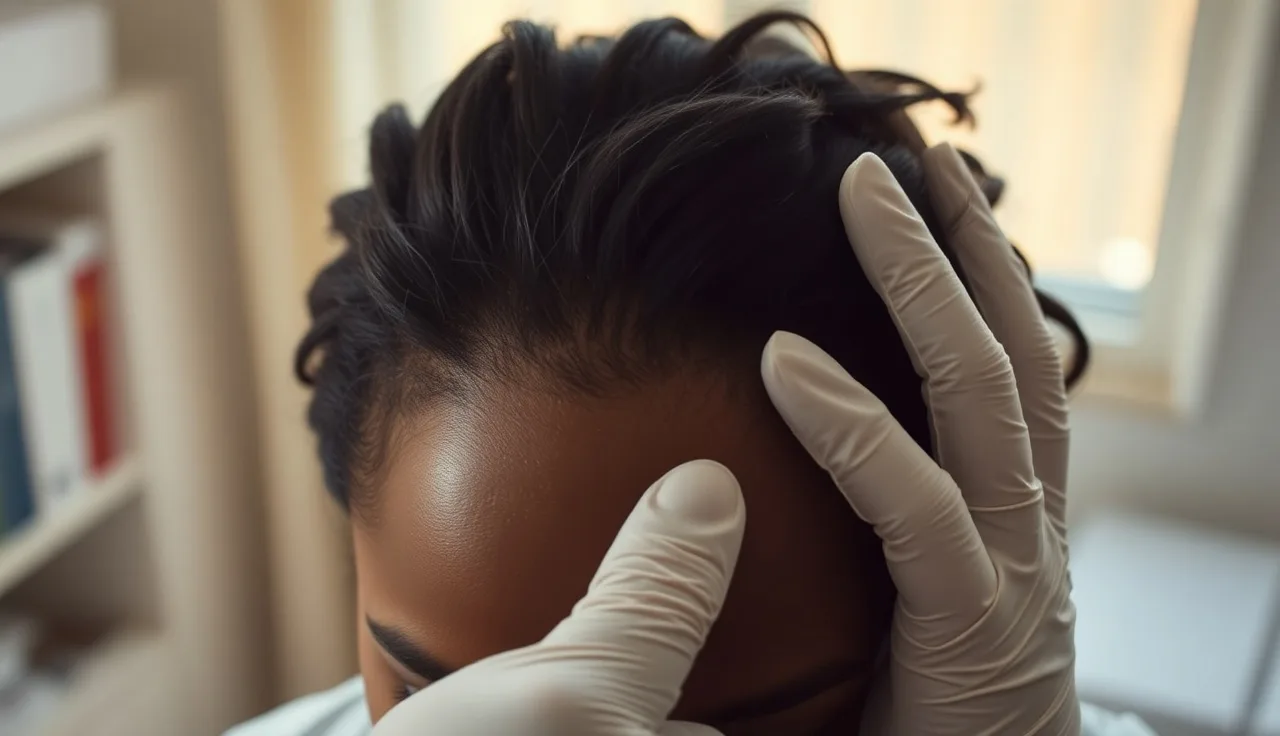
TL;DR: Central centrifugal cicatricial alopecia (CCCA) is a scarring hair loss condition most common in Black women. There is no cure. Early treatment with corticosteroids, tetracycline antibiotics, and minoxidil can slow or stop progression. Hair transplants become an option only after inflammation stays controlled for one to two years. Early diagnosis is the single biggest factor in outcome.
What is CCCA and why does it cause permanent hair loss?
CCCA stands for central centrifugal cicatricial alopecia. It starts at the crown and spreads outward in a roughly circular pattern. Here is the difference that changes everything: in androgenetic alopecia, follicles shrink but survive. In CCCA, chronic inflammation destroys follicles and replaces them with fibrous scar. Once scar takes over, no hair comes back from that spot. That permanence is why early treatment matters so much.
The condition hits Black women far more than any other group. Population estimates put prevalence somewhere between 2.7 and 5.6 percent in Black women, and clinic-based surveys suggest the real number runs higher because so many cases go undiagnosed for years [1]. Men get CCCA too, but it is much rarer.
On biopsy, pathologists see lymphocytic inflammation around the upper follicle (the infundibulum and isthmus) along with concentric lamellar fibrosis. That pattern separates CCCA from other scarring alopecias. A scalp biopsy is still the gold standard. Clinical appearance alone will not confirm the diagnosis or rule out lichen planopilaris or discoid lupus [2].
Early symptoms can be subtle or missing entirely. Some patients feel itching, tenderness, or a prickling sensation at the crown. Others feel nothing and only get diagnosed once the thinning at the vertex becomes obvious. That silent phase is a big reason the disease is often advanced by the time anyone treats it.
Scarring alopecias sit in their own category, separate from the more common non-scarring types. If you want the wider picture, see what causes hair loss.
What are the first-line treatments dermatologists actually prescribe?
Intralesional corticosteroid injections are first-line for active CCCA, according to the American Academy of Dermatology and most expert consensus documents [2]. Triamcinolone acetonide goes directly into the affected scalp to quiet the inflammation that is killing follicles. Typical concentrations run 5 to 10 mg/mL, injected every four to eight weeks into the active border of the patch. It will not regrow hair in scarred zones. It can stop the leading edge from advancing.
Topical corticosteroids, usually high-potency clobetasol propionate 0.05 percent, get used alongside or instead of injections in patients who cannot tolerate needles or have widespread active disease. The evidence here is mostly observational and expert opinion, not large randomized trials. Clinicians admit that openly. It is a real limitation of the field.
Oral tetracycline antibiotics, especially doxycycline (100 mg twice daily) or minocycline, get prescribed for their anti-inflammatory effect, not their antibacterial one. A 2019 study in the Journal of the American Academy of Dermatology found combination therapy stopped progression better than a single agent in most patients, though it was retrospective [3]. Courses often run six months to a year, sometimes longer.
Minoxidil goes on to support whatever viable follicles still sit outside the scarred center. It does nothing for the underlying inflammation, but it can hold density in the surrounding zone. Topical 5 percent solution or foam is the standard start. Some dermatologists now reach for oral minoxidil when a patient wants better systemic coverage, though CCCA-specific data is thin. Check minoxidil side effects before you start.
Hydroquinone sometimes gets added for the post-inflammatory hyperpigmentation that comes with CCCA. That treats appearance, not the disease.
How do tetracycline antibiotics and anti-inflammatory agents compare?
| Treatment | Mechanism | Typical duration | Evidence quality |
|---|---|---|---|
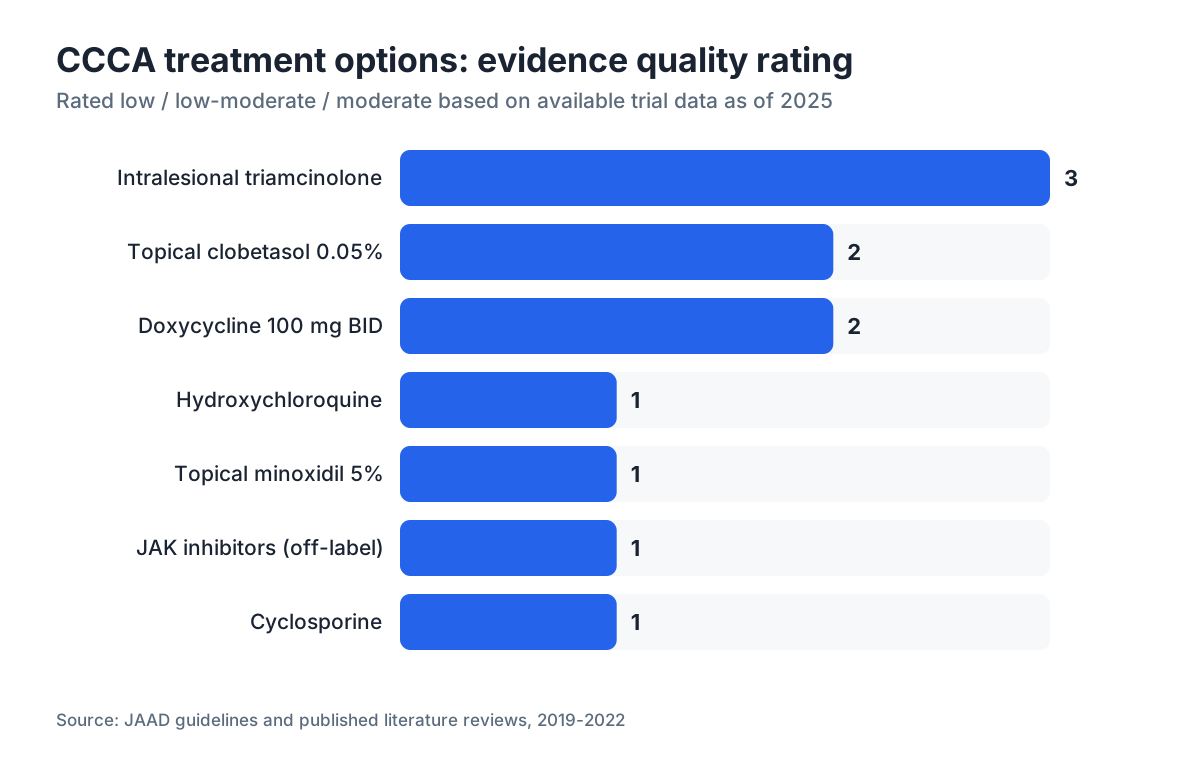
| Intralesional triamcinolone | Direct local anti-inflammation | Ongoing every 4-8 weeks | Moderate (case series, expert consensus) |
| Topical clobetasol 0.05% | Topical anti-inflammation | Ongoing with breaks | Low-moderate (observational) |
| Doxycycline 100 mg BID | Systemic anti-inflammatory | 6-12+ months | Low-moderate (retrospective cohorts) |
| Minocycline 100 mg BID | Systemic anti-inflammatory | 6-12+ months | Low-moderate (retrospective cohorts) |
| Topical minoxidil 5% | Follicle support, peripheral growth | Indefinite | Low (indirect; no CCCA-specific RCT) |
| Hydroxychloroquine | Immunomodulatory | 6-12 months | Low (small case series) |
| Cyclosporine | Potent immunosuppression | Short courses | Very low (anecdotal) |
Hydroxychloroquine, the antimalarial, gets used in CCCA when standard anti-inflammatory regimens fail, borrowed from its use in lichen planopilaris and lupus-related hair loss. A 2020 review in Dermatology and Therapy noted limited but suggestive evidence for its use across scarring alopecias [4]. You need a baseline eye exam before starting, because long-term hydroxychloroquine carries a real risk of retinal toxicity.
Cyclosporine and other systemic immunosuppressants are third-line, saved for aggressive, fast-moving disease. The side effect load is heavy, so most dermatologists burn through safer options first.
Here is the honest summary. No single drug has strong randomized trial evidence in CCCA specifically. Most of what we have is retrospective, small, or borrowed from related scarring conditions. The field knows it. The CCCA Foundation and several academic dermatology groups have been pushing for real clinical trials.
Does hair care and styling cause or worsen CCCA?
This is one of the most argued-over questions in CCCA research, and it matters enormously to patients whose styling practices carry cultural weight.
Early thinking blamed heat styling, chemical relaxers, and certain protective styles as the main drivers. Newer genetic work has complicated that story a lot. A 2019 JAMA Dermatology study found mutations in the PADI3 gene in a subset of CCCA patients; PADI3 encodes an enzyme that shapes the hair shaft [5]. That points to a genetic predisposition to follicular fragility in some people, with styling acting as an aggravating trigger rather than the root cause.
A 2011 study by Kyei and colleagues in JAMA Dermatology found statistically significant links between CCCA and hair relaxers and certain weaves, but the association was not clean, and plenty of women who never touched these products still developed the disease [6].
The clinical consensus now is practical: cut mechanical and chemical trauma to the scalp during active disease. Space out chemical services. Use lower heat. Keep braids and weaves loose enough to avoid pulling at the scalp. Moisturize regularly. This is harm reduction, not a cure, and it should be said without blame or cultural insensitivity.
Traction alopecia, a separate condition driven by chronic follicular tension, can sit alongside CCCA and make total hair loss worse. Telling them apart matters for treatment. Our receding hairline piece covers how traction alopecia shows up differently at the front.
Is there a genetic component to CCCA?
Yes, and this is genuinely new science. The 2019 JAMA Dermatology paper on PADI3 mutations mattered because it gave CCCA a partial molecular explanation for the first time [5]. Patients with loss-of-function mutations in PADI3 had a defective enzyme that citrullinates proteins in the inner root sheath of the follicle. That makes the follicle structurally weak and may set off the inflammatory cascade that ends in scarring.
Still, PADI3 mutations explain only a subset of cases. The genetics are almost certainly polygenic and partly environmental, so genetic testing is not a clinical standard for diagnosing or guiding treatment today.
Family clustering is well documented. A patient with an affected first-degree relative carries a meaningfully higher risk. Clinicians often ask about crown thinning in relatives, especially on the maternal side, during the workup.
There is also a link between CCCA and type 2 diabetes, first reported in a 2017 study by Dlova and colleagues in the British Journal of Dermatology [7]. Women with CCCA had roughly triple the prevalence of type 2 diabetes compared to controls. Nobody has nailed down the mechanism, but some researchers suspect metabolic dysfunction shapes the inflammatory environment of the scalp. Clinicians managing CCCA now often screen for or refer for a diabetes workup, particularly in patients with other metabolic risk factors.
When is a hair transplant safe for CCCA patients?
Transplants can work in CCCA, but timing decides the outcome. Put grafts into actively inflamed scalp and they almost certainly fail. The same process that destroyed the native follicles goes after the new ones.
Surgeons who specialize in scarring alopecias want the disease clinically stable, with no active inflammation (no symptoms, no progression on serial photos, ideally a quiet biopsy), for at least one to two years before any procedure [8]. Some prefer two full years of documented stability.
Once those criteria are met, both follicular unit excision (FUE) and follicular unit transplantation (FUT) have worked in CCCA patients. Donor follicles usually come from the occipital scalp, which CCCA generally spares. Graft survival in well-selected, stable patients has been reported as acceptable in small case series, though controlled trial data is missing.
Patients have to stay on anti-inflammatory maintenance after the transplant. Stopping can let the disease flare back and take the grafts with it. This is not a one-and-done fix.
The hair transplant guide covers FUE versus FUT, cost, and recovery in detail. All of it applies to CCCA patients, with the added rule that patient selection is stricter.
You can get a baseline read on your scalp with a free AI hair scan at MyHairline before your dermatology appointment. It will not diagnose CCCA. It can help you document and track the crown thinning pattern over time.
How is CCCA diagnosed and what tests does a dermatologist order?
Diagnosis starts with a detailed history and a scalp exam under dermoscopy. On dermoscopy, CCCA shows peripilar white or gray halos around follicular openings, loss of follicular ostia in the scarred center, and sometimes a perifollicular gray-white discoloration. Helpful findings, but not definitive on their own.
Scalp biopsy settles it. Two four-millimeter punch biopsies are standard: one from the active border of the patch, one from just outside it for comparison. Horizontal sectioning gives the pathologist the best view of follicular density and inflammation. The classic CCCA biopsy shows premature desquamation of the inner root sheath, lymphocytic inflammation at the isthmus, and concentric lamellar fibrosis [11].
Blood work is not required for diagnosis, but many dermatologists order a metabolic panel, hemoglobin A1c, and thyroid function tests to screen for the associated conditions above, diabetes in particular.
Trichoscopy (scalp dermoscopy) has become a common, less invasive way to monitor between biopsies. It lets clinicians see whether the active border is advancing or holding steady without another procedure.
Have crown thinning and a primary care doctor treating it as plain androgenetic alopecia with no biopsy? Push for a dermatology referral. CCCA and androgenetic alopecia can coexist in the same person, but the treatments differ, and the corticosteroids that help CCCA do nothing for androgenetic alopecia.
What does active versus stable CCCA mean for treatment decisions?
Active CCCA means ongoing inflammation, an expanding bald patch on serial comparison, and symptoms like tenderness or itching. Stable CCCA means no measurable expansion over at least six to twelve months, no active symptoms, and ideally quiet histology on biopsy.
This one distinction drives everything. Active disease gets treated hard with the anti-inflammatory regimens above. The goal is to stop the fire from spreading. Stable disease shifts to maintenance: lower-dose or less frequent topical steroids, minoxidil for peripheral density, and watchful monitoring with follow-up dermoscopy every three to six months.
Some patients run a monophasic course. The disease flares for a while, then truly burns out and never comes back. Others relapse, with periodic flares that force a return to aggressive treatment. There is no reliable way to predict which pattern any one patient gets. That uncertainty is why monitoring continues indefinitely even in stable disease.
Activity status also decides which cosmetic options fit. Wigs, toppers, and scalp micropigmentation can be used at any stage. Hair fibers and concealing powders work in stable disease. A transplant is only for stable disease with two or more years of confirmed quiescence.
Are there any newer or investigational treatments for CCCA?
JAK inhibitors are the most talked-about emerging class. Tofacitinib, ruxolitinib, and baricitinib have shown real efficacy in alopecia areata and are being tested in other inflammatory alopecias. There are published case reports and small series of CCCA patients responding to oral or topical JAK inhibitors, but no controlled trials as of 2025 [9]. Ruxolitinib cream (Opzelura) is FDA-approved for atopic dermatitis and, in specific contexts, alopecia areata [10]. Its use in CCCA is off-label.
Tetracycline derivatives stay the mainstay. Some researchers are looking at whether modified tetracyclines or other anti-inflammatory agents might be easier to tolerate long term.
Platelet-rich plasma (PRP) has mixed results in androgenetic alopecia. In CCCA it is largely unstudied, and there is a theoretical worry that PRP growth factors could feed the inflammatory pathway in some patients. Most expert centers do not recommend PRP for active CCCA.
Stem cell and exosome treatments get marketed hard at cosmetic clinics. There is essentially no peer-reviewed evidence for either in CCCA. Spending real money on these before finishing a standard anti-inflammatory course is a waste.
Finasteride and DHT blockers come up when a patient also has androgenetic alopecia. They do nothing for the scarring inflammation of CCCA itself. Read about finasteride and whether it makes sense as an add-on if you carry patterned loss too.
How long does CCCA treatment take to show results?
Expect no meaningful regrowth in the scarred central zone. That is the honest answer, and patients deserve to hear it plainly from day one.
The realistic goal is stabilization: stopping further expansion. On that measure, most patients with active CCCA who start treatment early and stick with it see stabilization within three to six months, though it can take longer. Confirming it takes serial photography and ideally follow-up dermoscopy every three to six months.
Minoxidil in the peripheral zone may give modest density gains in viable follicles, usually noticeable around three to four months of consistent use, the same timeline it follows in androgenetic alopecia.
Patients who lost hair silently for years before diagnosis face the hardest reality. Significant scarring has already happened, and stabilizing what remains may leave a large bald patch even with perfect compliance. That is exactly why any symptom at the crown, especially in a Black woman with family history, should trigger a dermatology referral instead of wait-and-see.
Long-term adherence predicts outcome more than anything else. Monitoring and at least low-level maintenance appear to be needed indefinitely in most patients.
What lifestyle and scalp care changes help alongside medical treatment?
Clinicians keep coming back to one message: cut chemical and physical scalp trauma during active disease. Space out relaxer applications. Turn down the heat on flat irons and dryers. Keep braids and twists loose at the root. Skip heavy occlusive products that clog follicular openings or trap heat.
Moisturizing the scalp directly with lightweight oils or serums is generally fine and can offset the dryness that comes with topical steroids. The rule is to avoid anything that builds up or needs aggressive scratching to remove.
Scalp massage gets recommended for androgenetic alopecia, but in active CCCA with tenderness and inflammation, hard massage just irritates the scalp. Gentle massage once inflammation is controlled is unlikely to hurt.
Diet and nutrition play a supporting part. Iron deficiency and low ferritin show up across many hair loss conditions, so checking ferritin during the workup makes sense. Fixing nutritional gaps is a background move, not a primary treatment. Our hair loss supplements piece covers what the evidence actually says, and none of it touches CCCA's inflammatory process.
Stress management shows up in guidelines mainly because chronic stress can throw off immune function broadly. There is no specific data tying stress reduction to CCCA outcomes, but it is a reasonable supportive measure given how stress feeds inflammation generally.
How does CCCA differ from other types of hair loss that look similar?
CCCA gets confused most often with androgenetic alopecia (female pattern hair loss), because both thin the crown. The split is simple: androgenetic alopecia is non-scarring. Follicles miniaturize but survive, and treatments like minoxidil and finasteride and minoxidil combinations can produce real regrowth. CCCA destroys follicles. Mixing these up costs patients years of useless treatment.
Lichen planopilaris (LPP) is another scarring alopecia that can look nearly identical, clinically and under the microscope. LPP tends to start at the frontal hairline and move back, while CCCA starts at the crown and spreads out, but the line is not always clean and overlap cases exist. Some researchers think CCCA may be a follicular lichen planus variant in certain patients.
Discoid lupus erythematosus causes scarring alopecia with its own dermoscopic signs (follicular red dots, large yellow dots) and ties to systemic lupus. A scalp biopsy, sometimes with serologic testing, separates it from CCCA.
Telogen effluvium causes widespread diffuse shedding, not focal scarring. It is not permanent and resolves once the trigger clears. If your loss is diffuse rather than crown-centered, read telogen effluvium.
Alopecia areata produces patchy loss with exclamation-point hairs on dermoscopy. It is autoimmune, hits non-scarred follicles, and responds to JAK inhibitors and steroids with real regrowth potential, unlike CCCA.
The right diagnosis is not a formality. Each condition needs a different treatment, and a wrong call burns time the follicles do not have.
What should you ask your dermatologist at your first CCCA appointment?
Walk in with a few sharp questions that pin down your situation and your options.
First: has a biopsy been done, and did it confirm CCCA over another scarring alopecia? If not, why not? A clinical diagnosis with no biopsy leaves the door open to a different condition with a different treatment path.
Second: is my disease active or stable right now, and how are you measuring that? Ask whether serial photos will be taken at every visit so you have an objective record.
Third: what is the plan for the next six months, specifically? Which anti-inflammatory agent, what dose, and what follow-up interval?
Fourth: should I be screened for type 2 diabetes or other associated conditions?
Fifth: at what point would I be a candidate for a transplant consultation, and which surgeons do you work with who have experience in scarring alopecia?
At MyHairline you can upload photos of your crown using the free AI scan tool at myhairline.ai/scan. It is not diagnostic and will not tell you if you have CCCA, but it helps you track changes and organize the visual record you bring to appointments.
Managing a condition alongside CCCA that also involves diffuse shedding, like telogen effluvium? Document those separately with photos and lab values. It helps your dermatologist tell apart what is driving each pattern.
Sources
- Aguh & McMichael, Journal of the American Academy of Dermatology, 2021: CCCA prevalence in Black women
- American Academy of Dermatology, Clinical Guidelines on Cicatricial Alopecia
- Osei-Sekyere et al., Journal of the American Academy of Dermatology, 2019: combination therapy in CCCA
- Bolduc et al., Dermatology and Therapy, 2020: hydroxychloroquine in scarring alopecias
- Malki et al., JAMA Dermatology, 2019: PADI3 mutations in CCCA
- Kyei et al., JAMA Dermatology, 2011: hair care practices and CCCA
- Dlova et al., British Journal of Dermatology, 2017: CCCA and type 2 diabetes
- International Society of Hair Restoration Surgery, guidance on hair transplants in scarring alopecia
- Mesinkovska et al., Journal of Investigative Dermatology, 2022: JAK inhibitors in hair loss
- U.S. Food and Drug Administration, Opzelura (ruxolitinib cream) prescribing information
- Sperling & Cowper, Archives of Dermatology, 2006: histopathology of CCCA
- Olsen et al., Journal of the American Academy of Dermatology, 2003: nomenclature and classification of primary cicatricial alopecias