
TL;DR: DHT blocker gummies contain ingredients like saw palmetto, biotin, and zinc that may weakly inhibit DHT in lab settings, but no gummy product has passed an FDA-standard clinical trial for hair loss. They're supplements, not drugs. For pattern hair loss, finasteride and minoxidil have decades of controlled-trial evidence behind them. Gummies are not a proven substitute.
What are DHT blocker gummies and what's actually in them?
DHT blocker gummies are chewable dietary supplements marketed to reduce dihydrotestosterone (DHT), the androgen primarily responsible for androgenetic alopecia, the most common cause of hair loss in both men and women. They're sold over the counter, no prescription required, and they look exactly like the vitamin gummies you'd find in any pharmacy aisle.
The ingredient list varies by brand, but most products lean on the same short roster. Saw palmetto (Serenoa repens) is the most common active ingredient, appearing in doses typically between 100 mg and 585 mg per serving. Biotin (vitamin B7) shows up almost universally, usually at doses of 2,500 mcg to 10,000 mcg, despite the fact that biotin deficiency-related hair loss is rare and biotin supplementation only helps people who are actually deficient [1]. Zinc and selenium are common additions because both minerals support normal hair cycling. Some formulas include pumpkin seed oil, stinging nettle root, or a small amount of reishi mushroom extract.
None of these ingredients are FDA-approved drugs. By law, a supplement cannot claim to diagnose, treat, cure, or prevent any disease [2]. What gummy brands can say is that an ingredient "supports healthy hair" or "may help maintain normal DHT levels," which is intentionally vague language that doesn't require clinical proof.
To understand why any of this matters, you need to understand DHT itself. DHT is a potent androgen derived from testosterone via the enzyme 5-alpha-reductase. In people genetically predisposed to pattern hair loss, DHT binds to receptors in hair follicles and progressively miniaturizes them, shortening the growth phase until the follicle stops producing visible hair. For a deeper look at what triggers this process, what causes hair loss covers the full mechanism. The question is whether any ingredient in a gummy can meaningfully block 5-alpha-reductase or interfere with DHT binding in a living human scalp.
Does saw palmetto in gummies actually block DHT?
Saw palmetto is the ingredient with the most research behind it, and it's worth being precise about what that research says.
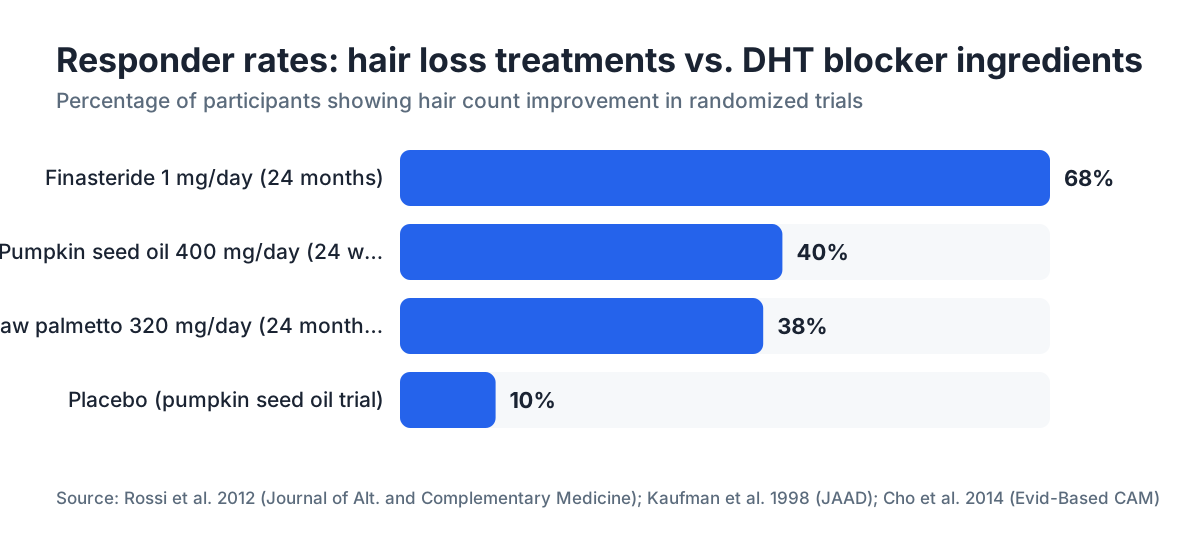
In lab and animal studies, saw palmetto extracts inhibit 5-alpha-reductase, specifically the type II isoform that finasteride targets. A 2012 randomized controlled trial published in the Journal of Alternative and Complementary Medicine tested 320 mg/day of saw palmetto extract against 1 mg/day of finasteride in 100 men with androgenetic alopecia over 24 months. Finasteride produced clinically significant hair count improvement in 68% of participants. Saw palmetto produced improvement in 38% [3]. That's a real difference, and the study was industry-funded, which adds a note of caution about how the 38% figure should be interpreted.
A separate 2021 randomized trial in the Journal of Cosmetic Dermatology tested a topical saw palmetto formulation and found modest improvements in hair density compared to placebo, but topical delivery to the scalp is very different from swallowing a gummy [4].
Here's the core problem with the gummy format. Bioavailability. Saw palmetto's active components are fat-soluble liposterolic compounds. They absorb best alongside dietary fat. A sugar-based gummy with 200 mg of saw palmetto taken on an empty stomach is probably delivering a fraction of what a softgel capsule taken with food delivers. No manufacturer of DHT blocker gummies has published pharmacokinetic data showing that their gummy format delivers therapeutic serum levels of saw palmetto extract. Nobody has.
So the honest answer is: saw palmetto has weak but real evidence as a mild DHT inhibitor. Gummy delivery is probably not the optimal format for it. And even in its best-studied form, it's noticeably less effective than finasteride.
What does the FDA say about DHT blocker gummies?
The FDA does not approve dietary supplements before they go to market. Under the Dietary Supplement Health and Education Act of 1994 (DSHEA), manufacturers are responsible for ensuring their products are safe before selling them, but they don't have to prove efficacy to anyone [2]. The FDA only steps in after a product is on the market, typically if adverse events are reported or if a company makes illegal drug claims.
The FDA has sent warning letters to supplement companies over hair loss marketing. The agency flags language like "regrows hair," "stops hair loss," or "clinically proven to reverse DHT damage" as illegal drug claims on supplement labels [5]. Compliant gummy brands stick to the vaguer structure/function claims.
This matters practically. When you buy a DHT blocker gummy, you are buying a product that:
- Has not been reviewed for efficacy by the FDA before sale
- May or may not contain the labeled dose of each ingredient (FDA audits consistently find dosing discrepancies in supplements [5])
- Cannot legally claim to treat androgenetic alopecia
The two FDA-approved treatments for androgenetic alopecia are minoxidil (topical OTC and oral prescription) and finasteride (oral prescription for men). Those have randomized controlled trial data, defined dosing, and established safety profiles. Supplements do not go through that process.
If you're comparing options, dht blocker gives a broader look at how pharmaceutical DHT blockers compare to supplement-based approaches.
How do DHT blocker gummies compare to finasteride and minoxidil?
This is the comparison that decides where your money goes.
| Treatment | Evidence level | Avg. efficacy (hair count) | FDA-approved | Monthly cost (approx.) |
|---|---|---|---|---|
| Finasteride 1 mg/day | Multiple large RCTs | ~30% increase in hair count at 2 years [6] | Yes (men, Rx) | $15-60 (generic) |
| Minoxidil 5% topical | Multiple large RCTs | Significant regrowth vs. placebo at 48 weeks [7] | Yes (OTC) | $10-25 |
| Oral minoxidil 0.25-5 mg | Growing RCT base | Comparable or better than topical in some trials | Yes (Rx, off-label for hair) | $20-50 |
| Saw palmetto supplements | 1-2 small RCTs | ~38% responded in best study [3] | No | $15-40 |
| DHT blocker gummies (branded) | No RCTs on finished products | Unknown | No | $25-70 |
Finasteride's two-year data, drawn from the original Merck trials in the late 1990s, showed that men taking 1 mg/day maintained or increased hair count while placebo users kept losing hair [6]. Minoxidil's registration studies showed statistically significant increases in non-vellus hair counts compared to placebo after 48 weeks of use [7].
Gummies sit at the bottom of the evidence ladder. No published randomized controlled trial has tested a branded DHT blocker gummy as a complete product. A company can put saw palmetto into a gummy and point to saw palmetto's own (limited) research, but that's not the same as testing their specific formula, dose, and delivery format.
If your hair loss is genetic (androgenetic alopecia), the clinical gap between gummies and FDA-approved treatments is large. The finasteride article walks through the evidence in detail, and finasteride and minoxidil covers how combining both drugs performs in studies.
Are DHT blocker gummies safe, and are there any side effects?
For most healthy adults, the ingredients in DHT blocker gummies are low-risk at the doses typically used. Saw palmetto at 320 mg/day is generally well-tolerated. The most commonly reported side effects are mild gastrointestinal issues: nausea, stomach cramps, or loose stools, particularly if taken without food [3]. Headache and dizziness show up occasionally.
A few specific safety flags are worth knowing.
Saw palmetto may have weak antiplatelet (blood-thinning) effects. If you take blood thinners like warfarin or are scheduled for surgery, mention any saw palmetto supplement to your doctor. The evidence here is mostly case reports, not large studies, but the caution is standard in clinical pharmacy.
Biotin at high doses (5,000 mcg or more, which many hair gummies contain) does not cause hair loss or toxicity, but it does interfere with certain lab tests. The FDA issued a safety communication in 2017 specifically warning that high biotin intake can cause falsely low or falsely high readings on thyroid tests, troponin tests (used to diagnose heart attacks), and other immunoassay-based lab panels [1]. Tell your doctor you're taking a biotin-containing supplement before any blood work.
For women who are pregnant or breastfeeding, saw palmetto is not recommended. It has theoretical anti-androgenic effects, and its safety in pregnancy has not been established.
Nothing in a standard DHT blocker gummy is likely to cause the sexual side effects (reduced libido, ejaculatory dysfunction) that affect a minority of men on finasteride, because the hormonal effect of gummy ingredients is far weaker. That's a real advantage. It comes with far weaker efficacy, too.
Do DHT blocker gummies work for women?
Female pattern hair loss (androgenetic alopecia in women) does involve DHT, but the hormonal picture is more complicated than in men. Women with female pattern hair loss often have normal circulating androgen levels, and the sensitivity of their follicles to androgens varies more widely. That makes DHT blockade a less reliable single intervention for women than for men.
Finasteride is not FDA-approved for women with hair loss, though some dermatologists prescribe it off-label, particularly for postmenopausal women. Topical minoxidil 2% is FDA-approved for women; the 5% foam is used off-label and often preferred by dermatologists.
For gummies specifically, the evidence in women is even thinner than in men. The saw palmetto trial mentioned above enrolled only men [3]. No large trial has tested DHT blocker gummy products in women with documented androgenetic alopecia. Women experiencing diffuse shedding rather than pattern loss might be dealing with telogen effluvium, a different condition where DHT blockade is irrelevant. Telogen effluvium explains how to tell the difference.
If you're a woman considering a DHT blocker gummy for hair loss, the first step is figuring out what type of hair loss you actually have. A dermatologist can do a scalp exam and, if needed, bloodwork. Treating the wrong condition with any product, gummy or otherwise, wastes time and money.
What ingredients should you actually look for in a hair supplement?
If you want to try a supplement approach before committing to prescription drugs, or alongside them, here's what the evidence supports.
Saw palmetto at 320 mg per day is the most defensible choice, with the caveat that the delivery format matters and that bioavailability from gummies is unverified. A standardized liposterolic extract in a softgel with fat is likely better absorbed than a gummy.
Zinc is worth including if your diet is low in zinc (common in vegetarians and vegans). Zinc deficiency is associated with hair shedding, and correcting the deficiency restores normal hair cycling [8]. If your zinc levels are normal, extra zinc probably doesn't help and can cause nausea at high doses.
Vitamin D deficiency is linked to alopecia in observational studies, and vitamin D receptors are expressed in hair follicles [9]. Again, supplementation likely only helps if you're actually deficient. A blood test tells you whether you are.
Iron: low ferritin is one of the most common and overlooked contributors to hair shedding in women. Hair loss supplements covers ferritin thresholds and what the dermatology literature says about optimal levels.
Biotin: genuinely only useful if you have a deficiency, which is uncommon in people eating a varied diet. Most gummies contain far more biotin than you need. You're mostly paying for a lab-interference risk.
Pumpkin seed oil: one small randomized trial (76 men, 24 weeks) found pumpkin seed oil (400 mg/day) increased hair count by 40% vs. 10% in the placebo group [10]. That's promising but needs replication in larger trials before anyone draws firm conclusions.
The pattern: supplements can correct deficiencies and may provide modest support. They cannot replicate what finasteride or minoxidil do at a mechanistic level.
How long does it take DHT blocker gummies to work, if they work at all?
Hair growth cycles are slow. The anagen (active growth) phase lasts two to six years, and a follicle that's been miniaturizing for years doesn't reverse course in weeks. Legitimate hair loss treatments set realistic timelines.
Finasteride studies show measurable hair count changes at six months, with peak effects around one to two years [6]. Minoxidil typically requires at least four to six months before visible results, with the first two months sometimes showing increased shedding as follicles transition phases [7].
For saw palmetto supplements, the best available trial ran 24 months. At that point, 38% of participants showed improvement [3]. No gummy product has published data on how long its specific formula takes to produce results.
Most gummy brands recommend 90 days as a "trial period." That's a marketing construct, not a clinically derived number. If you try a DHT blocker gummy, take photos at the same lighting and angle every four weeks. Subjective perception of improvement is unreliable. If after six months you see no change in photos, the product isn't working for you.
One thing to watch for is the shedding phase that sometimes occurs when starting any new hair support routine, including supplements. Receding hairline explains how to track early progression so you have a real baseline.
Should you take DHT blocker gummies alongside finasteride or minoxidil?
This is a reasonable question. If gummies have some mild 5-alpha-reductase inhibition and finasteride has strong 5-alpha-reductase inhibition, do they add up?
Honestly, nobody has studied the combination systematically. In theory, adding saw palmetto to finasteride is unlikely to cause harm, but it's also unlikely to produce meaningful additional DHT reduction beyond what finasteride already achieves. Finasteride at 1 mg/day suppresses DHT levels by approximately 60-70% in scalp tissue [6]. Saw palmetto's inhibition is weaker and acts on a partially overlapping mechanism. The marginal gain is probably small.
The more useful combination, with real trial evidence behind it, is finasteride plus minoxidil together, which multiple studies show outperforms either drug alone. Finasteride and minoxidil covers that evidence. If you're already on both and want to add a supplement for nutritional support (zinc, vitamin D, iron), that's reasonable. But adding a gummy to replace either drug is a step backward in efficacy.
For men thinking about minoxidil specifically, minoxidil for men and oral minoxidil break down the topical vs. oral decision.
If you want a data-driven picture of where your own hair loss currently stands, MyHairline's free AI hair scan (/scan) can map your thinning pattern against the Norwood scale before you decide on any treatment path.
One more consideration: some supplement ingredients interact with medications. Saw palmetto and high-dose biotin together with other drugs warrant a quick conversation with your pharmacist or prescriber before starting.
Are DHT blocker gummies worth buying, or are they a waste of money?
Here's the honest answer, stated plainly.
For someone with androgenetic alopecia who wants to stop or reverse meaningful hair loss, DHT blocker gummies are very likely a waste of money compared to what the evidence-based alternatives can do. The best-case scenario for saw palmetto-based supplements is modest slowing of progression in some people. That's a weak outcome for $30 to $70 a month.
For someone who isn't ready to take prescription drugs, is dealing with only very mild early thinning, or wants to support general hair health while on a proven treatment, a basic supplement with zinc, vitamin D, and a standardized saw palmetto extract is low-risk and might provide marginal benefit. In that context, a well-formulated capsule is probably more bioavailable than a gummy and is often cheaper.
The gummy format exists mainly because gummies are more marketable than capsules. They're sweet, they feel like a treat, and they're easy to sell on social media. The format adds nothing to efficacy and likely reduces bioavailability for fat-soluble compounds like saw palmetto extract.
If you're on a tight budget, $30/month of generic minoxidil foam does more for documented pattern hair loss than $60/month of DHT blocker gummies, full stop. If cost isn't the constraint but side effect concerns are, that's a conversation to have with a dermatologist rather than a reason to substitute gummies for proven treatments.
For men worried about finasteride's side effects: those are real but affect a minority of users, and the context matters. Finasteride covers the actual incidence numbers from trial data so you can make an informed choice rather than one driven by fear.
The creatine angle: some men ask about creatine after seeing claims that it raises DHT. Does creatine cause hair loss addresses that specific concern with the actual study data.
What's the bottom line on DHT blocker gummies?
DHT blocker gummies are legal supplements that contain ingredients with weak-to-moderate evidence for mild DHT inhibition. They are not FDA-approved for hair loss. No finished gummy product has been tested in a randomized controlled trial. The ingredients that have the most evidence, mainly saw palmetto, are probably better absorbed in other delivery formats.
They aren't dangerous for most adults (with the biotin and lab-test caveat noted above). They aren't a substitute for finasteride or minoxidil if you have documented androgenetic alopecia and want to meaningfully preserve or regrow hair.
Think of them like this: they're the hair loss equivalent of taking a multivitamin when you actually need a prescription antibiotic. For a minor deficiency or as complementary support, fine. As primary treatment for a progressive genetic condition, not enough.
If you haven't gotten a clear picture of your pattern yet, MyHairline's free AI hair scan (/scan) takes two minutes and maps your thinning against the Norwood scale, which is a useful starting point before spending money on any treatment.
The cleanest path forward: see a dermatologist, get a scalp exam, rule out correctable deficiencies with bloodwork, and use FDA-approved treatments if the diagnosis is androgenetic alopecia. Supplements can sit alongside that plan, not replace it.
Sources
- FDA, "Dietary Supplements" overview page
- Rossi A et al., "Comparitive Effectiveness of Finasteride vs Serenoa Repens in Male Androgenetic Alopecia", Journal of Alternative and Complementary Medicine, 2012
- Dhurat R et al., "A randomized, double-blind, placebo-controlled trial of a saw palmetto-based topical foam", Journal of Cosmetic Dermatology, 2021
- Kaufman KD et al., "Finasteride in the treatment of men with androgenetic alopecia", Journal of the American Academy of Dermatology, 1998
- Olsen EA et al., "A randomized clinical trial of 5% topical minoxidil versus 2% topical minoxidil and placebo in the treatment of androgenetic alopecia", Journal of the American Academy of Dermatology, 2002
- Karashima T et al., "Oral zinc therapy for zinc deficiency-related telogen effluvium", Dermatology Online Journal, 2012
- Rasheed H et al., "Serum ferritin and vitamin D in female hair loss", International Journal of Trichology, 2013
- Cho YH et al., "Effect of Pumpkin Seed Oil on Hair Growth in Men with Androgenetic Alopecia", Evidence-Based Complementary and Alternative Medicine, 2014