
TL;DR: DHT (dihydrotestosterone) is the hormone that miniaturizes hair follicles in genetic hair loss. FDA-approved DHT blockers include finasteride (1 mg oral, reduces scalp DHT by roughly 70%) and dutasteride (FDA-approved for BPH, widely used off-label for hair loss). Both require a prescription, take 6-12 months to show results, and must be used continuously to maintain them.
What is DHT and why does it cause hair loss?
DHT stands for dihydrotestosterone. It's a hormone your body makes from testosterone, and it's the main driver of androgenetic alopecia, which is the clinical name for male and female pattern hair loss. The enzyme that converts testosterone into DHT is called 5-alpha reductase, and it sits in high concentrations in scalp tissue and the prostate.
Once DHT binds to androgen receptors in genetically susceptible hair follicles, it shortens the anagen (growth) phase. Hairs spend less time growing, the follicle miniaturizes over repeated cycles, and eventually produces only vellus (fine, nearly invisible) hair before shutting down entirely. This doesn't happen overnight. It plays out over years or decades, which is why starting early matters so much.
Not everyone responds to DHT the same way. The sensitivity of your follicles is largely genetic, inherited from either parent. That's why someone can have high DHT levels and a full head of hair while someone else loses significantly at lower levels. The hormone isn't the whole story. The follicle's receptor sensitivity is what decides whether DHT does damage. For a broader picture of what's happening at the follicle level, see what causes hair loss.
Two isoforms of 5-alpha reductase exist: type 1 (found in skin and liver) and type 2 (dominant in scalp and prostate). This distinction matters because the medication you take may target one or both, which affects how much DHT reduction you actually get. [1]
What are DHT blocker medications and how do they work?
DHT blocker medications are drugs that inhibit 5-alpha reductase, preventing the conversion of testosterone to DHT. They don't block DHT that's already formed. They reduce how much new DHT your body produces. Less DHT in the scalp means less follicle miniaturization over time.
Two drugs in this class have real clinical evidence behind them: finasteride and dutasteride. Both are prescription-only. Over-the-counter products labeled as "DHT blockers" (saw palmetto, pumpkin seed oil, certain shampoos) work through different, weaker mechanisms and have far less evidence. We'll cover those separately below.
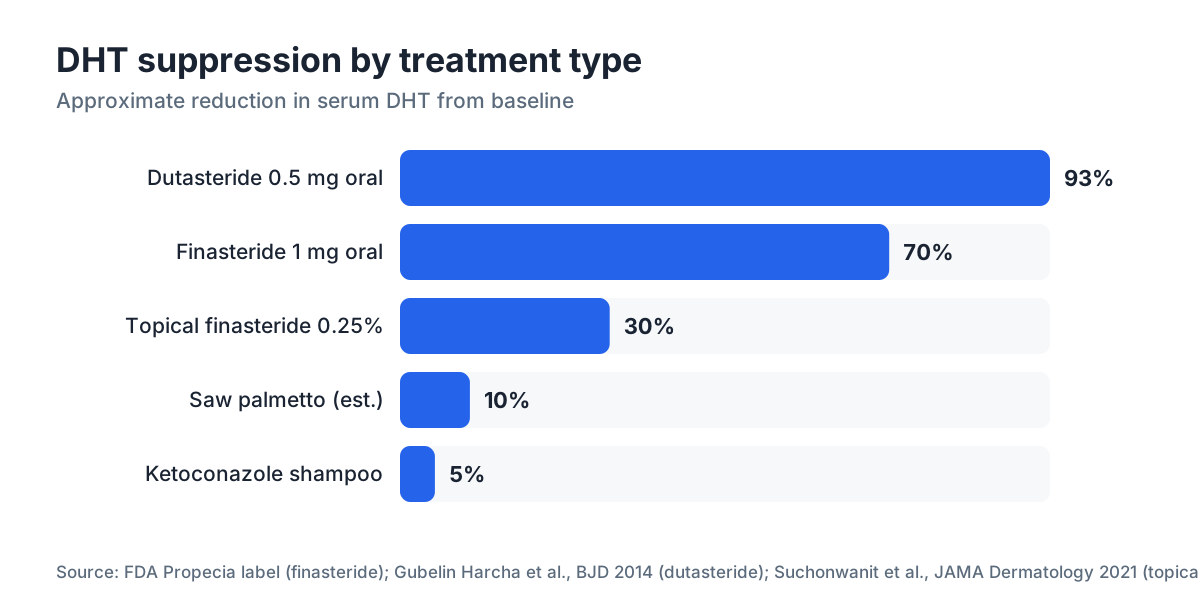
Finasteride selectively inhibits type 2 5-alpha reductase. At 1 mg per day, the standard hair loss dose, it reduces serum DHT by roughly 70% [2]. Dutasteride inhibits both type 1 and type 2, which is why it suppresses DHT harder, by roughly 90-95% in serum [3]. That larger drop doesn't automatically make dutasteride the right pick for everyone, but trial data does favor it on hair count, at the cost of a longer half-life and side effects that could linger longer if they happen.
Both medications work systemically. You're reducing DHT throughout your body, not only your scalp. That's the source of most of the side effects people worry about, and it's a real trade-off to understand before you start.
Which DHT blocker medications are FDA-approved for hair loss?
Finasteride 1 mg (brand name Propecia) is the only oral DHT blocker with FDA approval specifically for androgenetic alopecia in men [2]. It's been approved since 1997. Finasteride 5 mg (Proscar) is separately approved for benign prostatic hyperplasia (BPH).
Dutasteride (Avodart) is FDA-approved for BPH but not for hair loss in the United States. It is approved for androgenetic alopecia in South Korea and Japan, where regulators reviewed the hair loss trial data [4]. In the US, dermatologists routinely prescribe it off-label for hair loss, and the clinical literature supports its efficacy.
Topical finasteride is a newer formulation. It's not separately FDA-approved as a standalone product, but compounding pharmacies produce it, and some telehealth platforms offer it as a way to get local DHT suppression with lower systemic absorption. A 2021 study in JAMA Dermatology found that topical finasteride 0.25% applied daily produced similar hair count outcomes to oral finasteride 1 mg with much less plasma DHT reduction, which points to lower systemic exposure [5]. That's promising for people worried about systemic side effects, though the evidence base is thinner than for oral finasteride.
No FDA-approved topical DHT blocker for hair loss exists as a finished pharmaceutical product yet. That may change. For now, if a doctor prescribes topical finasteride, it's coming from a compounding pharmacy, and quality varies.
| Drug | FDA approval (hair loss) | 5-AR target | DHT reduction | Typical dose |
|---|---|---|---|---|
| Finasteride 1 mg | Yes (men) | Type 2 | ~70% | 1 mg/day oral |
| Dutasteride 0.5 mg | No (off-label US) | Type 1 + 2 | ~90-95% | 0.5 mg/day oral |
| Topical finasteride | No (compounded) | Type 2 | ~30% systemic | 0.25-1% daily |
| Ketoconazole shampoo | No | Weak anti-androgen | Minor, unclear | 2x/week wash |
How effective is finasteride for hair loss?
The main trials for finasteride 1 mg ran for five years and enrolled over 1,500 men with mild to moderate vertex and frontal hair loss. At two years, 83% of men who took finasteride maintained or increased hair count versus baseline, compared to 28% in the placebo group [2]. At five years, finasteride showed an average net benefit of roughly 277 hairs per square inch more than placebo.
Those numbers sound impressive. The honest caveat is that "maintained or increased" includes men who simply didn't lose more hair, which is a real benefit but not the same as dramatic regrowth. For most men, finasteride is a maintenance drug. It slows or stops progression. Modest regrowth happens for many, significant regrowth for fewer.
The crown responds better than the hairline. Studies consistently show a bigger effect at the top of the head than at the temples. Men with early-stage loss (Norwood 2-4) tend to benefit more than those already far along.
For a detailed breakdown of the trial data, dosing, and side effect profile, read our full finasteride article.
Finasteride doesn't work the same way in women. It's not FDA-approved for female pattern hair loss in the US, and its use in premenopausal women carries serious teratogenicity risk (it causes genital abnormalities in male fetuses). Some dermatologists prescribe it off-label for postmenopausal women with androgenetic alopecia. The evidence in women is weaker overall. [6]
How does dutasteride compare to finasteride for hair loss?
Head-to-head trials favor dutasteride. A 2014 randomized controlled trial published in the British Journal of Dermatology compared dutasteride 0.5 mg, dutasteride 2.5 mg, and finasteride 1 mg over 24 weeks in 416 men. Dutasteride 0.5 mg beat finasteride 1 mg on hair count. The authors concluded that "dutasteride 0.5 mg was significantly more effective than finasteride 1 mg" on the primary endpoint of hair count in the target area [3].
That's a meaningful finding, but the study ran only 24 weeks, which is shorter than ideal for hair loss research. Longer-term head-to-head data is thin.
Dutasteride's half-life is around five weeks. Finasteride clears in six to eight hours. That has two practical consequences. Steady-state DHT suppression is more complete with dutasteride. And if side effects hit and you stop the drug, it takes much longer to leave your system. Some men find that reassuring (a missed dose barely matters). Others find it concerning.
Cost is a factor too. Generic dutasteride 0.5 mg is available and generally comparable to generic finasteride in price, though prices vary a lot by pharmacy and country. Both drugs are cheap as generics.
The choice usually comes down to three things: how much DHT suppression you want, your risk tolerance for side effects, and what your prescribing doctor recommends given your pattern and history.
What are the side effects of DHT blocker medications?
The most talked-about side effects of finasteride are sexual: lower libido, erectile dysfunction, and reduced ejaculate volume. The FDA label reports these occurred in roughly 1.8% of men in clinical trials, versus 1.3% on placebo [2]. The rates are low but real, and in most cases they resolve after stopping the medication.
Post-finasteride syndrome (PFS) is a more contested topic. Some men report persistent sexual dysfunction, cognitive symptoms, and mood changes that continue after stopping finasteride. The FDA added a label update in 2012 acknowledging reports of persistent sexual side effects [2]. The true prevalence is genuinely unclear because there are no large prospective cohort studies designed to answer it. The Post-Finasteride Syndrome Foundation has collected patient reports, but those are self-selected. Here the honest answer is that we don't have reliable population-level data.
Finasteride lowers PSA (prostate-specific antigen) levels by roughly 50%. If you're getting PSA testing for prostate cancer screening, your doctor needs to know you're taking finasteride. The FDA label spells this out, because a "normal" PSA result on finasteride would be elevated in an unmedicated man of the same age [2].
Dutasteride carries similar sexual side effects. Because it inhibits both 5-AR isoforms and has a longer half-life, some clinicians suspect side effects may persist longer after stopping, though direct comparative data is limited.
Breast tenderness or gynecomastia (enlarged breast tissue) is rare with both drugs but reported. If it happens, see a doctor.
Neither drug causes the kind of rapid shedding some people fear. A temporary shed in the first 1-3 months can happen because the hair cycle resets, similar to minoxidil. It passes. For a comparison of how minoxidil interacts with these drugs, read about finasteride and minoxidil together.
How long does it take for DHT blockers to work?
Realistically: six months before you see any meaningful change, and twelve months before you can honestly judge whether it's working for you.
DHT blockers work by changing the hormone environment that follicles live in. Follicles run on their own schedule (anagen lasts 2-6 years, telogen 3 months), so the effect of less DHT shows up slowly, as follicles that would have miniaturized further instead hold steady, and as miniaturized follicles slowly recover. That takes time.
The first few months can look discouraging. Some people get a temporary shed as the hair cycle resets. This is not a sign the drug is failing. It's a recognized phenomenon, though flag it to your doctor if it's severe.
At six months you might notice things stabilizing. At one year, many men see modest regrowth, especially at the crown. The two-year and five-year trial data shows the benefit keeps building the longer treatment continues [2]. Stopping reverses it. Most of the hair that was maintained or regrown is lost within 6-12 months of quitting.
Do over-the-counter DHT blockers actually work?
Saw palmetto is the most popular OTC option. It's a plant extract that weakly inhibits 5-alpha reductase, mostly type 1. A small randomized trial published in the Journal of Alternative and Complementary Medicine in 2002 found 60% of men taking saw palmetto showed improvement versus 11% on placebo, but the study had only 26 participants and used subjective measures [7]. The evidence base is genuinely thin. No large well-controlled trial has pinned down a reliable effect size.
Pumpkin seed oil is another commonly cited option. A 2014 randomized trial in Evidence-Based Complementary and Alternative Medicine found a 40% increase in hair count after 24 weeks in men taking 400 mg daily versus placebo [8]. Better designed than some supplement studies, but still small (76 men) and short.
Ketoconazole shampoo (prescription strength is 2%, OTC is 1%) has some anti-androgenic properties and a small amount of trial evidence suggesting modest benefit as an add-on. It's not a standalone DHT blocker.
My honest take: OTC "DHT blockers" are fine to try as low-risk add-ons if you're already on a prescription drug and want to stack something. As standalone treatments for meaningful hair loss, they're not reliable enough to justify skipping proven options. You're also paying real money for supplements with uncertain potency and bioavailability. See hair loss supplements for a fuller breakdown of what the evidence actually shows.
Some supplements do affect the hormonal system in ways we don't fully understand. There's an interesting question around creatine supplementation and DHT, for example. The does creatine cause hair loss article covers that specific question in detail.
Can women take DHT blocker medications?
This is complicated. Finasteride is FDA-approved only for men. The FDA label carries a specific contraindication for pregnant women and women of childbearing age because finasteride causes abnormal genital development in male fetuses. Women who are pregnant or could become pregnant should not even handle crushed tablets [2].
That said, postmenopausal women with androgenetic alopecia are sometimes prescribed finasteride off-label. A 2013 study in the Journal of the American Academy of Dermatology followed 37 postmenopausal women taking finasteride 1 mg for 12 months and found 62% showed improvement [6]. Evidence is sparse compared to male trials, but some dermatologists consider it an option in the right patient.
Spironolactone is a different class of drug, an aldosterone antagonist that also acts as an anti-androgen at higher doses. It's commonly prescribed off-label for female pattern hair loss and acne in women. It blocks DHT's effect at the receptor level rather than cutting production. Many dermatologists treat it as the first-line anti-androgen for premenopausal women with androgenetic alopecia. It's not appropriate for men (it causes feminizing side effects including breast tenderness and libido changes).
Dutasteride in women has even less evidence than finasteride and similar teratogenicity concerns.
Anyone with female pattern hair loss deserves a proper workup by a dermatologist before starting any hormonal treatment. Other causes, including iron deficiency, thyroid dysfunction, and telogen effluvium, should be ruled out first.
Should you combine DHT blockers with minoxidil?
Yes, and most dermatologists who treat hair loss recommend it. Finasteride and minoxidil work through completely different mechanisms. Finasteride reduces DHT to slow follicle miniaturization. Minoxidil is a vasodilator that extends the growth phase and increases follicle size, regardless of hormones.
The combination beats either drug alone. A 2015 randomized trial published in Dermatologic Therapy found that finasteride plus minoxidil produced significantly greater hair regrowth than either agent alone at 12 months [9]. That makes sense mechanistically, since you're hitting both the hormonal cause and directly stimulating growth.
The practical question is whether you start both at once or add them one at a time. Starting together is reasonable. Adding minoxidil after a year on finasteride is also a common approach if you want to see how finasteride performs on its own first.
For specifics on minoxidil, including topical versus oral forms, see minoxidil for men and, if you're considering the oral version, oral minoxidil. Side effects of minoxidil are covered in detail at minoxidil side effects.
If you're trying to figure out your current loss pattern before committing to a protocol, a free AI hair analysis at MyHairline can give you a baseline picture of your hairline and Norwood stage without a clinic visit.
When is a hair transplant a better option than DHT blockers?
DHT blockers slow or stop progression and can produce modest regrowth. They cannot restore hair in follicles that have already died. If a follicle has been miniaturized and inactive for years, cutting DHT won't bring it back.
This is where hair transplants come in. A transplant moves DHT-resistant follicles (usually from the back and sides of the scalp) to thinned or bald areas. Those follicles are resistant because they carry genetic programming that makes them less responsive to DHT, which is why transplanted hair generally stays.
The best outcomes come from people who start DHT blockers to stabilize the native hair they have, then consider a transplant if density in certain areas is still too low. Doing a transplant without stabilizing progression risks your remaining native hair falling while transplanted hair stays, which produces an unnatural result over time.
For someone at Norwood 5-7 with extensive miniaturization, medication alone is unlikely to produce a cosmetically meaningful change. A realistic conversation with a dermatologist or hair restoration surgeon about both approaches is the right move.
For anyone early in the process, understanding your receding hairline pattern and rate of change matters a lot before committing to surgery.
What questions should you ask a doctor before starting a DHT blocker?
A few questions matter more than the rest.
First: what's actually causing the loss? Androgenetic alopecia is the most common cause, but not the only one. Starting finasteride for a telogen effluvium shed or a nutritional deficiency is a waste at best and delays finding the real cause at worst. A proper diagnosis, often including a pull test, trichoscopy, and possibly blood work, should come before a prescription.
Second: what's your baseline PSA? If you're over 40 and getting or planning prostate cancer screening, knowing your pre-finasteride PSA number matters because finasteride suppresses it by roughly 50% and can mask a rising PSA that would otherwise prompt investigation [2].
Third: what's your family history of prostate cancer? The FDA has noted that men with a family history of prostate cancer should discuss this with their doctor before taking finasteride, not because finasteride causes prostate cancer, but because of the PSA issue and the need for careful monitoring.
Fourth: what are realistic expectations for your pattern and stage? The dht blocker overview article is a good primer to read before your appointment so you know what to ask.
Finally: MyHairline's AI scan can help you document your current hairline and track change over time, which gives you and your doctor a much clearer picture than memory alone. Objective tracking matters when treatment timelines run in years.
Sources
- Endocrine Society, Testosterone and 5-alpha reductase overview
- FDA, Propecia (finasteride 1 mg) prescribing information
- Gubelin Harcha W et al., British Journal of Dermatology 2014
- Korean Ministry of Food and Drug Safety, dutasteride approval for androgenetic alopecia
- Suchonwanit P et al., JAMA Dermatology 2021
- Trüeb RM, Journal of the American Academy of Dermatology 2004; also Iorizzo M et al. 2013
- Prager N et al., Journal of Alternative and Complementary Medicine 2002
- Cho YH et al., Evidence-Based Complementary and Alternative Medicine 2014
- Hu R et al., Dermatologic Therapy 2015
- American Academy of Dermatology, Androgenetic alopecia guidelines
- FDA, Avodart (dutasteride) prescribing information
- FDA, finasteride label update 2012 re: persistent sexual side effects