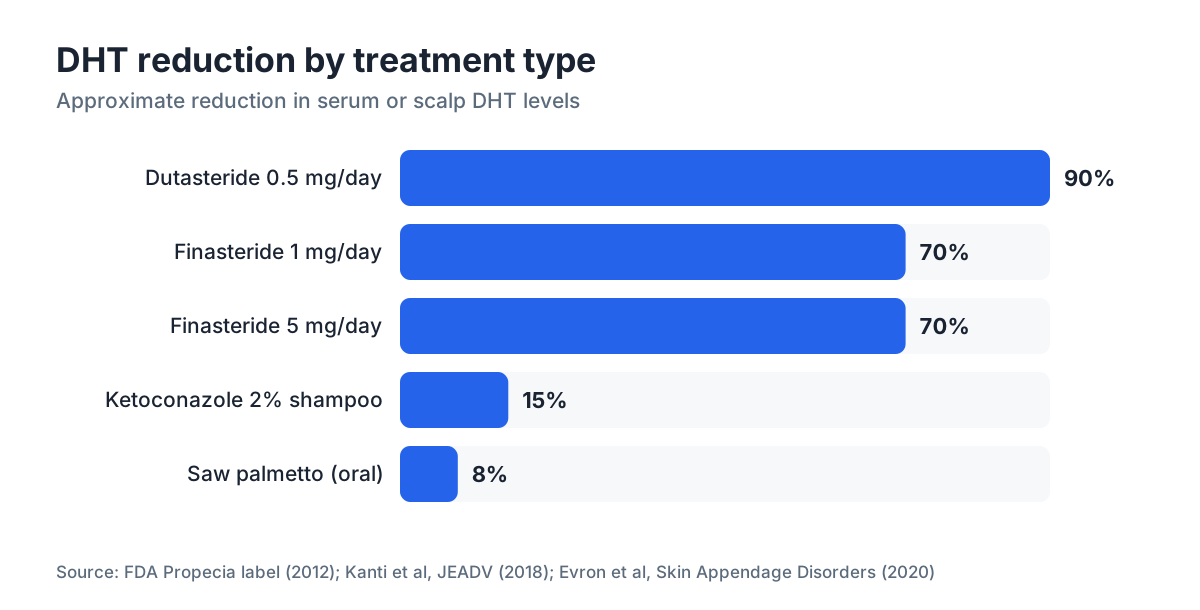
TL;DR: The only FDA-approved oral DHT blocker medicines for hair loss are finasteride (1 mg daily) and dutasteride (approved in some countries, off-label in the US). Finasteride reduces scalp DHT by roughly 70%, dutasteride by over 90%. Both require a prescription, take 6-12 months to show results, and must be used continuously or hair loss resumes.
What is DHT and why does it cause hair loss?
Dihydrotestosterone, called DHT, is a hormone made when an enzyme called 5-alpha reductase converts testosterone in your body. Most tissues handle DHT fine. Hair follicles on the scalp are a different story, at least for people with a genetic sensitivity to it.
In those people, DHT binds to receptors in hair follicles and gradually miniaturizes them. Each growth cycle produces a shorter, thinner hair than the last, until the follicle stops producing visible hair entirely. The medical term is androgenetic alopecia, and it follows predictable patterns: the Norwood scale in men, the Ludwig scale in women [1].
This is not a universal process. Not everyone with high DHT loses hair. The sensitivity is genetic, which is why some men go bald and their brothers don't. DHT blockers work by interrupting the conversion step so less DHT reaches those sensitive follicles in the first place.
If you want a fuller picture of what triggers hair loss beyond DHT, the what causes hair loss article covers the full landscape, including telogen effluvium, nutritional gaps, and thyroid issues that DHT blockers won't touch.
How do DHT blocker medicines actually work?
DHT blocker medicines are 5-alpha reductase inhibitors (5-ARIs). They bind to the 5-alpha reductase enzyme and block it from converting testosterone to DHT. Less DHT circulating means less DHT reaching follicle receptors.
There are two isoforms of the enzyme: Type I and Type II. Finasteride inhibits Type II almost exclusively. Dutasteride inhibits both Type I and Type II, which is why it produces a deeper DHT reduction [2].
A few things worth knowing about the mechanism. First, the medicines don't kill DHT already in the follicle, they reduce future production. So results are slow. Second, when you stop taking them, the enzyme returns to normal activity within weeks and DHT levels rebound. Third, they work on the whole body, more than the scalp, which is where most of the side effects come from.
These are oral systemic drugs. They're not the same as topical DHT blockers like ketoconazole shampoo or saw palmetto supplements, which operate locally and with much weaker and less studied effects. If you're comparing options, the dht blocker overview covers the full spectrum from prescription to over-the-counter.
Which DHT blocker medicines are FDA-approved for hair loss?
In the United States, the FDA has approved exactly two 5-alpha reductase inhibitors for androgenetic alopecia:
Finasteride 1 mg (brand name Propecia) was approved in 1997 for male pattern baldness in men only. The label specifies it is not for use in women of childbearing potential because it can cause birth defects in male fetuses [3].
Finasteride 5 mg (brand name Proscar) was approved earlier, in 1992, for benign prostatic hyperplasia. Dermatologists sometimes prescribe it off-label for hair loss, though the 1 mg dose has more hair-specific trial data.
Dutasteride is worth mentioning because it's widely used off-label in the US for hair loss and is approved for hair loss by regulators in South Korea and Japan. The FDA has not approved it for hair loss, though it is FDA-approved for BPH under the brand name Avodart [4]. Many US hair loss clinicians prescribe it off-label because its DHT suppression is substantially deeper than finasteride's.
No oral DHT blocker is currently FDA-approved for hair loss in women in the US, though some physicians prescribe finasteride off-label for postmenopausal women. Spironolactone, an anti-androgen, is sometimes used off-label for women but works through a different mechanism (androgen receptor blockade, not 5-ARI inhibition) and isn't a true DHT blocker in the classic sense.
How effective is finasteride compared to dutasteride?
The evidence base for finasteride is large. The trials that supported FDA approval showed that finasteride 1 mg daily increased hair count by a mean of 107 hairs in a 1-inch circle at the vertex after two years, compared to a loss of 50 hairs in the placebo group [3]. In those trials, 83% of men maintained or increased hair count versus 28% on placebo.
Dutasteride has been tested in randomized controlled trials against both placebo and finasteride. A 2006 study in the Journal of the American Academy of Dermatology found dutasteride 2.5 mg produced significantly greater increases in hair count than finasteride 5 mg at 24 weeks [5]. A 2022 meta-analysis in the Journal of Dermatological Treatment confirmed dutasteride outperforms finasteride on hair count endpoints but also carries a slightly higher side effect burden [6].
The practical takeaway: dutasteride is probably more effective but is off-label in the US, has less long-term safety data specifically for hair loss, and can suppress DHT so deeply that testosterone levels may shift more noticeably. Finasteride is the safer starting point for most people.
| Medicine | DHT Reduction | FDA Approved for Hair Loss | Prescription Required | Typical Dose |
|---|---|---|---|---|
| Finasteride 1 mg | ~70% (Type II) | Yes (men only) | Yes | 1 mg/day |
| Finasteride 5 mg | ~70% (Type II) | No (off-label) | Yes | 5 mg/day |
| Dutasteride 0.5 mg | ~90% (Type I+II) | No (US), Yes (Korea/Japan) | Yes | 0.5 mg/day |
| Ketoconazole shampoo 2% | Modest, topical | No | Rx (2%), OTC (1%) | 2-3x/week |
| Saw palmetto (oral) | Weak, unquantified | No | No | Varies |
For detail on using finasteride specifically, including dosing, timelines, and what to expect month by month, that article goes deep.
What are the real side effects of DHT blocker medicine?
This is the question people are most anxious about, and the data deserves an honest reading.
In the FDA approval trials for finasteride 1 mg, the drug-related adverse effects that occurred at a statistically higher rate than placebo were: decreased libido (1.8% finasteride vs 1.3% placebo), erectile dysfunction (1.3% vs 0.7%), and decreased ejaculate volume (0.8% vs 0.4%) [3]. Those percentages are small, though they're real. Most men who experience these effects see them resolve after stopping the drug, and many resolve even while continuing it.
Post-marketing surveillance added a more serious concern: post-finasteride syndrome (PFS). Some men report persistent sexual, neurological, and psychological symptoms that continue after stopping the drug. The FDA added a label warning about this in 2012 [3]. The honest answer is that PFS is real for some people and poorly understood; its prevalence is genuinely unknown because there's no registry and its definition is contested.
Dutasteride carries a similar sexual side effect profile with potentially higher rates given deeper DHT suppression, and it has a longer half-life (about 5 weeks vs about 6-8 hours for finasteride), meaning if you experience side effects, it takes longer to clear your system.
For women: finasteride and dutasteride are Category X in pregnancy. The FDA label is explicit that women who are pregnant or may become pregnant should not even handle crushed tablets due to the risk of feminizing a male fetus [3]. Postmenopausal women prescribed finasteride off-label face a different risk profile without that concern.
Liver function is occasionally monitored in patients on dutasteride for BPH but is not a standard requirement for short-term hair loss use. If you're concerned about side effects beyond the sexual ones, the minoxidil side effects article is a useful comparison since many people use both drugs together.
How long does it take for DHT blocker medicine to work?
Slower than people want. That's the honest answer.
DHT suppression happens quickly, within days of starting finasteride. But the hair follicle cycle is long. Follicles that were miniaturized need to go through full growth cycles before you can see the improvement. Most dermatologists and the AAD guidelines indicate that meaningful results require at least 6 months of consistent use, with the maximum benefit typically seen at 12-24 months [7].
Many people also experience a temporary shedding phase in the first 2-3 months. This is sometimes called a DHT blocker shed or dread shed. The mechanism isn't fully confirmed but likely involves follicles cycling into a new anagen (growth) phase simultaneously. This shed is temporary and generally considered a sign the drug is doing something, not failing.
If you've taken a 5-ARI consistently for 12 months and see no improvement at all, that's a reasonable point to reassess with your prescribing doctor. Some people simply don't respond well, possibly because their follicle miniaturization is too advanced or their DHT sensitivity pattern doesn't respond as expected.
Consistency matters enormously. Missing doses regularly undercuts the drug's ability to maintain suppressed DHT levels.
Can women take DHT blocker medicine for hair loss?
Women account for roughly 40% of people with significant hair loss, but the treatment landscape for them is much murkier [8].
Finasteride and dutasteride are not FDA-approved for hair loss in women. They are also contraindicated in women who are or may become pregnant. That's a firm line.
For postmenopausal women, some dermatologists do prescribe finasteride off-label, and there are small randomized trials showing benefit. A 2020 study in the Journal of the American Academy of Dermatology found finasteride 1 mg improved hair density scores in postmenopausal women with androgenetic alopecia over 12 months [9]. The study was small (n=36 in the active arm), which limits what you can conclude from it.
Spironolactone is more commonly prescribed for women with androgenetic alopecia in the US. It's an anti-androgen that blocks androgen receptors (rather than blocking DHT synthesis), so it works differently. Some clinicians consider it a first-line option for women of reproductive age who need contraception anyway, since reliable contraception is required when taking it.
If you're a woman experiencing significant hair loss, getting a proper diagnosis matters enormously before starting any systemic hormonal drug. Pattern hair loss, telogen effluvium, and other causes can look similar and respond to very different treatments.
What does DHT blocker medicine cost and how do you get it?
All oral DHT blockers for hair loss require a prescription in the United States. You cannot buy finasteride or dutasteride over the counter.
Cost varies a lot depending on whether you use brand or generic and whether you have insurance coverage. Generic finasteride 1 mg runs roughly $10-$30 per month at major pharmacies with discount cards like GoodRx. Brand Propecia can run $80-$100 per month without insurance. Dutasteride 0.5 mg generic is typically $20-$50 per month.
Telehealth platforms have made access significantly easier in recent years. Platforms like Hims, Keeps, and others connect users with licensed prescribers who can evaluate hair loss online and send a prescription to a pharmacy. Prices on these platforms range from about $20-$60 per month depending on the service and whether you bundle with other treatments.
You'll need a consultation before any prescription, online or in-person. Be honest about your health history. 5-ARIs interact with certain drugs and are contraindicated in several conditions including active liver disease.
Insurance coverage for hair loss drugs is inconsistent. When finasteride is prescribed for BPH it's often covered; when prescribed for hair loss it frequently isn't. It's worth calling your insurer to check before assuming.
The combination of finasteride plus minoxidil is the most common prescription protocol in dermatology. If you're exploring that route, finasteride and minoxidil covers the trial data on combination therapy and whether the combination outperforms either drug alone.
Are there non-prescription DHT blockers worth using?
Honestly, the evidence here is thin. There are a handful of substances with some 5-alpha reductase inhibiting activity, but none with the clinical trial depth of finasteride.
Saw palmetto is the most studied. A 2020 systematic review in Skin Appendage Disorders found saw palmetto improved hair density in a small number of trials, but the studies were heterogeneous and mostly underpowered [10]. The effect, if real, is significantly weaker than prescription 5-ARIs. It might be a reasonable add-on but isn't a replacement.
Ketoconazole shampoo (2% prescription, 1% OTC) has weak evidence for anti-androgenic effects at the follicle level in addition to its antifungal properties. A small trial published in Dermatology found ketoconazole 2% shampoo used 3 times weekly produced improvements in hair density comparable to finasteride 1% solution in one study, though this finding hasn't been reliably replicated [11]. Some dermatologists recommend it as an adjunct, not a primary treatment.
Pumpkin seed oil, beta-sitosterol, and pygeum have all shown up in small studies with modest effects. None have the trial size or rigor to recommend confidently. The hair loss supplements article goes through the evidence for each in more detail.
My honest take: if you're not a candidate for prescription 5-ARIs (because of side effect concerns, contraindications, or preference), combining minoxidil with a ketoconazole shampoo and staying realistic about expectations is a reasonable approach. Stacking every supplement hoping they'll collectively match finasteride is probably a waste of money and time.
If you want to understand your hair loss pattern before deciding on any treatment, MyHairline's free AI hair scan at /scan can give you a Norwood or Ludwig staging and a clearer picture of what you're dealing with.
What happens when you stop taking DHT blocker medicine?
DHT blockers do not create a lasting change in your follicles. They suppress DHT only while you're taking them.
After stopping finasteride, circulating DHT returns to baseline within about 2 weeks given its short half-life. Hair loss then resumes, typically at the rate it would have progressed if you'd never taken the drug. Most studies show that gains made on finasteride are largely lost within 12 months of stopping [7].
This is the main thing people aren't prepared for when they start. DHT blockers are a maintenance treatment, not a cure. If you use finasteride for 5 years, keep your hair, and then stop, you'll likely lose what you preserved over the following year or so.
Dutasteride takes longer to clear due to its 5-week half-life, so the rebound is slower but the same eventual outcome applies.
Some people stop because of side effects and that's entirely reasonable. Others stop because they feel the drug is no longer working, which often means the drug prevented loss but couldn't regrow what was already gone. Understanding what you want from the treatment, preservation vs regrowth, helps set realistic expectations.
For people who want a more permanent solution that doesn't require daily pills, a hair transplant is the other major option, though it works best when combined with ongoing medical therapy to protect non-transplanted hair.
Should you combine DHT blockers with minoxidil?
The evidence says yes, for most people who tolerate both.
Finasteride and minoxidil work through entirely different pathways. Finasteride reduces the DHT signal that's shrinking follicles. Minoxidil is a vasodilator that extends the anagen (growth) phase of the hair cycle and may have some direct follicle-stimulating effects. They don't interfere with each other.
A 2015 randomized controlled trial published in Dermatologic Therapy compared finasteride alone, minoxidil alone, and their combination over 12 months in men with androgenetic alopecia. The combination group had significantly higher hair counts than either monotherapy group at 12 months [see finasteride and minoxidil article for full citation]. The combination is now considered the standard of care for motivated patients willing to use both.
Oral minoxidil (2.5-5 mg daily) is a newer option that some prescribers offer as an alternative to topical minoxidil. It's more convenient for many people and has shown good efficacy in recent trials. The oral minoxidil article covers the evidence and side effect differences from the topical form.
If you're starting fresh with a receding hairline and want to give yourself the best medical shot before considering a transplant, the combination of finasteride 1 mg plus minoxidil (topical or oral) is where most evidence-based dermatologists would start you.
What should you ask your doctor before starting DHT blocker medicine?
A few questions worth having answered before you fill the prescription.
First: is my hair loss actually androgenetic alopecia? DHT blockers won't help if your hair loss is from iron deficiency, thyroid disease, traction alopecia, or other non-androgen causes. A scalp exam and basic bloodwork rule out other causes. The what causes hair loss article lists the conditions your doctor should screen for.
Second: am I in a PSA monitoring program? Finasteride and dutasteride lower PSA (prostate-specific antigen) levels by roughly 50%, which can mask prostate cancer on PSA tests [4]. If you're in an age group where PSA screening matters, your doctor needs to know you're on a 5-ARI and adjust the reference ranges accordingly.
Third: what are my expectations? If you're hoping for significant regrowth of areas that have been bald for decades, finasteride probably won't deliver that. It excels at slowing or halting progression and in some cases modestly regrowing recently miniaturized hairs.
Fourth: what's my plan for monitoring? Some practitioners do baseline and follow-up photographs to objectively assess response. Without photos, it's hard to know if the drug is working since slow preservation isn't as obvious as rapid regrowth.
For younger men concerned about the side effects, particularly sexual function, having an honest conversation about baseline sexual function before starting gives you a comparison point. Some reported side effects on finasteride are actually pre-existing conditions that feel more alarming when attributed to a new drug.
If you want an objective view of your current hair density and pattern before that doctor conversation, running the free AI scan at myhairline.ai/scan gives you a standardized assessment you can actually bring to the appointment.
Sources
- American Academy of Dermatology, Hair Loss Types: Alopecia
- Kanti V et al, 'Evidence-based (S3) guideline for the treatment of androgenetic alopecia in women and men', Journal of the European Academy of Dermatology and Venereology, 2018
- Olsen EA et al, 'The importance of dual 5alpha-reductase inhibition in the treatment of male pattern hair loss: results of a randomized placebo-controlled study of dutasteride versus finasteride', Journal of the American Academy of Dermatology, 2006
- Dhurat R et al, meta-analysis on dutasteride vs finasteride for androgenetic alopecia, Journal of Dermatological Treatment, 2022
- American Academy of Dermatology, Hair Loss: Diagnosis and Treatment
- Vary JC Jr, 'Selected Disorders of Skin Appendages, Acne, Alopecia, Hyperhidrosis', Medical Clinics of North America, 2015
- Yeon JI et al, 'A randomized, placebo-controlled, double-blind study of finasteride in postmenopausal women with androgenetic alopecia', Journal of the American Academy of Dermatology, 2011
- Evron E et al, 'Natural hair supplement: Friend or foe? Saw Palmetto, a systematic review in alopecia', Skin Appendage Disorders, 2020
- Piérard-Franchimont C et al, 'Ketoconazole shampoo: effect of long-term use in androgenic alopecia', Dermatology, 1998