TL;DR: No vitamin or supplement blocks DHT as well as finasteride or dutasteride. A few, including saw palmetto, pumpkin seed oil, and zinc, have small but real human studies behind them. None are FDA-approved for hair loss. They can work as low-risk add-ons. They are not replacements for clinically proven treatments.
What is DHT and why does it cause hair loss?
DHT stands for dihydrotestosterone. Your body makes it by converting testosterone with an enzyme called 5-alpha reductase. That enzyme sits in hair follicles, skin, and the prostate, which is why hair loss and prostate growth are linked in men who are genetically sensitive to DHT. [1]
Once DHT binds to receptors in a hair follicle, it shrinks that follicle over successive growth cycles. The medical term is miniaturization. Hairs get thinner, shorter, and eventually stop growing. This is the engine behind androgenetic alopecia (male-pattern and female-pattern hair loss), which affects roughly 50 million men and 30 million women in the United States. [2]
Blockers interrupt that chain somewhere along the way. Prescription drugs like finasteride block the 5-alpha reductase enzyme directly, cutting scalp and serum DHT by 60 to 70 percent in clinical trials. [3] Vitamins and plant compounds aim at the same target through weaker, less studied pathways. How weak? That is the honest question this article answers.
Want the full picture of what drives hair loss before you shop for supplements? What causes hair loss is a good place to start.
Do DHT blocker vitamins actually work?
Some show a real signal. None of them come close to the evidence we have for finasteride, or even minoxidil. Most supplement studies are small, short, funded by the maker, and never measure serum DHT directly. That does not make the ingredients useless. It means the confidence interval is wide and you should set your expectations there.
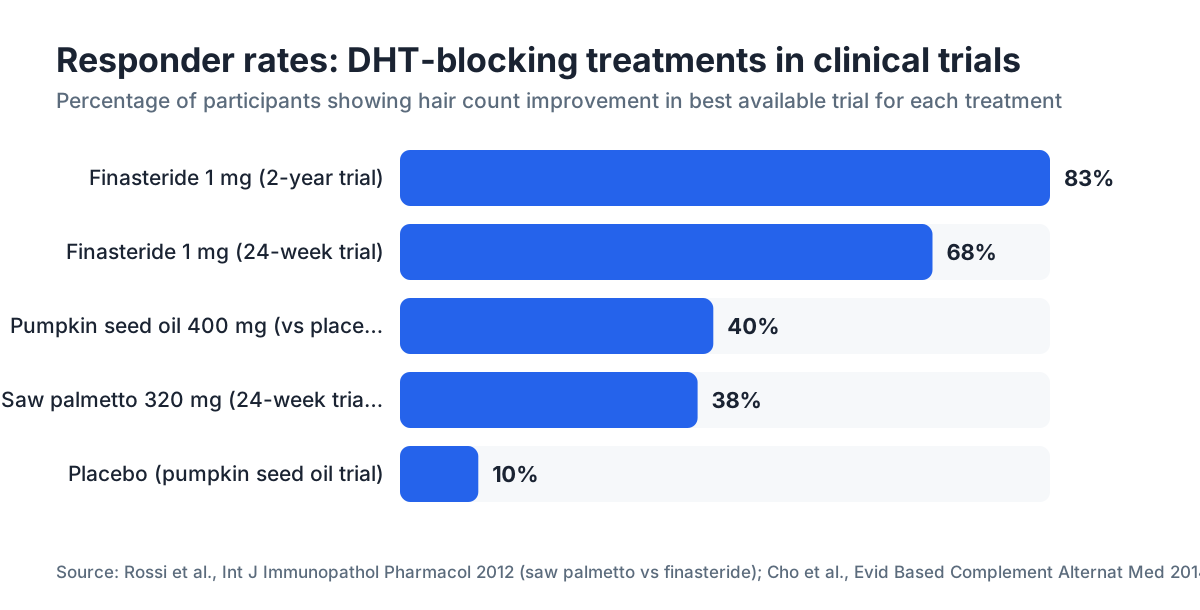
The most studied natural 5-alpha reductase inhibitor is saw palmetto (Serenoa repens). A 2012 randomized trial in the International Journal of Immunopathology and Pharmacology found saw palmetto extract raised hair count in 38 percent of men with androgenetic alopecia, compared with 68 percent for finasteride 1 mg, over 24 weeks. [4] It worked. It just worked worse than the drug.
Pumpkin seed oil has one solid randomized, placebo-controlled trial. A 2014 study in Evidence-Based Complementary and Alternative Medicine found men who took 400 mg of pumpkin seed oil daily for 24 weeks had 40 percent more hair count than placebo. [5] Pumpkin seed oil contains delta-7 sterols that may inhibit 5-alpha reductase, but the exact pathway is not confirmed.
Zinc is trickier. Zinc deficiency is genuinely tied to hair loss, and fixing a deficiency can restore normal growth. If you are not deficient, extra zinc does not appear to move DHT in any meaningful way. A review in Dermatology and Therapy noted that zinc inhibits 5-alpha reductase in vitro (in lab conditions) but human evidence in the body is thin. [6]
Here is the honest summary. Saw palmetto and pumpkin seed oil have small but real human trial data. Zinc helps if you are deficient. Everything else in the supplement aisle runs on lab-dish results or theory.
Which specific vitamins and nutrients show the most evidence?
Here are the ingredients you see most often, with the actual evidence behind each one.
Saw palmetto. The best-studied natural DHT blocker. In the 2012 trial above, it raised hair count in over a third of men. The typical study dose is 320 mg daily of a standardized liposterolic extract. Side effects are minimal at that dose, though high doses have rarely been linked to liver toxicity. [4]
Pumpkin seed oil. One quality RCT (2014, n=76) showing a 40 percent hair count improvement at 400 mg daily. The mechanism is plausible but not fully mapped. It is cheap and low-risk, which makes it a reasonable add-on. [5]
Zinc. Needed for normal hair follicle cycling. The recommended dietary allowance is 11 mg per day for adult men and 8 mg for adult women, per the NIH Office of Dietary Supplements. [7] Correcting a true deficiency can stop diffuse shedding. Going above the tolerable upper intake of 40 mg per day long-term blocks copper absorption and causes its own problems.
Vitamin D. Low vitamin D tracks with alopecia areata and some pattern hair loss, but the causal direction is murky. The NIH sets the tolerable upper intake at 4,000 IU per day for adults. [8] Fixing a deficiency is sensible. Megadosing is not.
Biotin. Useful if you are biotin-deficient, which is rare. The FDA has warned that high-dose biotin interferes with thyroid and troponin lab tests, producing false results. [9] There is no good evidence biotin touches DHT at all. Its hair-vitamin reputation is mostly marketing.
Rosemary oil. Not a vitamin, but it shows up constantly here. A 2015 trial in Skinmed compared rosemary oil with 2% minoxidil over 6 months and found similar hair count gains, with less scalp itching in the rosemary group. [10] It is not a DHT blocker in any pharmacological sense. It may improve scalp circulation.
Stinging nettle root (Urtica dioica). Contains compounds that may inhibit 5-alpha reductase in vitro. Human trial data is basically absent. It sits in dozens of "DHT blocker" blends on theory alone.
Pygeum africanum. Better studied for enlarged prostate than hair loss. Shares a mechanism with saw palmetto. Human hair loss trials are missing.
For a wider look at the supplement market and what earns your money, hair loss supplements goes ingredient by ingredient.
How do DHT blocker vitamins compare to finasteride and other proven treatments?
This is the comparison most articles dodge. Here it is straight.
Finasteride 1 mg daily cuts scalp DHT by about 64 percent and serum DHT by around 68 percent. Two-year placebo-controlled trials showed hair count gains or slowed loss in roughly 83 percent of men. [3] That is a drug with a measured mechanism and large, independent trials.
Saw palmetto, the best natural option, helped 38 percent of men in its best trial, against 68 percent for finasteride in the same head-to-head study. Pumpkin seed oil showed 40 percent more hair in one 76-person trial with no active comparator.
| Treatment | Mechanism | DHT reduction (approx.) | Responder rate (best available trial) | FDA-approved for hair loss |
|---|---|---|---|---|
| Finasteride 1 mg | 5-alpha reductase inhibitor (Type II) | 60-70% serum DHT | ~83% over 2 years | Yes (men) [3] |
| Dutasteride 0.5 mg | 5-alpha reductase inhibitor (Type I+II) | ~90% serum DHT | Higher than finasteride; less long-term data | No (off-label) |
| Minoxidil 5% topical | Vasodilator / follicle cycle extender | 0% (different mechanism) | ~60% moderate regrowth | Yes |
| Saw palmetto 320 mg | Weak 5-AR inhibitor (proposed) | Unmeasured in hair trials | ~38% [4] | No |
| Pumpkin seed oil 400 mg | Delta-7 sterol, weak 5-AR inhibition | Unmeasured | 40% more count than placebo [5] | No |
| Biotin high-dose | None relevant to DHT | 0% | No evidence unless deficient | No |
The supplements are not frauds. They are weaker, and the evidence is thinner. If your loss is mild, or you want something on top of a prescription, they are low-risk. If you are watching a real recession and avoiding finasteride because you hope saw palmetto does the same job, the data says it probably will not.
For how the drug works and what the actual trial side effect rates look like, read finasteride. If you are weighing a combination, finasteride and minoxidil covers what stacking the two shows in the research.
Are DHT blocker vitamins safe, and are there any side effects?
At typical doses, yes, they are low-risk. Low-risk is not zero-risk.
Saw palmetto at 320 mg daily is well tolerated in most people. Rare cases of hepatotoxicity (liver damage) show up in the literature, usually at higher doses or in combination products. [11] Mild GI discomfort is the most common complaint. Saw palmetto also has mild antiandrogen and anti-inflammatory activity, so in theory it could affect hormone-sensitive conditions, though clinical evidence for that is sparse.
Zinc above the 40 mg tolerable upper intake level causes nausea, blocks copper absorption, and can lower HDL cholesterol over time. It is easy to blow past 40 mg by accident if you stack a multivitamin, a "DHT blocker" blend, and a separate zinc capsule.
Biotin at high doses (5,000 to 10,000 mcg, common in hair products) is not directly toxic, but it distorts immunoassay lab tests. The FDA warned in 2017 that biotin has caused falsely high or falsely low results on tests for thyroid disorders, cardiovascular disease, and pregnancy, which can lead to misdiagnosis. [9]
Pumpkin seed oil is basically food. Side effects at 400 mg are negligible in the existing literature.
The real risk in this whole category is not toxicity. It is opportunity cost. You spend money and months on supplements while a meaningful recession keeps moving. Follicles that stay miniaturized for years can shut down for good. The window to intervene matters.
Can women use DHT blocker vitamins for hair loss?
Women lose hair to DHT too, though the pattern and the hormonal picture are usually more complex than in men. Female-pattern hair loss (FPHL) shows up as diffuse thinning over the crown rather than a receding hairline, and other causes like thyroid disease, iron deficiency, and telogen effluvium are more likely to be part of the story alongside DHT. [2]
Saw palmetto and pumpkin seed oil have not been studied well in women for hair loss. Because they carry mild antiandrogenic effects, women who are pregnant or trying to conceive should avoid them, on the same principle that keeps finasteride out of pregnancy.
Zinc and vitamin D corrections make sense for women with documented deficiencies. Rosemary oil is topical and safe for most women.
Here is the part that matters. Before a woman spends heavily on DHT-blocking supplements, rule out iron deficiency, thyroid dysfunction, and other contributors first. A blood panel tells you more than a supplement stack ever will.
How long does it take for DHT blocker vitamins to work?
Six months is the realistic minimum. The pumpkin seed oil trial ran 24 weeks. The saw palmetto trial ran 24 weeks. That is the window where those studies measured their results, so that is the window before you can honestly judge whether a supplement is doing anything.
Hair grows about half an inch per month. A follicle cycles through growth (anagen), transition (catagen), and rest (telogen) phases that span months. If a supplement is trimming DHT at the follicle, it takes several growth cycles before thicker, longer hairs replace the miniaturized ones.
No change in six months is probably your answer. Some people push to a full year before calling it, but no trial evidence suggests a longer run reveals effects that were invisible at six months.
What should you look for when buying a DHT blocker supplement?
The supplement market is largely unregulated. The FDA does not review supplement products for safety or efficacy before they go on sale, which matters a lot when you are staring at dozens of "DHT blocker" blends. [12]
Third-party testing is your best filter. Look for products certified by NSF International, USP (United States Pharmacopeia), or Informed Sport. These groups verify that a product contains what the label claims, in the listed amounts, without contaminants.
For saw palmetto, the standardized liposterolic extract (85 to 95 percent fatty acids and sterols) is the form used in trials. Whole berry powder is not equivalent and looks less bioavailable.
For pumpkin seed oil, cold-pressed oil is the research form. Some products use pumpkin seed powder, which has not been tested the same way.
Be skeptical of proprietary blends listing eight to twelve ingredients inside one "complex" with no individual doses. If the label will not tell you how much saw palmetto is in a capsule, you cannot check it against the doses used in research.
Price does not track quality here. A certified single-ingredient saw palmetto at 320 mg often costs less and holds up better than a fancy branded blend.
Should you use DHT blocker vitamins alongside minoxidil or finasteride?
This is where the question turns useful. DHT blockers and minoxidil work through entirely different mechanisms. Minoxidil does not touch DHT. It extends the anagen phase and improves follicle blood flow. There is no pharmacological reason you cannot use both, and no known interaction between minoxidil and saw palmetto or pumpkin seed oil.
For how topical minoxidil works and what it can and cannot do, minoxidil for men and minoxidil side effects are worth reading before you start.
Adding saw palmetto or pumpkin seed oil on top of finasteride is lower priority, because finasteride already cuts DHT far more than any supplement can. Some people do it anyway as a belt-and-suspenders move. The risk is minimal. The extra benefit over finasteride alone is probably small and untested.
The more defensible stack for someone unwilling to take prescription drugs looks like this: saw palmetto 320 mg standardized extract, plus pumpkin seed oil 400 mg, plus topical minoxidil, with vitamin D and zinc corrected if bloodwork shows a deficiency. That combination has biological logic and acceptable safety, even though no single trial has tested all three together.
Trying to figure out where you actually stand before you commit? MyHairline's free AI hair analysis (/scan) helps you identify your pattern and stage, which shapes which interventions make sense.
Does diet affect DHT levels, and which foods have DHT-blocking properties?
Diet nudges DHT production at the margins. Caloric excess, especially from saturated fat, tracks with higher 5-alpha reductase activity in some studies, though the human effect size is not dramatic. A Mediterranean diet, heavy in phytosterols from olive oil, tomatoes, and green vegetables, is loosely tied to lower rates of androgenetic alopecia in observational research, though causation is not proven. [13]
Foods with plausible DHT-modulating properties, based on their biochemistry:
Green tea (EGCG, or epigallocatechin gallate) has shown 5-alpha reductase inhibition in animal and cell studies. Human hair loss trials are absent.
Edamame and soy carry isoflavones that bind weakly to androgen receptors. The clinical meaning for scalp DHT in humans is unclear and debated.
Pumpkin seeds contain the same delta-7 sterols as the oil. A handful a day is not the same as 400 mg of cold-pressed oil, but it points the right direction.
Flaxseed carries lignans with weak antiandrogenic activity, again mostly tested in cell lines.
White button mushrooms have inhibited aromatase and 5-alpha reductase in lab studies. No human hair trials exist.
The honest summary: diet matters at the edges. No single food stops significant androgenetic alopecia. Avoiding deficiencies in zinc, iron, and vitamin D counts for more than chasing phytosterol content.
How does creatine relate to DHT and should you worry?
This one comes up constantly. A 2009 trial found rugby players taking creatine monohydrate had a 56 percent increase in serum DHT after three weeks, with no significant change in total testosterone. [14] That single study got enormous press and has circulated ever since.
Creatine is not a DHT precursor. The hypothesis is that it raises the DHT-to-testosterone ratio by increasing 5-alpha reductase activity, possibly from higher muscle demand for DHT-related signaling. The effect on scalp DHT specifically was never measured, and whether a short serum spike during loading actually speeds follicle miniaturization is unknown.
If you are genetically predisposed to hair loss and loading creatine heavily, it is fair to think about. If your hairline is stable, the risk from creatine at normal doses is probably low. Does creatine cause hair loss breaks down that single study and what it does and does not prove.
When should you stop relying on supplements and consider prescription treatment?
This is the conversation most supplement articles skip. Supplements fit if your loss is genuinely early, you have a personal or medical reason to avoid prescription drugs, or you want an adjunct to a proven treatment.
They do not fit as a substitute when loss is visibly progressing. Follicles that stay miniaturized for a long time can close permanently. The window for reversal is real. Waiting two years on supplements while your hairline slides past a Norwood III or IV, then starting finasteride, leaves you at a structural disadvantage versus starting earlier.
The AAD names finasteride and minoxidil as the two treatments with the strongest evidence for androgenetic alopecia in men. [2] If you have documented, progressing loss and no reason you cannot take finasteride, the evidence backs using it. Supplements do not carry the evidence base to replace that.
If you have progressed past the point where medical therapy can fully recover lost ground, hair transplant becomes a real conversation. That article covers expectations, costs, and who qualifies.
To see where your current pattern might sit, receding hairline walks through the Norwood scale and what early intervention looks like at each stage.
Sources
- NIH National Library of Medicine, StatPearls: Dihydrotestosterone
- American Academy of Dermatology, Hair Loss resource center
- FDA, Propecia (finasteride 1 mg) prescribing information
- Rossi A et al., International Journal of Immunopathology and Pharmacology, 2012
- Cho YH et al., Evidence-Based Complementary and Alternative Medicine, 2014
- Almohanna HM et al., Dermatology and Therapy, 2019
- NIH Office of Dietary Supplements, Zinc Fact Sheet for Health Professionals
- NIH Office of Dietary Supplements, Vitamin D Fact Sheet for Health Professionals
- Panahi Y et al., Skinmed, 2015
- Jibrin I et al., Southern Medical Journal, 2006
- FDA, Dietary Supplements
- Fortes C et al., Archives of Dermatology, 2008
- van der Merwe J et al., Clinical Journal of Sport Medicine, 2009