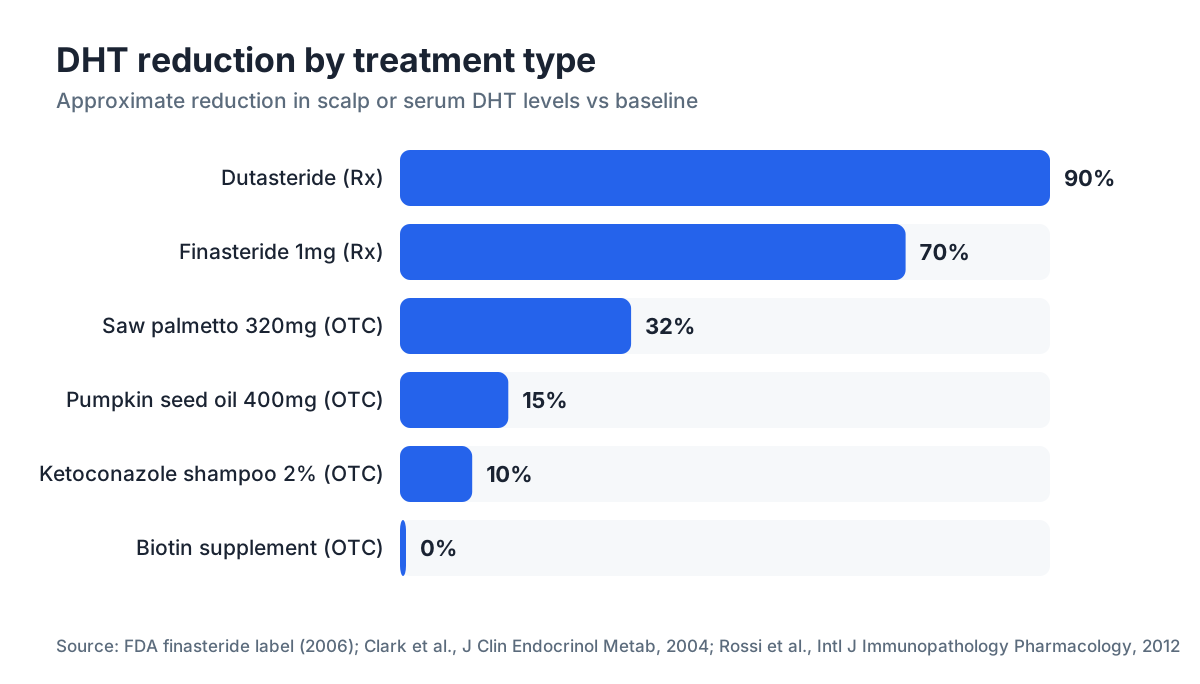
TL;DR: Walmart sells several over-the-counter products marketed as DHT blockers, including saw palmetto supplements, ketoconazole shampoos, and minoxidil. None of them block DHT as effectively as prescription finasteride, which reduces scalp DHT by roughly 70%. OTC options can slow shedding modestly, but if you're losing ground fast, a prescription is worth the conversation with a doctor.
What is a DHT blocker and why does it matter for hair loss?
DHT, short for dihydrotestosterone, is the hormone most responsible for androgenetic alopecia, the pattern hair loss that affects roughly 50 million men and 30 million women in the United States [1]. It forms when an enzyme called 5-alpha reductase converts testosterone into DHT. Once DHT binds to receptors in genetically susceptible hair follicles, those follicles miniaturize over years and eventually stop producing visible hair.
A DHT blocker is anything that interferes with that process, either by inhibiting 5-alpha reductase or by blocking DHT from binding to follicle receptors. The mechanism decides how strong the effect is. Prescription drugs like finasteride inhibit 5-alpha reductase directly and are clinically proven to do so. Many supplements sold as DHT blockers work through weaker, less well-characterized pathways, and their effect sizes in rigorous trials are much smaller.
Knowing where a product sits on that spectrum is the whole game. You can spend $15 at Walmart on something that might help a little, or you can spend $20 to $30 a month on a prescription with decades of clinical data behind it. That knowledge saves you money and time you don't have when your hairline is moving backward. For a broader look at what drives hair loss beyond DHT, see our guide on what causes hair loss.
What DHT blocker products does Walmart actually carry?
Walmart's shelves and website carry a predictable mix of categories. Here's an honest breakdown of what you'll find.
Saw palmetto supplements. These are the most common OTC DHT-related products at Walmart. Brands like Nature's Bounty, Spring Valley, and various generic labels sell saw palmetto capsules, typically 160 mg to 320 mg per dose, for $8 to $20 per bottle. Saw palmetto is thought to inhibit 5-alpha reductase, though the evidence is mixed and the effect is much weaker than finasteride.
Ketoconazole shampoos. Nizoral 1% shampoo is available OTC at Walmart (the 2% version requires a prescription). Ketoconazole has antifungal properties, and some evidence suggests it may also reduce scalp DHT activity and calm inflammation around follicles [2]. It's one of the more evidence-backed OTC options, though it's a shampoo, not an oral DHT blocker.
Minoxidil. Equate brand minoxidil (Walmart's store brand) is on shelves in 2% and 5% foam or liquid formulations for men, and 2% for women. Minoxidil doesn't block DHT at all. It works by a different mechanism, improving blood flow and extending the growth phase of follicles. It gets lumped into DHT-blocker marketing constantly, but calling it a DHT blocker is just wrong. That said, it's one of the two most effective OTC hair loss treatments that exist. Our full breakdown on minoxidil for men covers dosing, timelines, and results.
DHT-blocking shampoos and hair products. You'll find shampoos marketed with phrases like "DHT blocking formula," often containing biotin, caffeine, saw palmetto extract, or pumpkin seed oil. The evidence these do anything meaningful through the scalp is thin. They're washed off within minutes, and absorption is minimal.
Biotin supplements. Often shelved near DHT blockers. Biotin does nothing for DHT. It helps with biotin deficiency, which can cause hair loss, but that deficiency is rare in people eating a normal diet [11]. If you're buying biotin because you saw it marketed near DHT blockers, save the money.
Combination "hair growth" supplements. Brands like Hairfinity, Hair La Vie, or store-brand variants often combine saw palmetto with vitamins, amino acids, and plant extracts. These are the hardest to judge because they bury the active ingredient in a proprietary blend, so you often can't tell if you're getting a dose that's high enough to matter. Check out our guide on hair loss supplements for a deeper look at what's worth buying.
How much do DHT blocker products at Walmart cost?
Price varies a lot by category. Here's what you'll realistically pay.
| Product | Typical Walmart price | Monthly cost | Evidence level |
|---|---|---|---|
| Saw palmetto (generic) | $8-$15 per 60-100 ct | $8-$15 | Weak to moderate |
| Nizoral 1% shampoo (4 oz) | $12-$15 | $6-$12 (used 2-3x/week) | Moderate |
| Equate minoxidil 5% (3-month) | $25-$35 | $8-$12 | Strong (FDA approved) |
| Biotin supplement | $6-$14 | $6-$14 | No DHT effect |
| "DHT blocking" shampoo | $10-$20 | $10-$20 | Very weak |
| Prescription finasteride (via telehealth) | Not at Walmart | $15-$30 | Strong (FDA approved) |
The irony here is obvious. Finasteride, which has the strongest evidence, costs about the same per month as some supplements with the weakest evidence, and you can get it from a telehealth provider without leaving home. Walmart's OTC options aren't useless. But price alone shouldn't be the reason you choose them over a prescription.
Does saw palmetto actually block DHT?
Saw palmetto (Serenoa repens) is the active ingredient you'll meet most often in Walmart's OTC DHT blocker category. The mechanism is real: it inhibits both isoforms of 5-alpha reductase, the same enzyme finasteride targets [4]. The question is by how much.
A 2012 randomized controlled trial in the International Journal of Immunopathology and Pharmacology compared saw palmetto to finasteride over 24 months in 100 men with mild to moderate androgenetic alopecia. Finasteride produced hair growth in 68% of participants; saw palmetto produced growth in 38% [4]. Both beat placebo, but the gap is meaningful. If you're at an early Norwood stage with slow progression, saw palmetto might slow things down enough to matter. If you're losing hair fast, it probably won't keep up.
Standardization is a real problem too. Saw palmetto extracts vary in potency depending on extraction method and lipid content. Studies that show positive results typically use lipid-sterolic extract at 320 mg per day. Many Walmart supplements don't specify the extraction method on the label, which makes it impossible to know if you're getting a comparable dose.
Bottom line: saw palmetto is the most credible OTC option in the DHT-blocking category. It's not a substitute for finasteride, but it's not snake oil either. If you want to try something while you're deciding about a prescription, 320 mg of a standardized extract is a reasonable starting point.
Is Nizoral shampoo a DHT blocker?
Nizoral (ketoconazole 1%) has better evidence behind it than most shampoos claim to. Ketoconazole is an antifungal, and its main job in a shampoo is treating seborrheic dermatitis and dandruff. But a 1998 study in Dermatology found that 2% ketoconazole shampoo used every 2 to 4 days improved hair density comparably to 2% minoxidil in men with androgenetic alopecia, at least over the short term [2].
The mechanism isn't fully understood. Ketoconazole may block DHT's effect on follicle receptors, reduce scalp inflammation driven by the yeast Malassezia, or both. Scalp inflammation is increasingly recognized as a contributor to androgenetic alopecia progression, so the anti-inflammatory angle is plausible even if it's not the whole story.
The 1% OTC version (what Walmart carries) is weaker than the 2% prescription version used in that study. Most dermatologists who recommend it suggest two to three uses per week as an adjunct to other treatments, not as a standalone. It's cheap, it's generally well tolerated, and the worst realistic outcome is that it doesn't do much for your hair but keeps your scalp healthy. That's a fair trade.
How does minoxidil sold at Walmart compare to DHT blockers?
Minoxidil is not a DHT blocker. That's worth stating flatly, because packaging and marketing blur the line constantly. Minoxidil is a vasodilator that started as an oral blood pressure drug. Applied topically, it extends the anagen (growth) phase of the hair cycle and improves blood supply to follicles. It does nothing to reduce DHT levels or block DHT receptors.
Why does it show up in this conversation? Because it's one of two FDA-approved treatments for androgenetic alopecia (the other being finasteride), and Walmart sells it cheaply under the Equate brand. A three-month supply of Equate 5% minoxidil solution runs about $25 to $35, a genuine bargain against branded Rogaine.
The clinical track record is real. A 48-week randomized trial found that 5% topical minoxidil produced 45% more hair regrowth than 2% in men with androgenetic alopecia [5]. Women typically use the 2% formulation, though off-label use of 5% under physician guidance has also been studied.
If your goal is stopping hair loss with something you can buy at Walmart today, Equate minoxidil is the strongest option on those shelves. For side effects to know before you start, see our guide on minoxidil side effects. If you want to combine it with a DHT blocker for a fuller approach, the evidence for that pairing is strong. We cover it in detail at finasteride and minoxidil.
What's the strongest DHT blocker you can get, and is it at Walmart?
The strongest DHT blocker with solid clinical evidence is finasteride, a prescription-only oral medication. It's not sold at Walmart as an OTC product.
Finasteride (brand name Propecia) inhibits type II 5-alpha reductase and cuts serum DHT by about 70% and scalp DHT by about 60% at the standard 1 mg daily dose [6]. A five-year study of 1,553 men found that 48% of men on finasteride had some hair regrowth versus 25% in the placebo group, and 42% maintained their baseline hair count versus 71% in the placebo group who lost ground [6].
Dutasteride is even stronger: it inhibits both type I and type II 5-alpha reductase and reduces serum DHT by roughly 90% [7]. It's FDA-approved for benign prostatic hyperplasia but used off-label for hair loss. It's also prescription-only.
You can get finasteride filled at Walmart's pharmacy with a valid prescription. As of 2024, generic finasteride at Walmart Pharmacy runs approximately $20 to $40 for a 90-day supply, depending on location. Telehealth services can issue the prescription after an online consultation for a combined cost that often lands at $20 to $30 per month including the medication.
If you're a man with androgenetic alopecia and you're serious about slowing hair loss, finasteride is the conversation to have with a doctor. Our deep look at finasteride covers the evidence, side effects, and what to realistically expect.
Women of childbearing age cannot take finasteride. It's FDA Pregnancy Category X because it causes birth defects in male fetuses [6]. This is a hard limit, not a soft warning.
Are DHT-blocking shampoos at Walmart worth buying?
This is where most of the marketing money in hair loss is aimed, and the evidence is thin.
Shampoos labeled "DHT blocking" typically contain some mix of saw palmetto extract, caffeine, biotin, pumpkin seed oil, rosemary oil, or ketoconazole. The problem isn't that these ingredients are useless in all forms. The problem is shampoo contact time.
A typical shampoo sits on the scalp for 30 to 120 seconds before you rinse it off. For an ingredient to block DHT in a follicle, it has to penetrate the scalp in that window. Ketoconazole can do this, which is why it's the exception. Most plant extracts and water-soluble vitamins do not penetrate meaningfully in that time frame.
Pumpkin seed oil has a small amount of data behind it in supplement form: a 2014 randomized controlled trial in Evidence-Based Complementary and Alternative Medicine found 24-week supplementation with 400 mg pumpkin seed oil increased hair count by 40% versus 10% in the placebo group in men with androgenetic alopecia [8]. That's an oral supplement, not a shampoo rinse. The shampoo version of the same ingredient is a different product.
Rosemary oil applied topically has one small study suggesting comparable efficacy to 2% minoxidil over 6 months [9], but that study has limits and hasn't been replicated at scale. Again, that's a leave-in application, not a shampoo.
If a Walmart DHT-blocking shampoo contains ketoconazole, it has a plausible mechanism. If it doesn't, you're probably buying a nice-smelling shampoo.
Can women use DHT blockers from Walmart?
Yes, with important caveats.
Women lose hair to androgenetic alopecia too, and DHT is often involved, though the pattern is different (diffuse thinning rather than frontal recession) and other hormonal factors may also contribute. For more context, our article on receding hairline covers how patterns differ by sex.
Saw palmetto supplements are not contraindicated for women the way finasteride is, and some practitioners suggest them for women with hormonally driven hair loss. There isn't the same risk of birth defects. Women who are pregnant or trying to conceive should still avoid DHT-related supplements without medical guidance, since hormonal interference during pregnancy carries theoretical risks.
Nizoral shampoo is generally safe for women.
Minoxidil 2% is FDA-approved for women with androgenetic alopecia [5]. Walmart's Equate brand carries the 2% women's formula. It's one of the better-supported options available OTC.
Finasteride is not appropriate for premenopausal women who could become pregnant. Postmenopausal women sometimes use it off-label under medical supervision, but that's a conversation for a dermatologist or endocrinologist, not a product decision at Walmart.
If you're a woman with significant shedding that isn't obviously pattern hair loss, rule out other causes before spending money on DHT blockers. Telogen effluvium, thyroid issues, and iron deficiency can all cause shedding and don't respond to DHT blockers at all. Our guide on telogen effluvium explains how to tell the difference.
What should you actually buy at Walmart for hair loss?
Here's an honest take, not a marketing one.
If you're a man with early to moderate androgenetic alopecia: the best single thing you can do at Walmart is buy Equate 5% minoxidil and use it consistently. It's FDA-approved, it's cheap, and it works for most men who stick with it. Add Nizoral 1% shampoo two to three times a week as a low-cost adjunct. If you want to try saw palmetto alongside it, a 320 mg standardized extract is a reasonable add-on. But the real DHT-blocking conversation is about getting a prescription for finasteride, which you can fill at Walmart Pharmacy.
If you're a woman with pattern thinning: Equate 2% minoxidil for women is the strongest OTC option. Nizoral is fine to add. Saw palmetto is a reasonable experiment if you want a supplement, but the evidence in women is thinner than in men.
If you're losing hair rapidly or seeing significant scalp visibility, none of these OTC options are likely to be enough on their own. That's the point at which a dermatology or telehealth consultation is a better use of your money than a supplement.
Before you spend anything, a free AI hair analysis from MyHairline can give you a read on your Norwood stage and help clarify whether OTC options are likely to be sufficient for where you are right now. It's not a substitute for a doctor, but it can tell you how urgent the situation looks.
One more honest note: hair loss treatments need months of consistent use before you can judge whether they're working. Minoxidil typically takes four to six months to show meaningful results. Finasteride can take up to a year. If you quit after six weeks because you don't see progress, you've wasted your money regardless of what you bought. For a broader view of DHT and the full range of treatment options, see our main DHT blocker guide.
Are there any risks or side effects from OTC DHT blocker products?
The OTC products at Walmart are generally lower-risk than prescription DHT blockers, but not zero-risk.
Saw palmetto is well tolerated in most people. The most commonly reported side effects are mild GI upset, nausea, and headache. A small number of case reports have raised concerns about liver toxicity at high doses, though this appears rare [4]. Men should know that saw palmetto's 5-alpha reductase inhibition can theoretically affect PSA levels (a prostate cancer screening marker), similar to finasteride. If you're having a PSA test, tell your doctor you're taking it.
Ketoconazole shampoo is generally well tolerated. Skin dryness, irritation, or allergic contact dermatitis happens in a minority of users. Using it more than three times per week can strip scalp oils.
Minoxidil's side effects include scalp irritation, dryness, and in some people, increased shedding for the first few weeks (the minoxidil shed). Systemic absorption from topical use is low, but some people experience facial hair growth or, rarely, dizziness. See the minoxidil side effects guide for a full breakdown.
Biotin is water-soluble and the excess is excreted, so toxicity is not a major concern at standard doses. The real risk is that high-dose biotin can interfere with thyroid function lab tests and certain cardiac troponin tests, causing false readings [11]. The FDA issued a safety communication on this. If you're taking biotin supplements, tell your doctor before any lab work.
Combination "hair growth" supplements with proprietary blends are harder to assess. Unknown doses of multiple ingredients create unknown interaction risks. They're also not regulated by the FDA for efficacy before they hit store shelves, only for safety after problems emerge.
When should you stop shopping at Walmart and see a doctor?
There's a point where OTC products stop being the smart move. Here's how to recognize it.
If you've used minoxidil consistently for six months and haven't seen any stabilization of shedding, that's a signal to escalate. If you're progressing through Norwood stages visibly year over year, supplements aren't going to hold that line. If you're a Norwood 3 or beyond and losing ground, the OTC options are playing catch-up against a process that's outrunning them.
For men whose hairline loss has already advanced significantly, a transplant consultation starts to make sense alongside medical treatment. Our guide on hair transplant explains the evaluation process and what realistic candidacy looks like.
If you're experiencing sudden or patchy hair loss, that's likely not androgenetic alopecia, and DHT blockers of any kind are the wrong category of treatment. Alopecia areata, scarring alopecias, and medical causes of telogen effluvium all need different approaches.
A dermatologist, specifically one who specializes in hair (a trichologist or hair loss dermatologist), can do a scalp examination, dermoscopy, and basic bloodwork to tell you exactly what you're dealing with. That diagnosis is worth more than six months of trial-and-error supplements.
Sources
- American Academy of Dermatology, Hair Loss Overview
- Pierard-Franchimont C et al., Dermatology 1998: ketoconazole vs minoxidil for AGA
- Rossi A et al., International Journal of Immunopathology and Pharmacology 2012: saw palmetto vs finasteride
- FDA Label: Minoxidil Topical Solution, Drug@FDA
- FDA Label and clinical review: Finasteride 1mg (Propecia), Drug@FDA
- Clark RV et al., Journal of Clinical Endocrinology and Metabolism 2004: dutasteride DHT suppression
- Cho YH et al., Evidence-Based Complementary and Alternative Medicine 2014: pumpkin seed oil RCT
- Panahi Y et al., Skinmed 2015: rosemary oil vs 2% minoxidil for AGA
- FDA, Dietary Supplement Health and Education Act (DSHEA) overview
- NIH Office of Dietary Supplements: Biotin Fact Sheet